Preventing and Treating IT Band Syndrome: Tips for Pain-Free Movement
Master IT band syndrome prevention and treatment strategies for active, pain-free living and optimal athletic performance.
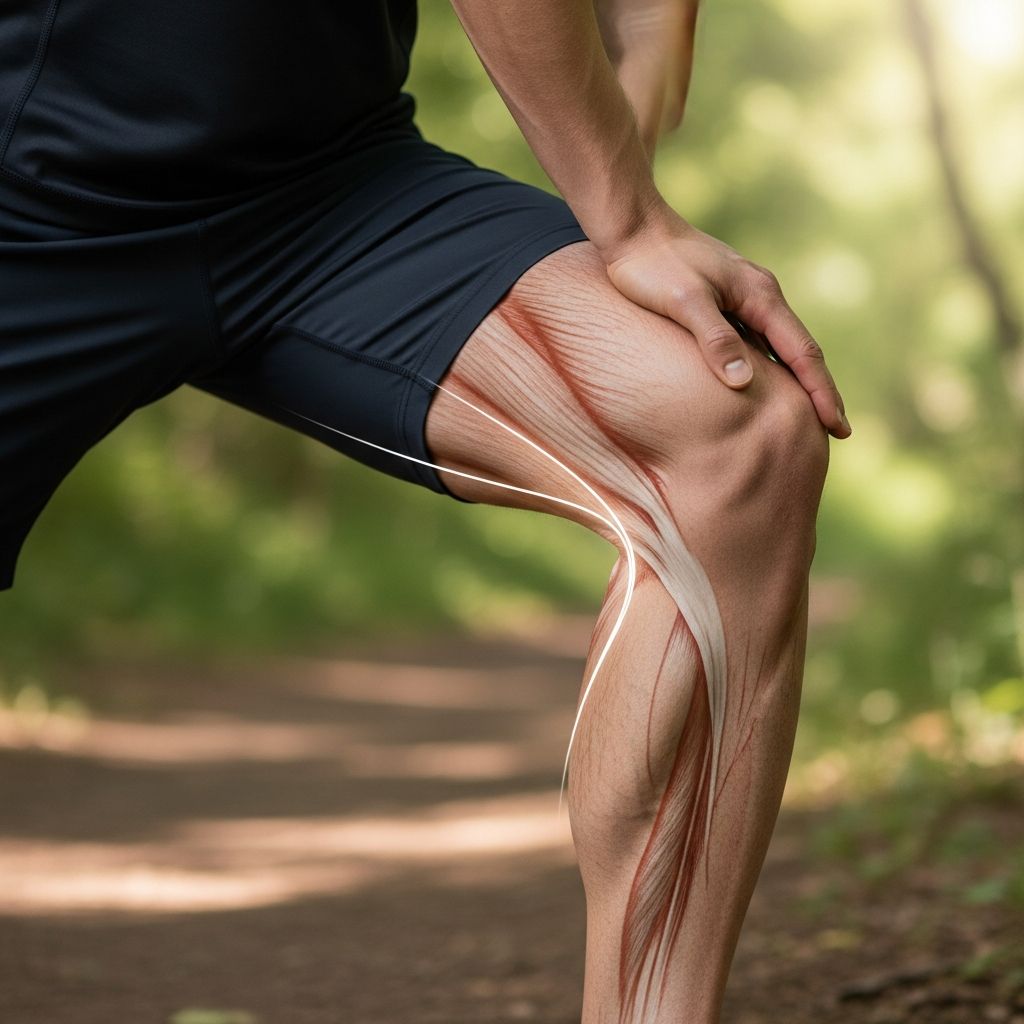
Understanding Iliotibial Band Syndrome
Iliotibial band syndrome (ITBS) is one of the most common overuse injuries affecting runners, cyclists, and athletes engaged in repetitive lower limb activities. The iliotibial band is a thick band of connective tissue that runs along the outside of the thigh, extending from the hip to the knee. When this structure becomes inflamed or irritated, it can cause significant lateral knee pain that may limit your ability to train effectively.
Understanding the mechanics of ITBS is crucial for both prevention and treatment. The condition typically develops when the IT band becomes tight and creates friction as it moves across the lateral epicondyle of the femur during repetitive activities. Recent research has revealed that a highly sensitive layer of fat and connective tissue lies between the IT band and the femoral condyle, and this structure is likely responsible for generating the characteristic pain associated with ITBS.
Risk Factors and Prevention Strategies
Common Risk Factors for Developing ITBS
Several biomechanical and training-related factors increase your risk of developing iliotibial band syndrome. Identifying these risk factors is the first step toward effective prevention. The most prevalent risk factor involves weakness or inactivity of the gluteal muscles, particularly the hip abductors. When these muscles are weak or poorly activated, they fail to stabilize the pelvis effectively during movement, resulting in a lateral pelvic tilt and increased hip adduction. This altered movement pattern creates excessive strain on the IT band and surrounding structures.
Other significant risk factors include poor running form, sudden increases in training volume or intensity, worn-out footwear that fails to provide adequate support, training on crowned or slanted surfaces, and inadequate flexibility in the hip and thigh muscles. Understanding these factors allows you to take proactive steps to minimize your injury risk.
Progressive Training Load Management
One of the most critical prevention strategies involves managing your training load appropriately. Sudden increases in distance, speed, or hill work are common triggers for ITBS development. Instead of dramatically ramping up your training, follow the principle of gradual progression. Most experts recommend increasing your training volume by no more than 10 percent per week to allow your body’s connective tissues adequate time to adapt to new demands.
Incorporate rest days into your training schedule, as these allow muscle recovery and tissue repair. Active recovery sessions, such as easy walks or gentle cycling, can maintain fitness while minimizing stress on the IT band. If you notice pain on the outside of your knee during training, immediately reduce your mileage or take several days off to prevent the condition from becoming chronic.
Footwear and Running Surface Considerations
Your choice of running shoes significantly impacts your injury risk. Worn-out shoes lose structural integrity and fail to provide proper support and cushioning, contributing to biomechanical dysfunction. Examine your shoes regularly for signs of wear along the outer sole, which indicates that your foot is rolling outward excessively during the gait cycle. Replace shoes when they show significant wear, typically after 300 to 500 miles of use.
Related Stories



Running surface selection also matters for ITBS prevention. Avoid constantly running on crowned roads, which slope toward the sides, as this creates an uneven distribution of forces through your legs. Similarly, running repeatedly on the same direction of a track creates asymmetrical loading. When training on a track, alternate your direction regularly. Choose flat, level running surfaces when possible, and avoid running exclusively on concrete, which provides less shock absorption than asphalt or trail surfaces.
Strengthening Exercises for IT Band Syndrome Prevention
Hip Abductor and Gluteal Strengthening
Strengthening the hip abductors and gluteal muscles is fundamental to ITBS prevention because these muscles stabilize the pelvis and control hip adduction during running. Strong glutes and hip abductors prevent the inward collapse of the knee that perpetuates IT band irritation.
Clamshell Exercise: Lie on your side with a resistance band positioned around your thighs just above the knees. Flex your hips slightly and keep your head supported. Keep your feet together while opening the top knee to externally rotate the hip. This movement specifically targets the hip external rotators and gluteus medius. Perform 12 to 15 repetitions on each side.
Crab Walk: Start in a squat position with a resistance band around your ankles. Keeping the band taut throughout the movement, step to the side while pushing your knees outward to prevent them from caving inward toward the midline. Each step should be approximately 50 percent of your starting stance width. Complete 10 to 12 steps in each direction.
Theraband Hip Abduction: Begin in a side-lying position with a resistance band positioned around your knees. Your knees should be straight with legs slightly behind your body in a small degree of hip extension. Lift your top leg to abduct the hip, ensuring the band is taut from the beginning of the movement. Avoid rotating your foot or moving the leg forward as you lift. Perform 12 to 15 repetitions on each side.
Side Plank with Leg Lift: This advanced exercise targets both the hip abductors and the stabilizing muscles of the core. Lie on your side with legs straight and aligned with your body. Support your upper body on your elbow, positioned directly under your shoulder. Lift your pelvis to create a straight line from head to feet. Once stable, lift your top leg and arm upward while maintaining a straight body position. Hold this challenging position for 20 to 30 seconds and repeat on both sides.
Core Stabilization Exercises
Core strength is essential for maintaining proper pelvis stability during dynamic movements. A weak core allows excessive pelvic motion, which disrupts the normal biomechanics of the lower extremities and increases IT band stress. Incorporate planks, dead bugs, and bird dogs into your training routine to develop functional core stability that translates to improved running mechanics.
Hamstring and Quadriceps Strengthening
Nordic hamstring strengthening exercises build eccentric strength in the hamstrings, which helps control the deceleration phase of running. Begin in a high kneeling position with a cushion or rolled towel under your knee and have a partner stabilize your feet or hook them under a stable base. Flex your ankle so the tips of your toes contact the ground. Keeping your thighs aligned with your torso, hinge forward at the knees while maintaining a straight body line. The hamstrings should generate significant tension during this eccentric contraction. Go as far as you can before experiencing cramping or pain, then return to the starting position.
Flexibility and Stretching Program
IT Band and TFL Stretching
Maintaining flexibility in the IT band, tensor fasciae latae (TFL), and surrounding hip musculature helps reduce tension that contributes to ITBS. A comprehensive stretching program should target these structures regularly.
TFL Stretch: Stand next to a wall with the involved leg positioned toward the wall. Cross your uninvolved leg in front and push your hips toward the wall until you feel a stretch along the side of your thigh and buttocks. Keep the foot of the stretched leg pointed forward or, if possible, slightly toward the wall. Hold this stretch for 30 seconds and repeat three times on each side. Perform this stretch daily to maintain IT band flexibility.
IT Band Foam Rolling: Using a foam roller on the IT band, glutes, quadriceps, and hamstrings helps reduce muscle tension and promote flexibility. Roll slowly along each muscle group, pausing on areas of tightness for 20 to 30 seconds. Regular foam rolling, performed three to four times per week, can significantly reduce IT band tension and decrease injury risk.
Additional Flexibility Work
Incorporate stretches targeting the quadriceps, hip flexors, hamstrings, and calves into your routine. Each stretch should be held for 20 to 30 seconds and repeated two to three times. Perform flexibility work after your workouts when muscles are warm and more responsive to stretching.
Treatment Approaches for Existing ITBS
Conservative Management and Rest
If you develop symptoms of IT band syndrome, the most effective initial treatment involves immediate rest from the aggravating activity. Reduce your running mileage significantly or cease running entirely until pain resolves. This early intervention prevents the condition from becoming chronic, which could necessitate extended time away from training.
Apply ice to the affected area for 15 to 20 minutes several times daily during the acute phase to manage inflammation. Once the acute inflammation subsides, heat application may facilitate healing by increasing blood flow to the tissue.
Physical Therapy and Professional Treatment
Structured physical therapy represents one of the most effective treatment approaches for ITBS. Physical therapists develop individualized programs focusing on flexibility improvement, weak muscle strengthening, and movement pattern correction. Manual therapy techniques, including myofascial release and deep tissue massage, help loosen IT band tightness and reduce associated pain. These hands-on interventions improve circulation and promote faster tissue healing while reducing inflammation.
Modalities such as ultrasound therapy, cold laser treatment, and electrical stimulation provide additional non-invasive relief. These modalities reduce inflammation and promote tissue healing, complementing other therapeutic approaches and accelerating recovery.
Activity Modification During Recovery
While recovering from ITBS, maintain fitness through cross-training activities that don’t aggravate symptoms. Swimming, cycling on flat terrain, and elliptical training provide cardiovascular benefits without the repetitive impact of running. Gradually return to running only after pain-free movement is achieved and with professional guidance regarding appropriate progression.
Running Form and Gait Analysis
Improper running form significantly contributes to IT band syndrome development. A professional running gait analysis can identify biomechanical issues that increase injury risk. Common form problems include overstriding, excessive knee inward collapse, and lateral pelvic drop. Runners should focus on maintaining a stride width of approximately 10 centimeters between parallel lines when running, avoiding excessive width that creates unnecessary stress on the IT band.
A shorter, more efficient stride with increased cadence reduces impact forces and improves biomechanical efficiency. Most experts recommend maintaining a cadence of 170 to 180 steps per minute to optimize running mechanics and minimize injury risk.
When to Seek Professional Help
If conservative management strategies don’t provide relief within two to four weeks, or if pain progressively worsens, seek evaluation from a healthcare provider. A podiatrist can assess whether custom orthotics might improve your biomechanics. In some cases, corticosteroid injections may be considered for acute pain management, though these are typically reserved for cases not responding to conservative treatment.
Long-Term Management and Return to Activity
Once you’ve achieved pain-free status, gradually return to your previous training volume and intensity with your healthcare provider’s permission. Develop a structured return-to-running plan that allows your tissues adequate adaptation time. Incorporate the strengthening and flexibility work into your maintenance routine indefinitely to prevent recurrence.
Frequently Asked Questions
Q: How long does it typically take to recover from IT band syndrome?
A: Recovery timelines vary depending on symptom severity and treatment adherence. Most cases resolve within 2 to 4 weeks with conservative management, though some individuals require 6 to 12 weeks of consistent treatment and activity modification.
Q: Can I continue running with IT band syndrome?
A: Running with active ITBS typically worsens the condition. Rest from running is essential, though cross-training activities like swimming or cycling may be tolerated if they don’t produce pain.
Q: What is the most common cause of IT band syndrome?
A: Weak or poorly activated gluteal muscles represent the most common biomechanical risk factor. Hip weakness allows excessive pelvic movement, increasing IT band stress.
Q: How often should I perform strengthening exercises?
A: Perform hip strengthening exercises 3 to 4 times per week for optimal results. Allow 48 hours between sessions targeting the same muscle groups.
Q: Are there any activities I should completely avoid if I have ITBS?
A: Avoid running, particularly on inclines or crowned surfaces. Jumping activities and deep squats should also be avoided during the acute phase. Once pain resolves, gradually reintroduce these activities under professional guidance.
References
- IT Band Syndrome: Symptoms, Treatment & Prevention — LH Physical Therapy. 2024. https://lhphysicaltherapy.com/how-to-recognize-and-treat-it-band-syndrome/
- Preventing & Managing Iliotibial Band Syndrome (ITBS) — Stockport Physiotherapy. 2024. https://stockport-physiotherapy.co.uk/preventing-managing-iliotibial-band-syndrome-itbs/
- Run Smart: Preventing and Treating IT Band Syndrome — OHOW. 2024. https://www.ohow.com/2024/07/25/run-smart-preventing-and-treating-it-band-syndrome/
- Treating and Preventing Iliotibial Band Syndrome — Runner’s World. 2024. https://www.runnersworld.com/health-injuries/a20797170/treating-and-preventing-iliotibial-band-syndrome/
- IT Band Syndrome: Symptoms, Causes, and Care — UPMC Orthopaedics. 2024. https://www.upmc.com/services/orthopaedics/conditions/it-band-syndrome
- Iliotibial Band Syndrome (ITBS): Causes, Symptoms & Treatment — Cleveland Clinic. 2024. https://my.clevelandclinic.org/health/diseases/21967-iliotibial-band-syndrome
Similar Articles








Read full bio of medha deb