Primary Aldosteronism: Causes, Symptoms, Diagnosis & Treatment
Understanding primary aldosteronism: A comprehensive guide to diagnosis and effective treatment options.
Primary Aldosteronism: Understanding This Important Condition
Primary aldosteronism, also known as primary hyperaldosteronism, is a treatable medical condition in which one or both adrenal glands produce excessive amounts of the hormone aldosterone. This overproduction leads to high blood pressure and electrolyte imbalances that can have significant health consequences if left untreated. Despite being a relatively common cause of secondary hypertension, primary aldosteronism remains underdiagnosed in clinical practice, meaning many patients with this condition may not receive appropriate treatment.
The adrenal glands, small triangular organs sitting atop the kidneys, play a crucial role in regulating blood pressure, electrolyte balance, and fluid volume in the body. When these glands malfunction and produce too much aldosterone, the body retains sodium and excretes potassium, leading to the characteristic presentation of elevated blood pressure and low serum potassium levels. Understanding the mechanisms, diagnosis, and treatment options for primary aldosteronism is essential for patients and healthcare providers alike.
What Causes Primary Aldosteronism?
Primary aldosteronism develops when the adrenal glands themselves produce excess aldosterone, independent of the body’s normal regulatory mechanisms. The condition typically stems from one of two primary pathological processes affecting the adrenal tissue.
Main Causes
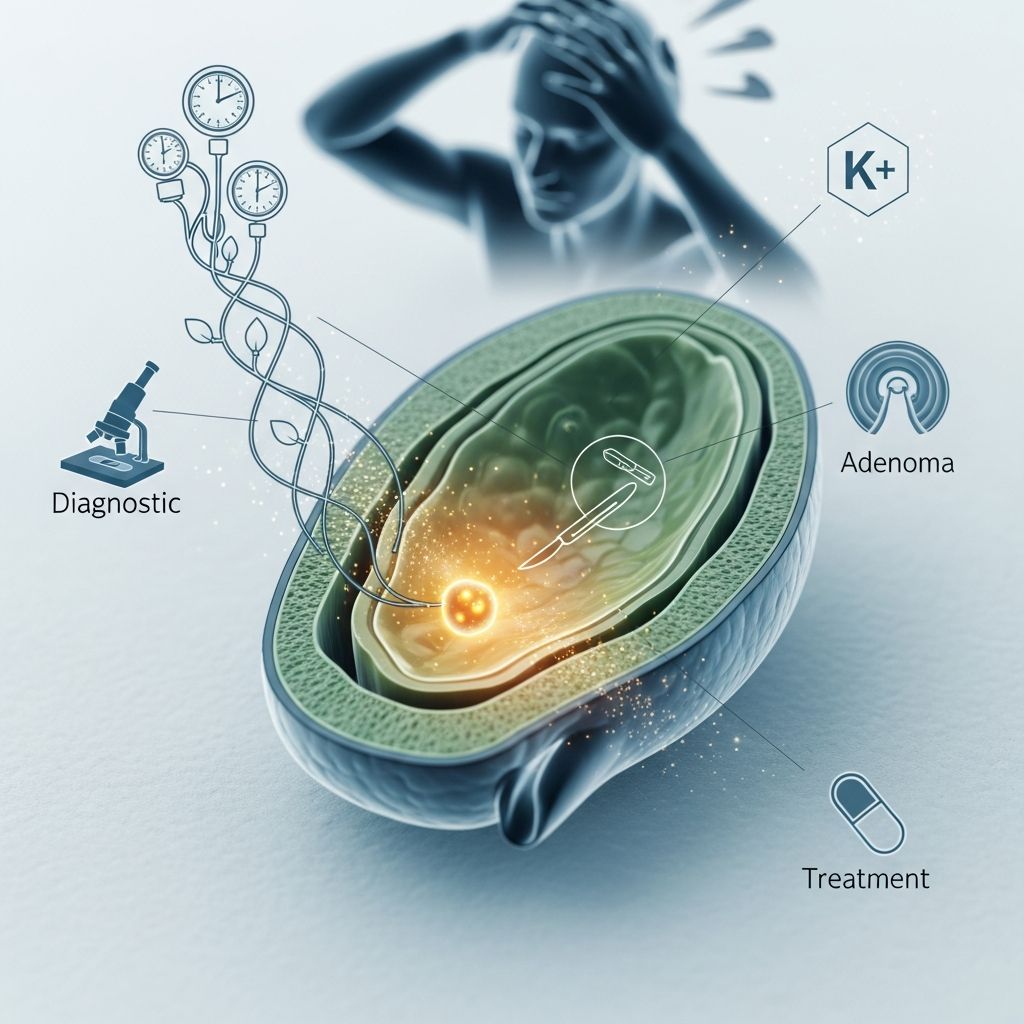
Aldosterone-Producing Adenomas (APAs): These are noncancerous tumors that develop within the adrenal gland and autonomously produce excessive aldosterone. Adenomas represent the most common cause of surgically curable primary aldosteronism and account for a significant proportion of cases where surgical intervention can provide a permanent cure.
Bilateral Adrenal Hyperplasia: This condition involves enlargement of the aldosterone-producing cells in both adrenal glands, leading to bilateral production of excess aldosterone. Bilateral adrenal hyperplasia is not amenable to surgical correction and requires long-term medical management.
Additionally, researchers have identified several familial forms of hyperaldosteronism classified as types I, II, and III, which are less common but important to recognize in patients with a strong family history of early-onset hypertension or stroke at a young age.
Signs and Symptoms
Many patients with primary aldosteronism experience no specific symptoms and may only be discovered to have the condition during routine laboratory screening for hypertension management. However, when symptoms do occur, they are typically related to either elevated blood pressure or electrolyte imbalances.
Hypertension-Related Symptoms
The primary manifestation of primary aldosteronism is moderate to severe high blood pressure that often proves resistant to standard antihypertensive therapy. Patients typically present with uncontrolled hypertension at a relatively young age and frequently require three or more antihypertensive medications to achieve only suboptimal blood pressure control. Some individuals may experience symptoms associated with their elevated blood pressure, including:
- Headaches
- Chest discomfort or tightness
- Dizziness or lightheadedness
- Flushing or redness of the skin
Symptoms Related to Low Potassium
Although many patients maintain normal serum potassium levels, those who develop hypokalemia may experience symptoms including severe muscle weakness, palpitations, fatigue, and muscle cramps. In some cases, the potassium depletion becomes severe enough to trigger nephrogenic diabetes insipidus, characterized by excessive urination and thirst, particularly at nighttime. Additionally, patients may experience numbness or tingling sensations in the extremities.
Related Stories



Diagnosis of Primary Aldosteronism
Diagnosing primary aldosteronism requires a systematic approach combining clinical suspicion, laboratory testing, and imaging studies to confirm the diagnosis and identify the underlying cause.
Initial Screening
Physicians typically consider primary aldosteronism when encountering unexpectedly low potassium levels in patients being treated for hypertension, or when encountering resistant hypertension that fails to respond adequately to multiple antihypertensive agents. The initial screening test is the aldosterone-to-plasma renin activity ratio. This ratio effectively identifies cases where the adrenal gland is the primary source of excess aldosterone. If this ratio exceeds 20:1, it strongly suggests primary aldosteronism and warrants further evaluation.
Before performing this test, it is crucial to correct serum potassium levels and discontinue blood pressure medications that can affect aldosterone or renin levels for a few weeks to ensure accurate results. Borderline test results are common, so repetition of the ratio may be necessary before proceeding with confirmatory testing.
Confirmatory Testing
Once screening suggests primary aldosteronism, confirmatory tests are performed to definitively establish the diagnosis. Four confirmatory tests may be used, and any one of them can confirm the diagnosis:
- Oral Sodium Loading Test: This test involves patients consuming increased sodium while aldosterone levels are monitored to determine if suppression fails to occur
- Intravenous Saline Infusion: High-dose saline is administered to suppress normal aldosterone secretion, but inappropriately elevated aldosterone persists in primary aldosteronism
- Fludrocortisone Suppression Test: Administration of a mineralocorticoid fails to suppress aldosterone in patients with the condition
- Captopril Challenge Test: ACE inhibition fails to suppress aldosterone appropriately in affected patients
Imaging and Subtype Classification
Once diagnosis is confirmed, an adrenal computed tomography (CT) scan is performed as the initial imaging study for all patients to exclude adrenocortical carcinoma and identify any visible adenomas. Following CT imaging, adrenal venous sampling should be performed to localize the source of aldosterone excess and distinguish between unilateral disease (amenable to surgery) and bilateral disease (requiring medical management).
Treatment Options
Treatment of primary aldosteronism depends on the underlying cause, patient characteristics, and surgical candidacy. Both surgical and medical approaches can effectively manage the condition and prevent cardiovascular complications.
Surgical Treatment
For patients with unilateral aldosterone-producing adenomas, video-laparoscopic adrenalectomy represents the preferred and most effective treatment, offering the potential for cure. This minimally invasive surgical approach involves laparoscopic resection of the tumor-bearing adrenal gland. The procedure almost invariably cures the aldosteronism and resolves hypokalemia in affected patients. The remaining adrenal gland is typically normal and produces sufficient hormones for normal body function.
Following unilateral adrenalectomy, most patients experience complete resolution of hypokalemia. However, blood pressure improvement is more variable, with hypertension persisting in up to 65% of patients following surgery. These patients require continuation of antihypertensive medications despite successful tumor removal. In some cases, partial adrenalectomy may be considered, offering similar outcomes with potentially fewer postoperative complications, though there remains a risk of leaving residual aldosterone-secreting tissue.
Medical Management
For patients with bilateral adrenal hyperplasia, those not deemed surgical candidates, or those preferring medical management, pharmacological treatment is highly effective. Medical management utilizes mineralocorticoid receptor antagonists, which block the effects of aldosterone in the body. Three primary medications in this class are available:
- Spironolactone (Aldactone): The original mineralocorticoid receptor antagonist with proven efficacy in controlling blood pressure and preventing cardiovascular events
- Eplerenone (Inspra): A selective mineralocorticoid receptor antagonist with potentially fewer side effects than spironolactone
- Amiloride (Midamor): A potassium-sparing diuretic that offers an alternative mechanism for managing the condition
These medications are very effective at controlling blood pressure and managing the electrolyte abnormalities associated with primary aldosteronism. However, it is common to need combination therapy with additional antihypertensive medications to achieve optimal blood pressure control, as monotherapy with mineralocorticoid antagonists alone may be insufficient in some patients.
Cardiovascular Complications and Long-Term Outcomes
Primary aldosteronism carries significant cardiovascular risk beyond that of essential hypertension. Research demonstrates that before treatment, individuals with primary aldosteronism have a greater prevalence of cardiovascular events, including myocardial infarction and stroke, compared to patients with primary hypertension matched for age, sex, body mass index, and duration of hypertension.
Increased aldosterone levels lead to elevated glomerular filtration rate and renal perfusion pressure, often resulting in elevated urinary albumin excretion. Studies comparing patients with primary aldosteronism to those with primary hypertension receiving standard therapy demonstrated that baseline albuminuria and glomerular filtration rates were higher in the aldosteronism group, indicating greater renal involvement.
Importantly, both surgical and medical treatments can reverse these renal complications. After treatment with either adrenalectomy or mineralocorticoid antagonist therapy, significant reductions in both albuminuria and glomerular filtration rate are observed, suggesting that treatment can unmask underlying renal insufficiency by reversing the hyperfiltration state characteristic of untreated primary aldosteronism.
Special Considerations and Comorbidities
Emerging evidence suggests that primary aldosteronism may be underdiagnosed in patients with certain comorbid conditions. Recent guidelines have extended screening recommendations to include patients with obstructive sleep apnea (OSA) and unexplained atrial fibrillation, as these conditions demonstrate significant associations with primary aldosteronism.
Patients with obstructive sleep apnea have approximately a 2-fold higher risk of developing primary aldosteronism, possibly due to hypoxia-induced increases in endothelin-1, a potent aldosterone secretagogue. Conversely, aldosterone-induced sodium and fluid retention may cause soft tissue edema in the upper airways, predisposing to OSA. Treatment of primary aldosteronism with mineralocorticoid antagonists or surgery has been shown to improve apnea-hypopnea indices and reduce neck circumference in affected patients with OSA.
Frequently Asked Questions
Q: Is primary aldosteronism curable?
A: Primary aldosteronism caused by a single aldosterone-producing adenoma is often curable through surgical removal of the tumor. However, bilateral adrenal hyperplasia requires lifelong medical management with mineralocorticoid antagonists and other antihypertensive medications.
Q: Can I have primary aldosteronism without low potassium?
A: Yes, many patients with primary aldosteronism maintain normal potassium levels. The condition should still be suspected in patients with resistant hypertension even when potassium is in the normal range.
Q: Will my blood pressure normalize after surgery?
A: While surgery typically cures the aldosteronism itself, blood pressure may persist in up to 65% of patients, requiring continued antihypertensive medication despite successful tumor removal.
Q: What medications are used to treat primary aldosteronism?
A: Mineralocorticoid receptor antagonists such as spironolactone, eplerenone, and amiloride are the primary medications used. These are often combined with other blood pressure medications for optimal control.
Q: How is primary aldosteronism different from secondary aldosteronism?
A: Primary aldosteronism originates from dysfunction within the adrenal glands themselves, while secondary aldosteronism results from activation of the renin-angiotensin system due to conditions like heart failure or kidney disease.
Q: Do I need imaging studies to confirm primary aldosteronism?
A: Yes, CT scanning of the adrenal glands is recommended as the initial imaging study to exclude adrenocortical carcinoma and identify adenomas. Adrenal venous sampling may also be performed to localize the source of aldosterone excess.
References
- Primary Hyperaldosteronism — National Center for Biotechnology Information (NCBI). 2024. https://www.ncbi.nlm.nih.gov/books/NBK539779/
- Primary Aldosteronism — National Adrenal Diseases Foundation. 2024. https://www.nadf.us/primary-aldosteronism.html
- Hyperaldosteronism: What It Is, Causes, Symptoms & Treatment — Cleveland Clinic. 2024. https://my.clevelandclinic.org/health/diseases/16448-hyperaldosteronism
- Clinical Management of Primary Aldosteronism: An Update — American Heart Association Journal. 2024. https://www.ahajournals.org/doi/10.1161/HYPERTENSIONAHA.124.22642
- Primary Aldosteronism (Hyperaldosteronism) — Cedars-Sinai. 2024. https://www.cedars-sinai.org/health-library/diseases-and-conditions/p/primary-aldosteronism-hyperaldosteronism.html
Similar Articles








Read full bio of Sneha Tete