Prion Diseases: Causes, Symptoms, and Research
Understanding prion diseases: rare, fatal neurodegenerative disorders with unique transmission and pathology.
What Are Prion Diseases?
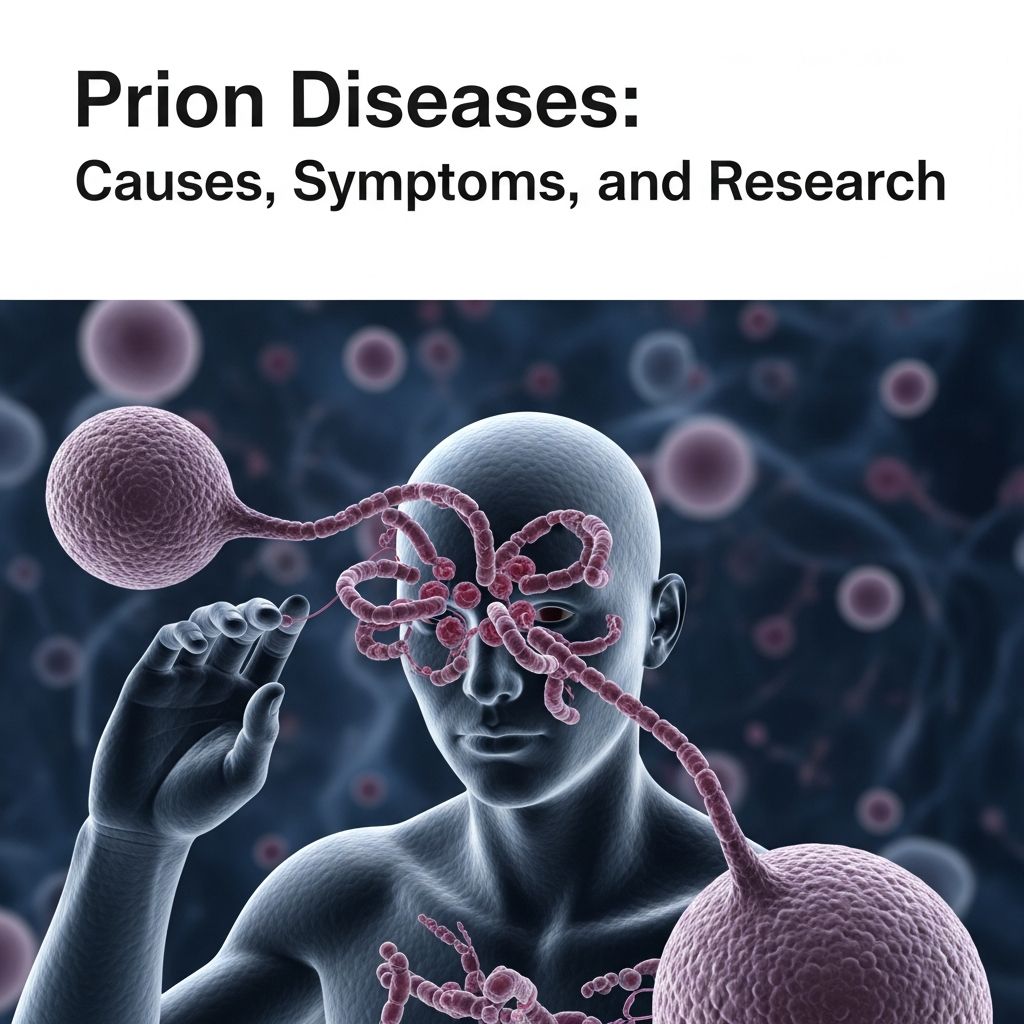
Prion diseases, also known as transmissible spongiform encephalopathies (TSEs), are a group of rare, progressive, and invariably fatal neurodegenerative disorders. These diseases are caused by abnormal, misfolded proteins called prions, which can transmit their misfolded shape onto normal variants of the same protein, leading to brain damage and cell death. Unlike other infectious agents, prions do not contain nucleic acids such as DNA or RNA, making them unique in the world of pathogens.
Types of Prion Diseases
- Creutzfeldt-Jakob Disease (CJD): The most common human prion disease, characterized by rapid dementia, motor dysfunction, and fatal progression within a year.
- Variant CJD (vCJD): Linked to consumption of beef infected with bovine spongiform encephalopathy (BSE), also known as “mad cow disease.”
- Kuru: Historically found in the Fore people of Papua New Guinea, associated with ritualistic cannibalism.
- Gerstmann-Sträussler-Scheinker Syndrome (GSS): A rare, inherited prion disease with a slower progression.
- Fatal Familial Insomnia (FFI): An inherited prion disease characterized by progressive insomnia and autonomic dysfunction.
- Animal Prion Diseases: Include scrapie in sheep, chronic wasting disease in deer and elk, and BSE in cattle.
Causes and Transmission
Prion diseases can arise through several mechanisms:
- Sporadic: Most cases of CJD occur sporadically, with no known cause or risk factors.
- Inherited: About 10-15% of cases are inherited due to mutations in the prion protein gene (PRNP).
- Acquired: Transmission can occur through medical procedures (iatrogenic), consumption of infected material (dietary), or exposure to contaminated tissue.
The spread of prion diseases is facilitated by the unique ability of prions to induce normal proteins to misfold, leading to a chain reaction of protein aggregation and neurodegeneration. The transmission routes vary by disease and species, making risk assessment and prediction challenging.
Symptoms and Progression
The clinical presentation of prion diseases is highly variable but typically includes:
- Rapid cognitive decline and dementia
- Movement disorders (ataxia, myoclonus)
- Behavioral and psychiatric changes
- Sleep disturbances (especially in FFI)
- Visual and sensory disturbances
- Progressive neurological deterioration leading to death
The incubation period can range from months to years, but once symptoms appear, the disease progresses rapidly, often leading to death within a year.
Diagnosis
Diagnosing prion diseases is challenging due to the lack of specific biomarkers and the rapid progression of symptoms. Diagnostic approaches include:
- Detailed medical history and neurological examination
- Brain imaging (MRI, CT) to detect characteristic changes
- Cerebrospinal fluid analysis for specific proteins (e.g., 14-3-3 protein)
- Electroencephalography (EEG) to detect periodic sharp wave complexes
- Genetic testing for PRNP mutations in suspected inherited cases
- Definitive diagnosis often requires brain biopsy or autopsy
Treatment and Management
There is currently no cure for prion diseases. Treatment is primarily supportive and aimed at managing symptoms and improving quality of life. Palliative care is essential to address pain, discomfort, and psychological distress. Research into potential therapies is ongoing, but no effective treatments have been established.
Prevention
Preventing prion diseases involves several strategies:
- Strict control of animal feed to prevent BSE and chronic wasting disease
- Proper sterilization of surgical instruments and medical equipment
- Screening of blood and tissue donors
- Public health measures to prevent dietary exposure
- Genetic counseling for families with inherited prion diseases
Research and Future Directions
Related Stories



Research into prion diseases is focused on understanding the molecular mechanisms of prion propagation, developing diagnostic tools, and exploring potential therapeutic interventions. Advances in protein misfolding and aggregation, as well as the development of animal models, are providing new insights into these complex disorders.
Frequently Asked Questions (FAQs)
Q: What causes prion diseases?
A: Prion diseases are caused by abnormal, misfolded proteins called prions that can induce normal proteins to misfold, leading to brain damage and cell death.
Q: How are prion diseases transmitted?
A: Prion diseases can be transmitted through sporadic, inherited, or acquired routes, including medical procedures, consumption of infected material, and exposure to contaminated tissue.
Q: What are the symptoms of prion diseases?
A: Symptoms include rapid cognitive decline, movement disorders, behavioral changes, sleep disturbances, and progressive neurological deterioration.
Q: Is there a cure for prion diseases?
A: There is currently no cure for prion diseases. Treatment is supportive and aimed at managing symptoms and improving quality of life.
Q: How can prion diseases be prevented?
A: Prevention strategies include strict control of animal feed, proper sterilization of medical equipment, screening of donors, and public health measures to prevent dietary exposure.
References
- Cellular and Molecular Mechanisms of Prion Disease — PMC. 2022-05-01. https://pmc.ncbi.nlm.nih.gov/articles/PMC9071098/
- Prion diseases – Johns Hopkins University — Lancet Neurology. 2005-10. https://pure.johnshopkins.edu/en/publications/prion-diseases-13
- Prion diseases – PubMed — PubMed. 2005-09-01. https://pubmed.ncbi.nlm.nih.gov/16168932/
Similar Articles








Read full bio of medha deb