Probiotics Beyond Yogurt: Delicious Fermented Foods
Discover tasty probiotic-rich foods beyond yogurt to support your gut health.
Want Probiotics But Dislike Yogurt? Try These Foods
If you’re seeking to improve your gut health through probiotics but find yogurt unappealing, you’re not alone. Many people avoid yogurt due to lactose intolerance, taste preferences, dietary restrictions, or simply wanting variety in their diet. The good news is that probiotics—beneficial live bacteria and yeasts that support digestive health—are found in numerous delicious fermented foods beyond the typical yogurt cup. Understanding these alternatives can help you incorporate beneficial microorganisms into your daily meals while enjoying flavors and textures you actually love.
Understanding Probiotics and Their Health Benefits
Probiotics are live microorganisms that provide health benefits when consumed in adequate amounts. These beneficial bacteria and yeasts work in your digestive system to promote a healthy gut microbiome, which plays a crucial role in overall wellness. A 2021 review of over 100 studies linked yogurt and other probiotic-containing foods to potential benefits such as improved gut, bone, and heart health, lower risk of certain cancers, and reduced risk of type 2 diabetes.
The fermentation process used to create many probiotic foods involves beneficial bacteria converting sugars into lactic acid, which preserves the food and creates an environment where these microbes can thrive. This ancient preservation method has been used for thousands of years across various cultures, and modern research continues to validate its health-promoting properties.
Top Probiotic Food Alternatives to Yogurt
1. Kefir: The Powerful Fermented Milk Alternative
Kefir is a fermented milk beverage that offers probiotic benefits similar to yogurt but with a thinner consistency and tangy flavor. Like cheese and yogurt, kefir is a form of fermented milk, but it provides an extra probiotic boost because the microbes used in production can continue to multiply during storage. This means kefir often contains a greater diversity and quantity of beneficial bacteria compared to yogurt.
Available in dairy and non-dairy versions, kefir can be consumed as a beverage, blended into smoothies, or used as a base for salad dressings and marinades. For those avoiding dairy, coconut kefir and water kefir offer excellent alternatives while maintaining probiotic properties. The versatility of kefir makes it easy to incorporate into your daily routine in ways that suit your preferences.
2. Aged Cheeses: Delicious Probiotic Sources
Many aged cheeses contain probiotic properties that may benefit gut health and cholesterol levels. Cheesemakers use live bacteria to convert lactose into lactic acid during production. To preserve the beneficial bacteria, it’s important to choose cheeses that have aged but not been heated, as heat can kill off these beneficial microorganisms.
The best cheese-based sources of probiotics include:
- Swiss cheese
- Provolone
- Aged cheddar
- Gouda
- Edam
- Gruyère
- Parmesan
- Blue cheeses like Stilton
While cottage cheese can contain live cultures, ensure the label specifically states “live cultures” to guarantee probiotic content. These cheeses can be enjoyed on their own, paired with whole grains, incorporated into recipes, or included in cheese boards for entertaining.
3. Kombucha: The Fermented Tea Beverage
Kombucha is a fermented tea drink created through the fermentation of sweet tea using a symbiotic culture of bacteria and yeast (SCOBY). This fizzy beverage has gained popularity as a flavorful way to consume probiotics, with countless flavor variations available commercially. The fermentation process creates beneficial acids and probiotics while giving kombucha its characteristic tangy taste and slight effervescence.
Related Stories



Available in various flavors and brands, kombucha can be enjoyed as a refreshing beverage on its own or used in cocktails and mocktails. When selecting kombucha, look for products with “live cultures” on the label, as some commercially available versions may be pasteurized, which eliminates the beneficial bacteria.
4. Miso: The Umami-Rich Fermented Paste
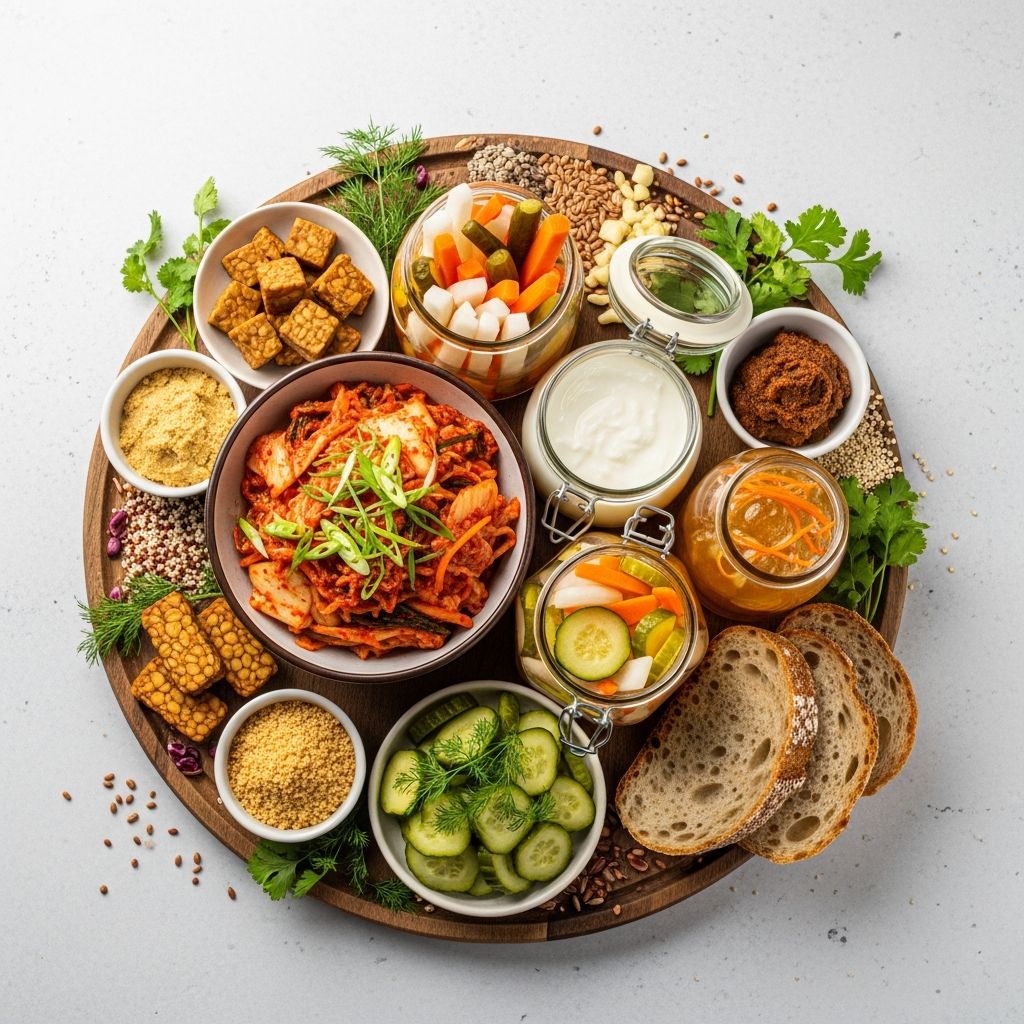
Originating in Japan, miso is a fermented soybean paste created by fermenting soybeans with a culture called koji. Beyond its traditional use in soups, miso adds an umami earthiness to numerous dishes. The fermentation duration affects miso’s characteristics—longer fermentation results in darker color and more intense flavor. Miso pastes range from mild and sweet to deeply savory, providing options for various culinary applications.
Miso can enhance salads, stir-fries, marinades, dressings, and even baked goods. A simple miso soup offers an easy introduction to this probiotic-rich ingredient, while more adventurous cooks can experiment with miso in desserts and unconventional recipes. When using miso, add it toward the end of cooking or dissolve it in cool liquid before adding to hot dishes to preserve its beneficial bacteria.
5. Tempeh: The Versatile Fermented Soybean Alternative
Believed to have originated in Indonesia many millennia ago, tempeh consists of slightly fermented soybeans, creating a firmer texture and milder flavor compared to miso. This versatility makes tempeh an excellent meat substitute in various cuisines. The soybeans are only slightly fermented, so the flavor isn’t too intense, allowing it to absorb surrounding flavors in recipes.
Tempeh can be crumbled into stir-fries, cooked as a veggie burger, baked in casseroles, marinated and grilled, or added to salads and grain bowls. Its firm texture holds up well to cooking methods that might break down softer tofu, making it ideal for those seeking texture in their plant-based meals while gaining probiotic benefits.
6. Kimchi: The Spicy Korean Fermented Vegetable
A traditional Korean treasure, kimchi involves fermenting vegetables with herbs and spices. The typical ingredients include ginger, garlic, chili peppers, salt, sugar, and onions, creating a complex flavor profile that’s both spicy and savory. This fermented vegetable provides probiotics through the natural fermentation process, which preserves and cultivates beneficial bacteria.
Kimchi can be eaten by itself as a side dish (banchan), paired with rice and grains, served alongside chicken, or incorporated into stews, scrambled eggs, and sauces. However, cooking kimchi may kill the probiotic bacteria, so for maximum probiotic benefit, consume it raw or add it at the end of cooking. Homemade kimchi offers the added advantage of controlling ingredients and fermentation length to suit your taste preferences.
7. Sauerkraut: The Lactic Acid Fermented Cabbage
Despite its German name, sauerkraut originated in China and represents a special source of lactic acid-producing bacteria. Similar to kimchi, sauerkraut is a form of fermented cabbage, but prepared with simpler ingredients—typically just cabbage and salt. Sauerkraut is particularly valuable because raw and uncooked versions maintain their full probiotic content and lactic acid benefits that may help reduce inflammation.
Sauerkraut works wonderfully as a condiment on hot dogs, sandwiches, and tacos, as a side dish for main courses, or mixed into grain bowls and salads. The sourness of sauerkraut complements rich foods and can aid digestion when consumed with meals. When purchasing sauerkraut, select unpasteurized, refrigerated versions to ensure you’re getting living probiotics rather than a pasteurized product.
Making the Most of Your Probiotic Foods
Combining Probiotics with Prebiotics
While probiotic foods are powerful additions to a healthy diet, they work best as part of a comprehensive nutritional approach. Prebiotics—types of fiber that feed beneficial bacteria—are equally important for a thriving microbiome. The American Gut Project found that people who eat 30 plants per week have greater microbiome diversity than those eating only 10 plants weekly.
Eating plenty of prebiotic fiber from plants provides the beneficial bugs with the food they need to thrive. Combining probiotic foods with prebiotic-rich options like whole grains, legumes, fruits, and vegetables creates an optimal environment for these microorganisms to flourish.
Storage and Consumption Tips
To maximize probiotic benefits, store fermented foods properly and consume them strategically. Most fermented foods should be refrigerated to slow bacterial activity and maintain viability. Unpasteurized varieties require refrigeration for optimal probiotic preservation. When incorporating these foods into meals, consider adding them at the end of cooking or consuming them raw to protect beneficial bacteria from heat damage.
Comparative Guide: Probiotic Foods at a Glance
| Food | Dairy/Non-Dairy | Flavor Profile | Best Uses | Storage |
|---|---|---|---|---|
| Kefir | Both | Tangy, creamy | Beverage, smoothies, dressings | Refrigerated |
| Aged Cheese | Dairy | Complex, varied | Snacks, boards, cooking | Cool, dry place |
| Kombucha | Non-dairy | Tangy, fizzy, fruity | Beverage, cocktails | Refrigerated |
| Miso | Non-dairy | Umami, earthy | Soups, dressings, marinades | Cool, dry place |
| Tempeh | Non-dairy | Mild, nutty | Meat substitute, stir-fries | Refrigerated |
| Kimchi | Non-dairy | Spicy, savory | Side dish, condiment, cooking | Refrigerated |
| Sauerkraut | Non-dairy | Sour, tangy | Condiment, side dish, bowls | Refrigerated (unpasteurized) |
Frequently Asked Questions
Q: How much probiotic food should I eat daily?
A: There’s no strict daily requirement, but incorporating a serving of fermented food—such as a cup of kefir, a tablespoon of miso in soup, a quarter-cup of kimchi, or a small portion of sauerkraut—can provide beneficial bacteria. Consistency matters more than quantity, so daily small portions are preferable to occasional large amounts.
Q: Are all commercial probiotic foods equally beneficial?
A: No, pasteurized fermented foods may lack live cultures. Look for products labeled with “live cultures,” “unpasteurized,” or “refrigerated” to ensure you’re getting active probiotics. Some commercial products have added probiotics after production, which may be less robust than naturally fermented options.
Q: Can I make my own fermented foods?
A: Yes, homemade fermentation is increasingly popular and straightforward. Simple projects like sauerkraut and kimchi require just vegetables, salt, and time. Homemade versions often contain higher probiotic counts than commercial alternatives and allow you to control ingredients and fermentation intensity.
Q: Are there any risks associated with consuming probiotics?
A: For most healthy individuals, probiotic foods are safe. However, those with compromised immune systems or certain medical conditions should consult healthcare providers. Additionally, some people may experience temporary digestive adjustments when first introducing fermented foods; starting with small amounts can minimize this effect.
Q: Which probiotic food is best for beginners?
A: Kefir and kombucha are often approachable for beginners since they’re consumed as beverages. Alternatively, aged cheeses present a low-risk entry point. Start with small portions to assess tolerance and gradually increase consumption as your body adapts.
Getting Started With Probiotic Foods
Whether you add some kefir and kombucha to your breakfast, try a new aged cheese in a sandwich, or incorporate sauerkraut, miso, tempeh, or kimchi into dinner plans, numerous probiotic foods await exploration. The key to success is finding options that align with your taste preferences and dietary needs, making it sustainable to include them regularly in your diet.
Begin by selecting one or two options that appeal to you most. Perhaps you enjoy the creamy tanginess of kefir, the umami depth of miso, or the spicy kick of kimchi. Once comfortable, gradually expand your probiotic repertoire to enjoy diverse beneficial bacteria and varied flavors.
Remember that probiotics are potentially powerful components of gut health, but they represent just one piece of the larger wellness puzzle. Combining fermented foods with prebiotic fiber, adequate hydration, regular physical activity, stress management, and overall balanced nutrition creates the optimal environment for digestive health and overall wellbeing.
Conclusion: A World of Probiotic Possibilities
If yogurt has never been your cup of tea—or if you’re simply seeking variety in your probiotic intake—the world of fermented foods offers abundant delicious alternatives. From the creamy tang of kefir to the complex umami of miso, the spicy crunch of kimchi to the subtle earthiness of tempeh, each probiotic food brings unique flavors and textures to your plate while supporting your digestive health.
These foods can play a key role as part of a balanced, nutritious diet, potentially helping you manage gut and heart health, improve immune responses, and manage blood sugar and fat levels. By exploring and incorporating these diverse fermented foods into your daily meals, you’re taking a flavorful and practical step toward better long-term health.
References
- The best probiotic foods to include in your diet — ZOE. Updated November 10, 2025. https://zoe.com/learn/best-probiotic-foods
Similar Articles








Read full bio of medha deb