Progesterone: Cyclogest and Utrogestan Guide
Complete guide to progesterone treatments: understand Cyclogest and Utrogestan formulations.
About Progesterone
Progesterone is a natural female sex hormone that plays a crucial role in regulating the menstrual cycle and maintaining pregnancy. It is produced naturally in the body by the ovaries after ovulation, and levels increase significantly after conception to support the developing pregnancy. When progesterone levels are insufficient or absent, medical supplementation becomes necessary to address various gynaecological conditions.
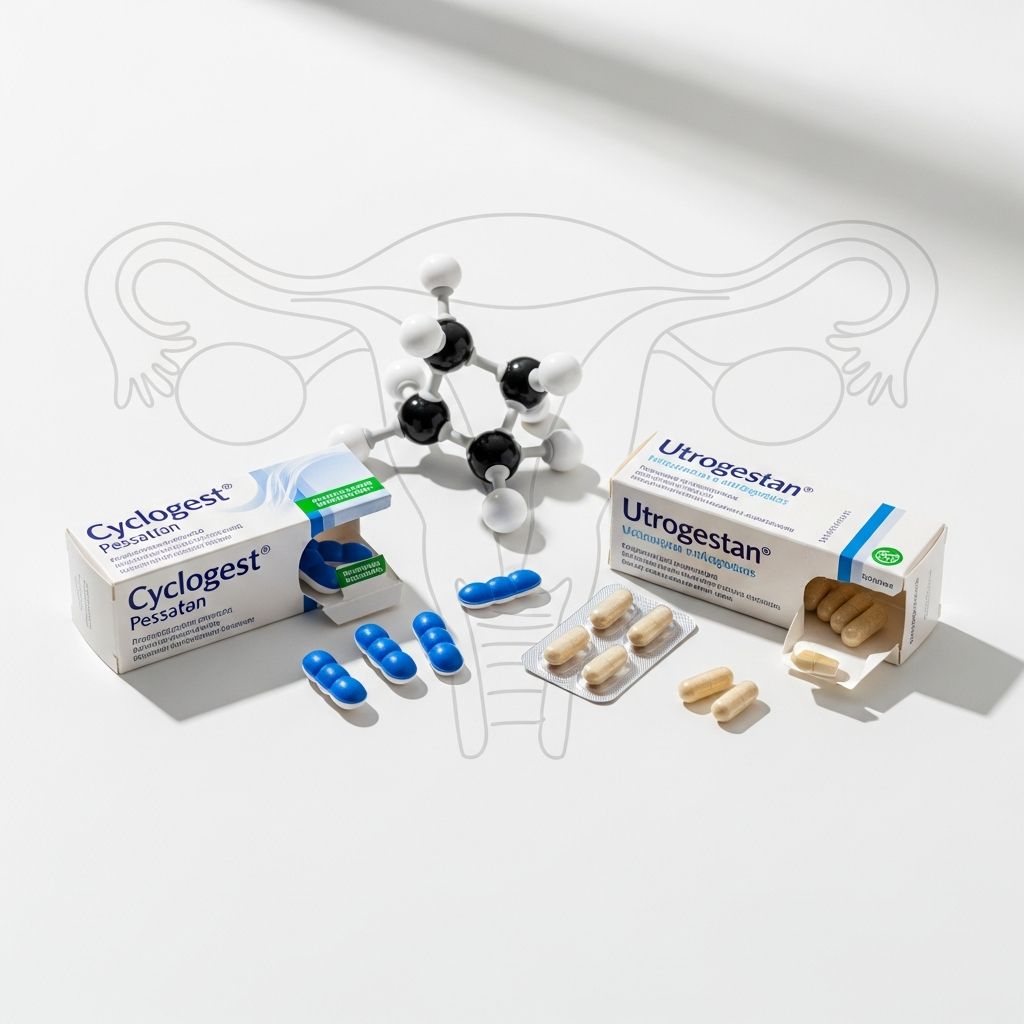
Progesterone is available in several formulations designed for different medical purposes and routes of administration. The most commonly prescribed versions are Cyclogest pessaries and Utrogestan capsules, both of which deliver micronised progesterone directly to the vaginal tissue. These medications work by adjusting the balance of your body’s own hormones and supplementing naturally produced progesterone for specific medical reasons determined by your healthcare provider.
Type and Uses
Progesterone is classified as a progestogen medication and is utilized for a variety of gynaecological problems. The primary uses include:
- Supporting infertility treatment and assisted reproductive technology (ART) cycles
- Maintaining early pregnancy after assisted conception procedures
- Hormone replacement therapy (HRT) in menopausal women
- Preventing endometrial complications in women receiving oestrogen-only HRT
- Managing luteal phase insufficiency in natural cycles
Available Formulations
Progesterone is available in multiple formulations, each serving specific clinical purposes:
- Utrogestan®: Available as 100 mg oral capsules and 200 mg vaginal capsules
- Cyclogest®: Available as 200 mg and 400 mg vaginal pessaries
- Crinone®: An 8% vaginal gel formulation
- Lubion®: An intramuscular injection for those unable to use vaginal preparations
- Lutigest®: 100 mg vaginal tablets
Each formulation is prescribed for different gynaecological reasons, and your healthcare provider will determine which formulation is most appropriate for your individual circumstances. It is important to follow the printed information provided by your doctor and the manufacturer for the specific formulation prescribed to you.
Dosage and Administration
The dosage and administration of progesterone varies depending on the formulation prescribed and the clinical indication being treated. Understanding the correct dosing regimen is essential for treatment effectiveness.
Utrogestan® Dosage
Utrogestan vaginal capsules are administered at a dose of 200 mg, typically prescribed as three times daily dosing. This results in a total daily dose of 600 mg. The capsules are small and designed for comfortable vaginal insertion. In some fertility treatment protocols, particularly hormone replacement therapy for frozen embryo transfer cycles, Utrogestan may be prescribed at 400 mg twice daily, providing a total daily dose of 800 mg.
Cyclogest® Dosage
Cyclogest pessaries are available in 200 mg and 400 mg formulations. The standard dosing for most clinical uses is 400 mg administered twice daily, providing a total daily dose of 800 mg. Cyclogest can be administered vaginally or rectally, offering flexibility for patients who may have difficulty with vaginal administration. The pessaries are round or oval in shape and are designed to be comfortable for insertion.
Duration of Treatment
The length of progesterone treatment depends on the clinical indication. For early pregnancy support following assisted conception, progesterone is typically continued until 16 weeks of pregnancy, starting from confirmation of a normally sited pregnancy on ultrasound scan. In fertility treatment cycles, progesterone support is initiated on the day of egg retrieval or embryo transfer and continued for the appropriate duration as determined by your fertility specialist.
Related Stories



Comparison: Utrogestan Versus Cyclogest
While both Utrogestan and Cyclogest contain progesterone, they represent different formulations with distinct administration profiles and clinical outcomes. Recent research comparing these two medications has provided important insights into their relative effectiveness.
| Feature | Utrogestan® | Cyclogest® |
|---|---|---|
| Formulation | Micronised progesterone vaginal capsules | Progesterone vaginal pessaries |
| Standard Dose | 200 mg three times daily (600 mg total) | 400 mg twice daily (800 mg total) |
| Administration Route | Vaginal only | Vaginal or rectal |
| Clinical Pregnancy Rate (IVF) | 47.6% | 42.4% |
| Live Birth Rate Advantage | 11% higher for fresh IVF cycles | Baseline comparison |
A large comparative study involving over 17,900 assisted reproductive treatment cycles demonstrated that Utrogestan produced higher clinical pregnancy rates and live birth rates compared to Cyclogest in both fresh IVF/ICSI cycles and hormone replacement therapy frozen embryo transfer cycles. Despite receiving a lower total daily dose (600 mg versus 800 mg), patients using Utrogestan experienced an 8% increase in clinical pregnancy rates and an 11% increase in live birth rates compared to those using Cyclogest in fresh cycles. In frozen embryo transfer cycles using hormone replacement therapy, both medications were dosed equally at 400 mg twice daily, yet Utrogestan still demonstrated superior clinical pregnancy rates and reduced miscarriage rates.
How Progesterone Works
Progesterone works by adjusting the balance of your body’s natural hormones to create the optimal environment for pregnancy support and endometrial protection. The hormone acts on the endometrium, the lining of the uterus, by promoting the secretory transformation necessary for embryo implantation and pregnancy maintenance.
Vaginal formulations such as Utrogestan and Cyclogest deliver progesterone directly to the uterus through the vaginal tissue, ensuring adequate hormone levels at the site of action. This localized delivery method provides efficient absorption and high local concentrations of progesterone within the reproductive tract. The micronised form of progesterone in Utrogestan demonstrates more stable plasma levels and a higher area under the curve (AUC) compared to conventional formulations, suggesting potentially superior pharmacodynamic properties.
Important Precautions and Warnings
Before using progesterone medications, it is essential to inform your healthcare provider about any medical conditions you may have or medications you are currently taking. Progesterone should be used with caution in certain clinical situations:
- Inform your doctor if you have a history of blood clots or thromboembolic disease
- Discuss any liver problems or previous adverse reactions to progestogens
- Mention if you are allergic to peanuts or soya, as some formulations may contain these allergens
- Report any abnormal vaginal bleeding not explained by your treatment
- Inform your healthcare provider if you are breastfeeding, as progesterone passes into breast milk
Side Effects and Tolerability
Most women tolerate progesterone medications well, though some side effects may occur. Common side effects associated with vaginal progesterone formulations include:
- Vaginal irritation or discharge
- Mild bleeding or spotting
- Abdominal discomfort or bloating
- Breast tenderness
- Headaches or dizziness
- Mild nausea
- Mood changes or emotional sensitivity
Most side effects are mild and tend to diminish with continued use as your body adjusts to the medication. If you experience severe or persistent side effects, contact your healthcare provider immediately. Patient surveys indicate that progesterone vaginal tablets are generally perceived as more convenient and comfortable to use compared with progesterone pessaries, though individual experiences vary.
Storage and Handling
Proper storage of progesterone medications is important to maintain their stability and effectiveness. Utrogestan and Cyclogest should be stored at room temperature, typically between 15-25°C (59-77°F), away from moisture and direct sunlight. Keep these medications in their original packaging and away from the reach of children. Do not use progesterone medications after the expiration date printed on the package.
Practical Tips for Administration
To ensure optimal absorption and comfort when using vaginal progesterone formulations:
- Wash your hands before and after insertion
- Insert the pessary or capsule as far back into the vagina as comfortably possible, preferably in the evening before bed
- Remain in a reclined position for a few minutes after insertion to allow proper absorption
- Avoid using other vaginal products or douching within two hours of insertion
- If using Cyclogest rectally, insert gently into the rectum as directed by your healthcare provider
- Set a reminder on your phone or use a pill organizer to maintain consistent dosing schedules
Interaction with Other Medications
Progesterone may interact with certain medications. Inform your healthcare provider about all medications, supplements, and herbal products you are taking. While vaginal formulations have minimal systemic absorption compared to oral progesterone, it is still important to discuss potential interactions, particularly with medications that affect liver metabolism or blood clotting.
Obtaining Your Prescription
The initial prescription for progesterone is typically provided by your fertility specialist, gynaecologist, or early pregnancy unit. For ongoing prescriptions, particularly for extended treatment periods, you should obtain refills from your general practitioner (GP). Your healthcare provider will specify the exact formulation, dose, and duration of treatment based on your individual clinical circumstances. Do not adjust your dose or discontinue treatment without consulting your healthcare provider, as premature cessation may compromise treatment outcomes.
Frequently Asked Questions
Q: What is the difference between Utrogestan and Cyclogest?
A: Both medications contain progesterone but differ in formulation and dosing. Utrogestan comes as 200 mg vaginal capsules typically given three times daily, while Cyclogest comes as 400 mg pessaries given twice daily. Recent research shows Utrogestan produces higher pregnancy and live birth rates in assisted reproductive treatment cycles.
Q: How long will I need to take progesterone?
A: The duration depends on your clinical situation. For early pregnancy support after assisted conception, you typically continue until 16 weeks of pregnancy. Your healthcare provider will advise you on the specific duration for your treatment.
Q: Can I use progesterone if I am breastfeeding?
A: Progesterone does pass into breast milk. Discuss this with your healthcare provider, who will determine whether progesterone is safe for you while breastfeeding based on your individual circumstances.
Q: What should I do if I forget a dose?
A: Take the missed dose as soon as you remember, unless it is nearly time for your next dose. Do not double the dose to make up for a missed one. Contact your healthcare provider if you consistently have difficulty remembering doses.
Q: Are there any foods or activities that affect progesterone absorption?
A: Avoid using other vaginal products, douches, or tampons within two hours of inserting vaginal progesterone. These could interfere with absorption. Sexual intercourse is generally acceptable but may cause minor discomfort due to vaginal irritation from the medication.
Q: What if I experience side effects?
A: Most side effects are mild and resolve with continued use. If you experience severe or concerning symptoms, contact your healthcare provider. Do not stop taking progesterone without medical advice unless instructed by your doctor.
Q: Can progesterone cause blood clots?
A: While oral progesterone can slightly increase thrombotic risk, vaginal formulations like Utrogestan and Cyclogest have minimal systemic absorption and carry lower risks. Discuss any concerns about blood clots with your healthcare provider, especially if you have a personal or family history of thromboembolism.
Q: Is progesterone safe during early pregnancy?
A: Yes, progesterone supplementation in early pregnancy is considered safe and is routinely used to support pregnancies following assisted reproductive treatment and in cases of progesterone insufficiency.
References
- A comparison of progesterone via vaginal oil capsules versus pessaries for luteal phase support in fresh and frozen-thawed assisted reproductive treatment cycles — Human Reproduction, Oxford University Press. 2025-01-10. https://academic.oup.com/humrep/article/41/1/59/8340009
- Progesterone treatment in early pregnancy — Royal Free NHS Trust. https://www.royalfree.nhs.uk/patients-and-visitors/patient-information-leaflets/progesterone-treatment-early-pregnancy
- Micronised progesterone vaginal capsules 200mg: Scottish Medicines Consortium Assessment — Scottish Medicines Consortium. 2017-04-12. https://scottishmedicines.org.uk/media/2001/micronised_progesterone_utrogestan_vaginal_final_april_2017_amended_120417_for_website.pdf
- Progestogens and endometrial protection — British Menopause Society. 2023-04. https://thebms.org.uk/wp-content/uploads/2023/04/14-BMS-TfC-Progestogens-and-endometrial-protection-APR2023-A.pdf
- IVF Pessaries: How to Use Them & What are the Side Effects to Know — Hull & East Riding Fertility. 2024-11-05. https://www.hulleastridingfertility.co.uk/2024/11/05/ivf-pessaries-how-to-use-them-and-what-are-the-side-effects/
- A questionnaire-based audit to assess overall experience and tolerability of progesterone vaginal tablets in comparison to progesterone pessaries — National Center for Biotechnology Information. 2017. https://pmc.ncbi.nlm.nih.gov/articles/PMC5726362/
Similar Articles








Read full bio of medha deb