Progesterone: Natural Function, Levels & Side Effects
Understanding progesterone's crucial role in menstruation, pregnancy, and hormonal health.
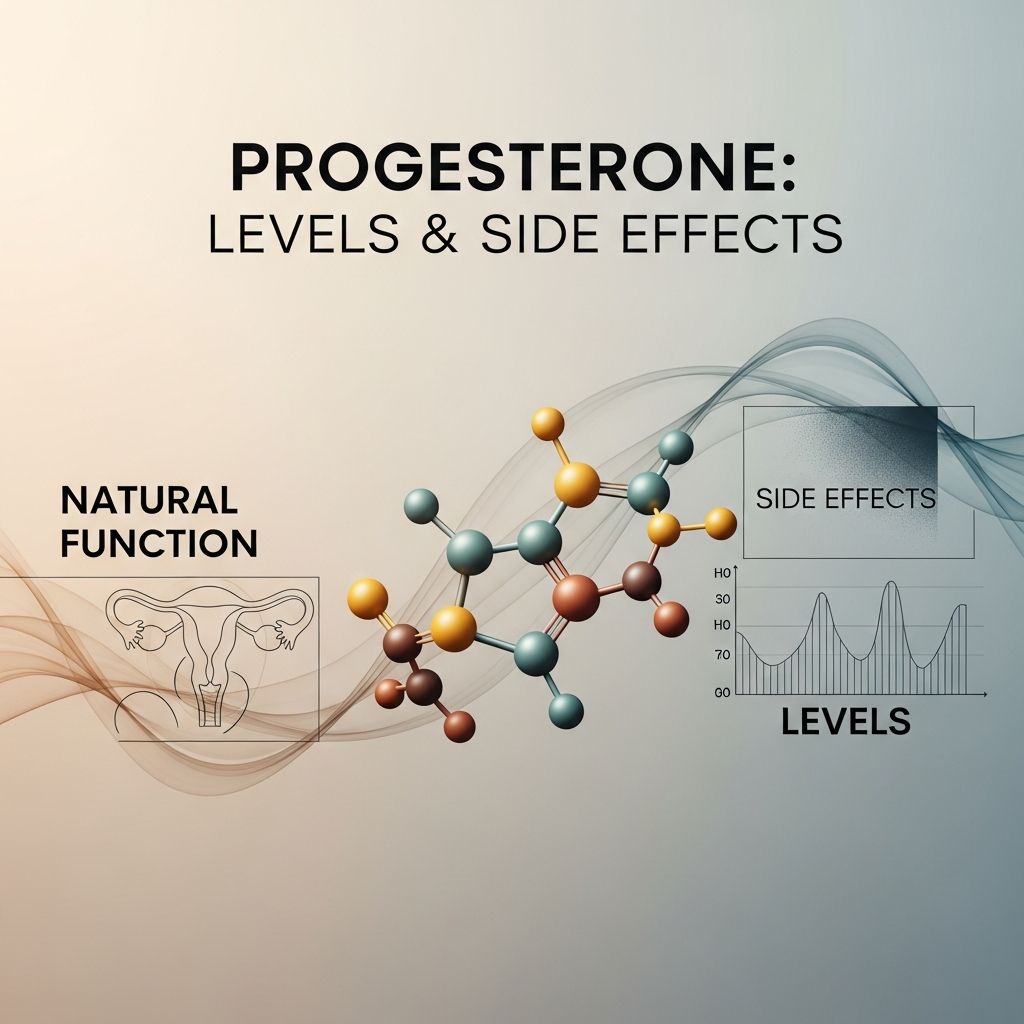
Progesterone is a critical hormone that plays a vital role in your reproductive system and overall health. As a chemical messenger, progesterone communicates with your body to regulate essential functions related to menstruation and pregnancy. In females, progesterone supports the menstrual cycle and helps maintain the early stages of pregnancy. Understanding how this hormone works, what normal levels should be, and recognizing signs of deficiency can help you maintain optimal reproductive health and address potential complications before they arise.
What Is Progesterone?
Progesterone is a sex hormone produced primarily by your ovaries, specifically from a temporary gland called the corpus luteum. This hormone belongs to a class of hormones known as steroid hormones and serves multiple functions throughout your menstrual cycle and during pregnancy. Beyond reproductive health, progesterone also influences mood, metabolism, and bone density. The hormone works synergistically with estrogen, another critical reproductive hormone, to regulate numerous body processes and maintain hormonal balance.
How Progesterone Works in Your Body
The production and function of progesterone varies depending on where you are in your menstrual cycle. After ovulation occurs—when your ovary releases an egg—the empty egg follicle transforms into the corpus luteum, which immediately begins producing progesterone. This temporary gland is specifically designed to support the beginning of a pregnancy if conception occurs during that cycle.
Progesterone works by thickening your uterine lining and creating a nutrient-rich environment suitable for a fertilized egg to implant. If an egg isn’t fertilized during that cycle, the corpus luteum breaks down, which decreases progesterone levels. This decline in progesterone triggers your uterine lining to thin and break down, causing the beginning of your menstrual period.
However, if an egg is fertilized by sperm and conception occurs, the corpus luteum doesn’t break down. Instead, it continues to produce more progesterone to maintain the thick, vascularized uterine lining. This rich lining provides essential nutrients for the developing embryo. Once the placenta forms during pregnancy, it takes over progesterone production, ensuring sustained hormone levels throughout gestation.
Progesterone Levels Throughout the Menstrual Cycle
Progesterone levels fluctuate significantly throughout your menstrual cycle, and understanding these variations is important for recognizing normal versus abnormal patterns.
Follicular Phase
During the follicular phase, which comprises the first half of your menstrual cycle, progesterone levels remain low—typically less than 2 nanograms per milliliter (ng/mL) of blood. Your body is preparing the egg for ovulation during this phase.
Ovulation and Luteal Phase
At ovulation, progesterone levels rise significantly. Progesterone peaks approximately one week after ovulation, during the luteal phase of your cycle, reaching levels around 20 ng/mL. If you’re not pregnant, progesterone levels then drop, and you can expect to get your period within a few days.
Pregnancy
If you’ve conceived during that menstrual cycle, progesterone levels continue to increase substantially. During the first trimester of pregnancy (up until the 13th week), progesterone levels can reach as high as 90 ng/mL. By the time you enter your third trimester (weeks 28 to 40), progesterone levels may reach as high as 300 ng/mL. Progesterone levels are typically even higher if you’re expecting multiples.
Related Stories



Aging and Menopause
Like other reproductive hormones, progesterone levels decrease as you age and enter menopause. Progesterone levels decline in the years leading up to menopause, when ovulation stops. After menopause, your progesterone levels may fall below 0.5 ng/mL.
Progesterone’s Role in Pregnancy
Progesterone is absolutely critical in supporting a healthy pregnancy from conception through delivery. The hormone performs several essential functions that enable successful pregnancy:
- Thickens the uterine lining to support embryo implantation and fetal development
- Maintains a rich blood supply to the uterus, providing nutrients for the developing fetus
- Prevents your body from ovulating while you’re pregnant
- Suppresses uterine contractions, helping you avoid preterm labor
- Prepares your breasts for breastfeeding by helping mammary glands develop
Because progesterone is so important in maintaining the early stages of pregnancy, low progesterone levels may make it difficult for you to conceive and may put you at higher risk for miscarriage. If progesterone levels drop too low during pregnancy, you face increased risks for bleeding and other serious complications.
Low Progesterone: Causes and Complications
Several factors can contribute to low progesterone levels, and the consequences can significantly affect your reproductive health and overall well-being. If you have low progesterone, you’re at risk for several pregnancy complications, including:
- Ectopic pregnancy (pregnancy outside the uterus)
- Miscarriage
- Preterm labor and delivery
- Inadequate uterine lining development
Low progesterone also affects non-pregnant individuals. When progesterone levels are insufficient, estrogen dominates, and your body’s processes aren’t properly regulated. When this hormonal imbalance occurs, you could experience irregular menstrual periods, heavy bleeding, mood changes including depression and anxiety, reduced sex drive, weight gain, and difficulty concentrating.
Progesterone and Estrogen Balance
Progesterone and estrogen function like hormonal teammates in your body, working together to regulate menstruation and other critical body processes. These two hormones maintain a delicate balance that, when disrupted, can cause numerous health issues. When estrogen levels are too high relative to progesterone—a condition called estrogen dominance—your body may experience irregular periods, heavy menstrual bleeding, mood swings, water retention, and breast tenderness.
The relationship between these hormones is so important that they work together in combination hormone replacement therapy (HRT), which treats symptoms of menopause. They also work together in certain oral contraceptives (birth control pills) to prevent pregnancy by regulating your menstrual cycle and preventing ovulation.
Testing Progesterone Levels
A blood test called a PGSN or progesterone test can measure your progesterone levels and is most commonly used to determine ovulation or diagnose fertility issues. However, you cannot check progesterone levels at home—only your healthcare provider can perform this test using a blood sample.
Progesterone levels fluctuate throughout your cycle, and there’s a wide range of acceptable normal levels. Your healthcare provider is the best person to determine what your progesterone level should be depending on where you are in your menstrual cycle or if you’re pregnant. If you’re trying to conceive and have issues with ovulation or regular menstruation, your healthcare provider may measure your progesterone levels to identify potential problems.
When You Might Need Progesterone Supplements
Some women need to take progesterone supplements to address deficiencies or support specific health goals. Your healthcare provider may prescribe progesterone if you:
- Have irregular menstrual periods or absent periods
- Are struggling with infertility or have difficulty maintaining a pregnancy
- Have a history of miscarriage
- Are experiencing symptoms of low progesterone
- Are undergoing fertility treatments that require hormonal support
Progesterone and Menopause
As you begin to transition into menopause, your ovaries no longer produce high levels of estrogen and progesterone. Changes in these hormone levels can cause uncomfortable symptoms affecting your quality of life. Common menopause symptoms include hot flashes, night sweats, vaginal dryness, mood changes, sleep disturbances, and weight gain.
Your healthcare provider may recommend estrogen-progesterone hormone therapy (EPT), also called combination therapy, to relieve these symptoms. This form of hormone therapy combines estrogen and progesterone to replace the hormones your body is no longer producing, helping to normalize hormone levels and reduce uncomfortable symptoms. The combination approach is particularly important because progesterone protects the uterine lining from overstimulation by estrogen, reducing certain health risks associated with estrogen-only therapy.
Key Functions of Progesterone
Progesterone performs multiple critical functions throughout your body:
- Regulates your menstrual cycle by thickening the uterine lining
- Supports pregnancy by maintaining a nutrient-rich uterine environment
- Prevents premature labor by suppressing uterine contractions
- Prepares breasts for lactation and breastfeeding
- Works with estrogen to maintain hormonal balance
- Influences mood and emotional well-being
- Supports bone health and metabolism
Frequently Asked Questions
Q: What are the main sources of progesterone production in the body?
A: The corpus luteum (the empty egg follicle after ovulation) produces most progesterone. Your adrenal glands and placenta (during pregnancy) also contribute to progesterone production.
Q: Can I check my progesterone levels at home?
A: No, progesterone levels cannot be checked at home. Only your healthcare provider can measure progesterone levels using a blood test in a clinical setting.
Q: What happens to progesterone if I don’t get pregnant during my cycle?
A: If you don’t conceive, the corpus luteum breaks down, progesterone levels decrease, your uterine lining thins and sheds, resulting in your menstrual period.
Q: How high do progesterone levels get during pregnancy?
A: During the first trimester, progesterone levels can reach 90 ng/mL. By the third trimester, levels may be as high as 300 ng/mL, and even higher if you’re expecting multiples.
Q: Is progesterone therapy safe for everyone?
A: Progesterone therapy can be beneficial for many conditions, but it’s essential to discuss with your healthcare provider. They will evaluate your individual health status, medical history, and specific needs to determine if progesterone therapy is appropriate for you.
Q: How does progesterone prevent pregnancy in birth control pills?
A: Progesterone (or progestin, its synthetic form) in birth control pills works with estrogen to prevent ovulation, thicken cervical mucus to block sperm, and thin the uterine lining, making pregnancy unlikely.
Conclusion
Progesterone is an indispensable hormone that plays multiple vital roles in your reproductive health, menstrual cycle regulation, and pregnancy success. By understanding how progesterone functions, recognizing normal fluctuations throughout your cycle, and identifying signs of deficiency, you can take proactive steps toward maintaining optimal hormonal health. Whether you’re trying to conceive, navigating menopause, or addressing hormonal imbalances, working closely with your healthcare provider to monitor and manage your progesterone levels is essential for your overall well-being. If you suspect you have low progesterone or are experiencing symptoms related to hormonal imbalance, consult with your healthcare provider to discuss testing and potential treatment options tailored to your individual needs.
References
- Progesterone: Natural Function, Levels & Side Effects — Cleveland Clinic. Accessed December 2025. https://my.clevelandclinic.org/health/body/24562-progesterone
- Low Progesterone: Causes, Symptoms, Tests & Treatment — Cleveland Clinic. Accessed December 2025. https://my.clevelandclinic.org/health/diseases/24613-low-progesterone
- Hormones: What They Are, Function & Types — Cleveland Clinic. Accessed December 2025. https://my.clevelandclinic.org/health/articles/22464-hormones
- Menstrual Cycle (Normal Menstruation): Overview & Phases — Cleveland Clinic. Accessed December 2025. https://my.clevelandclinic.org/health/articles/10132-menstrual-cycle
- Progestin: Birth Control, How It Works & Side Effects — Cleveland Clinic. Accessed December 2025. https://my.clevelandclinic.org/health/treatments/24838-progestin
- Hormone Therapy for Menopause Symptoms — Cleveland Clinic. Accessed December 2025. https://my.clevelandclinic.org/health/treatments/15245-hormone-therapy-for-menopause-symptoms
Similar Articles








Read full bio of Sneha Tete