Progesterone Therapy for Preterm Birth Prevention
Discover how progesterone supplementation, particularly vaginal forms like Utrogestan, helps reduce preterm birth risks in high-risk pregnancies through proven mechanisms and clinical evidence.
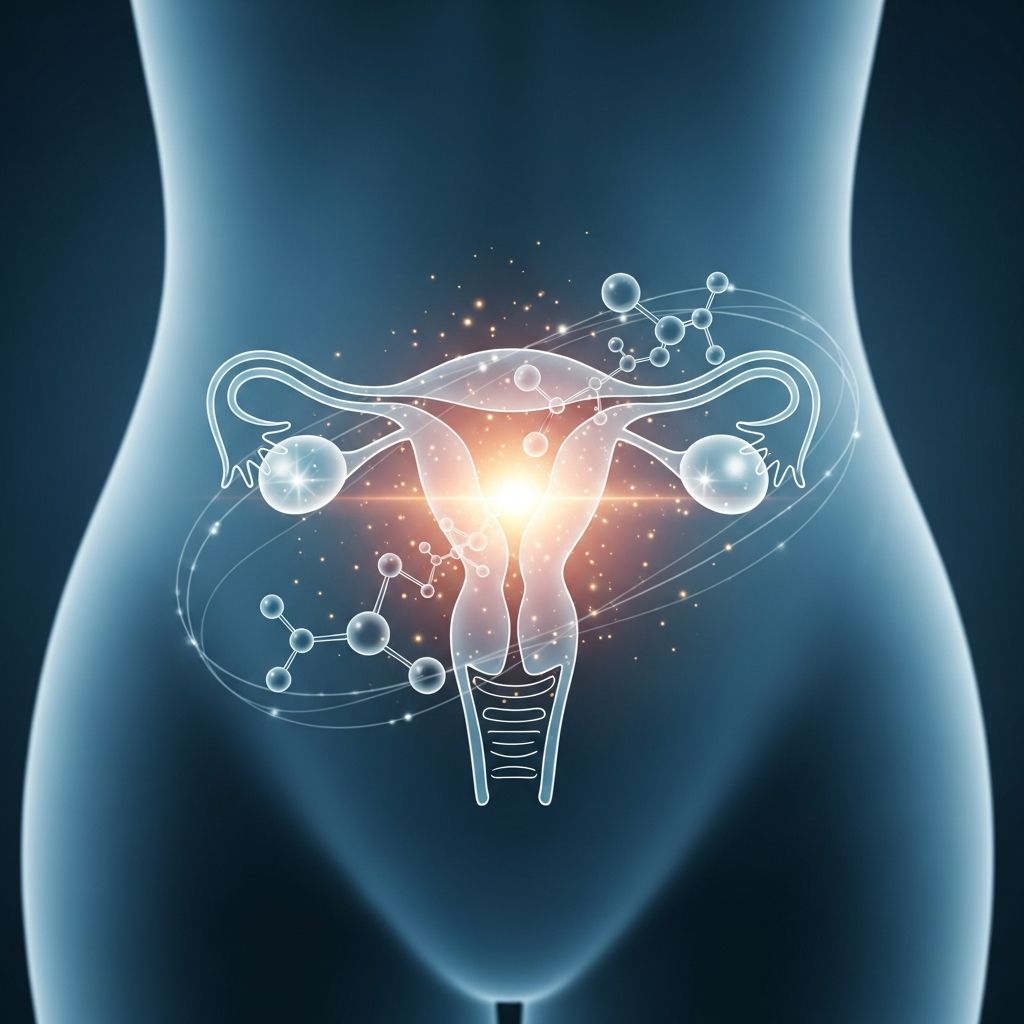
Progesterone supplementation has emerged as a cornerstone intervention for reducing the incidence of preterm birth in women identified as high-risk. This hormone plays a critical role in maintaining pregnancy by promoting uterine quiescence and supporting cervical integrity, particularly when administered vaginally in forms such as micronized progesterone capsules.
The Critical Impact of Preterm Birth
Preterm birth, defined as delivery before 37 weeks of gestation, remains a leading cause of neonatal morbidity and mortality worldwide. Infants born prematurely face heightened risks of respiratory distress syndrome, intraventricular hemorrhage, necrotizing enterocolitis, and long-term neurodevelopmental challenges. In high-risk groups, such as those with a history of spontaneous preterm delivery or a short cervix detected via transvaginal ultrasound, the recurrence risk can exceed 30-50% without intervention.
Addressing this issue requires targeted strategies grounded in evidence. Progesterone therapy targets the underlying physiological processes that precipitate early labor, offering a non-invasive option with substantial benefits for both mother and baby.
How Progesterone Maintains Pregnancy Stability
Progesterone, a key progestational steroid, is essential from early gestation. Produced initially by the corpus luteum and later by the placenta, it sustains pregnancy by suppressing uterine contractility. In the second half of pregnancy, it inhibits prostaglandin synthesis, downregulates contraction-associated proteins like oxytocin receptors and gap junctions, and prevents inflammation-induced apoptosis in fetal membranes.
Labor onset, whether at term or preterm, involves a ‘functional progesterone withdrawal’ at the uterine and cervical levels, despite stable circulating levels. This shift promotes myometrial activation and cervical ripening. Supplementation bypasses this by acting locally to sustain quiescence.
- Uterine effects: Reduces spontaneous contractions and inflammatory responses.
- Cervical effects: Maintains collagen structure and inhibits remodeling.
- Membrane effects: Blocks TNF-alpha-induced cell death, reducing preterm premature rupture of membranes (PPROM) risk.
Identifying Women Who Benefit Most
Not all pregnancies require progesterone therapy; selection is based on robust predictors of preterm birth risk.
| Risk Factor | Description | Prevalence of Use |
|---|---|---|
| Prior spontaneous preterm birth | Singleton gestation with previous delivery <37 weeks | Primary indication for intramuscular 17-alpha-hydroxyprogesterone caproate (17-OHPC) |
| Short cervix (<25 mm) | Midtrimester transvaginal ultrasound finding at 16-24 weeks | Strongest indication for vaginal progesterone |
| PPROM history | Prior preterm premature rupture of membranes | Supports progesterone alongside other interventions |
| Multiple gestation with short cervix | Twins with cervix ≤25 mm | Emerging benefit for vaginal progesterone |
Transvaginal sonography for cervical length is a pivotal screening tool, identifying 10-20% of women at elevated risk.
Clinical Evidence from Landmark Trials and Meta-Analyses
Decades of randomized controlled trials (RCTs) and meta-analyses affirm progesterone’s efficacy.
A seminal 2003 RCT with intramuscular 17-OHPC in 463 women with prior preterm birth showed a 34% reduction in recurrence (<37 weeks: 36.3% vs. 54.9%; RR 0.66, 95% CI 0.54-0.81). Meta-analyses confirm this, with recurrent preterm birth rates dropping from 33-47% to 25-31%.
For short cervix, the OPPTIMUM trial and others demonstrated vaginal progesterone (200 mg daily from 24 weeks) reduced preterm birth <34 weeks (19.2% vs. 34.4%; RR 0.56, 95% CI 0.36-0.86). An individual patient meta-analysis of over 1,000 women with cervix 10-20 mm reported 45% risk reduction <33 weeks (8.9% vs. 16.1%; RR 0.55, 95% CI 0.33-0.92), with fewer neonatal complications like respiratory distress and NICU admissions.
Related Stories



Recent ACOG guidance (2023) endorses vaginal micronized progesterone for short cervix (<25 mm) in singletons, with or without prior preterm birth history, and 17-OHPC for recurrence prevention.
Administration Methods: Vaginal vs. Intramuscular
Two primary routes dominate: vaginal micronized progesterone (e.g., 200 mg capsules nightly) and intramuscular 17-OHPC (250 mg weekly).
- Vaginal progesterone: Preferred for short cervix; achieves high uterine concentrations, minimal systemic effects. Inserted daily from diagnosis (typically 16-24 weeks) until 36 weeks.
- IM 17-OHPC: Weekly injections from 16-20 weeks to 36 weeks for prior preterm birth history; FDA-approved but recent trials question broad efficacy in non-short cervix cases.
Vaginal administration suits most, with number needed to treat (NNT) of 14 to prevent one <33-week preterm birth in short cervix cases.
Safety Profile and Maternal-Fetal Outcomes
Progesterone therapy is well-tolerated. Common side effects include vaginal irritation, discharge, or spotting (5-10%), resolving with continued use. No increased risks of congenital anomalies, gestational diabetes, or preeclampsia noted in large trials.
Neonatal benefits are profound: reduced low birthweight (<1500g), bronchopulmonary dysplasia, and composite morbidity/mortality. A meta-analysis showed lower NICU stays and mechanical ventilation needs.
| Outcome | Progesterone Group | Placebo Group | Relative Risk |
|———|——————-|—————|————–|
| PTB <34 weeks | 19.2% | 34.4% | 0.56 (0.36-0.86) |
| RDS | Lower incidence | Higher | Significant reduction |
| NICU admission | Reduced | Baseline | 0.64 (0.45-0.91) |
Guidelines and Implementation in Practice
ACOG (2023) recommends:
- Vaginal progesterone 200 mg daily for singleton short cervix (<25 mm at 16-24 weeks).
- 17-OHPC 250 mg IM weekly for prior spontaneous preterm singleton birth, absent short cervix.
- Screening via TVUS at 16-24 weeks for at-risk women.
Multidisciplinary care integrates progesterone with lifestyle advice, cervical cerclage if indicated, and tocodynamometry monitoring.
Special Considerations: Twins and Emerging Data
In twins, universal progesterone lacks benefit due to uterine overdistension overriding effects. However, subgroup data for short cervix (≤25 mm) show 30% preterm birth reduction <33 weeks (trend) and lower neonatal morbidity.
Ongoing trials refine protocols, but current evidence limits routine use in multiples.
Patient Experiences and Practical Tips
Women report mild discomfort from vaginal capsules, eased by bedtime dosing. Compliance improves outcomes; weekly IM shots require clinic visits but ensure delivery. Discuss with providers to tailor therapy.
Frequently Asked Questions (FAQs)
Who should get progesterone for preterm prevention?
Women with prior preterm birth or midtrimester short cervix (<25 mm). Screening is key.
How is vaginal progesterone administered?
200 mg capsule inserted vaginally nightly from 16-24 weeks until 36-37 weeks.
Does it affect the baby?
No increased malformation risk; it reduces preterm complications.
Is it effective for twins?
Not routinely, but beneficial if short cervix present.
What if I miss a dose?
Resume next dose; consult provider for IM schedule adherence.
Future Directions in Preterm Prevention
Research explores combined therapies (progesterone + cerclage), biomarkers for earlier intervention, and optimized dosing. With NNT as low as 8-14, progesterone remains a high-impact, cost-effective strategy.
References
- Progesterone Supplementation and the Prevention of Preterm Birth — PMC/NIH. 2011-10-27. https://pmc.ncbi.nlm.nih.gov/articles/PMC3218546/
- Progesterone to prevent spontaneous preterm birth — PMC/NIH. 2014-02-12. https://pmc.ncbi.nlm.nih.gov/articles/PMC3934502/
- Challenges in using progestin to prevent singleton preterm births — Dove Press. 2023. https://www.dovepress.com/challenges-in-using-progestin-to-prevent-singleton-preterm-births-curr-peer-reviewed-fulltext-article-IJWH
- Updated Guidance: Use of Progestogen Supplementation for Prevention of Recurrent Preterm Birth — ACOG. 2023-04. https://www.acog.org/clinical/clinical-guidance/practice-advisory/articles/2023/04/updated-guidance-use-of-progestogen-supplementation-for-prevention-of-recurrent-preterm-birth
- Progesterone for the Prevention of Preterm Birth — AAP NeoReviews. 2014-11-01. https://publications.aap.org/neoreviews/article/15/11/e484/91554/Progesterone-for-the-Prevention-of-Preterm-Birth
- Vaginal Progesterone for the Prevention of Preterm Birth in Twins — ClinicalTrials.gov. 2023. https://clinicaltrials.gov/study/NCT03540225
Similar Articles








Read full bio of medha deb