Progestogen-Only Contraceptive Tablets: Essential Guide
Comprehensive guide to progestogen-only pills like Cerazette, Norgeston, and Noriday for effective contraception and menstrual management.
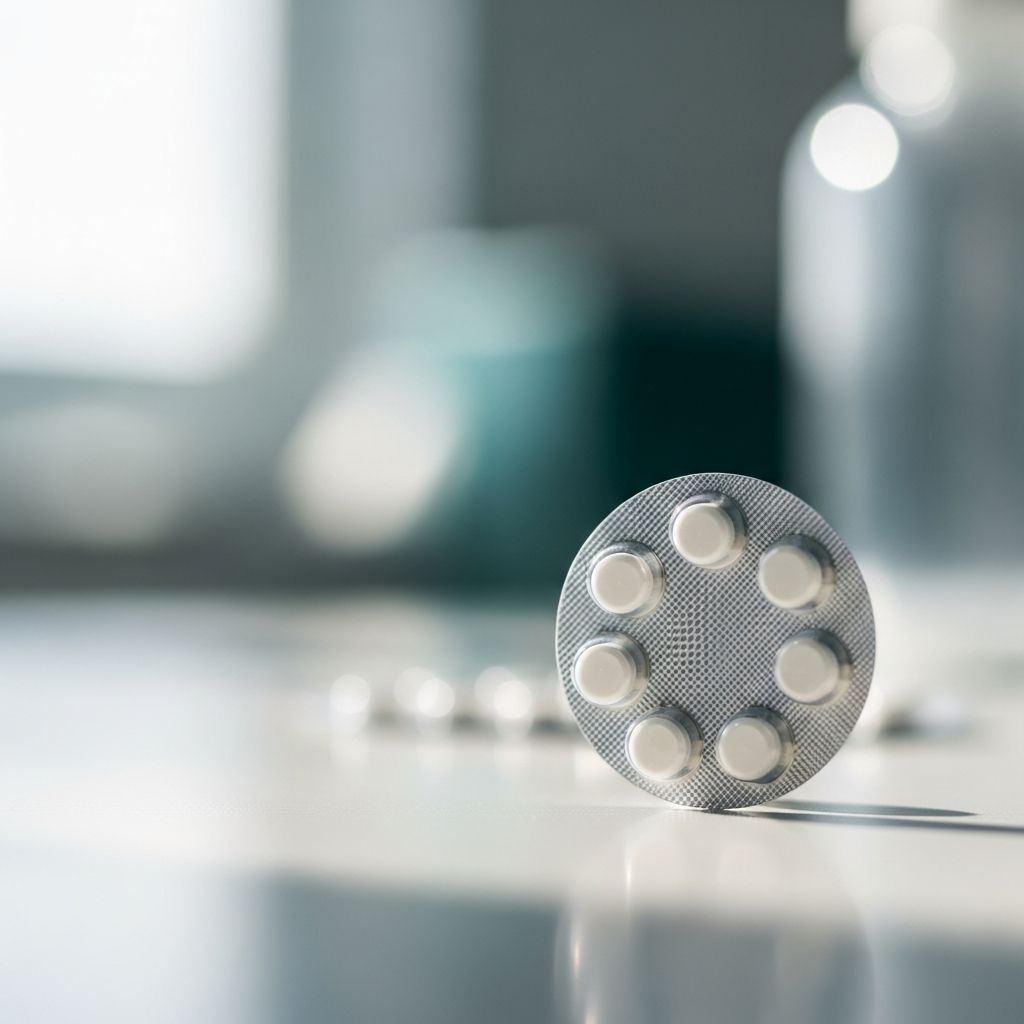
Progestogen-only contraceptive tablets, commonly known as the
mini-pill
orprogestogen-only pills (POPs)
, are oral contraceptives containing only synthetic progestogen (progestin) without estrogen. Brands likeCerazette
(desogestrel),Norgeston
(levonorgestrel), andNoriday
(norethisterone) prevent pregnancy by thickening cervical mucus, thinning the uterine lining, and often inhibiting ovulation, particularly with desogestrel types. These pills are ideal for women who cannot use estrogen-containing combined pills due to risks like blood clots, breastfeeding needs, or conditions such as migraines with aura.About Progestogen-Only Contraceptive Tablets
The progestogen-only pill (POP) is a daily tablet taken to prevent pregnancy. Unlike combined oral contraceptives, POPs contain no estrogen, making them safer for certain groups. There are two main types: traditional 19-norsteroid pills (e.g., Norgeston, Noriday) that primarily work by cervical mucus thickening and may allow ovulation in up to 40-60% of cycles, and desogestrel pills (e.g., Cerazette) that suppress ovulation in 97% of users. In the UK, POPs are prescription-only and widely used, with perfect use efficacy over 99% but typical use around 91-93% due to timing sensitivity.
POPs are particularly recommended for breastfeeding women, as they do not affect milk production or infant health. They can be started from 21 days postpartum. Additionally, POPs treat heavy or painful periods, endometriosis, and abnormal uterine bleeding by stabilizing the endometrium.
Key Facts
- **No estrogen**: Suitable for women with hypertension, migraine with aura, history of blood clots, or breastfeeding.
- **Daily timing critical**: Must be taken within a 3-hour (traditional) or 12-hour (desogestrel) window daily.
- **Effectiveness**: >99% with perfect use; 91% typical use. About 7 in 100 women may get pregnant in the first year typically.
- **No STI protection**: Use condoms for STI prevention.
- **Amenorrhea common**: Up to 50% of users have no periods after 6-12 months, reducing anemia risk.
How Progestogen-Only Contraceptive Tablets Work
POPs primarily thicken cervical mucus to block sperm, thin the endometrium to prevent implantation, and in desogestrel pills like Cerazette, inhibit ovulation. Traditional POPs (Norgeston, Noriday) mainly affect mucus and lining, with ovulation possible in many cycles, requiring strict daily timing. Desogestrel provides a wider 12-hour window and more consistent ovulation suppression.
These mechanisms make POPs effective for contraception and beneficial for conditions like adenomyosis or heavy bleeding, where amenorrhea (no bleeding) relieves symptoms.
When to Take Progestogen-Only Contraceptive Tablets
Start on day 1-5 of your period for immediate protection. If starting later, use backup contraception (condoms) for 2-7 days depending on the type and cycle day. No pill-free interval; take one daily continuously. If breastfeeding or postpartum, start from day 21.
| Pill Type | Start Day | Backup Needed |
|---|---|---|
| Traditional (Norgeston/Noriday) | Day 1-5 | None if immediate; 2 days otherwise |
| Desogestrel (Cerazette) | Day 1-5 | None if immediate; 7 days if >1 day post-bleed |
How to Take Progestogen-Only Contraceptive Tablets
- Take one pill daily at the same time.
- **Traditional POPs**: Within 3 hours of usual time; late pill requires 48-hour backup.
- **Desogestrel**: Within 12 hours; late by >3 hours needs 48-hour backup.
- No breaks; continuous packs.
- If vomiting/diarrhea within 2-3 hours, take another pill and use backup.
Missed more than one pill? Consult a healthcare provider and use emergency contraception if needed.
Effectiveness of Progestogen-Only Contraceptive Tablets
With perfect use (same time daily), <1 in 100 women get pregnant yearly. Typical use: 7-9 in 100 due to timing errors. Desogestrel is slightly more forgiving. Factors reducing effectiveness: medications (e.g., some antiseizure drugs), vomiting, or inconsistent timing.
Related Stories



Advantages and Disadvantages
Advantages
- Safe for breastfeeding from 21 days postpartum.
- No estrogen risks (e.g., clots, strokes).
- Often lightens/reduces periods or causes amenorrhea.
- Helps acne, PMS, ovarian cysts (some brands).
- Reversible; fertility returns quickly.
Disadvantages
- Strict daily timing.
- Irregular bleeding common initially.
- Less effective if overweight (>70kg for some).
- No STI protection.
- Not for everyone (e.g., breast cancer history).
Who Can Use Progestogen-Only Contraceptive Tablets
Suitable for most women, especially those contraindicated for estrogen: breastfeeding mothers, over 35 smokers, hypertensives, migraineurs with aura, postpartum, or post-abortion. UK MEC guidelines support use in these groups.
**Who should not use**:
- Current/acute breast cancer.
- Undiagnosed vaginal bleeding.
- Severe liver disease.
- Progestogen hypersensitivity.
Who Might Choose Progestogen-Only Contraceptive Tablets
- Breastfeeding women.
- Estrogen-intolerant (migraines, clots, hypertension).
- Heavy/painful periods or endometriosis.
- Preferring no/low hormones.
Side-Effects of Progestogen-Only Contraceptive Tablets
Common: irregular spotting (50% first 6 months, decreases), amenorrhea, breast tenderness, acne, weight gain, mood changes. Rare: ovarian cysts, ectopic pregnancy risk if failure. Most resolve; switch brands if persistent.
Interactions
Enzyme-inducers (rifampicin, some antiepileptics) reduce efficacy; use alternatives. Herbal St. John’s Wort interacts.
Other Precautions
- Monitor for breast changes or severe bleeding; seek medical advice.
- Overweight (>BMI 30) may reduce efficacy; consider alternatives.
- Post-ECP: Wait 5 days for UPA.
Pregnancy and Fertility
Fertility returns immediately upon stopping. If pregnant on POP, no increased risks.
Frequently Asked Questions (FAQs)
Can I use POP while breastfeeding?
Yes, safe from 21 days postpartum; does not affect milk.
What if I miss a pill?
Takes backup for 2-7 days; emergency contraception if >48 hours late and at risk.
Does it protect against STIs?
No; use condoms.
Will it stop my periods?
Possibly; 20-50% amenorrheic after 1 year.
Can smokers use it?
Yes, even over 35, unlike combined pills.
Stopping POP
Fertility resumes quickly. Periods may take 4-6 weeks to normalize.
References
- Progestogen-only pill — Wikipedia (sourced from medical reviews). 2023-10-15. https://en.wikipedia.org/wiki/Progestogen-only_pill
- Progestin-Only Pills — Centers for Disease Control and Prevention (CDC). 2024-06-20. https://www.cdc.gov/contraception/hcp/usspr/progestin-only-pills.html
- What is the progestogen-only pill? — National Health Service (NHS). 2024-03-12. https://www.nhs.uk/contraception/methods-of-contraception/progestogen-only-pill/what-is-it/
- Progestin-only Pill Birth Control — Kaiser Permanente. 2024-01-08. https://healthy.kaiserpermanente.org/health-wellness/birth-control/types/mini-pill
- Oral Contraceptive Pills — StatPearls, NCBI Bookshelf, National Library of Medicine. 2023-11-03. https://www.ncbi.nlm.nih.gov/books/NBK430882/
Similar Articles








Read full bio of Sneha Tete