Progressive Macular Hypomelanosis: Causes & Treatment
Understanding the causes, symptoms, diagnosis, and treatment of progressive macular hypomelanosis, a common hypopigmentation disorder.
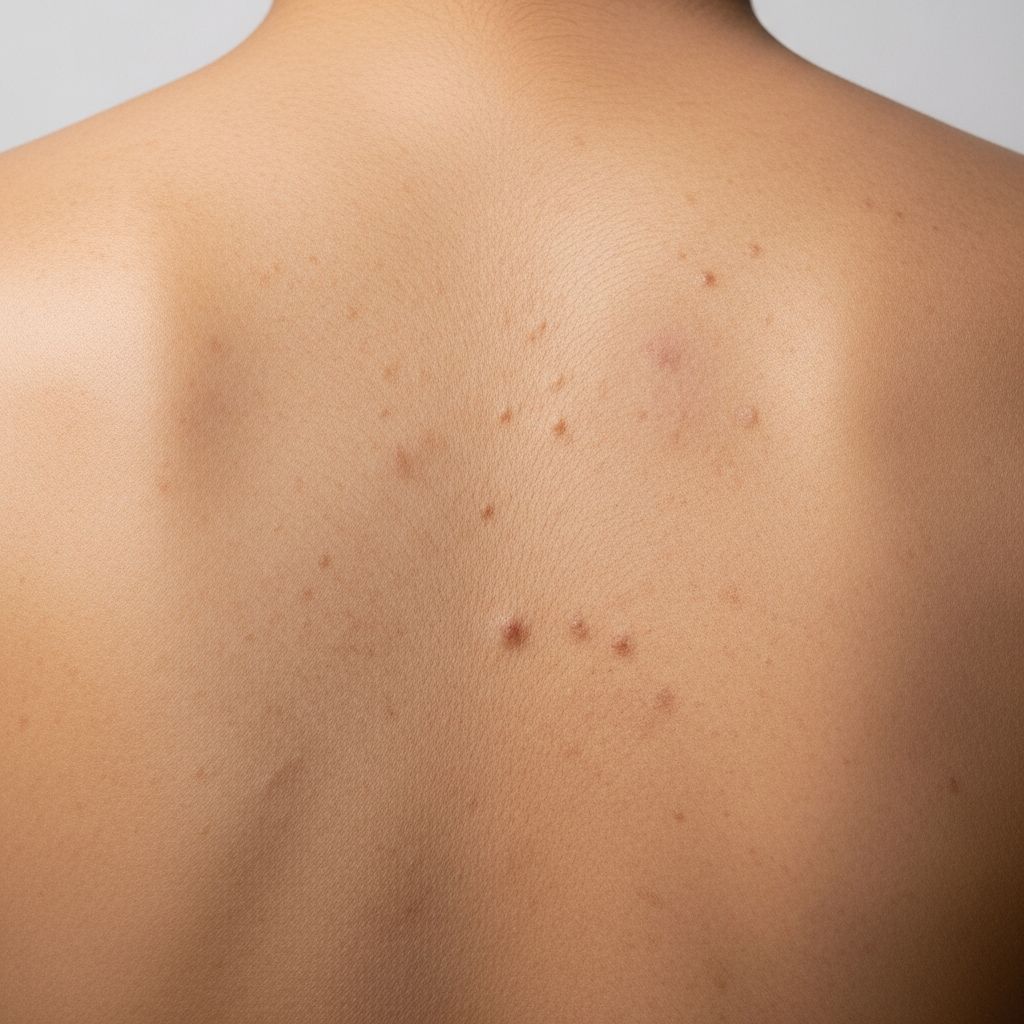
Progressive macular hypomelanosis (PMH) is a common yet frequently under-recognized dermatological condition characterized by asymptomatic, ill-defined, non-scaly hypopigmented macules primarily on the trunk. This disorder predominantly affects young adults, especially women with darker skin tones in tropical climates, though cases occur worldwide across all skin types. PMH often leads to cosmetic concerns due to its persistent nature and confluent patches around the midline, but it is benign and typically resolves spontaneously by age 40.
What is Progressive Macular Hypomelanosis?
PMH manifests as numerous round-to-oval, hypopigmented macules and patches, typically 1-3 cm in size, that are symmetric and non-scaly. These lesions are confined mainly to the lumbar region, lower back, and abdomen, occasionally extending to proximal limbs, neck, or rarely the face. Unlike inflammatory conditions, there is no preceding history of infection, trauma, or irritation, and the spots are asymptomatic without pruritus or scaling.
The condition is often misdiagnosed as tinea versicolor or pityriasis alba, leading to ineffective treatments with antifungals or steroids. Its name reflects the progressive nature of the hypopigmentation, which can spread rapidly and become confluent, causing significant distress to patients.
Who Gets Progressive Macular Hypomelanosis?
PMH chiefly impacts adolescents and young adults aged 13-38 years, with a strong female predominance. It is more prevalent in individuals with darker Fitzpatrick skin types (IV-VI), particularly in tropical and subtropical regions, but increasing reports note occurrences in lighter skin types (I-IV) in temperate climates like the US, Europe, Korea, and China.
While the exact incidence is unknown due to underdiagnosis, it affects all ethnicities worldwide. Risk factors may include warm, humid environments that favor bacterial overgrowth in pilosebaceous units.
- Age: Peak in 20s-30s; resolves before 40 in most cases.
- Gender: Predominantly females (up to 90% in some series).
- Skin type: Higher in darker skin; emerging in lighter skin.
- Geography: Common in tropics; global distribution.
Causes of Progressive Macular Hypomelanosis
The pathogenesis of PMH remains incompletely understood, but substantial evidence implicates Cutibacterium acnes (formerly Propionibacterium acnes), a commensal bacterium in pilosebaceous follicles, as the key culprit. This organism is consistently cultured from hypopigmented lesions and absent or reduced in normal skin.
Hypothesized mechanisms include production of a depigmenting factor by C. acnes that inhibits melanogenesis or disrupts melanosome transfer. Electron microscopy reveals a shift from large, single melanosomes in normal skin to small, aggregated, membrane-bound melanosomes in lesional skin, impairing pigment distribution to keratinocytes.
Under Wood’s lamp, PMH lesions show a characteristic red follicular fluorescence due to porphyrin production by C. acnes, aiding diagnosis. This fluorescence correlates with bacterial density and is absent in mimics like tinea versicolor.
Other factors such as genetic predisposition (e.g., ‘melting’ of genes in mixed-race individuals) or environmental triggers in humid climates may contribute, but bacterial involvement is the primary hypothesis supported by therapeutic responses to antimicrobials.
Related Stories



Signs and Symptoms of Progressive Macular Hypomelanosis
Lesions are ill-defined, nummular (coin-shaped), hypopigmented macules without scale, erythema, or induration. They start as discrete spots on the lower trunk and progress to confluent patches, sparing the face classically but occasionally involving it. No sensory changes, hair loss, or systemic symptoms occur.
- Primary feature: Hypopigmented, non-scaly macules 0.5-3 cm on trunk midline.
- Distribution: Lumbar/abdomen > proximal limbs > neck (rare).
- Symptoms: Asymptomatic; cosmetic concern only.
- Wood’s lamp: Red follicular glow in lesions.
Patches become more conspicuous after sun exposure, as hypopigmented areas fail to tan, exacerbating visibility.
Diagnosis of Progressive Macular Hypomelanosis
Diagnosis is clinical, supported by Wood’s lamp examination showing red follicular fluorescence and negative KOH prep excluding fungi. Biopsy, if performed, shows normal melanocyte numbers with reduced, aggregated melanosomes on electron microscopy; special stains rule out vitiligo or leprosy.
Key differentials include:
| Condition | Key Differentiators from PMH |
|---|---|
| Tinea versicolor | Scale present; KOH shows hyphae/spores; yellow-white fluorescence. |
| Pityriasis alba | Fine scale; atopic history; cheeks common; no red fluorescence. |
| Vitiligo | Depigmented; chalk-white; Wood’s lamp bright white; poliosis. |
| Tuberculoid leprosy | Sensory loss; well-defined borders; endemic areas. |
| Mycosis fungoides | Pruritic; well-defined; extremities; biopsy confirms. |
| Post-inflammatory hypopigmentation | History of inflammation/trauma; resolves over time. |
Treatment of Progressive Macular Hypomelanosis
Many cases resolve spontaneously within 3-5 years, but treatments target C. acnes to accelerate repigmentation. Topical antimicrobials like benzoyl peroxide (5% gel nightly) and clindamycin (1% lotion daily) combined with narrowband UVB phototherapy (311 nm, 2-3x/week for 12 weeks) yield excellent results, with near-complete resolution in months.
Sun exposure or phototherapy enhances contrast reduction by tanning normal skin. Systemic antibiotics are rarely needed. Patient education on benign course prevents unnecessary interventions.
- First-line: Benzoyl peroxide + clindamycin + nbUVB.
- Alternatives: Topical dapsone, minocycline; sun exposure.
- Prognosis: Excellent; self-limited.
Prevention of Progressive Macular Hypomelanosis
No proven prevention exists, but maintaining skin hygiene in humid climates and early recognition may limit spread. Avoid unnecessary antifungals.
Progressive Macular Hypomelanosis in Children
Rare in prepubertal children due to lower pilosebaceous activity; post-puberty onset typical. Manage conservatively.
Related Topics
- Tinea versicolor
- Pityriasis alba
- Vitiligo
- Postinflammatory hypopigmentation
Frequently Asked Questions
Is progressive macular hypomelanosis contagious?
No, PMH is not infectious despite bacterial association; C. acnes is a normal skin flora.
Does progressive macular hypomelanosis go away on its own?
Yes, most cases resolve spontaneously by age 40, within 3-5 years.
How do you get rid of progressive macular hypomelanosis?
Combination topical benzoyl peroxide/clindamycin with nbUVB phototherapy is most effective.
Can progressive macular hypomelanosis be on the face?
Rarely; classically trunk-limited, but facial lesions reported.
Is progressive macular hypomelanosis the same as tinea versicolor?
No; lacks scale/fungi; bacterial vs. fungal etiology.
References
- Progressive macular hypomelanosis – VisualDx — VisualDx. Accessed 2026. https://www.visualdx.com/visualdx/diagnosis/progressive+macular+hypomelanosis?diagnosisId=55897&moduleId=101
- Progressive Macular Hypomelanosis of the Trunk — Contemporary Pediatrics. Accessed 2026. https://www.contemporarypediatrics.com/view/progressive-macular-hypomelanosis-trunk
- Progressive macular hypomelanosis — Primary Care Dermatology Society (PCDS). 2021-11-18. https://www.pcds.org.uk/clinical-guidance/progressive-macular-hypomelanosis
- Progressive Macular Hypomelanosis — Journal of Drugs in Dermatology (JDD). Accessed 2026. https://jddonline.com/articles/progressive-macular-hypomelanosis-S1545961611P0502X
- Successful treatment of progressive macular hypomelanosis — PMC (PubMed Central). 2020. https://pmc.ncbi.nlm.nih.gov/articles/PMC7772758/
- Progressive macular hypomelanosis: an overview — PubMed. 2007. https://pubmed.ncbi.nlm.nih.gov/17298102/
- Propionibacterium acnes and the Pathogenesis of Progressive Macular Hypomelanosis — JAMA Dermatology. Accessed 2026. https://jamanetwork.com/journals/jamadermatology/fullarticle/480243
Similar Articles








Read full bio of medha deb