Prolactin: Functions, Levels & Health Implications
Understanding prolactin: The hormone regulating lactation, reproduction, and overall health.
What Is Prolactin?
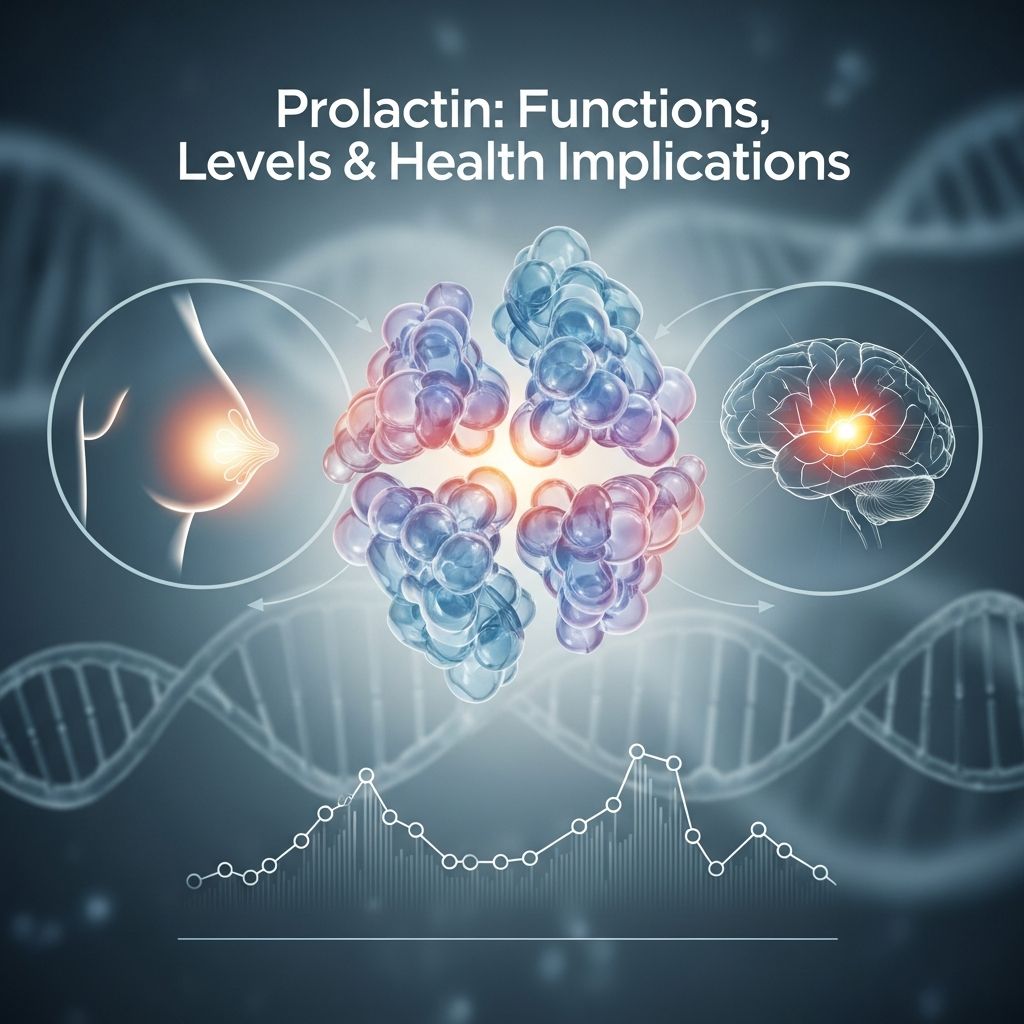
Prolactin is a hormone produced by the pituitary gland, a small endocrine gland located at the base of the brain. This hormone plays a crucial role in multiple physiological processes, with its primary function being the stimulation of breast milk production during lactation. Beyond lactation, prolactin influences various bodily functions including reproductive health, immune function, and metabolic processes. Understanding prolactin and its levels is essential for maintaining overall health and addressing potential hormonal imbalances that may affect fertility, menstrual cycles, and sexual function.
The Role of Prolactin in Your Body
Prolactin serves several important functions throughout the body. Its most well-known role is signaling breast tissue to grow during pregnancy and stimulating milk production after birth for breastfeeding. In individuals who are not pregnant or breastfeeding, prolactin levels remain relatively low.
Beyond lactation, prolactin affects reproductive function by influencing hormone production in both the ovaries and testicles. The hormone also plays roles in immune system regulation, bone health, and metabolic function. Additionally, prolactin works in conjunction with other hormones to maintain hormonal balance throughout the body.
Normal Prolactin Levels
Prolactin levels vary significantly based on reproductive status and life stage. In pregnant women and new mothers, prolactin levels are typically elevated to support milk production and maintain lactation. These elevated levels are completely normal during pregnancy and the postpartum period.
In nonpregnant women and men, prolactin levels are normally low, typically measured in nanograms per milliliter (ng/ml). The specific reference ranges may vary slightly between laboratories, but generally:
- Nonpregnant women: 2–29 ng/ml
- Men: 2–18 ng/ml
- Pregnant women: Up to 200 ng/ml or higher
Understanding High Prolactin Levels (Hyperprolactinemia)
Hyperprolactinemia occurs when prolactin levels are higher than normal. This condition is one of the most common endocrine disorders of the hypothalamic-pituitary axis and is more commonly diagnosed in women than in men. When prolactin levels remain persistently elevated, they can cause significant health effects including infertility, amenorrhea (absence of menstrual periods), and galactorrhea (production of breast milk when not pregnant or breastfeeding).
Symptoms of High Prolactin in Women
Women with elevated prolactin levels may experience various symptoms related to reproductive and breast health:
- Irregular or absent menstrual periods (oligomenorrhea or amenorrhea)
- Unwanted breast milk production or nipple discharge when not pregnant or breastfeeding
- Infertility or difficulty conceiving
- Decreased sexual desire
- Vaginal dryness
- Acne or excess facial hair due to hormonal imbalance
Approximately 75% of patients presenting with galactorrhea and amenorrhea have elevated prolactin levels.
Symptoms of High Prolactin in Men
Men with elevated prolactin levels may experience different symptoms affecting sexual and reproductive function:
- Erectile dysfunction or impotence (inability to achieve or maintain an erection)
- Decreased sex drive or libido
- Infertility
- Enlarged breast tissue (gynecomastia)
- Nipple discharge
- Decreased muscle mass
In men with mild hyperprolactinemia and symptoms of hypogonadism, the prolactin-to-testosterone ratio serves as an important diagnostic indicator.
Causes of Elevated Prolactin
Several factors and conditions can lead to increased prolactin levels. Understanding these causes is essential for proper diagnosis and treatment.
Related Stories



Prolactinoma (Pituitary Tumor)
Prolactinoma is a noncancerous tumor of the pituitary gland that produces excess prolactin. This is the most common cause of hyperprolactinemia, accounting for a significant portion of cases. Prolactinomas can range in size from microscopic to several centimeters in diameter.
Medications
Certain medications can elevate prolactin levels by affecting dopamine production, the brain chemical that suppresses prolactin secretion. Medications that may cause hyperprolactinemia include:
- Antipsychotic medications
- Antidepressants
- Metoclopramide (anti-nausea medication)
- Domperidone
- Certain blood pressure medications
- Opioid medications
Importantly, prolactin levels usually return to normal three to four days after stopping the offending medication.
Hypothyroidism
An underactive thyroid gland can cause elevated prolactin levels. Treating the underlying hypothyroidism often helps normalize prolactin levels.
Kidney Disease
Impaired kidney function can reduce prolactin clearance from the body, leading to accumulation and elevated levels.
Pituitary Stalk Compression
Any condition that compresses the pituitary stalk can disrupt the tonic hypothalamic inhibition of prolactin secretion, resulting in modest hyperprolactinemia.
Stress and Physical Stimulation
Prolactin secretion responds to stress and to breast and genital stimuli. Elevated levels from these causes are typically temporary.
Diagnosing Prolactin Imbalances
Proper diagnosis of prolactin abnormalities requires a systematic approach. Healthcare providers typically recommend confirming persistent hyperprolactinemia before initiating treatment, as single elevated readings may result from stress or recent breast examination.
Prolactin Testing
A prolactin test measures the level of prolactin in a blood sample. Testing should be performed under standardized conditions, ideally in the morning after a restful night’s sleep and without recent breast or pelvic examination.
Special Testing Considerations
Macroprolactinemia, a condition where a higher-molecular-weight form of prolactin predominates, occurs in approximately 10 to 25% of hyperprolactinemic blood samples. This condition is usually asymptomatic and may be present in about 0.2% of the general population. Specialized testing can identify this condition and prevent unnecessary treatment.
Imaging Studies
When hyperprolactinemia is confirmed, imaging studies, preferably magnetic resonance imaging (MRI), are typically performed to evaluate the pituitary gland for tumors or other abnormalities.
Additional Laboratory Tests
Comprehensive evaluation may include thyroid function tests, kidney function tests, and other hormone measurements to identify underlying causes of elevated prolactin.
Complications of Persistent Hyperprolactinemia
Untreated or persistent hyperprolactinemia can lead to serious health complications. Loss of bone mass is a significant feature of persistent hyperprolactinemia in both men and women, usually associated with prolonged hypogonadism (decreased hormone production by the gonads). This increased bone loss can lead to osteoporosis and increased fracture risk.
Large prolactinomas that are not treated may grow large enough to press against nearby structures in the pituitary gland and brain, causing:
- Headaches
- Vision changes or blurred vision
- Visual disturbances from pressure on the optic nerve
- Low levels of other pituitary hormones such as thyroid hormones and cortisol
Treatment Options for High Prolactin
Treatment approaches depend on the underlying cause of elevated prolactin. In many cases, addressing the root cause effectively normalizes prolactin levels.
Medication Adjustment
If a medication is causing elevated prolactin, discontinuing or switching the medication often resolves the issue. Healthcare providers should be consulted before stopping any prescribed medication.
Treating Underlying Conditions
Elevated prolactin may abate when treatment is provided for underlying disorders such as hypothyroidism or kidney disease.
Pharmacological Treatment
For prolactinomas and other causes of persistent hyperprolactinemia, dopamine agonist medications may be prescribed to suppress prolactin production and shrink tumors.
Surgical Intervention
In cases where medication is ineffective or a large prolactinoma is causing significant symptoms or complications, surgical removal may be considered.
When to See a Healthcare Provider
You may need a prolactin levels test if you are experiencing symptoms that could be caused by higher-than-normal prolactin levels. Seek medical evaluation if you experience:
- Irregular or absent menstrual periods
- Unexplained breast milk production
- Nipple discharge without pregnancy
- Difficulty conceiving or infertility
- Decreased sex drive
- Erectile dysfunction
- Unexplained headaches or vision changes
An endocrine specialist or reproductive endocrinologist can provide comprehensive evaluation and treatment recommendations.
Frequently Asked Questions
Q: What is the normal prolactin level?
A: Normal prolactin levels are typically 2–29 ng/ml in nonpregnant women and 2–18 ng/ml in men. Levels can increase significantly during pregnancy and breastfeeding, which is completely normal.
Q: Can prolactin levels fluctuate throughout the day?
A: Yes, prolactin levels can vary based on stress, sleep, time of day, and recent physical stimulation. This is why healthcare providers recommend standardized testing conditions and confirming persistent elevations.
Q: Is a prolactinoma cancerous?
A: No, prolactinoma is a noncancerous (benign) tumor of the pituitary gland. However, large tumors may require treatment to prevent complications from mass effect on surrounding structures.
Q: Can high prolactin levels be reversed?
A: Yes, in many cases. If caused by medication, discontinuing the offending drug often normalizes levels. If caused by hypothyroidism or other treatable conditions, addressing the underlying cause can restore normal prolactin levels.
Q: How long does it take for prolactin to normalize after stopping a medication?
A: Prolactin levels usually return to normal three to four days after stopping an offending medication, though this timeline may vary depending on the specific drug.
Q: Can men have prolactin-related fertility problems?
A: Yes, elevated prolactin in men can cause infertility by disrupting testosterone production and sexual function. The prolactin-to-testosterone ratio is an important indicator of potential pituitary abnormalities in men with hypogonadism symptoms.
References
- Persistent Elevations of Monomeric Prolactin and Macroprolactinemia — Cleveland Clinic Foundation. 2012. https://www.ccjm.org/content/ccjom/71/6/457.full.pdf
- Prolactin Levels: MedlinePlus Medical Test — U.S. National Library of Medicine. 2024. https://medlineplus.gov/lab-tests/prolactin-levels/
- Hyperprolactinemia: What It Is, Symptoms & Treatment — Cleveland Clinic. 2024. https://my.clevelandclinic.org/health/diseases/22284-hyperprolactinemia
- Prolactin-to-Testosterone Ratio Predicts Pituitary Abnormalities in Mildly Hyperprolactinemic Men with Symptoms of Hypogonadism — Journal of Urology. 2020. https://www.auajournals.org/doi/pdf/10.1097/JU.0000000000001431
- Prolactinoma: What It Is, Causes, Symptoms & Treatment — Cleveland Clinic. 2024. https://my.clevelandclinic.org/health/diseases/22007-prolactinoma
- Pituitary Gland: What It Is, Function & Anatomy — Cleveland Clinic. 2024. https://my.clevelandclinic.org/health/body/21459-pituitary-gland
- Hyperpituitarism (Overactive Pituitary Gland): Symptoms & Causes — Cleveland Clinic. 2024. https://my.clevelandclinic.org/health/diseases/15173-hyperpituitarism
Similar Articles








Read full bio of medha deb