Proper Walking Form: Complete Guide To Walk Smarter
Learn the science of proper walking form to enhance fitness, prevent injury, and boost wellness.
Proper Walking Form: A Complete Guide to Walking Smarter
Walking is often considered the most accessible form of exercise, yet many people overlook the importance of proper technique. While everyone knows how to walk, few realize that refining your walking form can significantly impact your fitness results, comfort, and long-term joint health. By mastering the fundamentals of proper walking form, you can transform a simple stroll into an effective, injury-preventive workout that maximizes efficiency with every step.
Why Proper Walking Form Matters
Proper walking form goes far beyond aesthetics. When you walk with correct technique, you activate the right muscle groups, distribute impact evenly across your joints, and move with greater efficiency. This approach reduces your risk of injury and discomfort while allowing your body to absorb impact more effectively. Additionally, good walking form helps you move with less strain and greater ease, making your walks more enjoyable and sustainable. Whether you’re new to walking for fitness or looking to refine your existing technique, understanding the principles of proper form can help you get more out of every step.
Head and Neck Position
Your head position sets the foundation for proper walking posture. Keep your head up and your chin parallel to the ground, looking roughly 10 to 20 feet ahead of you rather than down at your feet or your phone. This forward gaze naturally aligns your spine and prevents unnecessary strain on your neck and upper back. If you find yourself looking at your feet when you walk, you’re inadvertently putting stress on your upper back and neck muscles, which can lead to discomfort and tension over time. To maintain proper head position, imagine a string gently lifting you from the top of your head, as if you were a marionette being pulled upward. This visualization helps encourage an upright posture that feels natural and sustainable throughout your walk.
Shoulder Alignment and Arm Movement
Shoulders have a tendency to creep up toward your ears, especially when you’re stressed or concentrating. To find the correct shoulder position, roll your shoulders up, then back, and then down. Your shoulders should remain relaxed but alert, not hunched or tensed. This proper alignment decreases upper-body tension and allows your arms to swing more freely.
Your arms play an important role in walking efficiency. Bend your elbows at a 90-degree angle and swing your arms straight ahead from your shoulders rather than from your elbows. Keep your arms close to your body and swing your hands no higher than your chest. The motion should feel natural, like a clock pendulum swinging back and forth—smooth, rhythmic, and effortless. Avoid bringing your arms across your body, as this creates unnecessary movement and wastes energy that could propel you forward. Additionally, refrain from clenching your hands into fists; maintain a relaxed grip with slightly open hands.
Core Engagement and Torso Stability
Your core muscles play a crucial role in maintaining stability and balance while walking. Gently draw your belly toward your spine to engage your abdominal muscles without excessive tension. This engagement creates a supportive brace around your midsection, helping you move with more control and stability. However, avoid the temptation to tuck your tailbone under to achieve this engagement, as doing so causes unnecessary stress on your lumbar spine.
Maintaining a neutral pelvis position is essential—neither tilted forward nor backward. Avoid arching your back or leaning forward, as these habits can compress your core, crowd your internal organs, and make it harder to breathe deeply. By keeping your pelvis in a neutral position and your core engaged, you create a foundation of stability that supports efficient movement throughout your entire walk.
Related Stories



Lower Body Mechanics and Stride
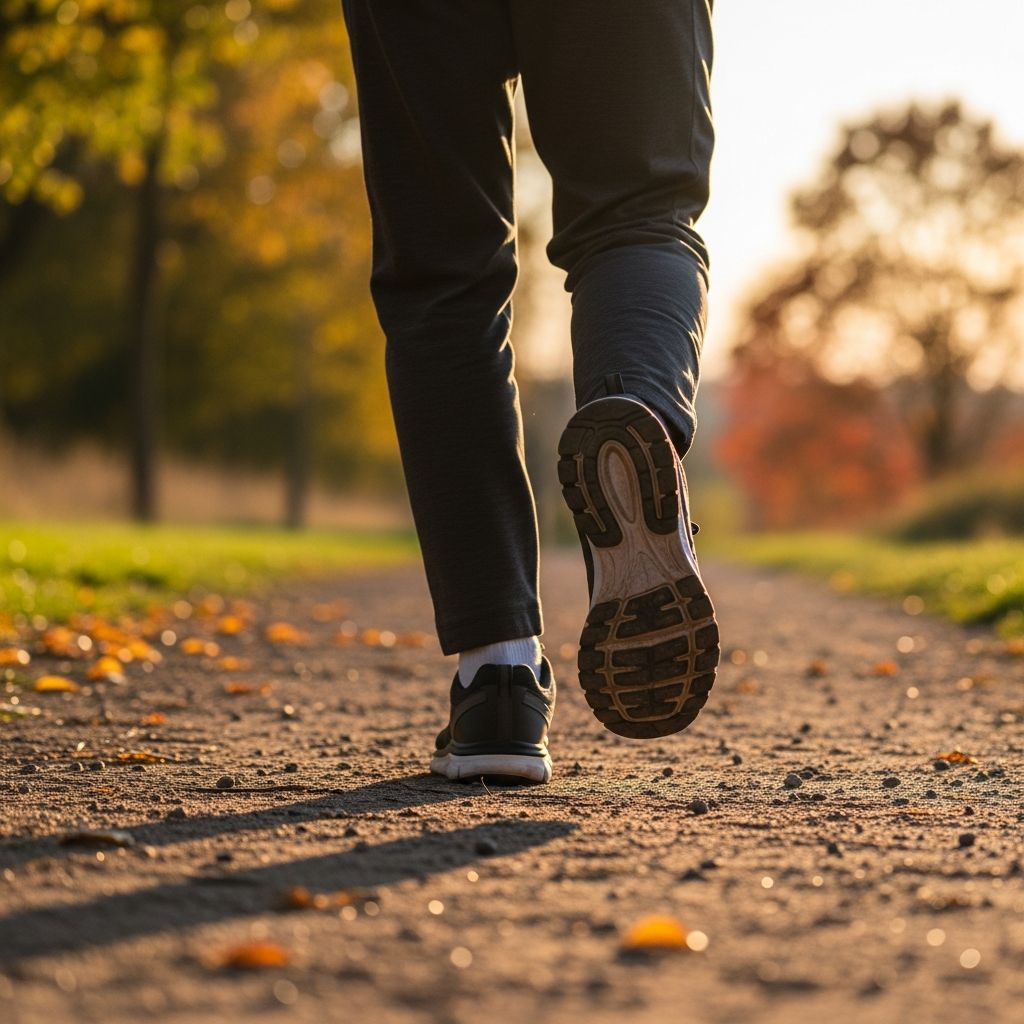
Your lower body mechanics directly influence the effectiveness and safety of your walk. The heel-to-toe step pattern is the gold standard for efficient walking. Begin by stepping first with your heel squarely but lightly on the ground, with your toes lifted high. Then roll through your entire foot, transitioning onto the ball of your foot and finally pushing away from the ground with your toes on your back leg. This rolling motion distributes impact evenly and reduces stress on your joints.
Research suggests that this heel-strike first pattern may reduce mechanical load on the knees, increase ankle mobility, and improve calf muscle flexibility compared to other walking styles. When you first transition to this rolling step pattern, you might experience some mild shin aching. This is completely normal and will resolve as the muscles surrounding your shins develop more strength.
Stride length matters more than you might think. While it’s tempting to believe that taking longer strides will help you move faster, overstriding actually puts more stress on your knees, hips, and ankles. Instead, aim for shorter, quicker steps—more steps per minute—to reduce strain and keep your stride efficient. Your leg should feel like it’s reaching forward from above the hip, not stretching out from the foot. This approach minimizes joint impact while maximizing forward momentum.
Glute and Thigh Activation
Your glutes and thigh muscles are powerful engines that should be actively engaged during your walk. As you walk, focus on your back leg. Gently squeeze your glute and the back of your thigh as you push off the ground—this adds power to your step and propels you forward more effectively. As that leg moves forward, keep those muscles working to maintain steady, controlled movement.
Your inner thighs serve an important function as well, helping to guide your knee straight and keep your leg stable throughout your stride. By consciously engaging these muscle groups, you transform walking from a passive activity into an active workout that strengthens and tones your lower body.
Common Walking Mistakes to Avoid
Understanding what not to do is just as important as knowing what to do. Several common mistakes can undermine your walking form and lead to discomfort or injury:
- Looking down at your feet or phone: This strains your neck and upper back. If you need to check your phone, hold it up to eye level rather than bending your neck downward.
- Excessive side-to-side motion: When your hips sway too much, you waste energy that could be used to propel you forward. Keep your hips stable and facing forward.
- Clenched hands and crossed arm swings: These create unnecessary tension and reduce walking efficiency. Keep your hands relaxed and arms swinging straight ahead.
- Hunching or slumping: Poor posture compresses your core, crowds your organs, and restricts breathing. Maintain an upright, elongated posture throughout your walk.
- Overstriding: Taking steps that are too long increases impact on your joints and slows you down. Focus on shorter, quicker steps instead.
Building Proper Form Over Time
Developing proper walking form is a process that requires mindfulness and practice. When you first begin focusing on correct technique, walk slowly and deliberately until proper form feels natural and comfortable. Pay attention to each element—head position, shoulder alignment, core engagement, stride length—and work on one or two aspects at a time rather than trying to perfect everything simultaneously.
As you develop good form and these adjustments become habit, gradually increase your walking speed. The goal is to eventually walk with proper form automatically, without conscious effort. Most people find that the more they practice proper technique, the more naturally it comes, until good form becomes second nature.
Tips for Success
Several strategies can help you maintain proper walking form and stay consistent with your practice:
- Find a walking buddy: Walking with a friend allows you to observe each other’s form and offer gentle corrections. A walking partner also helps you stay motivated and makes the experience more enjoyable.
- Use visualization: Mental imagery, such as imagining a string lifting you from the top of your head or balancing a book there, can help reinforce proper posture.
- Start with intention: Begin each walk with a focus on one or two specific form elements, then gradually add more as you progress.
- Record yourself: Taking a video of your walk can help you identify areas where your form needs adjustment.
- Practice mindfulness: Stay present during your walks and notice how your body feels as you move with proper form.
The Bottom Line
Good walking form isn’t just about looking more polished—it’s about walking smarter. By paying attention to posture, stride, and muscle engagement, you can reduce wear and tear on your joints, move more efficiently, and get more out of every step. Proper walking form also helps you look more confident and feel better during and after your walks. Whether you’re new to walking for fitness or looking to fine-tune your technique, these simple adjustments can transform your walking experience and support your long-term health goals.
Frequently Asked Questions
What is the correct heel-to-toe walking pattern?
The correct heel-to-toe pattern involves stepping first with your heel squarely but lightly on the ground with your toes lifted high, then rolling through your entire foot onto the ball of your foot, and finally pushing away with your toes. This pattern reduces mechanical load on the knees and improves ankle mobility.
How fast should I walk when learning proper form?
When first focusing on proper walking form, walk slowly until you feel you are walking freely and comfortably. Once good form becomes natural, you can gradually increase your speed.
Why shouldn’t I take long strides?
Overstriding puts more stress on your knees, hips, and ankles. Instead, shorter, quicker steps reduce strain and keep your stride more efficient.
What should I do if my shins ache when I change my walking technique?
Mild shin aching is completely normal when transitioning to a proper rolling step pattern. This discomfort will resolve as the muscles surrounding your shins develop more strength.
How can proper walking form improve my appearance?
Good walking posture naturally makes you look more confident, taller, and slimmer. An upright posture engages your core muscles and helps you stand at your best.
Can walking with proper form be my only exercise?
Done properly, a good walking routine with correct form could be a valuable aerobic exercise. However, combining walking with strength training and flexibility work provides the most comprehensive fitness benefits.
References
- Tips and Techniques for Proper Walking Form — Texas A&M AgriLife Extension, Howdy Health. 2025. https://howdyhealth.tamu.edu/tips-and-techniques-for-proper-walking-form/
- Fine-Tune Your Walking Technique for Safer, More Comfortable and More Fun Exercise — Teladoc Health. 2025. https://www.teladochealth.com/library/article/fine-tune-your-walking-technique-for-safer-more-comfortable-and-more-fun-exercise
- Perfecting Your Walking Technique — Harvard Health Publishing. May 25, 2020. https://www.health.harvard.edu/staying-healthy/perfecting-your-walking-technique
Similar Articles








Read full bio of Sneha Tete