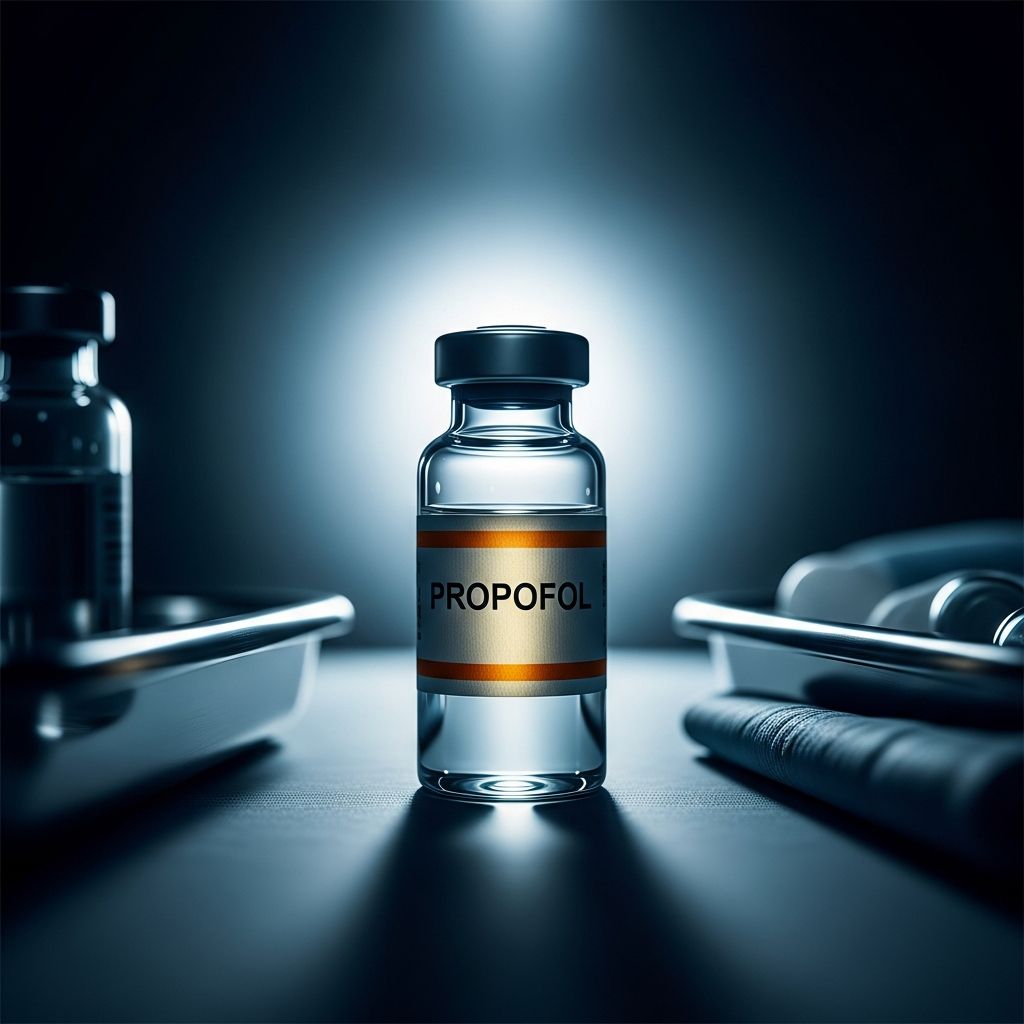
Propofol: The Drug That Killed Michael Jackson
Understanding propofol's dangers: How Michael Jackson's death exposed critical risks of anesthetic misuse.
On June 25, 2009, the world lost one of music’s most iconic figures—Michael Jackson, the King of Pop. His death shocked millions globally, but what shocked the medical community even more was the cause: acute propofol intoxication administered by his personal physician, Dr. Conrad Murray. Jackson’s death became a watershed moment in medical oversight, exposing dangerous gaps in how powerful anesthetics could be misused outside regulated clinical environments. This tragic event transformed how healthcare institutions handle propofol and other controlled anesthetics, leading to sweeping reforms in medication safety protocols.
What Is Propofol and Its Legitimate Medical Uses
Propofol is a potent intravenous anesthetic agent widely used in medical and surgical settings. Its legitimate applications include induction and maintenance of anesthesia during surgery, sedation in intensive care units, and procedural sedation for diagnostic and therapeutic interventions. The drug works rapidly, typically inducing unconsciousness within seconds of intravenous administration, making it invaluable in controlled hospital environments where trained anesthesiologists and emergency equipment are readily available.
The pharmaceutical profile of propofol requires careful handling. It must be administered only by trained anesthesia professionals in settings equipped with airway management tools, continuous cardiac and respiratory monitoring, and immediate access to emergency resuscitation equipment. When used appropriately within these parameters, propofol has an excellent safety record and remains an essential tool in modern medicine.
Michael Jackson’s Struggle with Insomnia
Michael Jackson’s journey to that fatal day began decades earlier with chronic insomnia. According to testimony from Dr. Charles Czeisler, a Harvard sleep medicine expert, Jackson had suffered from sleep problems for years, though they were not always disabling. However, the condition intensified during periods of stress, particularly when preparing for tours or major performances.
By the time of his death, Jackson’s insomnia had become severe. In the final two months of his life, he suffered from what experts described as almost total sleep deprivation. Jackson’s symptoms were profound: significant weight loss, paranoia, anxiety, chills, difficulty maintaining balance, and an inability to remember dance steps—even the choreography to his classic hits. The deterioration was both visible and devastating, affecting his cognitive function, physical health, and emotional well-being.
Why Propofol Was Used as a Sleep Aid
Desperate for relief from his insomnia, Jackson eventually turned to unconventional and dangerous methods. He sought propofol from his personal physician, Dr. Conrad Murray, who administered the surgical anesthetic nightly at Jackson’s home as an off-label sleep aid. This use was neither approved by any regulatory authority nor appropriate for any patient, let alone someone self-administering or receiving it outside a hospital setting.
The appeal to Jackson was understandable but tragically misguided. Propofol rapidly induces unconsciousness, offering what appears to be instantaneous sleep. However, Dr. Czeisler’s expert testimony revealed the critical flaw in this approach: propofol does not provide genuine sleep. Instead, it induces a drug-induced coma that fails to satisfy the body’s actual physiological sleep needs. Propofol actually dissipates the sleep drive itself, creating a massive sleep deficiency rather than resolving insomnia. Over Jackson’s final 60 days of treatment with propofol, he received doses that would be appropriate for conducting major abdominal surgeries—night after night.
The Dangers of Propofol Administration Outside Clinical Settings
Related Stories



The fundamental danger in Jackson’s case stemmed from the complete absence of appropriate medical safeguards. Propofol is a respiratory depressant that can cause dangerous drops in blood pressure, cardiac arrhythmias, and respiratory failure. It requires continuous monitoring of vital signs, immediate access to airway management equipment, and trained personnel capable of responding to emergencies.
When Dr. Murray administered propofol in Jackson’s home, none of these safeguards were present. There was no continuous cardiac monitoring. There were no airway management tools readily available. There was no emergency resuscitation equipment. Perhaps most critically, there was no trained anesthesiologist present—only a cardiologist attempting to manage a complex anesthetic outside his area of expertise and without appropriate preparation.
The scale of propofol that Murray ordered for Jackson was staggering. Pharmacy records showed he obtained more than four gallons of propofol in the three months leading to Jackson’s death—an amount sufficient for more than 7,000 major surgical procedures. This “stupendous” quantity, as Dr. Czeisler characterized it, highlights both the scale of Jackson’s chemical dependence and the complete lack of oversight in its administration.
The Night Jackson Died
On June 25, 2009, as with countless nights before, Dr. Murray administered propofol to Jackson. However, this night would be different. Jackson never woke up. The exact circumstances of his death involved propofol as the primary agent, with benzodiazepines—sedative medications that compound respiratory depression—as contributing factors.
The Los Angeles County Coroner’s official autopsy report confirmed that Jackson died from acute propofol intoxication. The amount of propofol in his system matched concentrations typically seen in patients undergoing major surgical procedures. The coroner’s office ruled Jackson’s death a homicide resulting from medical negligence. Subsequently, Dr. Conrad Murray was convicted of involuntary manslaughter—the first and only physician convicted of involuntary manslaughter for administering propofol.
Immediate Medical and Legal Consequences
Jackson’s death sent shockwaves through the medical community and sparked investigations into how such a tragedy could occur. The case exposed critical lapses in medical oversight and professional ethics. Dr. Murray’s actions violated fundamental principles of anesthesiology: administering a powerful anesthetic outside appropriate settings, failing to provide required monitoring, administering an unapproved use of the drug, and essentially abandoning proper medical practice.
The legal consequences were significant. Beyond the criminal conviction, multiple civil lawsuits followed, including a wrongful death suit from Jackson’s mother against concert promoter AEG Live, which alleged that the company hired Dr. Murray while ignoring Jackson’s documented health problems and failing to ensure appropriate medical care during tour preparations.
Regulatory Changes and Safety Reforms
Jackson’s death served as a powerful catalyst for systemic change in how medical institutions manage propofol and other controlled anesthetics. The tragedy highlighted critical vulnerabilities in medication oversight and inspired comprehensive reforms across the healthcare industry.
Institutional Protocol Changes
Hospitals and medical centers nationwide implemented stricter controls over propofol access and administration:
- Restricted access to propofol storage exclusively for authorized anesthesia personnel
- Installation of locked medication carts or secure vaults for controlled anesthetics
- Mandatory certification and training programs for all staff handling sedative medications
- Mandatory vital sign monitoring and emergency equipment requirements during all sedation
- Detailed audit trails and medication logs to track propofol usage and prevent diversion
- Policy alignment with American Society of Anesthesiologists’ safety standards
Professional Guidelines
Professional anesthesiology organizations worldwide strengthened their guidelines and position statements regarding propofol use. The focus shifted toward emphasizing that propofol should only be administered by trained anesthesia professionals in fully equipped medical facilities with appropriate monitoring capabilities.
Propofol Misuse Among Healthcare Workers
Ironically, Jackson’s case also exposed another significant problem: propofol abuse among healthcare workers themselves. Medical personnel with access to propofol have been documented abusing the drug, sometimes with fatal consequences. This occupational hazard has received inadequate attention in medical literature and policy development.
The propofol that affected Jackson also affected the medical profession, prompting discussions about workplace re-entry policies for healthcare workers who have misused the drug. Institutions have had to grapple with difficult questions about rehabilitation, monitoring, and how to prevent recurrence of such behavior among their staff.
The Broader Context: Medication Safety
Jackson’s death forced the medical community to confront uncomfortable truths about medication safety. Licensed physicians can misuse medications. High-profile patients can be inadequately protected. Powerful drugs can be obtained without appropriate controls. The case demonstrated that credentialing alone—having an MD after one’s name—provides no guarantee of safe or ethical practice when individuals operate outside appropriate oversight and safeguards.
The tragedy underscored the importance of systemic checks and balances in medicine. It highlighted why even experienced physicians require peer review, why monitoring and oversight matter, and why certain medications demand specific environmental and professional requirements regardless of the prescriber’s credentials.
International Recognition and Learning
Jackson’s death achieved global recognition across medical communities. Major medical institutions, from Harvard Medical School to international anesthesiology societies, cited the case as a cautionary tale and learning opportunity. The case became standard teaching material in anesthesiology and medical ethics courses, illustrating the consequences of deviation from established safety protocols.
The Harvard Medical School specifically noted Jackson’s death as a stark warning about the consequences of using propofol outside approved settings and the critical importance of medical oversight and strict adherence to safety protocols. This high-profile institution’s attention helped elevate the case from a tragic celebrity death to a significant chapter in medical education and safety reform.
Lessons for the Medical Community
Several critical lessons emerged from Jackson’s tragedy:
- Off-label use of powerful medications requires extreme caution and appropriate safeguards
- Insomnia, despite its severity, should never be treated with surgical anesthetics
- Propofol should never be used as a sleep aid under any circumstances
- Proper monitoring and emergency equipment are not optional—they are essential
- Professional credentials do not substitute for appropriate training in specific drug administration
- Systemic oversight and institutional controls protect both patients and healthcare providers
- When powerful drugs are involved, multiple safeguards and cross-checks are necessary
Current Propofol Safety Standards
Today, propofol remains an essential anesthetic agent, but its use is governed by comprehensive safety protocols. Current standards require:
- Administration only by trained anesthesiologists or qualified sedation specialists
- Continuous monitoring of heart rate, blood pressure, oxygen saturation, and respiratory status
- Immediate availability of airway management equipment and emergency medications
- Proper patient assessment and informed consent procedures
- Clear documentation and institutional oversight
- Adherence to approved indications and dosing guidelines
Frequently Asked Questions
Q: What exactly is propofol?
A: Propofol is a rapid-acting intravenous anesthetic used primarily for inducing and maintaining sedation during surgery and medical procedures. It works within seconds and is only appropriate in medical settings with proper monitoring.
Q: Why did Michael Jackson use propofol for sleep?
A: Jackson suffered from severe chronic insomnia and sought propofol from his physician because it rapidly induced unconsciousness. However, it does not provide genuine restorative sleep and was never an appropriate treatment for insomnia.
Q: What happened to Dr. Conrad Murray?
A: Dr. Murray was convicted of involuntary manslaughter for administering propofol to Jackson without appropriate monitoring, safeguards, or emergency equipment. He became the first physician convicted in connection with propofol administration.
Q: How did Jackson’s death change medical practice?
A: His death prompted comprehensive reforms in propofol access, storage, administration protocols, staff training, medication tracking, and institutional oversight. Medical institutions worldwide tightened controls and safety guidelines.
Q: Is propofol still used today?
A: Yes, propofol remains a widely used and essential anesthetic agent, but now with much stricter safety protocols, professional oversight, and institutional controls than were present during Jackson’s era.
Q: Can propofol be used to treat insomnia?
A: No. Propofol is not approved for treating insomnia and should never be used for this purpose. It does not provide restorative sleep and poses severe risks outside hospital operating rooms.
Q: What warning signs appeared before Jackson’s death?
A: Jackson exhibited significant weight loss, memory problems, paranoia, anxiety, difficulty with balance, and inability to perform choreography—all signs of severe sleep deprivation and deteriorating health from propofol use.
References
- The Misuse and Abuse of Propofol — National Institutes of Health (PMC), National Center for Biotechnology Information. 2019. https://pmc.ncbi.nlm.nih.gov/articles/PMC6392060/
- Jackson suffered almost total sleep deprivation, expert testifies — Los Angeles Times. 2013-06-21. https://www.latimes.com/local/la-xpm-2013-jun-21-la-me-0622-jackson-20130622-story.html
- How Michael Jackson’s Death Restricted Propofol Use — Theodore Drew Blog. 2020. https://theodoredrew.com/blog/propofol-control-lessons-from-the-michael-jackson-case/
- Acute Propofol Intoxication: Risks, Symptoms, and Prevention — Tennessee Behavioral Health. 2023. https://tennesseebehavioralhealth.com/blog/acute-propofol-intoxication/
- Michael Jackson wrongful death trial: Insomnia expert testifies — ABC7 Chicago. 2013. https://abc7chicago.com/archive/9148127/
Similar Articles








Read full bio of Sneha Tete