Treadmill Running: 6 Pros, 5 Cons To Know
Discover the advantages and drawbacks of treadmill running versus outdoor workouts to optimize your fitness routine effectively.
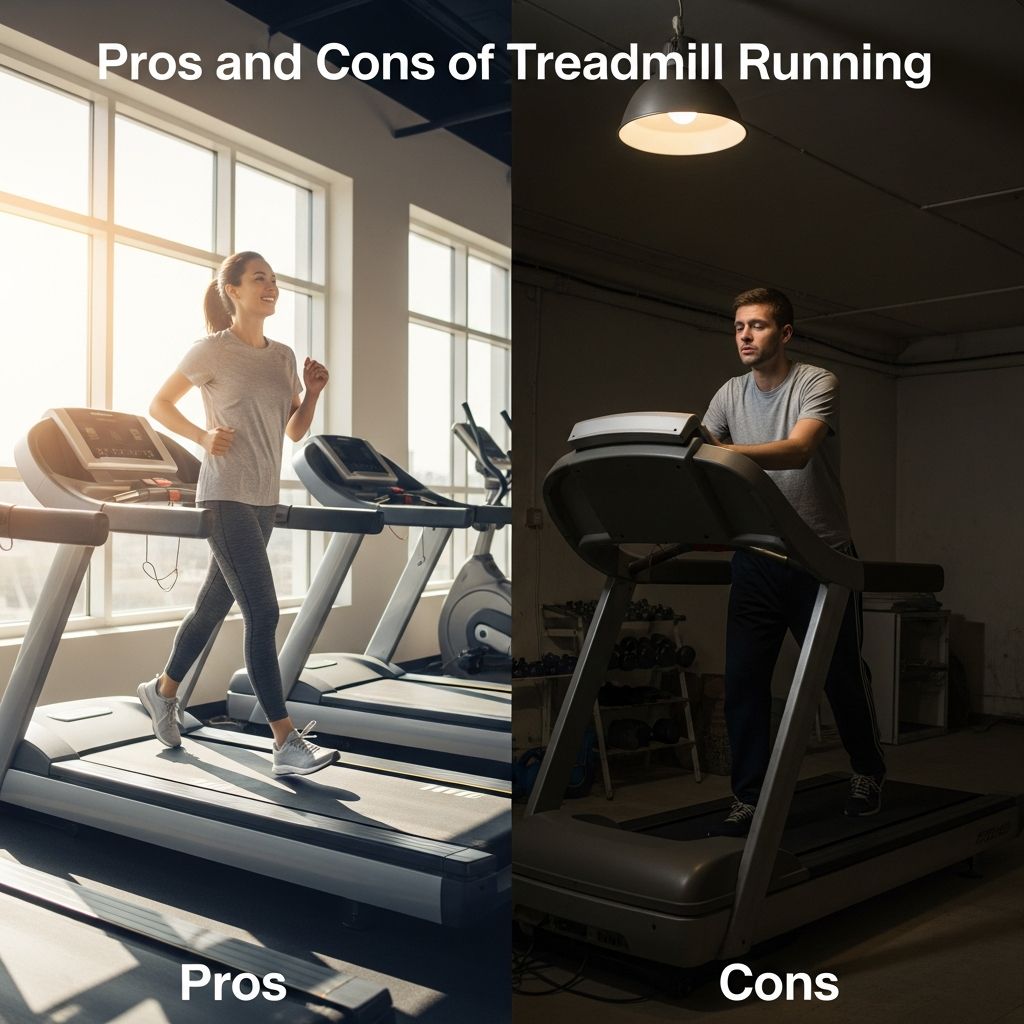
Treadmill running offers a controlled indoor alternative to outdoor jogging, providing benefits like weather protection and customizable workouts while presenting challenges such as monotony and equipment limitations. This article examines these aspects in detail, helping runners decide when to hit the treadmill or pavement.
What Are the Pros of Running on a Treadmill?
Treadmills excel in creating a consistent, user-friendly environment for exercise. They allow precise control over speed, incline, and duration, making them suitable for beginners and seasoned athletes alike.
- Weather Independence: Unlike outdoor runs, treadmills eliminate concerns about rain, snow, heat, or wind, enabling consistent training regardless of conditions. This predictability supports pace-focused sessions without environmental disruptions.
- Enhanced Safety: Indoor running avoids traffic, uneven terrain, wildlife, or poorly lit paths, reducing accident risks—ideal for early mornings, late nights, or high-crime areas.
- Terrain Simulation: Adjust inclines to mimic hills or flats, preparing for races in varied landscapes even if your local area lacks such features. This versatility aids targeted training.
- Superior Shock Absorption: Treadmill decks cushion impacts better than concrete or asphalt, easing joint stress on knees, hips, and ankles. This is particularly beneficial for injury recovery or high-mileage runners.
- Customizable Workouts: Features like heart rate monitors, step counters, and pre-programmed routines track progress and burn calories efficiently—often more than stationary biking.
- Multitasking Potential: Run while watching TV, reading, or listening to podcasts, combating boredom and fitting workouts into busy schedules.
What Are the Cons of Running on a Treadmill?
Despite advantages, treadmills have limitations that can hinder enjoyment and effectiveness, especially for long-term training.
- Monotony and Lack of Social Interaction: Staring at a wall or screen feels repetitive compared to scenic outdoor routes or group runs, potentially reducing motivation over time.
- Underpreparation for Races: The absence of wind resistance, variable terrain, and real-world elements can leave treadmill-exclusive runners struggling with pace outdoors, risking slower race times or injury.
- Time and Speed Constraints: Gym treadmills often cap sessions at 30-60 minutes, interrupting long runs. Max speeds may not support sprints, and quick deceleration feels unsafe.
- High Cost and Space Demands: Quality models exceed $2,000 and require significant room (up to 72 inches long), plus maintenance issues like breakdowns.
- Potential Joint Concerns: While cushioned, poor-quality belts may still jar joints if rebound is excessive or absorption inadequate.
Treadmill Running vs. Outdoor Running
Choosing between treadmill and outdoor running depends on goals, location, and preferences. Outdoor runs build resilience against real-world variables, while treadmills offer reliability.
| Aspect | Treadmill Running | Outdoor Running |
|---|---|---|
| Calorie Burn | Consistent pace and incline; cushioned surface may reduce effort slightly. | Often higher due to air resistance, terrain variability, and no belt assistance. One study showed greater body fat loss and leg muscle gains outdoors. |
| Joint Impact | Lower thanks to cushioning; easier for recovery. | Higher on hard surfaces like pavement, increasing injury risk. |
| Weather/Terrain | Fully controlled; simulates hills. | Unpredictable; builds strength but poses safety issues. |
| Motivation | Can be boring; aids multitasking. | Scenic and social; weather-dependent. |
| Accessibility | 24/7 at home/gym; no travel. | Schedule, location, and safety barriers. |
Outdoor running demands more energy against elements like wind and inclines, potentially burning more calories at matched speeds. However, treadmills allow sustained efforts impossible outside.
Outdoor Running Pros and Cons
To contextualize treadmill use, consider outdoor alternatives.
Pros of Outdoor Running
- Greater Fat Loss and Muscle Building: Studies indicate superior body fat reduction and leg muscle improvements versus treadmills.
- Real-World Preparation: Builds endurance against wind, heat, and terrain for better race performance.
- Mental Boost: Nature exposure, variety, and social runs enhance mood and adherence.
Cons of Outdoor Running
- Weather Dependency: Rain, extreme temperatures, or wind can derail plans.
- Scheduling Challenges: Travel to safe routes, childcare, or work demands limit flexibility.
- Safety and Logistics: Traffic, poor lighting, getting lost, or lacking bathrooms during GI distress.
Related Stories



Calories Burned: Treadmill vs. Outdoors
Calorie expenditure varies by speed, incline, body weight, and conditions. Outdoors typically edges out due to air resistance and uneven surfaces, but treadmills with inclines can match or exceed via consistency. For equivalent efforts, outdoor burns more without cushioning aid.
Frequently Asked Questions (FAQs)
Is treadmill running better than outdoor running?
No definitive winner—treadmills suit controlled, joint-friendly sessions; outdoors build comprehensive fitness. Mix both for optimal results.
Does treadmill running burn fewer calories?
Potentially yes at same speed/incline due to less resistance and cushioning, but customizable inclines can equalize or surpass.
Is running on a treadmill bad for joints?
Generally safer with proper cushioning, reducing impact versus pavement. Select models with good rebound testing.
How long should you run on a treadmill?
20-60 minutes for most, based on fitness level. Beginners start shorter; include warm-up/cool-down. Long runs may require gym hopping or home models without limits.
Why does treadmill running feel easier?
No wind resistance, belt propulsion, and cushioning lower effort. Manual treadmills feel harder, mimicking outdoors better.
Tips for Effective Treadmill Running
Maximize benefits: Vary inclines/speeds, use intervals, set virtual routes via apps, maintain posture (avoid holding rails), and hydrate. Periodically transition outdoors to adapt.
Choosing the Right Treadmill
Key factors: Cushioning quality, motor power for speed/incline, stable frame/rails, user-friendly controls, noise level, and space. Test in person for stability.
References
- Treadmill vs. Outdoor Running: A Run Coach Reveals Which Is Better — Prevention.com. 2024-10-15. https://www.prevention.com/fitness/fitness-tips/a69061981/treadmill-vs-outdoor-running-benefits/
- Running on a Treadmill Versus Running Outside: Pros, Cons — REP Fitness. 2023-05-20. https://repfitness.com/blogs/training/treadmill-vs-running-outside
- Advantages and Disadvantages of Treadmill Use for Exercise and Pain Relief — Spine-Health.com. 2022-08-10. https://www.spine-health.com/wellness/exercise/advantages-and-disadvantages-treadmill-use-exercise-and-pain-relief
- Pros and Cons of Treadmill Running — Oh My Aching Feet. 2021-11-05. https://www.ohmyachingfeet.com/blog/item/791-pros-and-cons-of-treadmill-running.html
- Indoor or Outdoor Running? How to Choose for Your Goals — Runner’s World. 2025-01-08. https://www.runnersworld.com/training/a69528783/amazing-runners-world-show-episode-90-treadmill-vs-outside-running/
Similar Articles








Read full bio of Sneha Tete