Prostate Cancer: Key Facts, Stages, And Treatment Options
Comprehensive guide to prostate cancer: symptoms, causes, diagnosis, treatment options, and prevention strategies for men.
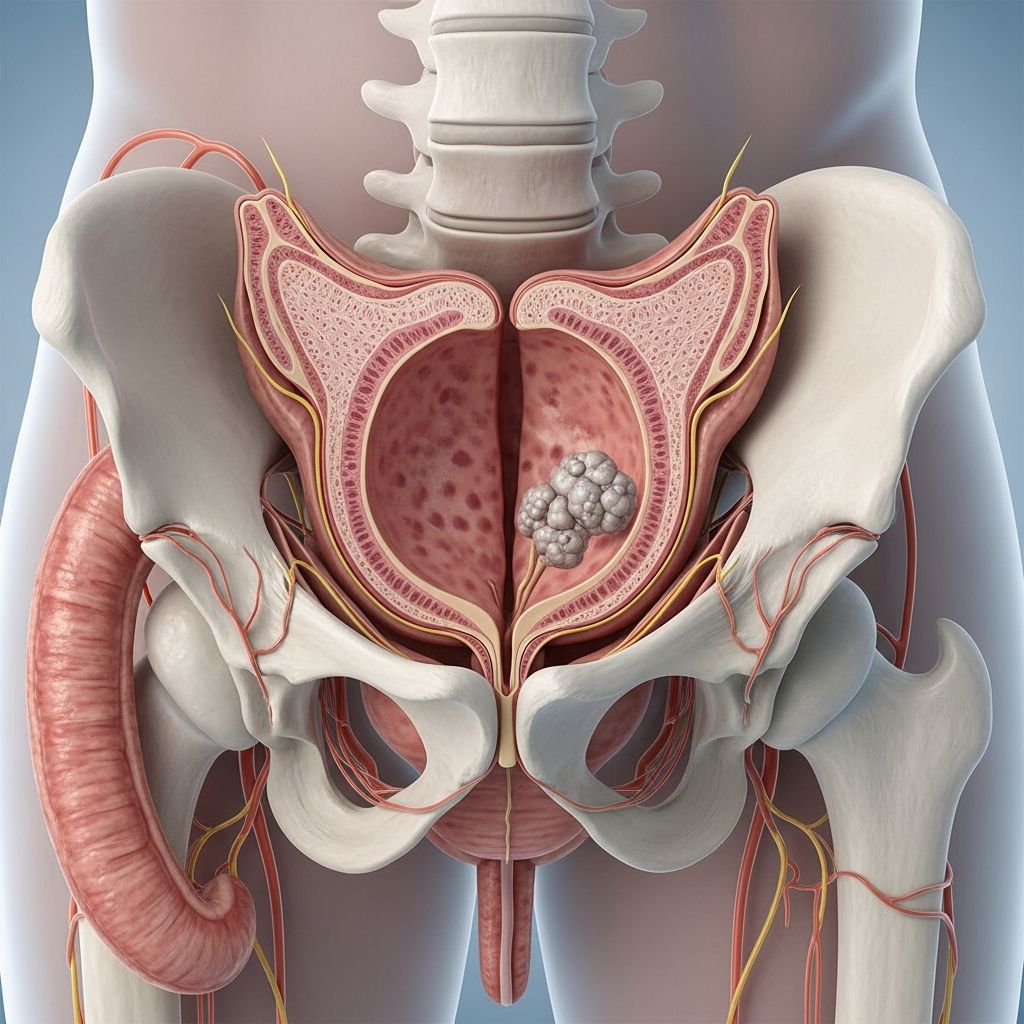
The prostate is a small walnut-shaped gland in men located just below the bladder, surrounding the urethra. Prostate cancer occurs when cells in the prostate gland grow uncontrollably, forming a tumor that can spread if not treated early. It is one of the most common cancers in men, but many cases grow slowly and may not cause serious harm during a man’s lifetime. Early detection significantly improves outcomes, with five-year survival rates approaching 100% for localized cases.
What Is Prostate Cancer?
Prostate cancer begins when normal prostate cells mutate and multiply rapidly, forming a malignant tumor. Unlike benign conditions like prostatitis or benign prostatic hyperplasia (BPH), prostate cancer cells can invade nearby tissues and metastasize to distant organs such as bones, lymph nodes, or lungs. The disease is often androgen-dependent, meaning male hormones like testosterone fuel its growth.
Most prostate cancers are adenocarcinomas, originating from glandular cells. Rare types include small cell carcinoma, neuroendocrine tumors, and sarcomas. According to the American Cancer Society, about 1 in 8 men will be diagnosed with prostate cancer during their lifetime, but only 1 in 44 will die from it, highlighting its variable aggressiveness.
Prostate Cancer Symptoms
Early-stage prostate cancer often produces no symptoms, which is why screening is crucial. When symptoms appear, they typically relate to urinary function or advanced disease:
- Urinary issues: Weak or interrupted urine flow, frequent urination (especially at night), difficulty starting or stopping urination, blood in urine (hematuria).
- Sexual dysfunction: Erectile dysfunction, blood in semen.
- Advanced symptoms: Bone pain, unexplained weight loss, fatigue, swelling in legs or pelvic area from lymph node involvement.
These signs can mimic BPH or infections, so medical evaluation is essential. Men over 50 should discuss symptoms with a healthcare provider promptly.
Risk Factors for Prostate Cancer
Several factors increase prostate cancer risk, though the exact cause remains unknown. Key risk factors include:
- Age: Risk rises sharply after age 50; over 60% of cases occur in men over 65.
- Family history: Having a father or brother with prostate cancer doubles risk; multiple relatives increase it further.
- Race/ethnicity: African American men have higher incidence and mortality rates; Asian and Hispanic men have lower rates.
- Genetics: Mutations in BRCA1, BRCA2, or HOXB13 genes elevate risk.
- Lifestyle: Obesity, high-fat diets, smoking may contribute; physical activity and healthy weight may lower risk.
Environmental factors like Agent Orange exposure also play a role in veterans.
Prostate Cancer Stages
Staging determines cancer extent and guides treatment. The TNM system assesses Tumor size, Node involvement, and Metastasis:
| Stage | Description |
|---|---|
| Stage I | Cancer confined to a small prostate area, undetectable by imaging or exam. |
| Stage II | Larger tumor still within prostate, may be felt on exam. |
| Stage III | Cancer extends beyond prostate capsule to nearby tissues. |
| Stage IV | Metastatic to lymph nodes, bones, or distant organs. |
Gleason score (6-10) grades aggressiveness from biopsy samples; higher scores indicate poorer prognosis.
Diagnosis of Prostate Cancer
Diagnosis combines screening, imaging, and biopsy:
Related Stories



- PSA test: Blood test measuring prostate-specific antigen; levels above 4 ng/mL prompt further tests, though not diagnostic alone.
- Digital rectal exam (DRE): Doctor feels prostate for lumps.
- Imaging: MRI, CT, bone scans, PSMA-PET for staging.
- Biopsy: Tissue samples confirm cancer, Gleason score.
Multiparametric MRI improves accuracy, reducing unnecessary biopsies.
Prostate Cancer Treatment Options
Treatment depends on stage, grade, age, and health. Options include:
- Active surveillance: Monitoring low-risk cases with regular PSA, MRI, biopsies.
- Surgery (radical prostatectomy): Removes prostate; robotic-assisted common.
- Radiation therapy: External beam or brachytherapy; often combined with hormone therapy.
- Hormone therapy (ADT): Lowers testosterone; drugs like Lupron or abiraterone.
- Chemotherapy: For advanced cases; docetaxel standard.
- Targeted therapies: PARP inhibitors for BRCA mutations; immunotherapy like sipuleucel-T.
- Focal therapies: HIFU, cryotherapy for early, localized disease.
Side effects vary: incontinence, erectile dysfunction, bowel issues. Multidisciplinary care optimizes outcomes.
Prognosis and Survival Rates
Prostate cancer has excellent prognosis when localized. Five-year relative survival rates:
- Localized: Nearly 100%
- Regional: 100%
- Distant: About 34%
- All stages combined: 98%
Ongoing research improves metastatic disease management.
Prevention and Screening
No sure prevention exists, but strategies reduce risk:
- Maintain healthy weight, exercise regularly.
- Eat diet rich in fruits, vegetables, low in red meat/dairy.
- Consider 5-alpha reductase inhibitors if high-risk.
Screening debate: USPSTF recommends shared decision-making for ages 55-69; start earlier for high-risk groups. Annual PSA/DRE from age 50 (45 for African Americans/family history).
Living with Prostate Cancer
Diagnosis impacts emotional, physical health. Support groups, counseling help. Lifestyle changes aid recovery: pelvic floor exercises for incontinence, PDE5 inhibitors for ED. Regular follow-ups monitor recurrence via PSA.
Frequently Asked Questions (FAQs)
What causes prostate cancer?
Exact cause unknown; combination of genetic mutations, hormones, environment. Risk factors like age/family history contribute.
Is prostate cancer curable?
Yes, especially early-stage; surgery/radiation cure many localized cases. Advanced disease manageable long-term.
Does prostate cancer spread quickly?
Varies; many slow-growing, others aggressive. Gleason score predicts behavior.
Can diet prevent prostate cancer?
Not proven, but plant-based diets, lycopene (tomatoes), omega-3s may lower risk.
What is a normal PSA level?
Under 4 ng/mL typical; varies by age. Trends matter more than single reading.
Does BPH increase prostate cancer risk?
No direct link; both common in older men, share symptoms.
References
- Prostate Cancer — Urology Care Foundation. 2024. https://www.urologyhealth.org/urology-a-z/p/prostate-cancer
- Prostate Cancer Statistics — American Cancer Society. 2025-01-10. https://www.cancer.org/cancer/types/prostate-cancer/about/key-statistics.html
- Prostate Cancer Screening — U.S. Preventive Services Task Force. 2023-08-22. https://www.uspreventiveservicestaskforce.org/uspstf/recommendation/prostate-cancer-screening
- Prostate Cancer Treatment (PDQ®) — National Cancer Institute. 2026-01-01. https://www.cancer.gov/types/prostate/hp/prostate-treatment-pdq
- Key Statistics for Prostate Cancer — Centers for Disease Control and Prevention. 2024. https://www.cdc.gov/cancer/prostate/statistics/index.htm
Similar Articles








Read full bio of Sneha Tete