Prostatitis: Causes, Symptoms, and Treatment Options
Complete guide to understanding prostatitis, its types, symptoms, diagnosis, and effective treatment strategies.
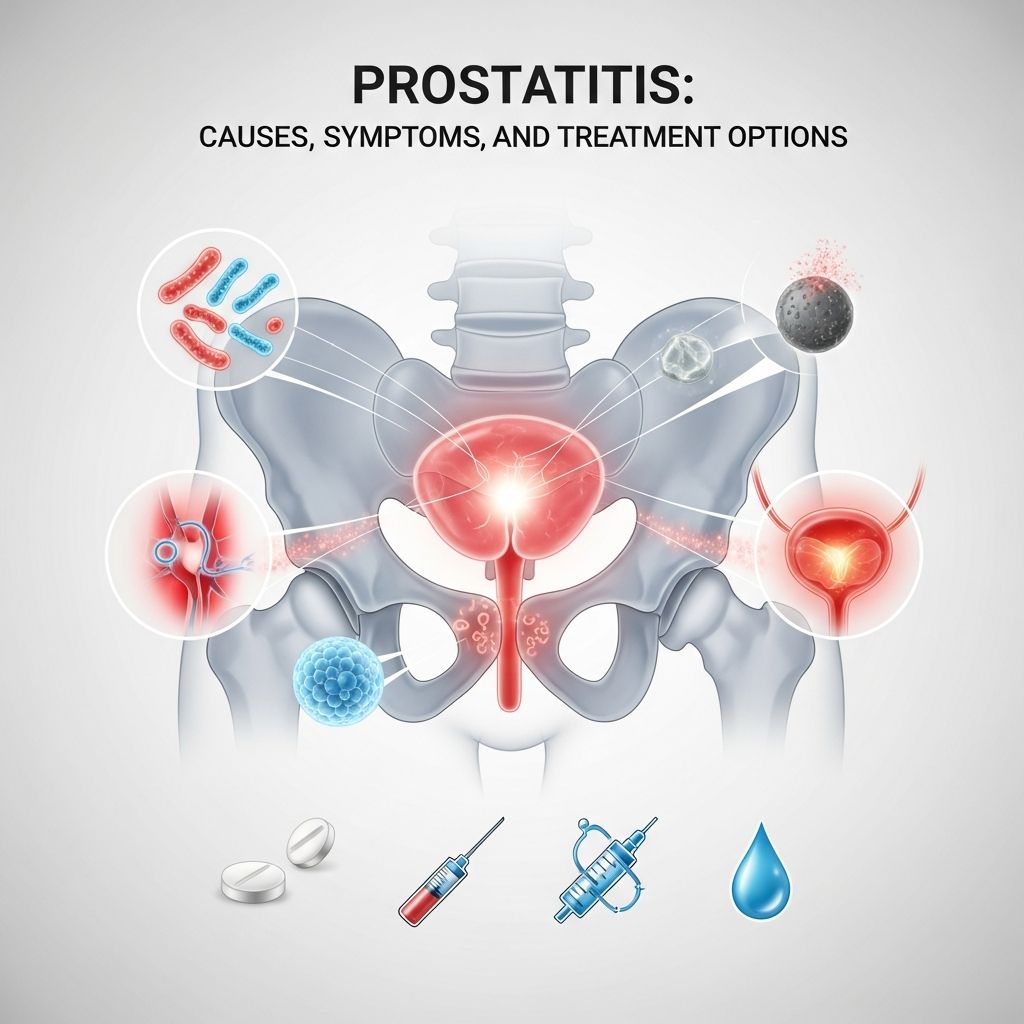
Prostatitis is an inflammation or infection of the prostate gland, a small gland that is part of the male reproductive system. The prostate produces fluid that helps nourish and transport sperm. When the prostate becomes inflamed or infected, it can cause significant discomfort and urinary problems. Understanding the different types of prostatitis, their symptoms, and available treatment options is essential for men’s health and wellbeing.
Understanding Prostatitis
Prostatitis affects men of various ages but occurs most commonly in men between 20-40 years old and those over 60 years of age. The condition can develop suddenly or gradually and may vary in severity from mild discomfort to severe pain and systemic illness. Prostatitis is classified into several distinct types, each with different causes and treatment approaches.
The prostate gland is located below the bladder and surrounds the urethra, the tube that carries urine from the bladder through the penis. When this gland becomes inflamed or infected, it can interfere with urination and sexual function, significantly impacting a man’s quality of life.
Types of Prostatitis
There are four main types of prostatitis, each with distinct characteristics:
Acute Bacterial Prostatitis
Acute bacterial prostatitis (ABP) is a severe, potentially life-threatening infection that requires immediate medical attention. This type develops suddenly and presents with acute symptoms that can be quite severe. ABP is most commonly caused by bacterial pathogens, particularly Escherichia coli (E. coli), which accounts for approximately 75% of cases. Other common causative organisms include other members of the Enterobacteriaceae family, Pseudomonas aeruginosa, and Enterococcus species. When prostatitis is caused by Enterococcus or Pseudomonas species, it tends to be more difficult to treat and may require prolonged antibiotic therapy.
The infection typically occurs when bacteria ascend through the urethra and enter the prostate gland, or when bacteria spread from an infected urinary tract. Men with urinary catheters or recent urological procedures face an increased risk of developing acute bacterial prostatitis.
Chronic Bacterial Prostatitis
Chronic bacterial prostatitis (CBP) develops over time and is characterized by recurrent urinary tract infections and persistent symptoms. The causative organisms are similar to those found in acute bacterial prostatitis, with Escherichia coli remaining the predominant pathogen in the majority of cases. However, chronic bacterial prostatitis may also involve other gram-negative organisms like Pseudomonas aeruginosa and various gram-positive bacteria including Enterococcus and Staphylococcus species.
Sexually transmitted pathogens such as Chlamydia trachomatis and other atypical organisms like Ureaplasma urealyticum have also been implicated in chronic bacterial prostatitis. In rare cases, other organisms including tuberculosis, fungi (such as histoplasmosis and cryptococcus), and viruses may cause chronic prostatitis.
Chronic Pelvic Pain Syndrome
Chronic pelvic pain syndrome (CP/CPPS) is the most common form of prostatitis, yet its cause remains unclear. Unlike bacterial prostatitis, cultures do not reveal bacterial growth, suggesting a non-infectious etiology. The symptoms can be similar to chronic bacterial prostatitis but persist without identifiable bacterial infection.
Asymptomatic Inflammatory Prostatitis
This type is characterized by inflammation of the prostate without symptoms. It is typically discovered incidentally during evaluation for other urological conditions or elevated prostate-specific antigen (PSA) levels.
Related Stories



Symptoms and Clinical Presentation
The symptoms of prostatitis vary depending on the type and severity of the condition. Both acute bacterial prostatitis and chronic bacterial prostatitis (as well as CP/CPPS) can present with a range of symptoms affecting urination, sexual function, and overall comfort.
Common Symptoms Include:
- Pain in the lower abdomen, pelvic region, or lower back
- Rectal pain or discomfort
- Perineal pain (pain in the area between the scrotum and anus)
- Penile or testicular pain
- Pain during or after ejaculation (post-ejaculatory pain)
- Urinary frequency and urgency, particularly at night (nocturia)
- Burning sensation during urination (dysuria)
- Difficulty urinating or weak urinary stream
- Urgent need to urinate
- Fever and chills (particularly in acute bacterial prostatitis)
- Fatigue and general malaise
- Sexual dysfunction or decreased libido
In acute bacterial prostatitis, symptoms develop suddenly and can be severe, often accompanied by systemic signs such as fever, chills, and general illness. Patients may experience severe perineal, rectal, or lower abdominal pain along with acute urinary symptoms. In contrast, chronic bacterial prostatitis symptoms develop gradually and may wax and wane over time.
Diagnosis of Prostatitis
Accurate diagnosis of prostatitis involves a comprehensive evaluation including medical history, physical examination, and laboratory tests. Healthcare providers must differentiate between the various types of prostatitis to determine the appropriate treatment approach.
Medical History and Physical Examination
The diagnostic process begins with a detailed history of symptoms, including their onset, duration, and severity. The healthcare provider will inquire about associated urinary symptoms, pain characteristics, and any recent urological procedures or infections. A thorough physical examination includes palpation of the prostate gland through a digital rectal examination (DRE), which can reveal tenderness, enlargement, or other abnormalities.
Laboratory Tests
Urinalysis and urine culture are fundamental diagnostic tests. A midstream clean-catch urine sample is analyzed for the presence of white blood cells, bacteria, and other indicators of infection or inflammation. Urine cultures identify the specific bacterial organism causing infection, which is crucial for targeted antibiotic therapy.
In acute bacterial prostatitis, urine cultures typically reveal significant bacterial growth. The Meares and Stamey four-glass test, though less commonly used today, can help localize infection to the prostate versus other parts of the urinary tract by comparing bacterial counts in sequential urine and expressed prostatic secretion samples.
Additional Diagnostic Imaging
Transrectal ultrasound may be performed to visualize the prostate gland and identify structural abnormalities, abscess formation, or other complications. In some cases, imaging studies help rule out other conditions and assess the severity of prostate involvement.
Treatment Approaches
Treatment of prostatitis depends on the type, severity, and underlying cause of the condition. A multimodal approach combining antibiotics, supportive care, and symptomatic relief often yields the best outcomes.
Antibiotic Therapy
Antibiotics form the cornerstone of treatment for bacterial prostatitis. For acute bacterial prostatitis, initial empiric antibiotic therapy typically targets the most common pathogens, particularly E. coli and other gram-negative organisms. Fluoroquinolones, such as ciprofloxacin or levofloxacin, are frequently used due to their excellent penetration into prostate tissue and broad spectrum of activity against urinary pathogens. In severe cases requiring hospitalization, intravenous antibiotics such as gentamicin combined with ampicillin or third-generation cephalosporins may be administered.
For chronic bacterial prostatitis, prolonged antibiotic courses (typically 4-12 weeks or longer) are often necessary to achieve adequate prostate tissue penetration and eradicate persistent infection. The choice of antibiotic is guided by culture and sensitivity results to ensure appropriate pathogen coverage.
Supportive Care and Symptomatic Management
Supportive therapies play an important role in managing prostatitis symptoms and promoting recovery. These measures include:
- Adequate hydration to dilute urine and reduce irritation
- Rest and activity modification to minimize pelvic discomfort
- Sitz baths (sitting in warm water) to relieve pelvic and perineal pain
- Application of heat to the perineal area for comfort
- Urinary catheterization only when necessary, as catheters increase infection risk
- Bowel management to prevent constipation, which can exacerbate symptoms
Pain and Anti-inflammatory Management
Nonsteroidal anti-inflammatory drugs (NSAIDs) such as ibuprofen or naproxen can help reduce pain and inflammation associated with prostatitis. These medications work by decreasing inflammatory mediators and providing symptomatic relief. In some cases, stronger analgesics may be necessary for more severe pain.
Alpha-Adrenergic Blockers
Alpha-blockers such as tamsulosin or alfuzosin help relax smooth muscle in the prostate and bladder neck, improving urinary flow and reducing symptoms of urinary urgency and frequency. These medications can be particularly beneficial when urinary obstructive symptoms are prominent.
Management of Chronic Bacterial Prostatitis
Chronic bacterial prostatitis often requires more aggressive and prolonged treatment. Beyond antibiotics and supportive care, additional strategies may include:
- Repeated or intermittent antibiotic courses
- Consideration of prophylactic antibiotic therapy to prevent recurrent episodes
- Urological evaluation to identify and address any anatomical abnormalities or obstructions
- Transurethral resection of the prostate (TURP) in selected cases with significant obstruction
Treatment for Chronic Pelvic Pain Syndrome
Since CP/CPPS is not caused by bacterial infection, antibiotic therapy is not indicated. Management focuses on symptom relief through a multimodal approach including NSAIDs, alpha-blockers, muscle relaxants, and psychological support. Some patients benefit from physical therapy, particularly pelvic floor physical therapy, which addresses muscle tension and dysfunction in the pelvic region.
Complications and When to Seek Care
While most cases of prostatitis respond well to appropriate treatment, complications can occasionally occur. Acute bacterial prostatitis, if untreated or inadequately treated, can progress to prostate abscess formation, sepsis, or urosepsis—potentially life-threatening conditions. Signs requiring emergency medical attention include high fever, severe chills, acute inability to urinate, and signs of systemic infection such as hypotension or altered mental status.
Men experiencing symptoms consistent with prostatitis should seek prompt medical evaluation for accurate diagnosis and appropriate treatment initiation. Early diagnosis and treatment can prevent progression to more severe disease and complications.
Prevention and Lifestyle Considerations
While not all cases of prostatitis can be prevented, certain practices may reduce risk. Maintaining good urinary hygiene, avoiding prolonged catheterization, practicing safe sexual practices to reduce sexually transmitted infections, and maintaining adequate hydration are general preventive measures. Men with recurrent urinary tract infections may benefit from urological evaluation to identify underlying anatomical or functional abnormalities.
Frequently Asked Questions
Q: Is prostatitis contagious?
A: Acute and chronic bacterial prostatitis result from bacteria ascending the urethra and are not directly contagious from person to person in the traditional sense. However, sexually transmitted pathogens that can cause chronic bacterial prostatitis may be transmissible through sexual contact.
Q: Can prostatitis lead to prostate cancer?
A: There is no established causal relationship between prostatitis and prostate cancer. However, men with prostatitis may have elevated PSA levels, which could complicate cancer screening. Regular follow-up with a healthcare provider is important for appropriate monitoring.
Q: How long does prostatitis take to resolve?
A: Acute bacterial prostatitis typically improves within 1-2 weeks with appropriate antibiotic therapy, though complete resolution may take several weeks. Chronic bacterial prostatitis requires longer treatment courses and may take months to resolve. CP/CPPS is often chronic and requires ongoing management strategies.
Q: Can prostatitis cause erectile dysfunction?
A: Yes, prostatitis can cause temporary erectile dysfunction and decreased sexual function due to pain, inflammation, and associated symptoms. These problems typically improve as the underlying infection or inflammation resolves with treatment.
Q: Is treatment always necessary for prostatitis?
A: Yes, bacterial prostatitis requires antibiotic treatment to prevent progression and complications. For asymptomatic inflammatory prostatitis or CP/CPPS, treatment is individualized based on symptom severity and impact on quality of life.
References
- Prostatitis, Acute Bacterial — Johns Hopkins ABX Guide, Johns Hopkins University. 2016-07-03. https://www.hopkinsguides.com/hopkins/view/Johns_Hopkins_ABX_Guide/540049/all/Prostatitis__Acute_Bacterial
- Prostatitis, Chronic Bacterial — Johns Hopkins ABX Guide, Johns Hopkins University. 2016-08-01. https://www.hopkinsguides.com/hopkins/view/Johns_Hopkins_ABX_Guide/540050/all/Prostatitis__Chronic_Bacterial
- Current Issues in Prostate Cancer: Johns Hopkins Medicine — Johns Hopkins Medicine, Department of Urology. 2010-09-17. https://www.youtube.com/watch?v=Gv_heKdggq4
Similar Articles








Read full bio of Sneha Tete