Prosthesis: Definition, Types & Living With Prosthetics
Complete guide to prosthetics: Understanding artificial replacements for improved mobility and quality of life.
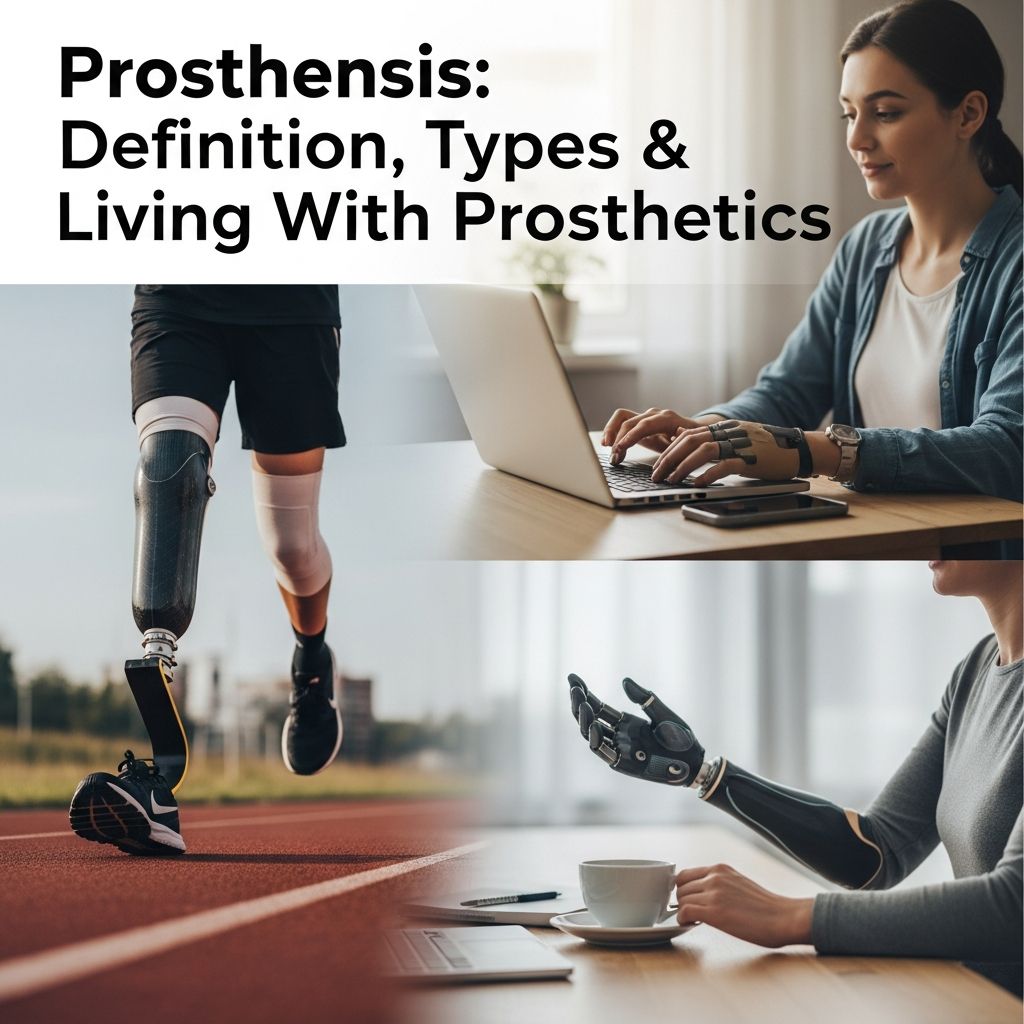
What Is a Prosthesis?
A prosthesis is an artificial replacement part for your body that replaces a part that’s missing or no longer functioning as you need it to. Prosthetics are custom-designed medical devices created to restore function, improve mobility, and enhance quality of life for individuals who have experienced limb loss or have limb deficiencies. Whether due to amputation from injury, disease, congenital conditions, or surgical removal, prosthetics offer patients the opportunity to regain independence and return to their daily activities.
The primary goals of prosthesis fitting include achieving comfort, providing stability while standing and walking, and enabling patients to perform various daily activities. Modern prosthetics are sophisticated devices that combine biomechanical engineering with personalized fitting to meet each individual’s unique needs and lifestyle goals.
Types of Prosthetics
There are numerous types of prosthetics available, each designed to address specific amputation levels and functional requirements. The type of prosthesis you need depends on where the amputation occurs and your personal goals.
Lower Limb Prosthetics
Lower limb prosthetics are among the most common types of prosthetic devices. They are designed to help patients walk and maintain mobility after foot, ankle, leg, knee, or hip amputation.
Prosthetic Feet
A prosthetic foot is an assistive device designed to help you walk when you don’t have a whole foot. Different types of prosthetic feet offer different levels of functionality. Some are more rigid and provide greater stability, while others are more flexible and accommodate various terrains and activities. Different types of prosthetic feet can accommodate different activity levels, from basic walking to running and swimming. Your prosthetist will help you select the right prosthesis based on your needs, goals, and overall physical condition. Partial foot prostheses are available for those with partial foot amputations, offering targeted support and restoration of function.
Prosthetic Legs
A leg prosthesis can replace as much of your leg as needed, from your foot, ankle, and shin to your knee, thigh, and hip. Some prosthetics are purely mechanical, while others incorporate computerized components that enhance movement and adaptability. The complexity of the prosthesis depends largely on the amputation level. Below-the-knee prosthetics are generally less complex than above-the-knee prosthetics because they only need to include a shin, ankle, and foot.
Above-the-knee prosthetics must include a functioning knee joint, which is central to the mechanics of walking. The knee joint bears much of your weight and affects your stability, balance, and ability to perform activities like running, biking, or swimming. Advanced prosthetic legs may include computerized components that allow users to toggle between different movement patterns for various activities.
Upper Limb Prosthetics
Upper limb prosthetics replace missing or nonfunctional arms or hands. A prosthetic arm, or upper limb prosthesis, can replace part or all of your upper limb. Prosthetic hands are designed to replace an absent or nonfunctional hand, with different types helping you accomplish different tasks.[10]
Advanced upper limb prosthetics may incorporate myoelectric technology, which uses electrical signals from your muscles to control the prosthesis. Some patients benefit from a procedure called targeted muscle reinnervation (TMR), where surgeons redirect severed nerves to other muscles in the body. This allows users to operate myoelectric prosthetics by training specific muscles, providing greater control and more natural movement.
Related Stories



Specialized Prosthetics
Beyond limb prosthetics, specialized prosthetic devices are available for other body parts. For example, a prosthetic testicle can replace a testicle that’s missing from birth or that was removed to treat an injury or disease. These prosthetics are designed for specific medical situations and are fitted by specialized prosthetists.
The Prosthesis Fitting and Fabrication Process
Acquiring a prosthesis from a certified prosthetist is a structured process that typically takes several months to complete. Understanding this process can help you prepare for what to expect as you work toward receiving your custom prosthetic device.
Initial Consultation and Assessment
The process begins with thorough consultations with your prosthetist. During these appointments, your prosthetist will discuss your needs, goals, and lifestyle to determine the most appropriate prosthesis for you. They will also assess your overall health, mobility level, and any specific activities you hope to perform with your prosthesis.
Measurements and Mold Creation
Your prosthetist will take precise measurements of your limb and create custom molds of your residual limb. This ensures that the prosthesis will fit properly and comfortably. For lower limb amputations, the prosthesis attaches to a custom socket that fits precisely onto your existing limb. Different types of suspension systems, including vacuum suction and pin-lock systems, hold the prosthesis securely in place.
Fabrication and Customization
Once measurements are complete, your prosthesis is made to order over several weeks. During this time, prosthetists use advanced manufacturing techniques to create a device tailored to your specifications. Many modern prosthetics can be customized not only for function but also for appearance, allowing you to match your skin tone or express your personal style.
Fitting and Adjustments
After fabrication, you’ll have additional appointments for fitting and adjustments. Your prosthetist will ensure the device fits properly, feels comfortable, and functions as intended. Several adjustments may be necessary before you achieve the perfect fit.
Timeline and Duration
On average, it takes three to six months to receive your prosthetic leg and begin the training process. The timeline includes measurements, fabrication, fitting, and initial training. For prosthetic feet, the process is similar, typically taking several months from initial consultation to final delivery.
It’s important to note that if you’re recently post-amputation, your prosthetist may first fit you with a preparatory or temporary prosthesis. This temporary prosthesis allows you to become accustomed to using a prosthesis while your residual limb undergoes morphologic changes. The residual limb typically changes considerably for 6 to 18 months following amputation. Once your residual limb stabilizes in size and shape, a definitive prosthesis is provided for long-term use.
Postoperative Management and Recovery
Proper postoperative care is essential for successful prosthesis use and overall recovery. This begins immediately after amputation surgery and continues throughout your adjustment period.
Initial Postoperative Care
Immediate postoperative management includes several key components to support recovery:
- Maintaining range of motion to prevent joint contractures
- Maintaining or increasing strength and general conditioning
- Managing edema (swelling) through compression
- Promoting healthy eating habits to support healing
Limb Conditioning
When recovery permits, patients should begin desensitizing the terminal residual limb through massage, tapping, vibration, and progressive load-bearing. This conditioning process helps prepare your limb for prosthesis use and can reduce discomfort over time.
Interdisciplinary Team Support
Success is most likely when an interdisciplinary clinical team works with the patient throughout the recovery process. The composition of the team varies depending on your needs. At a minimum, core members include the surgeon, prosthetist, and therapist. For more complex cases, the team could also include a physiatrist, physical therapist, occupational therapist, social worker, psychologist, and family members.
Training and Adaptation
Learning to use a prosthesis takes time and dedication. Your physical therapist and/or occupational therapist will design a customized plan to train you in prosthesis use. Training happens in stages and can take up to a year to complete.
Physical Training
Learning to use your muscles in new ways to achieve specific actions with your prosthetic device requires practice and patience. Your therapist will work with you on balance, gait training, and strength building. If your prosthesis includes advanced features like computerized components or bionic technology, learning to program and toggle between different movement patterns can take even longer.
Practical Skills
Your prosthetist will teach you how to use, clean, and care for your prosthesis. They’ll also help you troubleshoot any issues that arise during daily use. Learning these practical skills ensures your prosthesis remains functional and lasts as long as possible.
Emotional and Psychological Adjustment
While transitioning to a prosthetic is a physical process, there’s also an important emotional component. Most people considering a prosthetic are planning or recovering from an amputation, which is a major life event. Consider consulting a counselor or support group to help you through this transition. Psychological support can be as important as physical rehabilitation in achieving successful adaptation.
Caring for Your Prosthesis
Proper care and maintenance of your prosthesis extends its lifespan and ensures optimal function. Most prosthetic feet and legs last three to five years, depending on how much you use them. Your prosthetist might need to adjust the fit before that, as your natural limb may change its shape and size over time.
Routine Maintenance
Regular cleaning and inspection help keep your prosthesis in good condition. Your prosthetist will provide specific care instructions based on your device type. Following these instructions carefully can prevent premature wear and maintain comfort and function.
Regular Check-ups
Schedule regular appointments with your prosthetist to assess the fit and function of your prosthesis. As your physical and practical needs change over the years, you’ll need repairs, adjustments, and replacements. Be sure to consult your prosthetist if discomfort or complications develop.
Common Complications and Solutions
Different types of prosthetics can cause different complications. Some complications can happen with any type of prosthesis, including pressure sores or skin irritation from sweat. Your prosthetist can help you troubleshoot these issues and make adjustments to improve comfort. Other potential complications include balance problems or muscle strains, which can often be addressed through additional training or device adjustments.
Benefits of Prosthetics
A prosthetic foot or leg can restore your mobility, independence, and quality of life after a limb amputation. It can be difficult or impossible to walk if you don’t have a whole foot, and some people develop abnormal ways of walking that throw their musculoskeletal alignment off. A prosthetic can help you walk more safely and comfortably for your body and avoid injuries.
Modern prosthetic legs do more than just help you walk. Whether you hope to run, swim, ski, or join your family and friends in everyday activities, a prosthetic leg can help you get there. Your overall physical condition and the type of prosthesis you have will determine what activities you can perform.
Working With Your Healthcare Team
Orthotists and prosthetists are healthcare providers who create and fit devices to support your body. They can help with short-term issues or lifelong disabilities. Prosthetists are healthcare providers who make and fit you for prosthetics that replace missing body parts. They design custom prostheses and work with you to ensure proper fit and function.
At Cleveland Clinic and similar medical institutions, comprehensive treatment includes acute care and rehabilitation hospitals, physical and occupational therapy specialists, and specialized amputation care. This multidisciplinary approach ensures you have the experts and support you need during recovery and beyond.
Frequently Asked Questions
Q: How long does it take to get a prosthesis?
A: On average, it takes three to six months to receive your prosthesis and begin training. The timeline includes consultation, measurements, fabrication, fitting, and adjustments. If you’re recently post-amputation, you may first receive a temporary prosthesis while your residual limb stabilizes.
Q: How long do prosthetics last?
A: Most prosthetic feet and legs last three to five years, depending on how frequently you use them. Your prosthetist may need to adjust the fit or replace components before the full lifespan is reached as your limb changes shape and size.
Q: Can I do sports or exercise with a prosthesis?
A: Yes, many modern prosthetics can support sports and exercise. Some prosthetic feet can help you run or swim, and specialized prosthetics are designed for particular sports. Your prosthetist can help you select a prosthesis suited to your activity level and goals.
Q: Will a prosthesis be uncomfortable?
A: While there may be an adjustment period, properly fitted prosthetics should be comfortable during daily use. Your prosthetist will make adjustments as needed to ensure optimal comfort. Some people experience pressure sores or skin irritation initially, which can usually be addressed through fitting adjustments.
Q: How do I care for my prosthesis?
A: Your prosthetist will provide specific care instructions based on your device type. Generally, you should clean your prosthesis regularly, inspect it for damage, and schedule regular check-ups with your prosthetist. Proper maintenance extends the lifespan of your device.
Q: What if my prosthesis doesn’t fit properly?
A: Contact your prosthetist if you experience discomfort or fitting issues. Several socket replacements may be necessary before achieving the perfect fit, especially in the first months after fitting. Your prosthetist can make adjustments to improve comfort and function.
References
- Overview of Limb Prosthetics — MSD Manuals. 2024. https://www.msdmanuals.com/professional/special-subjects/limb-prosthetics/overview-of-limb-prosthetics
- Prosthetic Leg: What It Is, Who Needs It & How It’s Used — Cleveland Clinic. 2024. https://my.clevelandclinic.org/health/treatments/prosthetic-leg
- Prosthetic Foot — Cleveland Clinic. 2024. https://my.clevelandclinic.org/health/treatments/prosthetic-foot
- Prosthetic Arm — Cleveland Clinic. 2024. https://my.clevelandclinic.org/health/treatments/prosthetic-arm
- Prosthetic Hand — Cleveland Clinic. 2024. https://my.clevelandclinic.org/health/treatments/prosthetic-hand
- Orthotic & Prosthetist: Who They Are & What They Do — Cleveland Clinic. 2024. https://my.clevelandclinic.org/health/articles/orthotist-prosthetist
Similar Articles








Read full bio of Sneha Tete