Prothrombin Time (PT/INR) Test: Complete Guide
Understanding PT/INR tests: How they measure blood clotting and monitor anticoagulant therapy.
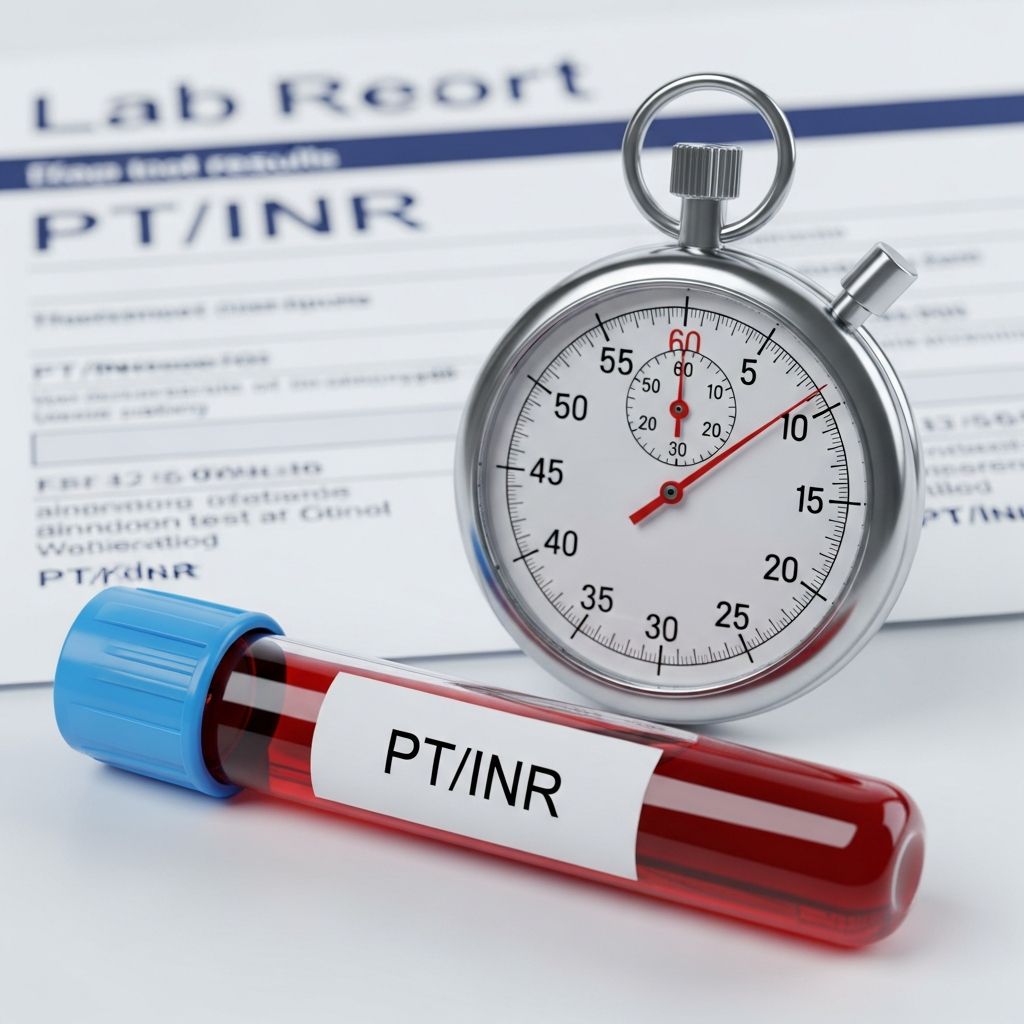
What is a Prothrombin Time (PT/INR) Test?
A prothrombin time (PT/INR) test measures how quickly your blood clots. This simple blood test evaluates the function of clotting factors, which are proteins in your blood that help form clots. Healthcare providers commonly perform this test to monitor blood clotting in patients taking blood thinners like warfarin, and to diagnose various blood clotting disorders. The test results indicate whether your blood is clotting at a normal rate, too quickly, or too slowly.
The results may be reported in seconds or, more commonly, as a calculation called the International Normalized Ratio (INR). The INR is a standardized measurement developed by the World Health Organization (WHO) that accounts for differences in laboratory testing processes across different facilities, making results comparable regardless of where the test is performed.
Why Do Healthcare Providers Perform PT Tests?
Healthcare providers perform PT tests for several important reasons related to blood clotting and overall health management. Understanding why your doctor ordered this test can help you better appreciate its importance in your care.
Monitoring Blood Clotting During Anticoagulant Therapy
One of the primary reasons for performing a PT test is to monitor patients taking warfarin, a commonly prescribed blood thinner. Regular PT/INR testing ensures that the medication is working effectively and that the dosage remains appropriate for your needs. Too little warfarin may not prevent dangerous blood clots, while too much could increase bleeding risk.
Diagnosing Blood Clotting Disorders
Healthcare providers use PT tests to diagnose various bleeding and clotting disorders. Abnormal results can indicate problems with the clotting cascade or liver function, helping providers identify the underlying cause of clotting issues.
Assessing Bleeding Risk
Before surgical procedures, providers may order a PT test to evaluate your bleeding risk and ensure your blood will clot adequately during and after surgery. This helps prevent excessive bleeding complications.
Evaluating Liver Function
Since the liver produces many clotting factors, a PT test can serve as an indicator of liver function. Abnormal results may suggest liver disease or dysfunction that requires further investigation.
How the PT Test Works
A prothrombin time test is a straightforward laboratory procedure. After you provide a blood sample, a substance called thromboplastin is added to the sample to activate the clotting process. A laboratory specialist or automated device then measures how long it takes for the blood to form a clot. This timing, measured in seconds, becomes your PT result.
The test specifically evaluates the function of certain clotting factors involved in the extrinsic and common coagulation pathways. These include factors I (fibrinogen), II (prothrombin), V, VII, and X. By measuring how these factors work together, the PT test provides crucial information about your blood’s clotting ability.
Related Stories



Preparing for Your PT Test
Most PT tests require minimal preparation, though your healthcare provider may give you specific instructions based on your individual situation. Here’s what you should know:
- Continue taking all your regular medications unless your provider specifically tells you otherwise
- Inform your provider about all medications, supplements, and herbal products you’re taking
- Fast if your provider requests it (though PT tests don’t always require fasting)
- Wear comfortable, loose-fitting clothing that allows easy access to your arm
- Stay hydrated before the test
- Inform the laboratory staff if you have a history of fainting or needle anxiety
Important: Never stop taking your medications, especially blood thinners like warfarin, unless your healthcare provider explicitly instructs you to do so. Stopping these medications without medical guidance could have serious health consequences.
What to Expect During the Test
The PT test procedure is similar to a standard blood draw. A healthcare provider will clean the area on your arm, usually the inner elbow where veins are most accessible. They’ll insert a needle into the vein to collect a blood sample into a special tube containing sodium citrate, which prevents the blood from clotting before analysis.
The process typically takes just a few minutes. You may experience slight discomfort or pressure when the needle is inserted, but this sensation is usually brief. Some individuals might feel lightheaded, but this is uncommon and usually passes quickly.
In some cases, providers may collect a sample by pricking your fingertip instead of drawing from a vein. This method is common for at-home PT test kits, particularly for patients on warfarin who require frequent monitoring. If your provider recommends at-home testing, they’ll provide detailed instructions on how to perform the test correctly and interpret your results.
PT Test Results and Normal Ranges
PT test results are typically reported as the number of seconds it takes for your blood to clot. Normal PT results generally range from 9.7 to 14.8 seconds, though this can vary slightly between laboratories depending on their equipment and reagents used.
However, when you’re taking warfarin or other anticoagulants, your results are reported as the International Normalized Ratio (INR) rather than seconds. The INR provides a standardized measurement that allows consistent comparison across different laboratories and testing methods.
Understanding INR Results
For patients not taking warfarin, a normal INR typically ranges from 0.8 to 1.0. For those taking warfarin, the target INR usually ranges from 2.0 to 3.0, depending on the reason for anticoagulation. Some conditions may require a higher target INR of 2.5 to 3.5.
What High PT/INR Results Mean
A high PT test result or elevated INR level means it takes longer than usual for your blood to clot. If you’re not taking warfarin, this could indicate:
- A bleeding or blood clotting disorder
- Liver disease or dysfunction
- Vitamin K deficiency
- Certain medications that affect clotting
- Disseminated intravascular coagulation (DIC)
If you’re taking warfarin and your INR is elevated, your dosage may need adjustment. High INR levels increase bleeding risk, so your provider may reduce your medication dose.
What Low PT/INR Results Mean
A low PT or INR result suggests your blood clots faster than normal, which could indicate:
- Resistance to anticoagulation therapy
- Inadequate warfarin dosing
- Vitamin K supplementation interfering with medication
- Certain medications that reduce warfarin effectiveness
- Underlying clotting disorders that increase thrombosis risk
Low INR levels in patients taking warfarin indicate insufficient anticoagulation, potentially leaving you at risk for dangerous blood clots. Your provider may increase your medication dose.
When You Might Have Abnormal INR Levels on Warfarin
If you’re taking warfarin and have abnormal INR levels, several factors could be responsible:
- Changes in your diet, particularly foods high in vitamin K
- Starting or stopping other medications
- Illness or infection
- Changes in alcohol consumption
- Liver disease progression
- Inconsistent medication adherence
- Drug interactions with new supplements or medications
- Thyroid problems
Your healthcare provider will work with you to identify the cause and make appropriate adjustments to your treatment plan.
Related Tests: PT vs. PTT
Healthcare providers often perform PT tests alongside another blood clotting test called a partial thromboplastin time (PTT) test. These tests work together to provide comprehensive information about your blood’s clotting ability. While the PT test evaluates the extrinsic and common coagulation pathways, the PTT test measures how other clotting factors in your blood are working, specifically evaluating the intrinsic and common pathways. By ordering both tests, providers can assess more clotting factors and get a more complete picture of your coagulation status.
PT Test Results Timeline
Most people receive their PT/INR test results within a few hours to one day after the test. Finger prick tests performed at home or in a point-of-care setting can produce results in just minutes, providing immediate feedback for warfarin dose adjustments. If your provider sends the sample to an off-site laboratory, you may need to wait a few days for results. Emergency or urgent PT tests typically have faster turnaround times.
After Your PT Test
After a PT test, you should be able to return to your regular routine immediately. Most people experience no significant side effects from the procedure. You may notice slight discomfort or minor bruising at the needle insertion site, but this typically resolves within a day or two.
Continue taking all your medications as prescribed, including any blood thinners. Your healthcare provider will contact you with your results and discuss what they mean for your treatment plan. If adjustments to your warfarin dose are needed, your provider will give you clear instructions on how to implement these changes.
What Happens After Results Come Back
Your healthcare provider will explain your PT/INR results and what they mean for your health. Depending on your situation, your provider may order additional tests to help diagnose and treat any identified problems. A PT test is usually one of the first tests ordered to diagnose a bleeding or blood clotting disorder, but additional testing is typically needed before making a definitive diagnosis.
If you’re taking warfarin, your provider will review your INR result and determine if your current dose is appropriate. They’ll explain any necessary dosage changes and provide instructions for taking your medication going forward. Regular monitoring ensures your anticoagulation therapy remains effective and safe.
Frequently Asked Questions
Q: How often do I need a PT/INR test if I’m on warfarin?
A: The frequency depends on your individual situation. Initially, you may need weekly tests. Once your INR is stable, testing typically occurs monthly or every few months. Your provider will determine the appropriate testing schedule for your needs.
Q: Can I eat or drink before a PT test?
A: Most PT tests don’t require fasting. However, check with your healthcare provider about any specific preparation instructions, as requirements may vary based on other tests being performed simultaneously.
Q: What foods affect PT/INR results?
A: Foods high in vitamin K, such as leafy greens (spinach, kale, broccoli), can lower your INR by reducing warfarin effectiveness. Consistency in vitamin K intake is more important than avoidance. Discuss dietary questions with your provider.
Q: Can I get a PT test at home?
A: Yes, at-home PT test kits are available for patients on warfarin who need frequent monitoring. Your healthcare provider can order these kits and provide instructions for use and result interpretation.
Q: How accurate are home PT tests compared to laboratory tests?
A: Home PT tests using fingerstick samples are generally reliable and well-correlated with laboratory results when performed correctly. However, proper technique is essential for accurate results.
Q: What should I do if my PT/INR result is abnormal?
A: Contact your healthcare provider immediately to discuss your results. Never adjust your warfarin dose on your own. Your provider will determine if changes are needed based on your specific situation and other clinical factors.
Q: Can medications other than warfarin affect PT/INR results?
A: Yes, many medications can affect PT/INR results, including aspirin, nonsteroidal anti-inflammatory drugs (NSAIDs), antibiotics, and others. Always inform your provider about all medications and supplements you’re taking.
References
- Prothrombin Time (PT/INR) Test — Cleveland Clinic. 2025. https://my.clevelandclinic.org/health/diagnostics/prothrombin-time-test
- Prothrombin Time Test and INR (PT/INR) — MedlinePlus, National Library of Medicine. 2024. https://medlineplus.gov/lab-tests/prothrombin-time-test-and-inr-ptinr/
- Prothrombin Time — Cleveland Clinic Laboratories. 2025. https://clevelandcliniclabs.com/test/prothrombin-time/
- Partial Thromboplastin Time (PTT) Test — Cleveland Clinic. 2025. https://my.clevelandclinic.org/health/diagnostics/25101-partial-thromboplastin-time
- Liver Function Tests: Types, Purpose & Results Interpretation — Cleveland Clinic. 2025. https://my.clevelandclinic.org/health/diagnostics/17662-liver-function-tests
Similar Articles








Read full bio of Sneha Tete