Prunes Benefits: Evidence-Based Guide For Bone, Gut, Heart
Discover the science-backed health benefits of prunes, from bone strength and gut health to heart protection and beyond.
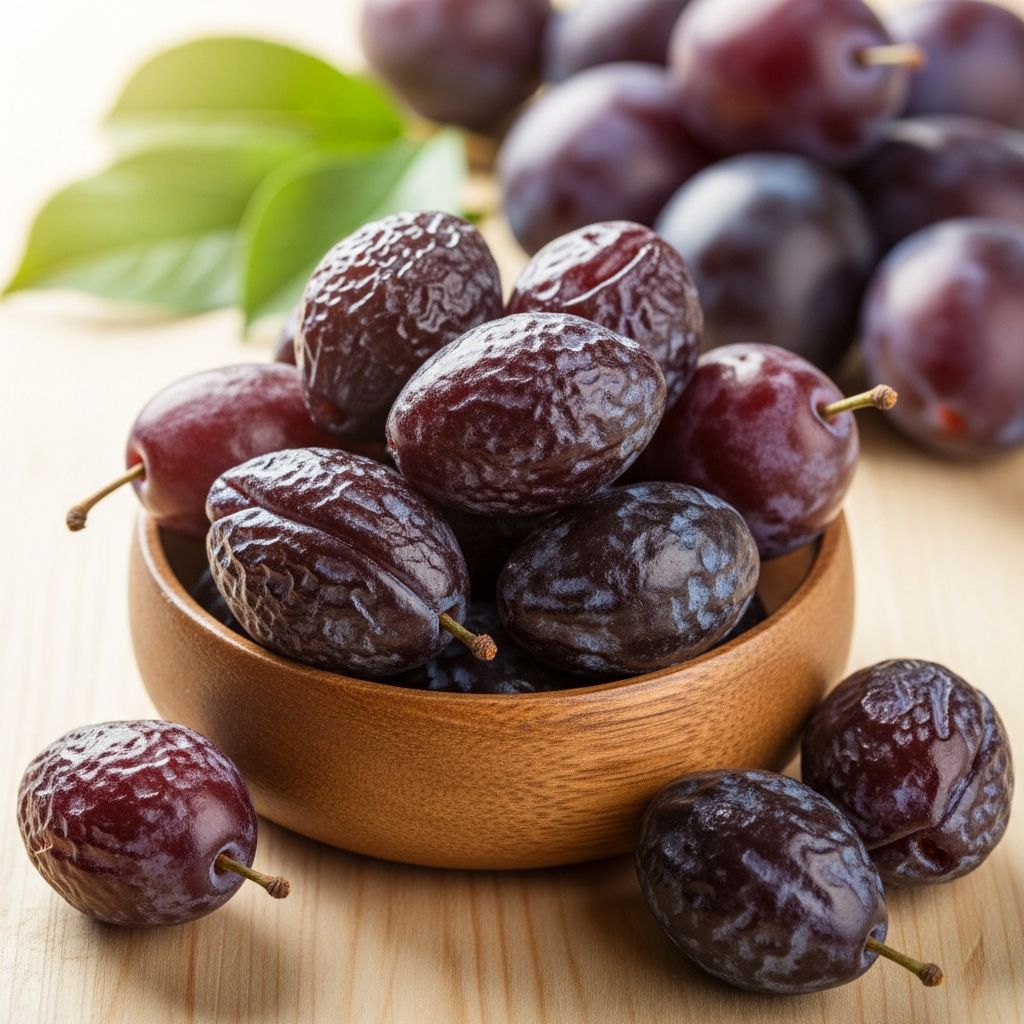
Prunes, also known as dried plums, have long been celebrated for their natural laxative properties, but recent research reveals a broader spectrum of health advantages. Packed with fiber, antioxidants, vitamins, and minerals, prunes support digestive health, bone strength, cardiovascular function, and more. Studies, particularly on postmenopausal women, highlight their role in preventing bone loss and improving gut microbiota. This article delves into the evidence-based benefits, nutritional profile, and practical ways to incorporate prunes into your diet.
What Are Prunes?
Prunes are the dried fruit of the plum tree, specifically varieties like the Prunus domestica. Unlike fresh plums, which contain about 87% water, prunes are dehydrated to around 30% moisture, concentrating their nutrients. This process enhances their shelf life and nutrient density, making them a convenient superfood. Prunes are naturally sweet, with a chewy texture, and are available whole, pitted, or as juice.
Nutritionally, a 50-gram serving (about 5-6 prunes) provides approximately 120 calories, 3 grams of fiber, 700mg potassium, vitamin K, magnesium, boron, and polyphenols. The fiber blend—both soluble and insoluble—along with sorbitol, contributes to their digestive benefits. Prunes also boast a low glycemic index, aiding blood sugar control.
Prunes for Bone Health
One of the most compelling benefits of prunes is their ability to support bone health, particularly in preventing age-related bone loss. Postmenopausal women, at higher risk for osteoporosis, benefit significantly from daily prune consumption. A year-long randomized controlled trial involving 235 postmenopausal women found that those eating 50 grams (4-6 prunes) or 100 grams (10-12 prunes) daily maintained bone mineral density (BMD) and bone strength, especially in the hip and cortical bone—the dense outer layer. In contrast, the control group experienced over 1% bone loss.
Prunes’ bone-protective effects stem from key nutrients: vitamin K shuttles calcium to bones, potassium and magnesium enhance bone density, and boron supports bone metabolism. Antioxidants and polyphenols reduce oxidative stress and inflammation, which contribute to bone breakdown. Another study linked 50 grams daily to preserved BMD in postmenopausal women and older men.
These findings suggest prunes as a natural strategy for hip bone preservation, a critical area for fracture prevention. While more research is needed for other populations, prunes offer a safe, dietary intervention without the side effects of some medications.
Prunes for Gut Health and Digestion
Prunes are renowned for promoting digestive regularity due to their high fiber content (6.1g per 100g) and sorbitol, a natural laxative. Insoluble fiber adds bulk to stool, speeding transit time, while soluble fiber acts as a prebiotic, nourishing beneficial gut bacteria like Lachnospiraceae.
A double-blind, randomized trial in Japanese adults with chronic constipation showed prune juice significantly reduced hard, lumpy stools (BSFS type 1) and increased normal stools (BSFS type 4) after 3-7 weeks, without raising loose or watery stools. Subjective symptoms like constipation, hard stools, and incomplete evacuation improved via GSRS scores, with no increase in flatulence or diarrhea.
Prune juice offers similar benefits, though it’s fiber-free due to filtration; sorbitol and pectin drive the laxative effect. For constipation sufferers, prunes increase bowel movement frequency and soften stools, outperforming some over-the-counter remedies in studies. Postmenopausal women saw gut microbiota shifts linked to lower inflammation.
- Key mechanisms: Sorbitol draws water into the colon; fiber ferments to produce short-chain fatty acids supporting gut lining.
- Dosage: Start with 50g (4-6 prunes) to avoid bloating.
- Evidence level: Strong from RCTs; effective for chronic constipation without adverse effects.
Related Stories



Prunes Reduce Inflammation
Chronic inflammation underlies diseases like heart disease, diabetes, and arthritis. Prunes combat this through polyphenols and antioxidants that neutralize free radicals, reducing oxidative stress. Daily intake lowers inflammation markers, as seen in postmenopausal women with improved heart health profiles.
These compounds modulate gut bacteria, indirectly curbing systemic inflammation. Prunes’ anti-inflammatory action synergizes with bone health benefits, as reduced inflammation preserves bone structure.
Prunes Support Heart Health
Prunes address cardiovascular risk factors: high cholesterol, oxidative stress, and inflammation. Studies show daily prunes lower total cholesterol and inflammation in postmenopausal women. Potassium balances sodium, potentially preventing hypertension—a factor in nearly half of ischemic heart disease cases.
Antioxidants protect arteries, while fiber binds cholesterol in the gut. Incorporating prunes may enhance overall heart markers without dietary overhaul.
Prunes for Weight Management and Satiety
Prunes promote fullness due to soluble fiber slowing digestion and low GI preventing blood sugar spikes. This curbs appetite, aiding weight control. A handful post-meal satisfies sweet cravings with fiber bonuses.
Nutritional Profile of Prunes
| Nutrient (per 50g) | Amount | % Daily Value* |
|---|---|---|
| Calories | 120 | 6% |
| Dietary Fiber | 3g | 11% |
| Potassium | 700mg | 15% |
| Vitamin K | 26mcg | 22% |
| Magnesium | 41mg | 10% |
| Polyphenols | High | – |
| *Based on 2,000 calorie diet. Source: USDA data via studies. | ||
How Many Prunes Should You Eat Per Day?
Research supports 50g (4-6 prunes) daily for most benefits, balancing efficacy and tolerability. Higher doses (100g) amplify effects but increase dropout risk due to digestive discomfort. Start low: 2-3 prunes, gradually increase. Prune juice: 4-8 oz for constipation relief.
Consult a doctor if you have IBS, diabetes, or take medications, as sorbitol may affect blood sugar or interact.
Prune Juice Benefits
Prune juice retains sorbitol, pectin, and polyphenols for laxative effects minus fiber, ideal for those needing gentler options. Trials confirm it softens stools and eases constipation without excess gas. It also supports blood pressure via potassium and satiety for weight management.
Potential Side Effects and Precautions
Prunes are safe for most, but excess can cause diarrhea, bloating, or gas—especially initially. Those with fructose malabsorption or on low-FODMAP diets should limit intake. High sorbitol may lower blood sugar; monitor if diabetic. No major liver/kidney issues in studies.
- Who should avoid: Infants under 1 year (risk of sorbitol overload); those with severe GI issues without medical advice.
Healthy Ways to Add Prunes to Your Diet
Incorporate prunes creatively for daily benefits:
- Snack: 4-6 plain or with nuts.
- Breakfast: Chop into oatmeal or yogurt.
- Baking: Substitute in muffins, energy bars.
- Salads: Dice for sweetness and fiber.
- Smoothies: Blend with spinach, almond milk.
- Juice: Dilute with water for milder taste.
Recipes like prune energy balls or stuffed prunes pair nutrition with enjoyment.
Frequently Asked Questions (FAQs)
Are prunes good for constipation?
Yes, prunes effectively relieve constipation via fiber and sorbitol, increasing stool frequency and softness per RCTs.
Can prunes help with bone loss?
Daily 4-6 prunes preserve BMD in postmenopausal women, reducing osteoporosis risk.
Do prunes cause diarrhea?
In moderation, no; studies show no increase in loose stools. Start slow to build tolerance.
Are prunes fattening?
No, their fiber promotes satiety; low-calorie with high nutrients for weight management.
Is prune juice as good as whole prunes?
For digestion, yes due to sorbitol; lacks fiber but retains other benefits.
Summary
Prunes deliver multifaceted health benefits—from gut and bone support to heart protection—backed by robust studies. A modest daily serving offers profound wellness impacts. Embrace prunes as a delicious, natural health booster.
References
- What Happened to My Body When I Ate Prunes Every Day — Prevention.com. 2024-10-01. https://www.prevention.com/food-nutrition/a69451670/what-happens-when-you-eat-prunes-every-day/
- Eating Prunes Daily May Keep Your Bones Strong, Per New Study — Women’s Health Mag. 2024-11-15. https://www.womenshealthmag.com/health/a61437266/prune-bone-health-study/
- Prune juice: Benefits, nutrition, and diet — Medical News Today. 2023-05-10. https://www.medicalnewstoday.com/articles/315340
- Prune Juice Containing Sorbitol, Pectin, and Polyphenol… — PMC (NIH). 2022-10-01. https://pmc.ncbi.nlm.nih.gov/articles/PMC9531972/
- Chemical Composition and Potential Health Effects of Prunes — California Prunes (PDF). 2020-04-01. https://californiaprunes.org/wp-content/uploads/2020/04/bowen-overview-of-prune-composition-nutrition.pdf
Similar Articles








Read full bio of Sneha Tete