Pruritic Papular Eruption Of HIV: 3 Key Causes & Treatments
Understanding the most common HIV-associated rash: causes, symptoms, diagnosis, and effective treatments including HAART.
What is pruritic papular eruption of HIV?
Pruritic papular eruption (PPE) of HIV is the most prevalent cutaneous manifestation in individuals infected with human immunodeficiency virus (HIV), frequently serving as the initial dermatological indicator in otherwise asymptomatic patients. This condition manifests as intensely pruritic, discrete papules predominantly affecting the extremities, trunk, and occasionally the face. Classified by the World Health Organization (WHO) as Stage 2 HIV disease, PPE correlates strongly with advanced immunosuppression, occurring three times more frequently when CD4 counts fall below 200 cells/μL.
PPE impacts 11–46% of HIV-positive individuals, with higher prevalence in tropical and subtropical regions, and shows a notable female predominance across studies. In up to 79% of cases, it presents as the inaugural symptom prompting HIV diagnosis. The rash’s persistence and severity underscore its role as a marker of immune compromise, necessitating prompt evaluation and intervention.
Who gets pruritic papular eruption of HIV?
Demographically, PPE predominantly affects adults and children living with HIV, particularly those in resource-limited settings with high HIV burdens, such as sub-Saharan Africa. Prevalence rates vary geographically: up to 46% in tropical areas versus lower incidences in temperate climates. Females are disproportionately affected, potentially due to immunological or environmental factors.
- Prevalence: 11–46% of HIV patients, peaking in advanced disease (CD4 < 200 cells/μL).
- Age groups: Common in both pediatric and adult HIV populations.
- Geographic bias: Most frequent in tropics/subtropics, suggesting arthropod-related triggers.
- Risk presentation: Often the first sign in 25–79% of undiagnosed cases.
In the United States, PPE remains underrecognized but serves as a critical indicator of severe immunosuppression among people living with HIV (PLH).
Causes of pruritic papular eruption of HIV
The precise etiology of PPE remains elusive, with no single causative agent confirmed. Hypotheses include:
- Exaggerated immune response to arthropod bites: Supported by geographic distribution in insect-endemic areas, histological findings of spongiosis and eosinophilic infiltrates, and elevated serum IgE/eosinophils.
- Direct HIV effects: Possible viral infection of dermal cells or autoimmune mechanisms, though unproven.
- Drug reactions: Rarely implicated, as lesions precede antiretroviral initiation.
Histopathology reveals acanthotic epidermis, parakeratosis, spongiosis, upper dermal perivascular lymphocytic infiltrate with eosinophils, and mast cell degranulation—features mimicking exaggerated insect bite reactions in immunosuppressed states.
Clinical features of pruritic papular eruption of HIV
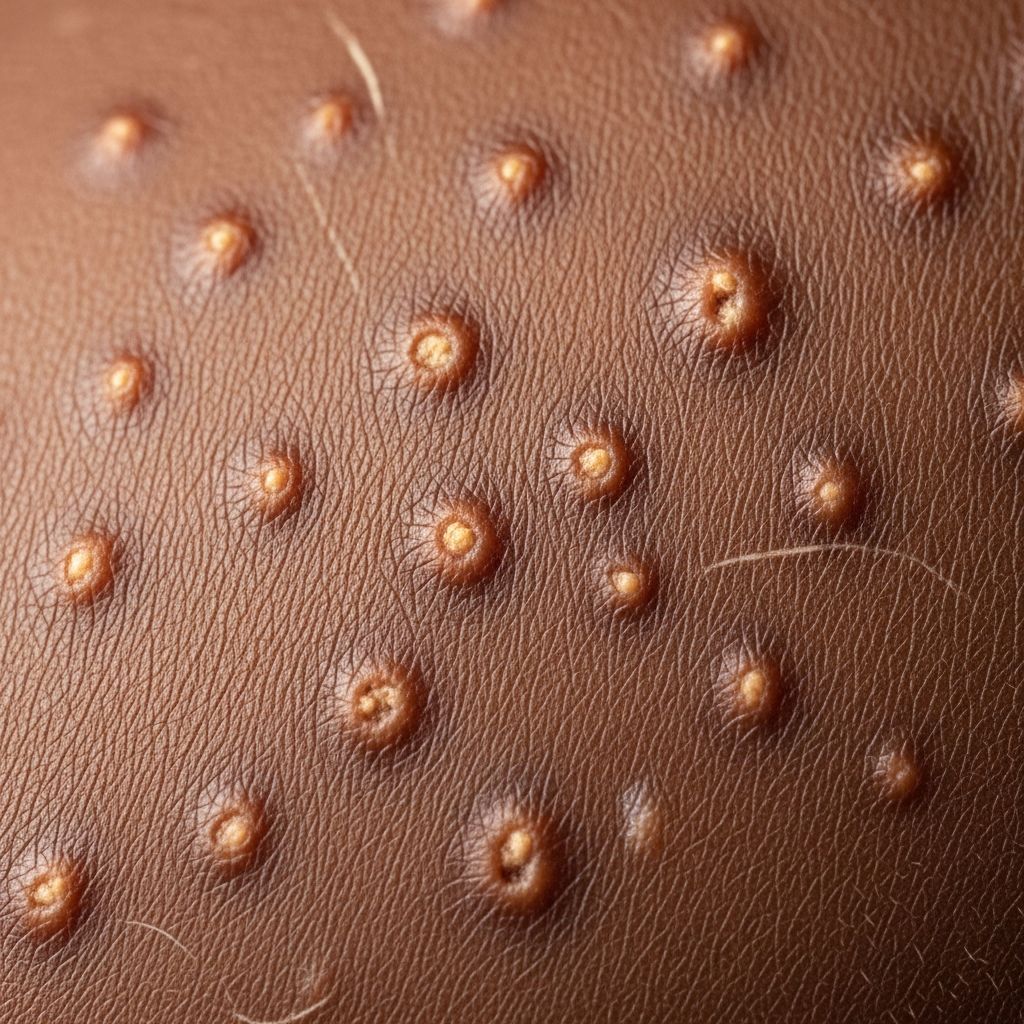
PPE presents as a chronic, symmetrically distributed eruption of 2–5 mm firm, intensely pruritic papules, sparing mucous membranes. Key characteristics include:
- Distribution: Extremities (arms, legs) and trunk predominant; face, neck less common.
- Morphology: Discrete red-brown papules evolving to excoriated, crusted, hyperpigmented lesions due to scratching.
- Symptoms: Severe pruritus leading to sleep disturbance, secondary infection risk.
- Progression: Waxing/waning but persistent without treatment; no association with immune reconstitution inflammatory syndrome (IRIS).
Lesions are diffusely symmetric, starting as discrete red bumps, more pronounced on extremities than face. In advanced cases, papules may coalesce or pustulate.
Related Stories



Complications from pruritic papular eruption of HIV
Primary complications arise from unrelenting pruritus:
- Excoriations and lichenification: From chronic scratching.
- Secondary bacterial infections: e.g., impetigo, cellulitis.
- Postinflammatory hyperpigmentation: Especially in darker skin types.
- Psychosocial impact: Embarrassment, insomnia, reduced quality of life.
Untreated, lesions persist indefinitely, exacerbating HIV stigma.
Diagnosis of pruritic papular eruption of HIV
Diagnosis is primarily clinical in at-risk patients (known HIV or risk factors) with characteristic pruritic papules. Confirm HIV status via serology if undiagnosed. Exclusion of differentials is key; skin biopsy if atypical.
Investigations:
- CD4 count, viral load.
- Full blood count (eosinophilia).
- Serum IgE (elevated).
- Biopsy: Shows spongiotic dermatitis with eosinophils.
Suspect PPE in HIV patients with rapid-onset pruritic lesions; thorough exam rules out infections.
Differential diagnosis of pruritic papular eruption of HIV
Key differentials include:
| Condition | Distinguishing Features |
|---|---|
| Folliculitis (e.g., eosinophilic) | Follicular-centered papules/pustules, upper body predominant. |
| Arthropod bites | Linear/grouped papules ("breakfast-lunch-dinner"), exposed areas. |
| Drug eruption | Temporal link to new meds, morbilliform. |
| Scabies | Burrows, interdigital, nocturnal itch. |
| Secondary syphilis | Palm/sole involvement, coppery hue. |
| Prurigo nodularis | Larger nodules, less discrete. |
Treatment of pruritic papular eruption of HIV
Initiate highly active antiretroviral therapy (HAART) as cornerstone: resolves lesions in most via immune restoration, though may take months. Symptomatic relief essential:
- First-line: Emollients, topical corticosteroids (potent), oral antihistamines.
- Second-line: Doxepin 25 mg nightly (if no TCA contraindications), topical tacrolimus.
- Refractory: Narrow-band UVB phototherapy (effective, speedy response); itraconazole, pentoxifylline.
HAART provides itch relief and lesion clearance without recurrence in majority. Adjunctive UVB/corticosteroids relieve pruritus in PLH.
Outcome and prevention of pruritic papular eruption of HIV
With HAART, most achieve complete resolution; untreated persists chronically. Recurrence possible ~8 weeks post-discontinuation. Prevention: Early HIV diagnosis/treatment to maintain CD4 >200.
Frequently Asked Questions (FAQs)
Q: Is PPE curable?
A: Yes, HAART typically resolves PPE by restoring immunity, though symptomatic treatments aid interim relief.
Q: How itchy is PPE?
A: Severely pruritic, often disrupting sleep and daily life.
Q: Does PPE indicate advanced HIV?
A: Yes, 3x more common at CD4 <200 cells/μL; prompts HIV testing.
Q: Can children get PPE?
A: Yes, common in pediatric HIV.
Q: What if HAART doesn’t work?
A: Use UVB phototherapy or adjuvants like steroids/antihistamines.
References
- Pruritic papular eruption in HIV: a case successfully treated with NB-UVB phototherapy — Viscido DV et al. Dermatologic Therapy. 2013-05-01. https://pubmed.ncbi.nlm.nih.gov/23551375/
- A Scoping Review of Pruritic Papular Eruption in People Living With HIV in the United States — George Washington University. 2023. https://hsrc.himmelfarb.gwu.edu/gwhpubs/7408/
- Pruritic papular eruption of HIV — DermNet NZ. 2021-08. https://dermnetnz.org/topics/pruritic-papular-eruption-of-hiv
- Pruritic papular eruption of HIV — WikEM. Accessed 2026. https://wikem.org/wiki/Pruritic_papular_eruption_of_HIV
- Acute Onset of Facial Pruritic Papules in a Patient with AIDS — American Academy of Family Physicians. 2009-03-15. https://www.aafp.org/pubs/afp/issues/2009/0315/p511.html
Similar Articles








Read full bio of medha deb