Pseudochromhidrosis: Causes, Diagnosis, And Treatment Guide
Understanding pseudochromhidrosis: causes, diagnosis, and effective treatments for coloured sweat due to external factors.
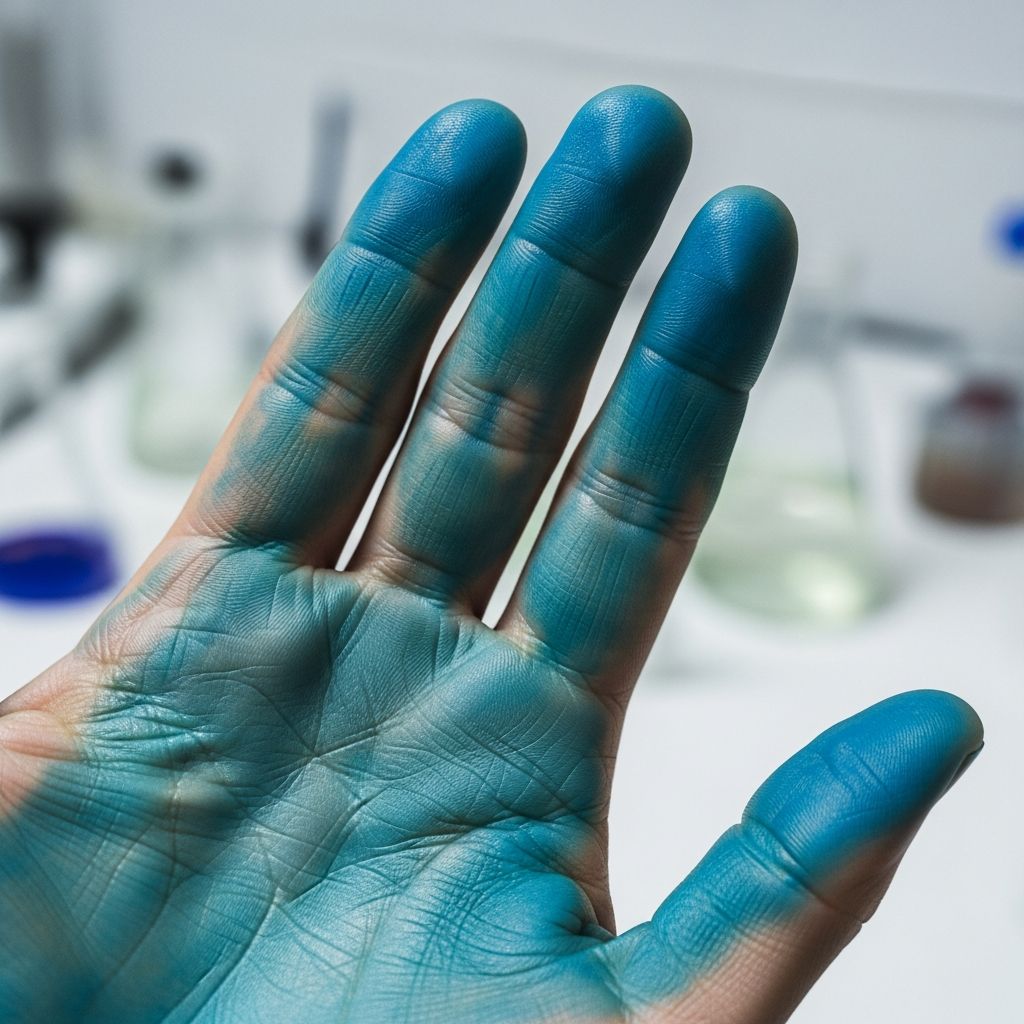
Pseudochromhidrosis is a rare dermatological condition characterised by sweat that appears coloured on the skin surface, despite being colourless when secreted from the sweat glands. Unlike true chromhidrosis, where sweat is inherently pigmented, pseudochromhidrosis results from external substances such as bacteria, dyes, or chemicals staining the sweat or skin upon emergence.
This condition primarily affects areas rich in eccrine sweat glands, such as the palms, soles, axillae, and face. It is typically asymptomatic but can cause cosmetic distress and social embarrassment. Early diagnosis and targeted treatment lead to complete resolution in most cases.
What is pseudochromhidrosis?
Pseudochromhidrosis occurs when normally colourless eccrine sweat mixes with pigments on the skin surface, creating the appearance of coloured perspiration. The term “pseudo” distinguishes it from apocrine and eccrine chromhidrosis, where lipofuscin or other endogenous pigments colour the sweat within the glands.
Common colours include black, blue, green, yellow, or brown, depending on the causative agent. The discolouration is usually localised to specific body areas and may be exacerbated by heat, exercise, or emotional stress that triggers sweating.
Infectious pseudochromhidrosis, a subtype, arises from pigment-producing bacteria like Bacillus cereus that thrive in altered skin environments, producing water-soluble pigments that bind to sweat. Chemical pseudochromhidrosis stems from exogenous dyes, heavy metals, or medications.
Who gets pseudochromhidrosis?
Pseudochromhidrosis affects individuals of all ages and genders but is more commonly reported in adults. Risk factors include:
- Prolonged use of topical antibiotics or steroids that disrupt skin microflora
- Hypohidrosis or anhidrosis conditions concentrating bacterial pigments
- Exposure to dyes in cosmetics, fabrics, or industrial chemicals
- Medications like antihistamines (e.g., promethazine, ranitidine) or anticonvulsants (e.g., topiramate) that alter sweat production or skin pH
- Pregnancy or physiological states changing skin conditions
Case reports document occurrences in healthcare workers handling dyes, factory employees, and patients with underlying dermatoses.
What causes pseudochromhidrosis?
The primary causes fall into two categories: infectious and non-infectious.
Infectious pseudochromhidrosis
Pigment-producing bacteria colonise the skin, especially in occluded or macerated areas. Key pathogens include:
- Bacillus species (e.g., B. cereus): Produce blue-black pigments; triggered by drugs causing hypohidrosis
- Corynebacterium species: Cause black or brown discolouration
- Pseudomonas aeruginosa: Green pigment (pyocyanin)
- Staphylococcus species: Red or yellow pigments
Triggers include medications altering skin pH or sweat volume, allowing bacterial overgrowth (Table 1).
Non-infectious (chemical) pseudochromhidrosis
Exogenous chromogens include:
- Dyes from clothing, paints, or cosmetics (e.g., tartrazine yellow)
- Heavy metals like copper or silver
- Medications with coloured coatings (e.g., bisacodyl laxatives)
- Vegetable matter or food colourings
| Potential trigger | Suggested mechanism | Microorganism | Sweat colour |
|---|---|---|---|
| Ranitidine | Alters stratum corneum milieu | Bacillus spp. | Blue |
| Promethazine | Hypohidrosis | Bacillus spp. | Blue |
| Topiramate | Hypohidrosis, decreased pH | Bacillus spp. | Blue |
Clinical features
Patients notice coloured sweat or skin staining primarily on palms, soles, face, or axillae. Features include:
- Colour: Blue, black, green, yellow, brown; consistent within episodes
- Odour: Often absent or mild, unlike true bromhidrosis
- Symptoms: Asymptomatic; no pain, pruritus, or scaling typically
- Triggers: Heat, exercise, stress; resolves with drying
- Distribution: Acral (hands/feet) common in infectious type; widespread in chemical exposure
Related Stories



Skin may show mild erythema or maceration if infectious. Chronic cases lead to nail or fabric staining.
Diagnosis
Diagnosis is clinical, supported by investigations:
- History: Onset, triggers, medications, occupations, cosmetics
- Examination: Confirm coloured sweat; test by wiping (transfers to cloth)
- Sweat tests: Starch-iodine or chromatography to assess pigment source
- Cultures: Swab affected skin; identify pigment-producing bacteria
- Wood lamp: Fluorescence may indicate bacterial pigments
- Biopsy: Rarely needed; rules out true chromhidrosis
Differential includes true chromhidrosis, exogenous staining, haemochromhidrosis, or alkaptonuria.
Treatment of pseudochromhidrosis
Treatment targets the cause:
Infectious type
Antibiotics are first-line, even if culture-negative:
- Topical: Clindamycin lotion 2x/day or erythromycin 1-2 weeks
- Oral: Erythromycin 250mg 3x/day for 10 days
- Antiseptic soaps: Chlorhexidine daily
Address triggers (e.g., discontinue offending drugs). Resolution in days to weeks; recurrence rare.
Chemical type
Avoidance is curative:
- Remove dyes/chemicals from clothing, cosmetics
- Discontinue medications if possible
- Wash with soap/water; resolves quickly
For refractory cases:
- Botox injections to reduce sweat
- Topical aluminum chloride
- Capsaicin cream (burning sensation possible)
Pseudochromhidrosis resolves completely once cause is eliminated.
What is the outcome of pseudochromhidrosis?
Prognosis is excellent with prompt treatment. Infectious cases clear with antibiotics; chemical types resolve with avoidance. No scarring or long-term sequelae. Recurrence prevented by addressing predispositions.
FAQs
Is pseudochromhidrosis contagious?
No, it is not contagious. Infectious type results from skin colonisation, not person-to-person transmission.
Can pseudochromhidrosis affect children?
Yes, though rarer; often linked to dyes or bacteria in young skin.
How long does treatment take?
Typically 1-2 weeks for antibiotics; immediate with chemical avoidance.
Does pseudochromhidrosis stain clothes permanently?
No, stains wash out; persistent fabric discolouration uncommon.
Can diet cause pseudochromhidrosis?
Rarely; food dyes may contribute in chemical type.
References
- Infectious Pseudochromhidrosis: A Case Report and Literature Review — PMC/NCBI. 2022-05-26. https://pmc.ncbi.nlm.nih.gov/articles/PMC9128975/
- Symptoms of Chromhidrosis — Hines Dermatology Associates. 2023-01-15. https://www.hinesdermatologyassociates.com/blog/symptoms-of-chromhidrosis
- Pseudochromhidrosis — DermNet NZ. 2024-06-10. https://dermnetnz.org/topics/pseudochromhidrosis
- Chromhidrosis: Definition, causes, and treatment — Medical News Today. 2023-11-20. https://www.medicalnewstoday.com/articles/chromhidrosis
- Chromhidrosis: A Rare Clinical Finding — Dermatology Times. 2022-09-05. https://www.dermatologytimes.com/view/chromhidrosis-a-rare-clinical-finding
- Transient Blue Skin: Pseudochromhidrosis — European Journal of Case Reports in Internal Medicine. 2021-03-12. https://www.ejcrim.com/index.php/EJCRIM/article/view/84/174
Similar Articles








Read full bio of Sneha Tete