Pseudofolliculitis Barbae: Expert Guide To Prevent Razor Bumps
Understanding razor bumps: causes, clinical features, diagnosis, and effective treatments for pseudofolliculitis barbae.
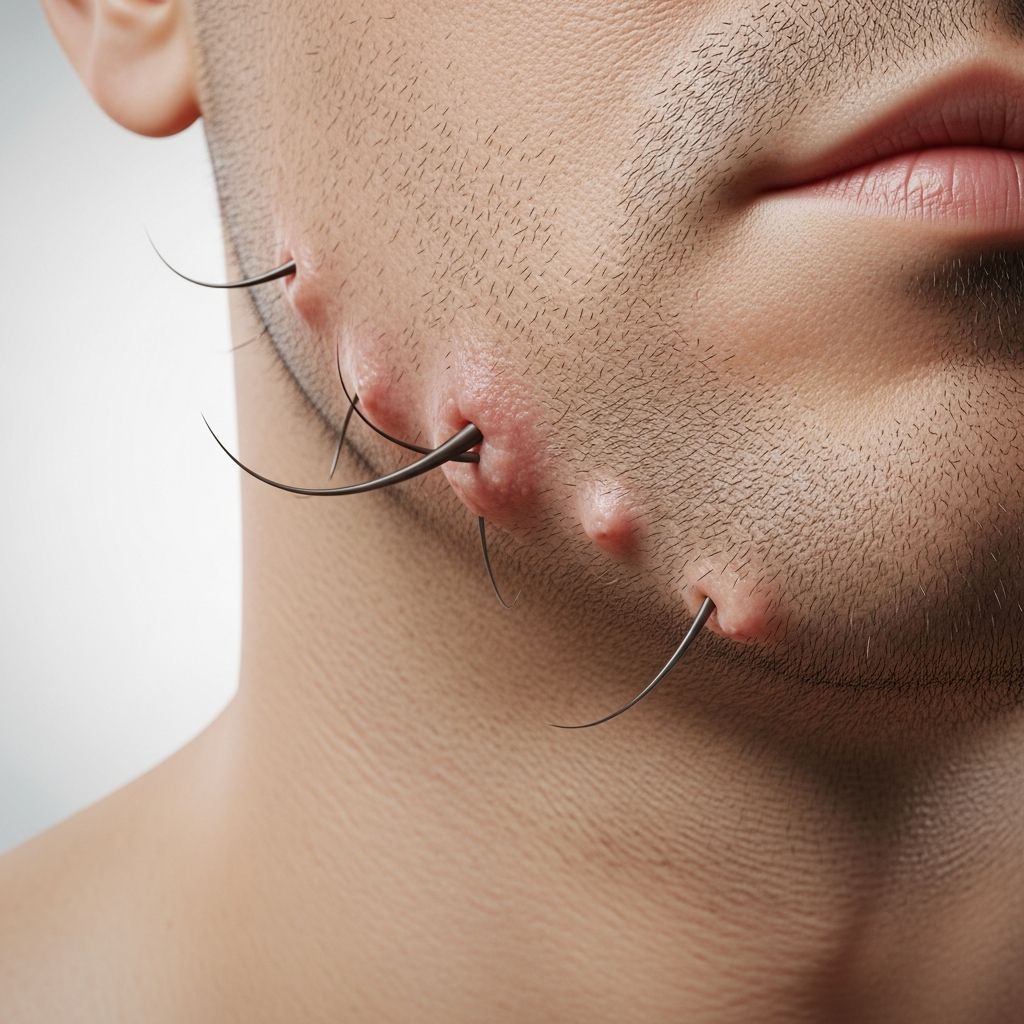
Pseudofolliculitis barbae (PFB), commonly referred to as razor bumps or shaving bumps, is a prevalent inflammatory reaction affecting the hair follicle, primarily on the face due to shaving. It arises when shaved hairs curl back into the skin, provoking irritation, papules, and pustules. This condition can occur on any shaved area, including the axillae, pubic region, and legs, particularly in individuals with tightly coiled hair.
Demographics
PFB predominantly affects men of African and Asian descent due to their curly, helical hair structure that predisposes to ingrowth. It is less common in women but can occur in those who shave or pluck facial or body hair. The condition is chronic in genetically susceptible individuals and is exacerbated by frequent hair removal practices. Studies indicate higher prevalence in Black males, with up to 45-83% experiencing symptoms after shaving.
Causes
The primary cause of PFB is mechanical trauma from shaving or plucking, leading to transected hair shafts that penetrate the skin either extrafollicularly (alongside the follicle) or transfollicularly (through the follicle wall). Curly hairs with sharp, blade-cut tips are particularly prone to re-entering the epidermis as they regrow, triggering inflammation. Additional factors include close shaves with multi-blade razors, pulling skin taut during shaving, and secondary bacterial infection from skin flora like Staphylococcus epidermidis. Genetic predisposition plays a key role, with tightly coiled hair follicles facilitating ingrowth.
Clinical Features
Symptoms typically emerge 1-2 days post-shaving, starting with pruritus or pain in shaved areas, followed by erythematous papules (2-5 mm) that evolve into pustules or deeper nodules. Common sites in men include the anterior neck, cheeks, and chin; in women, axillae and bikini line. Lesions may scar, form keloids, or cause post-inflammatory hyperpigmentation (PIH), especially in darker skin types. Secondary infection leads to larger, tender pustules. Dermoscopy reveals ingrown hairs with coiled tips or blunt tips from depilatories.
Variation in Skin Types
PFB severity varies by skin phototype. In Fitzpatrick skin types IV-VI (darker skin), PIH and keloid formation are more frequent complications due to robust melanocyte response and fibrosis propensity. Lighter skin types may show more erythema but less hyperpigmentation. African and Asian ancestries correlate with higher incidence owing to hair curliness, while straight-haired individuals (e.g., Caucasians) are rarely affected unless shaving habits are aggressive.
Diagnosis
Diagnosis is primarily clinical, based on history of recent hair removal and characteristic grouped papules/pustules in shaved areas. Dermoscopy aids by visualizing ingrown hairs, coiled shafts, or perifollicular hyperkeratosis, distinguishing PFB from true infections. Severity can be graded using tools like the PFB Severity Index for treatment monitoring. Biopsy, if needed, shows pseudo-folliculitis with hair shaft penetration, micro-abscesses, and granulomatous inflammation.
Differential Diagnoses
- Bacterial folliculitis: More diffuse, lacks ingrown hairs; culture confirms S. aureus.
- Sycosis barbae: Deeper staphylococcal infection with persistent pustules.
- Tinea barbae: Fungal, annular lesions with scaling; KOH prep positive.
- Acne keloidalis nuchae: Posterior neck scarring without clear shaving history.
- Perifolliculitis capitis abscedens et suffodiens: Severe scalp involvement with burrowing abscesses.
Related Stories



Dermoscopy and history differentiate PFB effectively.
Treatment and Prevention
The cornerstone of management is halting shaving for 4-12 weeks to allow hair regrowth beyond skin penetration depth, resolving inflammation naturally. For those unable to stop (e.g., professional requirements), modified shaving techniques are essential:
- Use single-blade or safety razors, avoiding multi-blades.
- Shave after softening beard with warm water/cream, in hair growth direction.
- Avoid stretching skin; use light strokes.
- Post-shave: cool rinse, pat dry, apply soothing agents.
Topical therapies: Clindamycin 1% or erythromycin 2% twice daily reduces bacterial load; benzoyl peroxide 5-10% for anti-inflammatory/keratolytic effects; low-potency steroids (hydrocortisone 1%) short-term for itch/inflammation. Keratolytics like salicylic acid, glycolic acid (8-10%), or retinoids lift hyperkeratosis.
Systemic options: For moderate-severe cases, tetracyclines (doxycycline 50-100 mg BID) or macrolides for 4-8 weeks target infection/inflammation.
Depilatories: Barium sulfide creams (e.g., Magic Shave) dissolve hair above skin, preventing ingrowth; patch test first.
Laser/Physical: Long-pulsed Nd:YAG or diode lasers achieve semi-permanent hair reduction by targeting follicles, safest for dark skin. Multiple sessions needed; operated by experts to avoid burns/PIH.
Combination therapies optimize outcomes: e.g., topical antibiotic + keratolytic + laser maintenance.
| Treatment Type | Examples | Duration/Notes |
|---|---|---|
| Behavioral | No shaving, proper technique | 4-12 weeks initial |
| Topical | Clindamycin, benzoyl peroxide, steroids | BID, short-term steroids |
| Systemic | Doxycycline, erythromycin | 4-8 weeks |
| Depilatory | Barium sulfide | As needed, patch test |
| Laser | Nd:YAG 1064 nm | 4-6 sessions |
Outcome
With adherence, most achieve clearance: 80-90% resolution after 1-3 months of no shaving. Modified grooming sustains control. Lasers offer 70-90% long-term reduction. Complications like scarring/PIH improve slowly; keloids may require intralesional steroids. Recurrence is common with resumed improper shaving. Patient education is vital for success.
Frequently Asked Questions
What is pseudofolliculitis barbae?
PFB is an inflammatory condition from ingrown hairs post-shaving, causing itchy razor bumps mainly on the face.
Who is at risk for PFB?
Primarily men with curly hair (African/Asian descent), but anyone shaving coarse hair.
How can I prevent razor bumps?
Stop shaving temporarily, use proper techniques, topicals, or laser hair removal.
Does PFB cause scarring?
Yes, untreated severe cases can lead to keloids and hyperpigmentation, especially in dark skin.
Is laser treatment safe for dark skin?
Yes, with Nd:YAG lasers by experienced providers.
References
- Pseudofolliculitis Barbae — Cosmo Dermatology. Accessed 2026. https://www.cosmodermatology.com/articles/general/920454-pseudofolliculitis-barbae
- Pseudofolliculitis barbae; current treatment options — PMC (PubMed Central). 2019-06-24. https://pmc.ncbi.nlm.nih.gov/articles/PMC6585396/
- Pseudofolliculitis Barbae: Prevention and Treatment — US Pharmacist. 2016-10. https://www.uspharmacist.com/article/pseudofolliculitis-barbae-prevention-and-treatment
- Pseudofolliculitis Barbae — Skin of Color Society. Accessed 2026. https://skinofcolorsociety.org/discover-patients-public/public-education/pseudofolliculitis-barbae
- Pseudofolliculitis Barbae (Razor Bumps) — DermNet NZ. Accessed 2026. https://dermnetnz.org/topics/pseudofolliculitis-barbae
Similar Articles








Read full bio of Sneha Tete