Pseudoporphyria
Understanding pseudoporphyria: a photo-distributed bullous dermatosis mimicking porphyria cutanea tarda without porphyrin abnormalities.
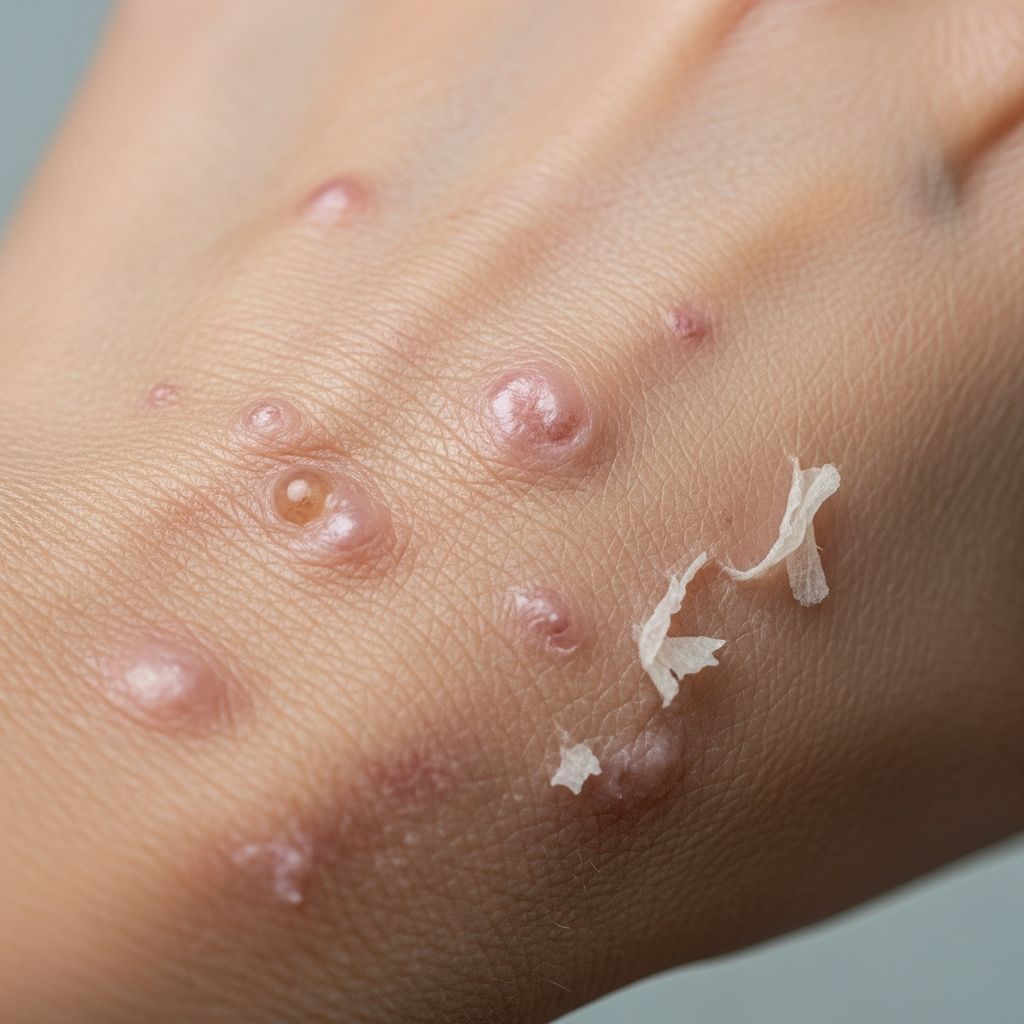
Pseudoporphyria is a rare acquired bullous photodermatosis characterized by skin fragility, tense blisters, erosions, milia, and scarring predominantly on sun-exposed areas, clinically and histologically resembling porphyria cutanea tarda (PCT) but without biochemical porphyrin abnormalities.
What is pseudoporphyria?
**Pseudoporphyria** (PPP) presents with identical clinical and histopathological features to PCT, including increased skin fragility and bullae formation on light-exposed skin, yet porphyrin levels in blood, urine, and faeces remain normal or near-normal. This distinguishes it from true porphyrias, where porphyrin accumulation drives phototoxicity. The condition arises from phototoxic reactions triggered by exogenous agents interacting with UVA radiation, damaging dermal components without porphyrin involvement.
Histologically, pseudoporphyria shows subepidermal blisters with festooning of dermal papillae, minimal inflammation, and caterpillar bodies, mirroring PCT. Electron microscopy reveals damage to the lamina lucida, supporting a photo-oxidative mechanism. Prevalence is underreported, with fewer than 100 cases documented, though recent awareness suggests higher incidence, particularly in NSAID users.
Who gets pseudoporphyria?
Pseudoporphyria affects all ages, from children on peritoneal dialysis to elderly patients on polypharmacy. Risk factors include:
- Chronic renal failure or haemodialysis (up to 18% prevalence in dialysis patients)
- Drug exposure, especially non-steroidal anti-inflammatory drugs (NSAIDs) like naproxen
- UVA overexposure from tanning beds or PUVA therapy
- Genetically predisposed individuals with oxidative stress susceptibility
Children receiving erythropoietin for end-stage renal disease and adults on antibiotics or diuretics are particularly vulnerable. Genetic factors may modulate susceptibility, as not all exposed individuals develop symptoms.
What causes pseudoporphyria?
Pseudoporphyria results from phototoxic metabolites generated when certain agents absorb UVA, producing reactive oxygen species that damage collagen and elastic fibres in sun-exposed skin.
Drugs implicated
Over 20 medications are associated, primarily via phototoxic mechanisms.
| Drug Class | Examples | Notes |
|---|---|---|
| NSAIDs | Naproxen, ibuprofen, ketoprofen | Most common; resolution upon discontinuation (average 8 weeks) |
| Antibiotics | Tetracyclines, fluoroquinolones, dapsone | Phototoxic reactions reported |
| Diuretics | Furosemide, thiazides, hydrochlorthiazide | Sulfa moieties implicated |
| Others | Cyclosporine, 5-fluorouracil, olaparib, warfarin, tolterodine | Variable onset; tyrosine kinase inhibitors delayed (4 months) |
Non-drug causes
- Chronic kidney disease/hemodialysis: Uraemic toxins or erythropoietin; vesicles in 2 months post-initiation
- UVA exposure: Tanning beds, PUVA; direct photo-damage
- Other: Excessive Coca-Cola, chlorophyll supplements
Pathogenesis involves glutathione depletion and oxidative stress; N-acetylcysteine (NAC) replenishes it.
What are the symptoms of pseudoporphyria?
Skin signs manifest on photo-exposed sites (dorsum of hands, forearms, face, feet), worsened by minor trauma.
- Skin fragility: Increased susceptibility to mechanical injury
- Tense blisters: 5-10 mm on fingers/hands, bursting to erosions/scabs
- Milia: Tiny white cysts at healing sites
- Scarring: Irregular atrophic scars, no hyperpigmentation/hypertrichosis unlike PCT
- Photosensitivity: Sunburn-like rash, pruritus
Symptoms appear weeks to months post-exposure; hands most affected. No systemic involvement.
How is pseudoporphyria diagnosed?
Diagnosis is clinical, supported by normal porphyrin tests excluding true porphyria.
Clinical features
Photo-distributed blisters, milia, scarring without porphyrinuria.
Investigations
- Wood’s lamp: Urine lacks coral-pink fluorescence
- Porphyrin assays: Normal plasma, urine, faecal porphyrins (key differentiator from PCT)
- Skin biopsy: Subepidermal bulla, festooning, no inflammation; DIF negative
- Phototesting: Confirms agent-specific phototoxicity
Differential includes PCT, epidermolysis bullosa acquisita, bullous lupus.
What is the treatment for pseudoporphyria?
Management focuses on trigger removal and photoprotection; symptoms resolve in weeks to months.
Key strategies
- Withdraw offending agent: Essential; improvement in 8 weeks average for drugs
- Strict photoprotection: Broad-spectrum SPF50+ sunscreen (UVB/UVA), UPF clothing, avoid peak sun
- Symptomatic relief: Potent topical steroids (e.g., clobetasol 0.05%) for erosions
Adjunctive therapies
- Hydroxychloroquine: 200 mg daily; reduces phototoxicity, significant improvement in 1 month
- N-acetylcysteine (NAC): 800-2400 mg/day for 8 weeks in haemodialysis cases; enhances glutathione, resolves lesions in 3 months
No role for phlebotomy or chelators (unlike PCT). Persistence possible if trigger ongoing.
What is the outcome for pseudoporphyria?
Prognosis excellent upon trigger cessation: blisters heal with milia/scars, full resolution in weeks-months. Persistent scarring common on hands; no progression to PCT or malignancy. Recurrence if re-exposure. Haemodialysis cases may persist without NAC.
Table: Case Reports Summary
| Case | Cause | Treatment | Outcome |
|---|---|---|---|
| 20M photosensitivity | Drug-induced | Hydroxychloroquine + sun protection | Improved 1 month |
| 7yo on dialysis | Erythropoietin | NAC 1200mg/day | Resolved 8 weeks |
| 49M CKD | Medications | Drug withdrawal | Resolved |
| Adult ibuprofen | NSAID | Discontinuation | Presumptive resolution |
Frequently Asked Questions
What drugs most commonly cause pseudoporphyria?
NSAIDs like naproxen and ibuprofen are the leading causes, followed by tetracyclines and furosemide.
Does pseudoporphyria turn into real porphyria?
No, it is not a precursor to porphyria and lacks porphyrin abnormalities.
How long until symptoms resolve?
Typically weeks to months (average 8 weeks) after stopping the trigger and with photoprotection.
Is biopsy always needed?
Not always; clinical features plus normal porphyrins suffice, but biopsy confirms subepidermal bulla.
Can children get pseudoporphyria?
Yes, especially on dialysis or erythropoietin.
References
- Drug-Induced Pseudoporphyria: A Case Report — Quaiser F et al. 2024-04-26. https://pmc.ncbi.nlm.nih.gov/articles/PMC11069038/
- Pseudoporphyria — DermNet NZ. 2023. https://dermnetnz.org/topics/pseudoporphyria
- Pseudoporphyria: Discussion of Etiologic Agents — Freedberg IM et al. 2014. https://jddonline.com/articles/pseudoporphyria-discussion-of-etiologic-agents-S1545961614P0990X
- Pseudoporphyria (UpToDate excerpt) — UpToDate. 2025. https://doctorabad.com/uptodate/d/topic.htm?path=pseudoporphyria
- Pseudoporphyria — VisualDx. 2025. https://www.visualdx.com/visualdx/diagnosis/pseudoporphyria?diagnosisId=52725&moduleId=101
Similar Articles



Read full bio of Sneha Tete