Pseudostrabismus: What Parents Need To Know
Discover how facial features can mimic crossed eyes in children, and learn to distinguish this harmless illusion from true eye misalignment conditions.
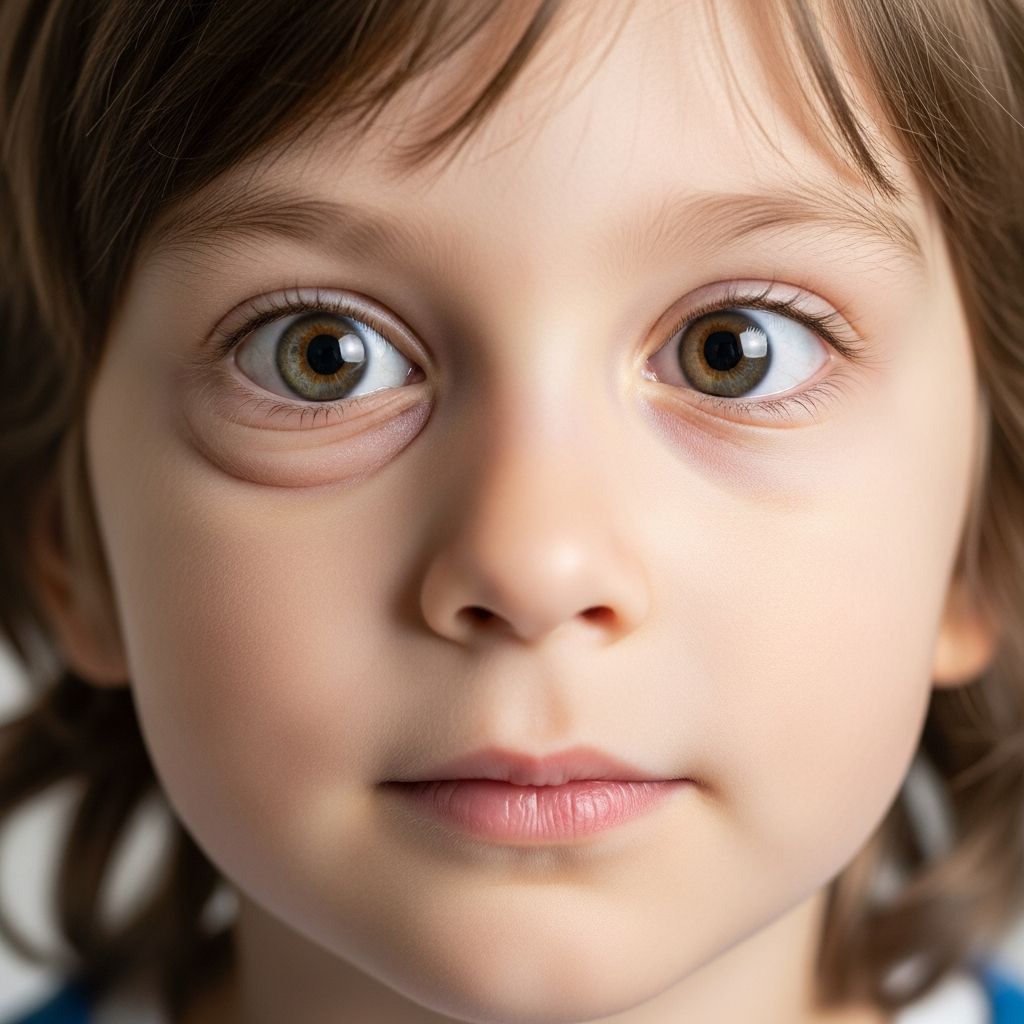
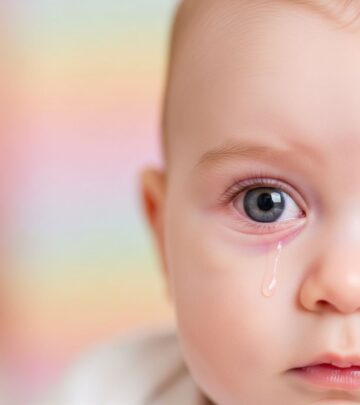
Pseudostrabismus is a benign condition where a child’s eyes seem crossed or misaligned, but they function normally and point in the same direction. This visual trick often arises from immature facial structures in infants and typically fades as the face develops.
The Nature of Apparent Eye Misalignment
In young children, particularly newborns, the eyes can give the impression of turning inward or outward due to anatomical features rather than any muscular or neurological issue. Unlike genuine strabismus, where eye muscles fail to coordinate properly, pseudostrabismus involves no disruption to binocular vision or eye movement.
This phenomenon is especially prevalent in the first year of life, affecting the perception in photos or side gazes where shadows and folds exaggerate the effect. Parents frequently notice it during casual observation or family pictures, prompting concern that proves unfounded upon professional evaluation.
Common Facial Features Behind the Appearance
Several developmental traits contribute to this misleading look:
- Wide or flat nasal bridge: Common in infants, this reduces the visible space between the eyes, simulating convergence.
- Epicanthal folds: These skin creases at the inner eye corners partially obscure the sclera (white part), creating an inward-turning illusion.
- Close interpupillary distance: A naturally smaller gap between pupils enhances the crossed-eye effect temporarily.
- Asymmetrical eyelids: Uneven folds or positions can make one eye appear deviated.
These features are evolutionary holdovers, more pronounced in certain ethnic groups such as those of Asian descent, where epicanthal folds are a standard trait.
Variations in Pseudostrabismus Presentations
Pseudostrabismus manifests in distinct forms based on the illusion’s direction:
| Type | Description | Typical Cause |
|---|---|---|
| Pseudoesotropia | Eyes appear crossed inward | Epicanthal folds and flat nose bridge |
| Pseudoexotropia | Eyes seem to drift outward | Positive angle kappa or macular dragging |
| Pseudohypertropia | One eye looks higher | Eyelid asymmetry or orbital issues |
| Pseudohypotropia | One eye appears lower | Trauma or infections affecting orbit |
Pseudoesotropia dominates as the most frequent type, resolving spontaneously in most cases by age 2-3 as facial bones grow.
Why Infants Are Most Affected
Newborn facial anatomy prioritizes a compact structure for passage through the birth canal, resulting in a flatter midface that evolves over time. The nasal bridge elevates, epicanthal folds recede, and eye spacing widens, naturally correcting the illusion without intervention.
Genetic factors play a role; children with family histories of prominent epicanthal folds inherit this trait, heightening the pseudostrabismus likelihood. Premature infants may experience additional macular irregularities, contributing to vertical illusions.
Recognizing Symptoms in Daily Life
Key indicators include:
- Eyes looking crossed primarily in straight-ahead or side views.
- No head tilting, squinting, or blinking issues associated with true misalignment.
- Normal fixation on objects and toys with both eyes.
- Absence of double vision or depth perception problems.
- More evident in photographs due to flash and angles.
If the child tracks moving objects smoothly with coordinated eyes, pseudostrabismus is likely. Persistent concerns warrant a check to rule out progression to actual deviation.
Related Stories



Differentiating from True Strabismus
Strabismus involves real misalignment from muscle imbalance, nerve signals, or brain control deficits, risking amblyopia if untreated. Pseudostrabismus poses no vision threat.
| Feature | Pseudostrabismus | Strabismus |
|---|---|---|
| Eye Alignment | Normal on exam | Actual deviation |
| Vision Impact | None | Possible lazy eye, double vision |
| Head Posture | Straight | Often tilted |
| Resolution | Spontaneous with growth | Requires treatment |
Early distinction prevents unnecessary worry; about 4-5% of children have true strabismus, while pseudostrabismus is far more common in infancy.
Diagnostic Approaches by Eye Specialists
Optometrists and ophthalmologists employ simple, non-invasive tests:
- Corneal light reflex: Shine light; symmetric pupil reflections confirm alignment.
- Cover-uncover test: Covering one eye reveals no movement in the other if straight.
- Movement assessment: Check pursuit and versions for full range.
- Angle kappa measurement: Evaluates pupillary vs. visual axis offset.
Hirschberg test, where light position on corneas is gauged, quickly debunks the illusion. Infants cooperate variably, but serial exams track development.
Does It Require Treatment?
Rarely. Observation suffices as facial maturation eradicates the appearance. Patching or glasses are unnecessary unless true issues lurk.
Surgical options like epicanthoplasty exist for cosmetics in persistent cases but are uncommon and not advised routinely due to risks. Monitoring every 6-12 months reassures parents.
Parental Monitoring and When to Seek Help
Track these red flags for potential true strabismus:
- Misalignment persists beyond 6 months.
- Family history of strabismus or amblyopia.
- Associated symptoms like head turns or poor tracking.
- Prematurity or developmental delays.
Annual vision screenings from pediatricians aid early detection. Prompt referral to pediatric ophthalmology clarifies doubts.
Long-Term Outlook and Prevention
Prognosis excels; nearly all cases self-resolve by preschool age with perfect vision outcomes. No preventive measures exist for anatomical traits, but awareness averts overtreatment.
Educating caregivers on normal variants reduces anxiety. Public health initiatives emphasize routine eye checks in well-child visits.
Frequently Asked Questions (FAQs)
Is pseudostrabismus harmful to my child’s vision?
No, it does not affect eyesight or development; it’s purely cosmetic.
At what age does it usually disappear?
Most resolve by 1-3 years as the face grows.
Can adults have pseudostrabismus?
Rarely; it’s tied to infant features.
How is it tested in babies?
Via light reflex and cover tests during exams.
Does it turn into real strabismus?
No direct link; monitoring distinguishes them.
Understanding pseudostrabismus empowers parents to recognize harmless traits, fostering confidence in their child’s eye health journey.
References
- What Is Pseudostrabismus? — All About Vision. 2023. https://www.allaboutvision.com/conditions/strabismus/pseudostrabismus/
- Strabismus (crossed eyes) — American Optometric Association. 2024-01-15. https://www.aoa.org/healthy-eyes/eye-and-vision-conditions/strabismus
- Pseudostrabismus — University Hospitals Sussex NHS Foundation Trust. 2023-05-10. https://www.uhsussex.nhs.uk/resources/pseudostrabismus-2/
- What Is Pseudostrabismus? — WebMD. 2024-02-01. https://www.webmd.com/eye-health/what-is-pseudostrabismus
- What is Pseudostrabismus? What Are the Symptoms in Infants — Batigoz. 2023. https://www.batigoz.com/en/health-guide/what-is-pseudostrabismus
- Pseudostrabismus — EyeWiki (American Academy of Ophthalmology). 2025-01-20. https://eyewiki.org/Pseudostrabismus
- Pseudostrabismus — American Association for Pediatric Ophthalmology and Strabismus. 2023. https://aapos.org/glossary/pseudostrabismus
Similar Articles








Read full bio of Sneha Tete