Psoriasis Health Risks: Screening And Management Guide
Discover the hidden connections between psoriasis and serious conditions like heart disease, joint inflammation, and metabolic issues that demand proactive care.
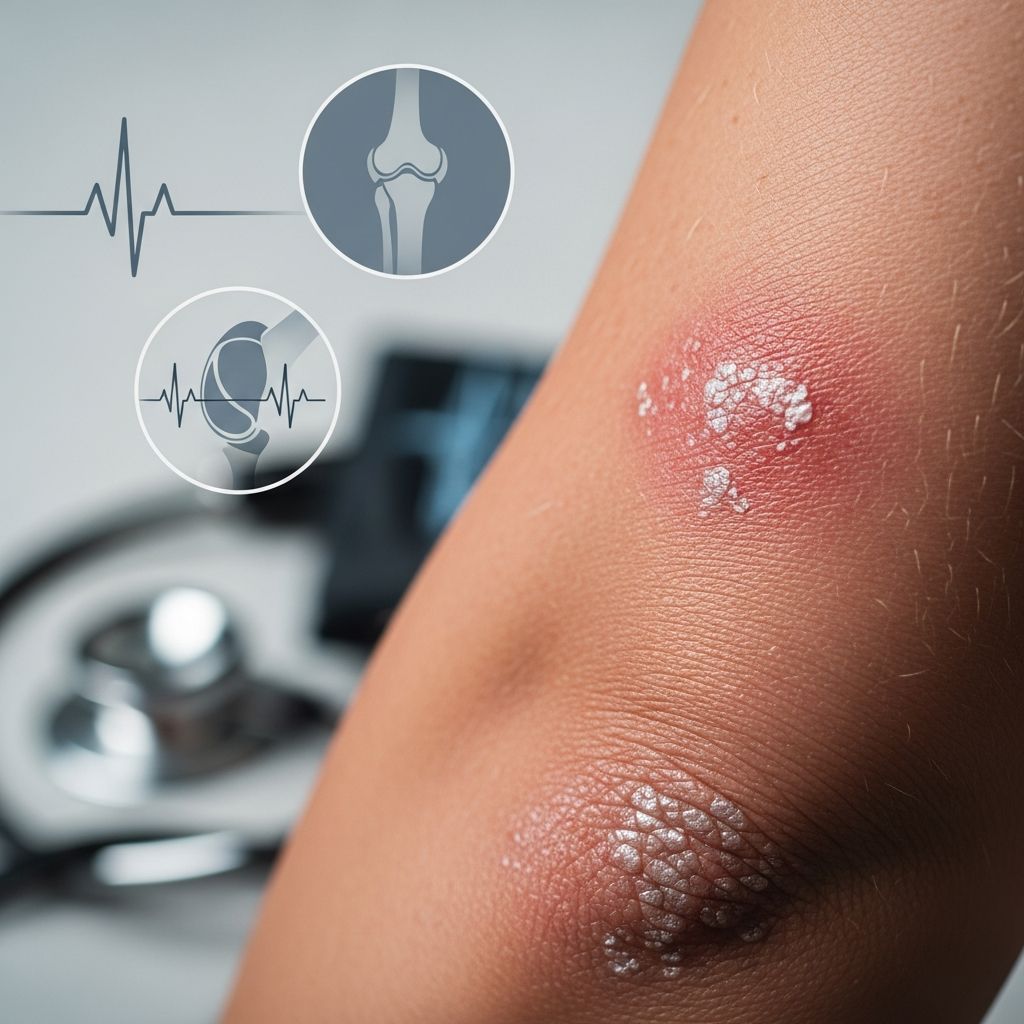
Psoriasis represents more than a skin disorder; it signals a systemic inflammatory state that heightens vulnerability to various interconnected health issues. Patients often face elevated chances of developing joint diseases, heart conditions, metabolic disturbances, and psychological challenges, all fueled by persistent immune overactivity. Recognizing these associations enables earlier interventions, potentially altering disease trajectories and enhancing life quality.
The Inflammatory Core of Psoriasis Connections
At its root, psoriasis involves T-cell driven inflammation that spills beyond the skin, promoting cytokine release like TNF-alpha and IL-17. This chronic process mirrors mechanisms in other inflammatory disorders, explaining overlaps with conditions such as atherosclerosis and insulin dysregulation. Studies indicate moderate-to-severe cases amplify these risks, with patients showing subclinical vascular changes like increased arterial stiffness and intima-media thickening. The “psoriatic march” theory posits a progression from inflammation to endothelial dysfunction, insulin resistance, and eventual cardiovascular events.
Severity matters: hospitalized or systemically treated individuals exhibit higher comorbidity burdens, including a threefold myocardial infarction risk in younger patients. Dermatologists, as primary caregivers, must screen routinely, coordinating with specialists for comprehensive oversight.
Joint Involvement: Psoriatic Arthritis Spotlight
Psoriatic arthritis (PsA) stands as the predominant comorbidity, affecting 30-33% of psoriasis sufferers. It manifests as joint swelling, enthesitis (tendon-bone inflammation), dactylitis (sausage-like fingers), and axial spine issues. Typically, skin symptoms precede PsA by years, though 10-15% debut simultaneously or PsA first.
- Risk predictors: Nail dystrophy, scalp or perianal lesions, and five or more tender/swollen joints signal higher PsA likelihood.
- Progression markers: Radiographic damage, elevated acute-phase reactants, and dactylitis forecast aggressive courses.
Early detection via rheumatology referral prevents irreversible damage. Guidelines from the National Psoriasis Foundation emphasize comorbidity-aware treatments.
Heart and Vascular Threats
Cardiovascular disease (CVD) looms large, with psoriasis independently boosting myocardial infarction (MI) risk by 70-200%, stroke by 56-59%, and CVD mortality by 37-39%. Severe cases confer a fourfold diabetes risk and three-fold MI odds, trimming life expectancy by about four years.
Prevalent issues include ischemic heart disease, angina, cerebrovascular events, and peripheral vascular disease. Subtle signs like coronary calcification appear more frequently. Traditional factors—obesity, hypertension, dyslipidemia—compound this, alongside inflammation’s direct vascular assault. A Taiwanese cohort linked psoriasis to doubled stroke risk.
| Cardiovascular Risk | Increased Odds in Psoriasis | Source Notes |
|---|---|---|
| Myocardial Infarction | 70-200% | Younger, severe cases highest |
| Stroke | 56-59% | Population studies |
| Hypertension | 43-58% | 9.1% undiagnosed |
| CVD Mortality | 37-39% | Severe psoriasis |
Metabolic Disruptions and Weight Challenges
Metabolic syndrome—encompassing obesity, hypertension, dyslipidemia, and insulin resistance—clusters in psoriasis patients, predisposing to CVD. Severe psoriasis links strongest, though evidence varies. Patients over 65 show markedly higher hypertension, diabetes, and glucose elevations.
Obesity feeds a vicious cycle: adipokines exacerbate inflammation, while psoriasis limits mobility. Type 2 diabetes risk quadruples, with 27% higher odds reported. Dyslipidemia and hypercholesterolemia prevail, demanding lipid panels and lifestyle counseling.
Gut and Liver Ties: IBD and Beyond
Inflammatory bowel disease (IBD), particularly Crohn’s disease, associates with psoriasis, especially severe forms. Risks elevate for both Crohn’s and ulcerative colitis, often predating skin symptoms. Dual cases heighten chances of thyroiditis, hepatitis, diabetes, and seronegative arthritis.
Related Stories



Management challenges arise: TNF inhibitors suit both but risk paradoxical psoriasis in 5%. COPD also emerges more frequently, with Taiwanese data showing reduced COPD-free survival.
Mental Health and Eye Complications
Depression ranks prominent, stemming from visible lesions, pain, and social stigma. Early psoriasis clinics note 25-33% with depression or hypertension at onset.
Ocular issues like uveitis affect PsA patients disproportionately, with 2.4-fold risk in severe cases. Routine eye checks prove essential.
Screening and Management Blueprint
Holistic care mandates:
- Annual CVD risk assessment (lipids, blood pressure, glucose).
- Joint exams and rheumatology referral for symptoms.
- Mental health screenings.
- Weight management and anti-inflammatory diets.
Treating psoriasis inflammation yields dual benefits, curbing comorbidity progression. Biologics targeting IL-17/23 show promise without worsening metabolic profiles. Multidisciplinary teams optimize outcomes, minimizing drug interactions.
Frequently Asked Questions
Does psoriasis directly cause heart disease?
Inflammation independently elevates CVD risk, amplified by metabolic factors. Severe cases heighten young patient vulnerability.
How common is psoriatic arthritis?
About 30% of psoriasis patients develop PsA; early skin signs predict it.
Can lifestyle changes reduce risks?
Yes—weight loss, exercise, and smoking cessation mitigate metabolic and CVD threats.
Should I get screened for comorbidities?
Absolutely; guidelines recommend routine checks for hypertension, diabetes, joints, and mood.
Do psoriasis treatments affect other conditions?
Some systemic drugs influence comorbidities; tailored biologics offer safer profiles.
Addressing psoriasis comprehensively transforms patient care, viewing it as a multisystem inflammatory entity rather than isolated dermatitis.
References
- Comorbidities in psoriasis — Indian Journal of Dermatology, Venereology and Leprology. 2017. https://ijdvl.com/comorbidities-in-psoriasis/
- What Are the Related Medical Conditions of Psoriasis? — National Psoriasis Foundation. 2023. https://www.psoriasis.org/related-conditions/
- Comorbidity in Adult Psoriasis: Considerations for the Clinician — PMC (National Library of Medicine). 2022-05-26. https://pmc.ncbi.nlm.nih.gov/articles/PMC9196664/
- Understanding Psoriasis Comorbidities — National Psoriasis Foundation. 2023. https://www.psoriasis.org/understanding-psoriasis-comorbidities/
- Uncovering the hidden risks of psoriasis comorbidities — Re-Solve Global Health. 2023. https://www.re-solveglobalhealth.com/post/uncovering-the-hidden-risks-of-psoriasis-comorbidities
- Treating Inflammation Benefits Psoriasis and its Comorbidities — Psoriasis Council. 2023. https://psoriasiscouncil.org/comorbidities/treating-inflammation/
Similar Articles








Read full bio of Sneha Tete