Psoriasis Management: Comprehensive Guide For Effective Control
Discover proven strategies for controlling psoriasis symptoms through personalized treatments and daily habits for lasting skin relief.
Psoriasis is a long-term autoimmune disorder that accelerates skin cell growth, leading to thick, scaly patches on the skin. Effective management focuses on reducing inflammation, slowing cell turnover, and preventing flare-ups through a combination of medical interventions and lifestyle adjustments. While no cure exists, tailored strategies can significantly alleviate symptoms and enhance daily life.
Understanding Psoriasis and Its Impact
Psoriasis manifests in various forms, with plaque psoriasis being the most prevalent, featuring raised red areas covered in silvery scales. Other variants include guttate (small drop-like spots), inverse (smooth patches in skin folds), pustular (pus-filled blisters), and erythrodermic (widespread redness). These types influence treatment choices, as each responds differently to therapies.
Triggers such as stress, infections, skin trauma, certain drugs, and weather changes can worsen outbreaks. Genetic predisposition plays a role, making family history a key factor in risk assessment. Early diagnosis via visual exam or biopsy ensures prompt intervention, preventing progression to moderate or severe stages that affect joints (psoriatic arthritis) or overall health.
Evaluating Psoriasis Severity
Determining severity guides therapy selection. Mild cases cover less than 3% of body surface and respond well to localized applications. Moderate affects 3-10%, often needing combined methods, while severe exceeds 10% or impairs function. Tools like the Psoriasis Area and Severity Index (PASI) quantify redness, thickness, scaling, and coverage for objective monitoring.
| Severity Level | Body Coverage | Typical Impact | Recommended Starting Approach |
|---|---|---|---|
| Mild | <3% | Minimal disruption | Topical agents |
| Moderate | 3-10% | Noticeable discomfort | Topicals + phototherapy |
| Severe | >10% | Major quality-of-life effects | Systemic or biologics |
Topical Therapies: First-Line Defense
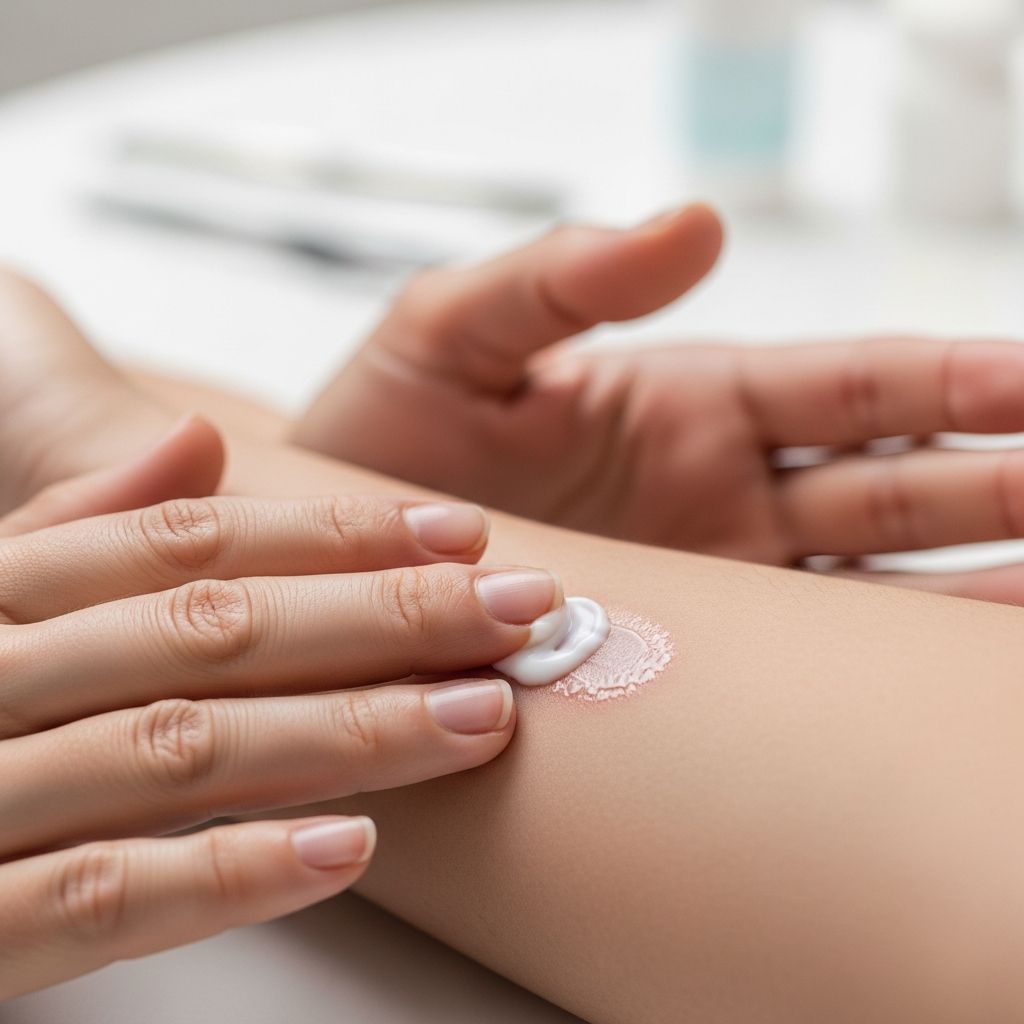
For mild to moderate psoriasis, topical agents directly target affected areas, reducing plaques effectively with fewer systemic risks. Corticosteroids, available in potencies from mild (for face/genitals) to super-potent (for thick plaques), suppress inflammation and itching.
- Vitamin D analogues like calcipotriene normalize cell growth; often paired with steroids for synergy, though they may irritate sensitive skin.
- Calcineurin inhibitors (tacrolimus, pimecrolimus) suit delicate zones by modulating immune activity without steroid thinning risks.
- Scale softeners: Salicylic acid dissolves buildup; coal tar reduces scaling and inflammation.
- Retinoids (tazarotene) promote normal turnover but increase sun sensitivity.
Application tips include moisturizing post-treatment to lock in hydration and using medicated shampoos for scalp involvement. Consistency yields results in 4-6 weeks; rotation prevents tolerance.
Light-Based Treatments: Harnessing UV Rays
Phototherapy employs controlled ultraviolet exposure to decelerate skin cell proliferation and dampen immune responses. Narrowband UVB (NB-UVB) is preferred for its balance of efficacy and safety, administered 2-3 times weekly in clinics or home units for stable cases.
PUVA combines psoralen (light-sensitizing drug) with UVA for stubborn plaques, though it carries higher skin cancer risk with long-term use. Excimer lasers deliver targeted NB-UVB to small areas, minimizing exposure. Side effects like burns or premature aging necessitate dermatologist oversight.
Related Stories



- Best for: Moderate psoriasis unresponsive to topicals.
- Duration: 20-30 sessions for clearance, maintenance as needed.
- Contraindications: Photosensitivity disorders, lupus.
Systemic Medications: For Widespread Control
Moderate-to-severe cases demand drugs acting body-wide. Traditional options include methotrexate (weekly oral, suppresses immunity; liver monitoring required), cyclosporine (rapid-acting but short-term due to kidney risks), and acitretin (retinoid for pustular types; avoids pregnancy).
Apremilast (Otezla), an oral phosphodiesterase-4 inhibitor, curbs inflammatory signals for plaque and arthritis relief. These require blood tests for safety.
Biologic Therapies: Precision Targeting
Biologics revolutionized care by blocking specific immune pathways (TNF-alpha, IL-17, IL-23). Injected or infused, they yield clear/near-clear skin in 70-90% of users within months. Examples:
- IL-17 inhibitors: Secukinumab, ixekizumab – swift plaque reduction.
- IL-23 inhibitors: Guselkumab, risankizumab – sustained remission.
- TNF inhibitors: Etanercept, adalimumab – versatile for skin/joints.
Screening for infections (TB, hepatitis) precedes use; efficacy persists years for many.
Complementary Lifestyle Strategies
Non-drug measures amplify results. Daily emollients combat dryness; avoid irritants like alcohol, smoking. Weight management, anti-inflammatory diets (omega-3s, fruits), and stress reduction (yoga, meditation) lessen flares.
- Aloe vera or capsaicin for itch relief (OTC).
- Sun exposure cautiously; baths with oats/salts soothe.
Navigating Treatment Plans with Providers
Personalized regimens evolve via regular check-ins. Start simple, escalate as needed; combinations (e.g., topical + biologic) optimize outcomes. Track progress with photos/apps; report side effects promptly.
Frequently Asked Questions
What causes psoriasis flares?
Common triggers include stress, streptococcal infections, cold weather, and medications like beta-blockers or lithium.
How long until treatments work?
Topicals: 4-8 weeks; phototherapy: 1-2 months; biologics: 12-16 weeks for peak effect.
Are biologics safe long-term?
Yes, with monitoring; low malignancy risk vs. disease burden.
Can diet influence psoriasis?
Evidence supports Mediterranean-style eating to reduce inflammation, though not curative.
Is home phototherapy viable?
For limited disease, under prescription; follow protocols to avoid burns.
Future Directions in Psoriasis Care
Ongoing research explores oral small molecules, gene therapies, and microbiome modulators. Guidelines from AAD emphasize patient education and shared decision-making. Advances promise higher remission rates and fewer side effects.
References
- Effective Psoriasis Treatment: A Comprehensive Guide — Dermatology North Sydney. 2023. https://dermatologynorthsydney.com.au/effective-psoriasis-treatment-a-comprehensive-guide/
- Treating Psoriasis: A Comprehensive Guide — Dr. Paul Fischer, M.D. 2023. https://www.drpaulfischer.com/my-blog/1331774-treating-psoriasis-a-comprehensive-guide/
- Treatment of Psoriasis: An Algorithm-Based Approach — American Academy of Family Physicians (aafp.org). 2000-02-01. https://www.aafp.org/pubs/afp/issues/2000/0201/p725.html
- Your Guide to Managing Psoriasis — UCLA Health. 2024. https://www.uclahealth.org/news/article/your-guide-managing-psoriasis
- Psoriasis – Treatment — National Health Service (NHS.uk). 2024. https://www.nhs.uk/conditions/psoriasis/treatment/
- Diagnosis and Management of Psoriasis — National Center for Biotechnology Information (PMC.ncbi.nlm.nih.gov). 2017. https://pmc.ncbi.nlm.nih.gov/articles/PMC5389757/
- Psoriasis Clinical Guideline — American Academy of Dermatology (aad.org). 2024. https://www.aad.org/member/clinical-quality/guidelines/psoriasis
Similar Articles








Read full bio of medha deb