Psoriasis Complete Guide: Causes, Triggers, Symptoms & Treatment
Comprehensive guide to psoriasis: symptoms, causes, types, diagnosis, and effective management strategies for this chronic skin condition.
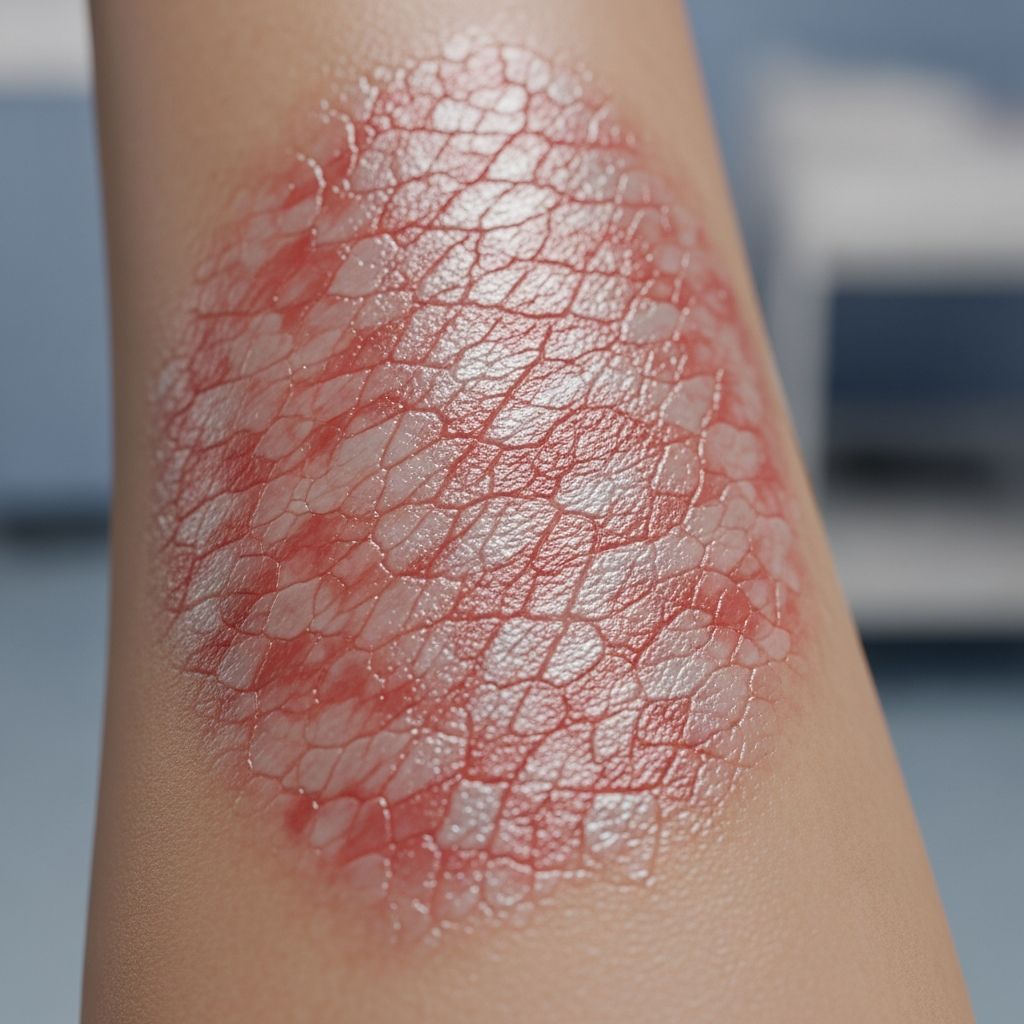
Psoriasis is a chronic, immune-mediated inflammatory skin disease characterised by clearly defined red plaques with silvery scales. It affects approximately 2–3% of the population and can significantly impact quality of life due to its visible nature, itchiness, and association with comorbidities like psoriatic arthritis.
What is psoriasis?
Psoriasis arises from an overactive immune system where T-cells and cytokines such as IL-17, IL-23, and TNF-α trigger rapid keratinocyte proliferation. Normally, skin cells renew every 28–30 days, but in psoriasis, this cycle accelerates to 3–4 days, leading to thick, scaly plaques. The condition is not contagious but follows a relapsing-remitting course influenced by genetic and environmental factors.
Who gets psoriasis?
Psoriasis typically onset between ages 20–30 or 50–60, with bimodal peaks. It affects males and females equally and is more prevalent in individuals of Caucasian descent, though all ethnicities can be affected. Family history increases risk; if one parent has it, children have a 10–25% chance, rising to 50–70% with both parents affected. Risk factors include obesity, smoking, and metabolic syndrome.
Types of psoriasis
- Plaque psoriasis (psoriasis vulgaris): Most common (80–90%), featuring well-demarcated erythematous plaques with silvery scales on elbows, knees, scalp, and lower back.
- Guttate psoriasis: Small drop-like lesions, often post-streptococcal infection in children and young adults.
- Inverse (flexural) psoriasis: Smooth, erythematous patches in skin folds like axillae and groin, exacerbated by friction and moisture.
- Pustular psoriasis: Sterile pustules on erythematous base; generalised (von Zumbusch) or localised (palms/soles).
- Erythrodermic psoriasis: Rare, severe form causing widespread erythema and exfoliation, risking dehydration and infection.
- Nail psoriasis: Affects 50% of patients; features include pitting, onycholysis, oil-drop discoloration, and subungual hyperkeratosis.
Clinical features
Classic plaque psoriasis
Plaques exhibit the Auspitz sign (pinpoint bleeding on scale removal) and cobblestoning. Common sites: extensor surfaces, scalp (50–80%), nails (10–50%). Itch, pain, and cracking occur, worsened in winter.
Scalp psoriasis
Affects up to 80%; presents as thick scaling with erythema, often extending to ears and neck. Differentiate from seborrhoeic dermatitis by thicker scales.
Nail psoriasis
Nail changes correlate with disease severity; pitting from parakeratosis, onycholysis increases infection risk. NAPSI score assesses severity.
Guttate psoriasis
Triggered by group A streptococcus; resolves spontaneously but may evolve to plaque type.
Palmoplantar pustulosis
Yellow-brown pustules on palms/soles with hyperkeratosis; linked to smoking.
Diagnosis
Primarily clinical based on morphology and distribution. Skin biopsy rarely needed but shows parakeratosis, Munro microabscesses, and dilated capillaries in papillae. Exclude differentials like eczema, tinea, or cutaneous lymphoma.
Psoriasis triggers
- Infections (streptococcal, HIV)
- Trauma (Koebner phenomenon)
- Drugs (beta-blockers, lithium, antimalarials)
- Stress, alcohol, smoking
- Cold weather, obesity
Triggers precipitate flares in genetically susceptible individuals.
Treatment
Treatment escalates by severity: mild (<3% BSA) uses topicals; moderate-severe employs phototherapy, systemics, biologics.
First-line
- Topical corticosteroids: Potent for plaques; risk atrophy with prolonged use.
- Vitamin D analogues (calcipotriol): Normalise keratinocyte proliferation.
- Combinations: Steroid + calcipotriol for synergy.
Second-line
- Phototherapy: Narrowband UVB (NB-UVB) effective for 60–70%; PUVA for thicker plaques.
- Excimer laser: Targeted for localised disease.
Related Stories



Systemic therapy
| Agent | Mechanism | Indications |
|---|---|---|
| Methotrexate | Folate antagonist, anti-proliferative | First-line systemic; also for PsA |
| Cyclosporin | Calcineurin inhibitor | Rapid control; short-term due to nephrotoxicity |
| Acitretin | Vitamin A derivative | Pustular/erythrodermic; teratogenic |
| Apremilast | PDE4 inhibitor | Mild-moderate; oral alternative |
Biologics
Target IL-17 (secukinumab, ixekizumab), IL-23 (guselkumab), TNF-α (etanercept). High efficacy (PASI 90 in 70–90%); for refractory disease or PsA.
Other
Avoid systemic steroids due to rebound flares. Emerging: JAK inhibitors, small molecules.
Psoriatic arthritis
Affects 20–30%; axial, peripheral joints. Screen with CASPAR criteria; early rheumatology referral.
Complications
- Cardiovascular: 50% higher MI risk.
- Metabolic: Diabetes, NAFLD.
- Mental health: Depression from stigma.
- Lymphoma: Slight increase with severe disease.
Disease severity
- Mild: <3% BSA or <10 plaques.
- Moderate: 3–10% BSA or DLQI >10.
- Severe: >10% BSA, erythrodermic/pustular.
Prognosis and follow-up
Chronic with flares/remissions; 70–80% achieve clearance with biologics. Monitor comorbidities, screen annually for PsA, CVD. Lifestyle: weight loss, smoking cessation improve response.
Frequently Asked Questions (FAQs)
Q: Is psoriasis contagious?
A: No, psoriasis is not contagious; it is an autoimmune condition.
Q: Can psoriasis be cured?
A: No cure exists, but treatments achieve long-term remission.
Q: Does diet affect psoriasis?
A: Anti-inflammatory diets (Mediterranean) may reduce flares; gluten-free for celiac comorbidity.
Q: What is the Koebner phenomenon?
A: New psoriasis lesions at trauma sites.
Q: How does psoriasis affect nails?
A: Causes pitting, onycholysis; treat with topicals/systemics.
References
- Psoriasis | Fact Sheets — Yale Medicine. 2023. https://www.yalemedicine.org/conditions/psoriasis
- Psoriasis: What It Is, Symptoms, Causes, Types & Treatment — Cleveland Clinic. 2024-01-15. https://my.clevelandclinic.org/health/diseases/6866-psoriasis
- Psoriasis – Symptoms and causes — Mayo Clinic. 2024-10-01. https://www.mayoclinic.org/diseases-conditions/psoriasis/symptoms-causes/syc-20355840
- Psoriasis Symptoms, Causes, & Risk Factors — NIAMS, NIH. 2023-05-04. https://www.niams.nih.gov/health-topics/psoriasis
- Psoriasis Overview: Types, Causes, Symptoms, and Treatment — Pfizer. 2024. https://www.pfizer.com/disease-and-conditions/psoriasis
- Psoriasis: Symptoms, Treatment, Images and More — DermNet NZ. 2024-11-20. https://dermnetnz.org/topics/psoriasis
Similar Articles








Read full bio of Sneha Tete