Psoriasis PASI Scoring: Induration Thickness
Master the PASI scoring of induration (thickness) in psoriasis for accurate severity assessment and treatment monitoring.
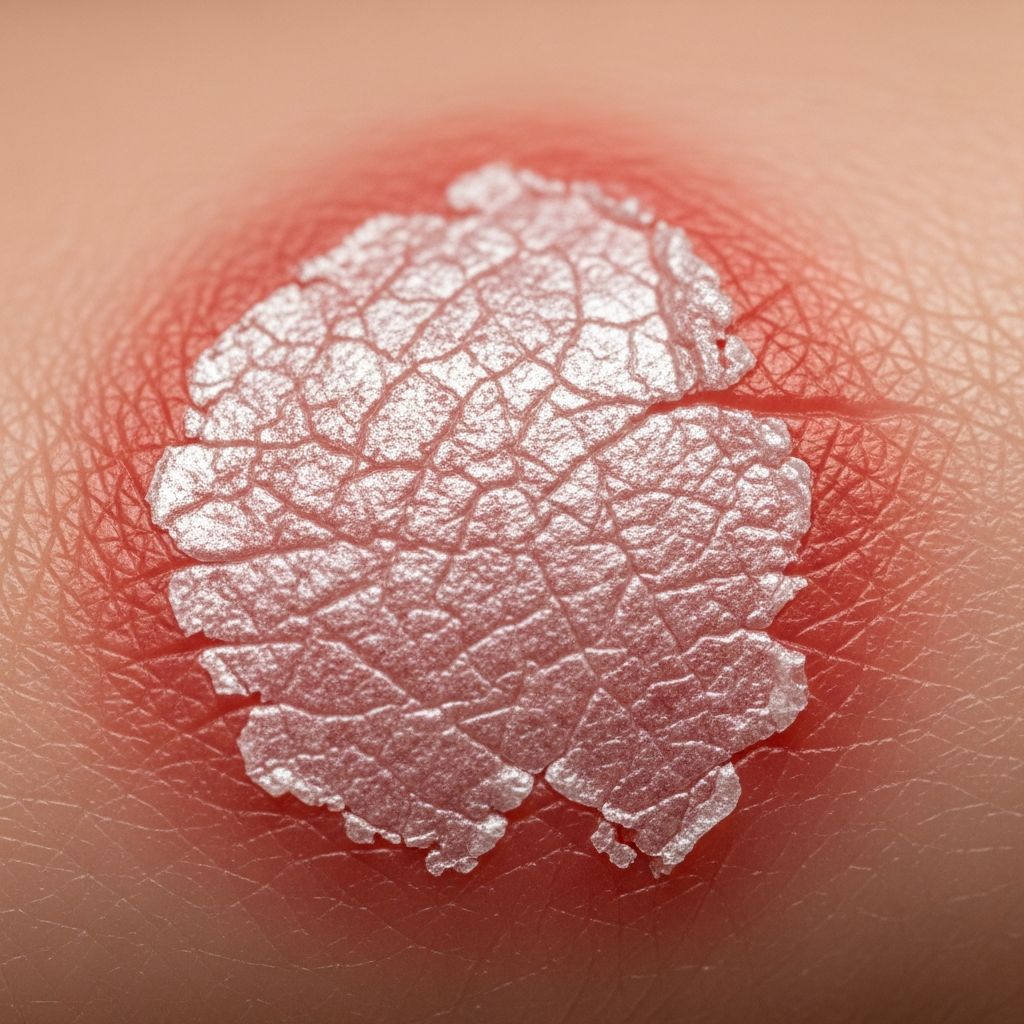
The Psoriasis Area and Severity Index (PASI) is a standardized tool used by dermatologists to quantify the severity of psoriasis plaques. Among its components,
induration
—referring to the thickness or elevation of plaques—is a critical parameter scored from 0 to 4. This article delves into the specifics of induration scoring, its clinical significance, visual guides, and practical application in PASI calculation.What is Induration in Psoriasis?
Induration describes the palpable thickness of psoriasis lesions due to inflammatory cell infiltration and hyperproliferation of keratinocytes. Unlike erythema (redness) or desquamation (scaling), induration reflects the three-dimensional aspect of plaques, making it a key indicator of lesion activity. In PASI, induration is averaged with erythema and scaling to derive an intensity score for each body region.
Accurate induration assessment requires gentle palpation to gauge plaque elevation without causing discomfort. Scores are subjective but standardized through visual references and training. Studies show inter-observer variability can be reduced with calibrated photographs.
PASI Components Overview
PASI combines
area affected
(0-6 per region) andseverity
(average of erythema, induration, desquamation; 0-4 each) across four body areas: head/neck (10%), upper limbs (20%), trunk (30%), lower limbs (40%). The formula is:PASI = 0.1(Ah + Ih) + 0.2(Au + Iu) + 0.3(At + It) + 0.4(Al + Il)
Where A = area score, I = average intensity score. Maximum score: 72.
Induration Scoring Scale
Induration is scored on a 0-4 scale:
| Score | Description | Clinical Features |
|---|---|---|
| 0 | No induration | Flat skin, no elevation; matches surrounding normal skin. |
| 1 | Minimal induration | Slight palpable thickening; barely elevated, detectable only on careful touch. |
| 2 | Moderate induration | Obvious elevation; <2mm thick, smooth contours. |
| 3 | Moderate to thick induration | Prominent raising; 2-4mm thick, firm to palpation. |
| 4 | Very thick induration | Marked elevation; >4mm, hard, may crack or fissure. |
This scale ensures consistency. For example, a plaque with score 2 feels like mild edema.
Visual Guide to Induration Scores
- Score 0: Skin surface is completely flat, indistinguishable from uninvolved areas. No resistance to finger pressure.
- Score 1: Subtle ridge felt under fingertip; elevation <1mm. Often seen in early or resolving plaques.
- Score 2: Clear domed shape; 1-2mm height. Fingertip sinks slightly into plaque edges.
- Score 3: Substantial bulk; 2-4mm. Plaque resists compression, feels rubbery.
- Score 4: Tumor-like mass; >4mm. May overhang edges, prone to fissuring in chronic cases.
These descriptions align with validated PASI training tools. Images from standardized atlases (e.g., DermNet) aid scoring.
Assessing Induration in Practice
To score induration:
- Inspect: Observe silhouette against light for elevation profile.
- Palpate: Use index finger to slide over plaque, noting resistance and height.
- Compare: Reference to hand rule (palm ≈1% BSA) for scale, but focus on relative thickness.
- Average: Combine with erythema/desquamation for regional intensity.
Challenges include hyperkeratosis masking true thickness or pustular variants altering feel. In such cases, gently scrape scales if needed.
Clinical Examples of Induration
- Classic plaque psoriasis: Often scores 2-3; thick on extensors (elbows/knees).
- Guttate psoriasis: Typically 0-1; minimal elevation despite widespread erythema.
- Palmoplantar psoriasis: High induration (3-4) due to hyperkeratosis; feels callus-like.
- Resolving plaques post-treatment: Drops to 0-1 as inflammation subsides.
Related Stories



Treatment response: Biologics often reduce induration faster than topicals.
Common Pitfalls in Induration Scoring
- Over-scoring scaling as thickness: Distinguish desquamation (surface flakes) from true elevation.
- Inconsistent pressure: Use light touch; heavy palpation flattens plaques.
- Neglecting variants: Erythrodermic psoriasis may have diffuse subtle induration (score 1-2).
- Inter-observer variability: Training reduces this by 20-30%; use PO-PASI for patients.
Induration in PASI Interpretation
PASI thresholds:
- 0-5: Mild (induration often ≤1)
- 6-10: Moderate (induration 2 average)
- >10: Severe (induration ≥3 dominant)
PASI 75 (75% improvement) targets induration reduction. High baseline induration predicts slower clearance.
Patient-Oriented PASI (PO-PASI)
DermNet’s tool lets patients self-score induration via photo matching. Select images for head, arms, trunk, legs matching thickness. Auto-calculates PASI for telehealth.
Frequently Asked Questions (FAQs)
Q: How reliable is self-scoring induration?
A: PO-PASI correlates well with clinician scores (r=0.85); useful for monitoring but confirm with dermatologist.
Q: Does induration always match erythema?
A: No; thick plaques can be pale (score 4 induration, 1 erythema post-scaling).
Q: Can induration guide treatment choice?
A: Yes; thick induration (>3) favors systemic therapies over topicals.
Q: How to score fissured thick plaques?
A: Score max elevation; fissures indicate score 4.
Q: Is PASI valid for non-plaque psoriasis?
A: Primarily for plaque; modifications exist for pustular/erythrodermic.
Training and Resources
Practice with DermNet atlases. Apps like PASI calculator aid computation. Regular scoring improves accuracy by 15%.
References
- PASI score: Definition and how to calculate — Medical News Today. 2023-05-15. https://www.medicalnewstoday.com/articles/pasi-score
- Patient-oriented PASI score — DermNet NZ. 2024-01-10. https://dermnetnz.org/topics/patient-oriented-pasi-score
- Understanding Your PASI Score For Psoriasis — Healthline. 2023-08-22. https://www.healthline.com/health/pasi-psoriasis
- PASI (psoriasis area and severity index) — Primary Care Notebook. 2024-03-05. https://primarycarenotebook.com/pages/dermatology/pasi-psoriasis-area-and-severity-index
- Estimation of Psoriasis Area and Severity Index score for treatment — NCBI Bookshelf (BAD guidelines). 2022-11-18. https://www.ncbi.nlm.nih.gov/books/NBK109508/
- Disease Severity Classification — International Psoriasis Council. 2023-07-12. https://psoriasiscouncil.org/our-work/projects/disease-severity-classification/
- Psoriasis Severity: More Than Just a Score Card — HMP Global (NPF-endorsed). 2024-02-20. https://www.hmpgloballearningnetwork.com/site/thederm/npf-endorsed-features/psoriasis-severity-more-just-score-card
Similar Articles








Read full bio of medha deb