Psoriatic Arthritis Diagnosis: 6 Symptoms And 5 Criteria
Learn how psoriatic arthritis is diagnosed, from symptoms and criteria to tests and specialist referrals for timely management.
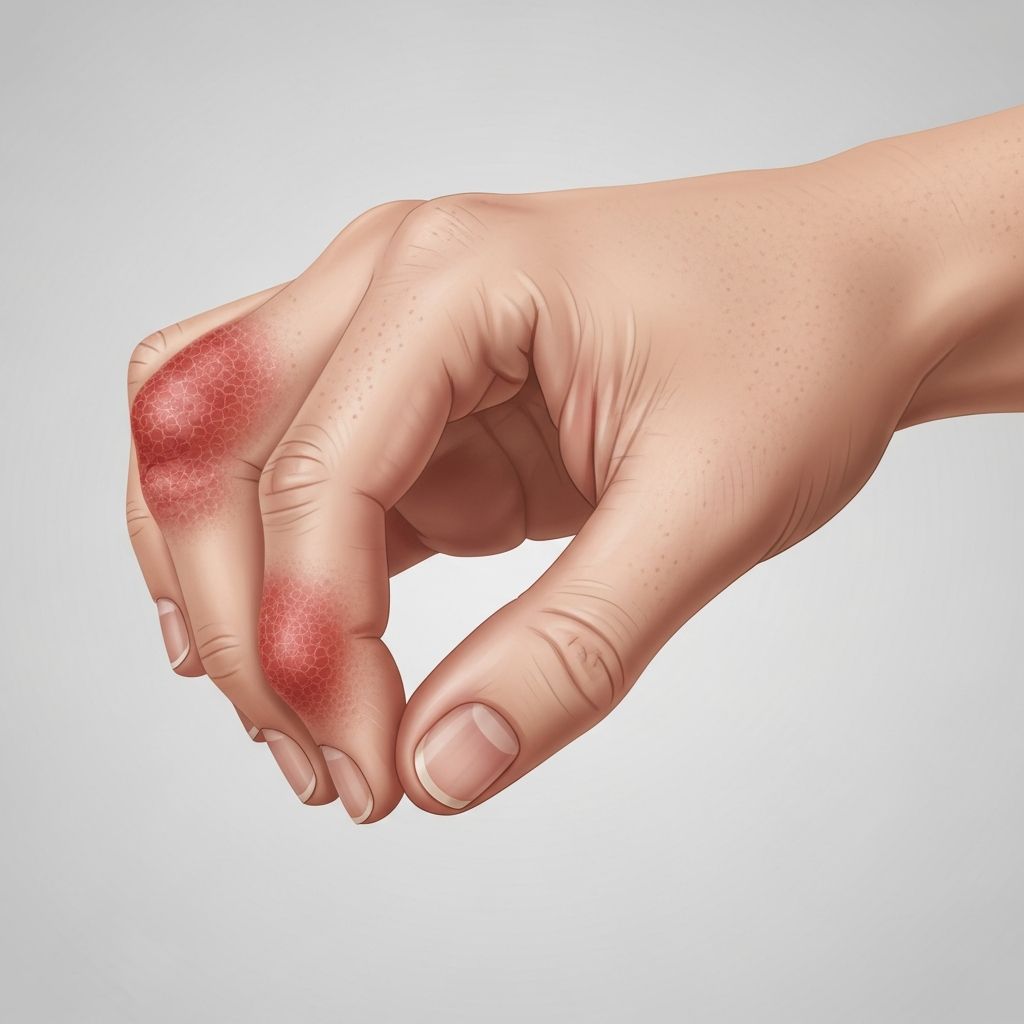
Psoriatic arthritis (PsA) is a chronic inflammatory condition affecting up to 30% of people with psoriasis, causing joint pain, swelling, and potential long-term damage if not diagnosed early. Early diagnosis is crucial to prevent functional disability, manage comorbidities like cardiovascular disease, and improve outcomes through targeted therapies.
What Is Psoriatic Arthritis?
Psoriatic arthritis is a
seronegative spondyloarthropathy
characterized by heterogeneous musculoskeletal and dermatological manifestations, including peripheral arthritis, axial involvement, enthesitis (inflammation where tendons/ligaments attach to bone), dactylitis (sausage-like finger/toe swelling), and psoriasis skin/nail disease. It accounts for about 20% of early arthritis clinic referrals and poses diagnostic challenges due to its mimicry of other conditions like rheumatoid arthritis (RA) or gout.Unlike RA, PsA typically spares the distal interphalangeal (DIP) joints less symmetrically and features extra-articular signs like psoriasis. Up to 50% of cases remain unrecognized in primary and secondary care, leading to diagnostic delays of 6-12 months that correlate with increased joint damage and disability.
Psoriatic Arthritis Symptoms
Recognizing PsA symptoms prompts timely medical evaluation. Common signs include:
- Joint pain and stiffness: Affects knees, ankles, fingers, toes, lower back; worse in mornings or after inactivity (inflammatory pattern vs. mechanical osteoarthritis).
- Dactylitis: Entire digit swelling, occurring in 30-50% of PsA patients.
- Enthesitis: Pain at Achilles tendon, plantar fascia, or elbow epicondyles.
- Psoriasis: Scaly skin patches (current or history); nail pitting, onycholysis in 80%+ cases.
- Axial symptoms: Inflammatory back pain (night pain, morning stiffness >30 min, improves with activity).
- Asymmetric oligoarthritis: 2-4 joints, often lower limbs.
Symptoms may precede, coincide with, or follow psoriasis diagnosis. Family history of psoriasis/PsA raises suspicion.
Risk Factors for Psoriatic Arthritis
Key risk factors include:
- Moderate-to-severe psoriasis (especially plaque type).
- Nail psoriasis.
- Family history of PsA/psoriasis.
- Obesity, smoking, and metabolic syndrome (linked to higher incidence and severity).
- HLA-B27 positivity in axial-dominant PsA.
People with psoriasis have a 10-20% lifetime risk of developing PsA.
When to See a Doctor
Consult a healthcare provider if you have psoriasis plus persistent joint pain/swelling, especially with dactylitis, enthesitis, or back pain unresponsive to rest. Early rheumatology referral is recommended for inflammatory features to avoid irreversible damage. Primary care screening tools like the PEST (Psoriasis Epidemiology Screening Tool) can identify at-risk patients.
Psoriatic Arthritis Diagnosis Criteria: CASPAR
The
CASPAR (Classification Criteria for Psoriatic Arthritis)
provide a validated framework for diagnosing PsA in inflammatory arthritis patients. A score ≥3 confirms PsA (sensitivity 91.4%, specificity 98.7%).| Feature | Description | Points |
|---|---|---|
| Evidence of psoriasis |
| 2 (current) 1 (personal/family) |
| Nail dystrophy | Typical changes like pitting/onnycholysis | 1 |
| Negative rheumatoid factor | By ELISA/nephelometry (not latex) | 1 |
| Dactylitis | Current or history (rheumatologist-recorded) | 1 |
| Juxta-articular new bone formation | On hand/foot X-rays (ill-defined ossification) | 1 |
CASPAR helps differentiate PsA from RA (symmetric, RF-positive polyarthritis) and other arthritides.
Physical Exam for Psoriatic Arthritis
Rheumatologists perform comprehensive exams:
- 68/66 joint count: Beyond RA’s 28-joint score to include feet/ankles.
- Enthesis assessment: MASES or LEI indices for Achilles, elbows.
- Dactylitis check: Full hand/foot exam.
- Spine evaluation: Schober’s test for axial involvement.
- Skin/nail inspection: Psoriasis severity (PASI score).
Related Stories



Patterns: oligoarticular (50%), polyarticular (30%), distal (15%), axial (5-10%), mutilans (rare).
Lab Tests for Psoriatic Arthritis
Labs support but don’t confirm diagnosis:
- RF and anti-CCP: Negative in >90% (seronegative).
- ESR/CRP: Elevated in 50%; correlates with activity.
- HLA-B27: Positive in axial PsA.
- Uric acid: Rule out gout.
- Normal in mechanical pain.
Low RF titers occur in 10%; not diagnostic.
Imaging Tests for Psoriatic Arthritis
Imaging detects structural changes:
- X-rays: Erosions, pencil-in-cup deformity, juxta-articular periostitis, new bone formation.
- Ultrasound/MRI: Enthesitis, synovitis, bone marrow edema (early detection).
- DEXA scan: Osteoporosis risk.
Bone scintigraphy or CT for axial disease.
Differential Diagnosis
| Condition | Key Differentiators from PsA |
|---|---|
| Rheumatoid Arthritis | Symmetric small-joint polyarthritis, RF/anti-CCP positive, no psoriasis/dactylitis. |
| Osteoarthritis | Mechanical pain, DIP/OA nodes, no inflammation. |
| Gout | Monosodium urate crystals, tophi, hyperuricemia. |
| Ankylosing Spondylitis | HLA-B27+, pure axial, no skin disease. |
PsA exclusion requires ruling out mimics.
Assessing PsA Disease Activity and Monitoring
Use composite scores:
- DAPSA/CPsA: For peripheral joints.
- ASDAS: Axial.
- MDA: Minimal disease activity (target).
Monitor joint counts, entheses, skin, function (HAQ), damage (PsAJI).
Treatment After Diagnosis
Early DMARDs (methotrexate), biologics (TNF-i, IL-17/23i) halt progression. Lifestyle: weight loss, smoking cessation.
Frequently Asked Questions (FAQs)
Can PsA occur without psoriasis?
Yes, in 10-15% (personal/family history suffices per CASPAR).
How long does diagnosis take?
Average 6-12 months; screening reduces delays.
Are blood tests definitive?
No, seronegative; clinical + imaging needed.
Does PsA affect the spine?
Yes, 25% have axial involvement like ankylosing spondylitis.
Is early diagnosis important?
Critical; delays increase damage/disability.
References
- Psoriatic arthritis: state of the art review — Nash P, et al. National Center for Biotechnology Information (PMC – NIH). 2018-12-11. https://pmc.ncbi.nlm.nih.gov/articles/PMC6297592/
- Classification criteria for psoriatic arthritis — Taylor W, et al. Arthritis & Rheumatism (Wiley). 2006-08-15. https://onlinelibrary.wiley.com/doi/10.1002/art.21472
- 2021 EULAR recommendations for PsA management — Smolen JS, et al. Annals of the Rheumatic Diseases (BMJ). 2022-07-01. https://ard.bmj.com/content/81/7/907
- PsA diagnosis and screening — Ritchlin CT, et al. New England Journal of Medicine. 2017-04-19. https://www.nejm.org/doi/full/10.1056/NEJMra1505557
Similar Articles








Read full bio of medha deb