Psychopathy: Symptoms, Causes, Diagnosis, Treatment
Unraveling psychopathy: Explore its traits, causes, brain science, diagnosis tools, and management strategies for this complex condition.
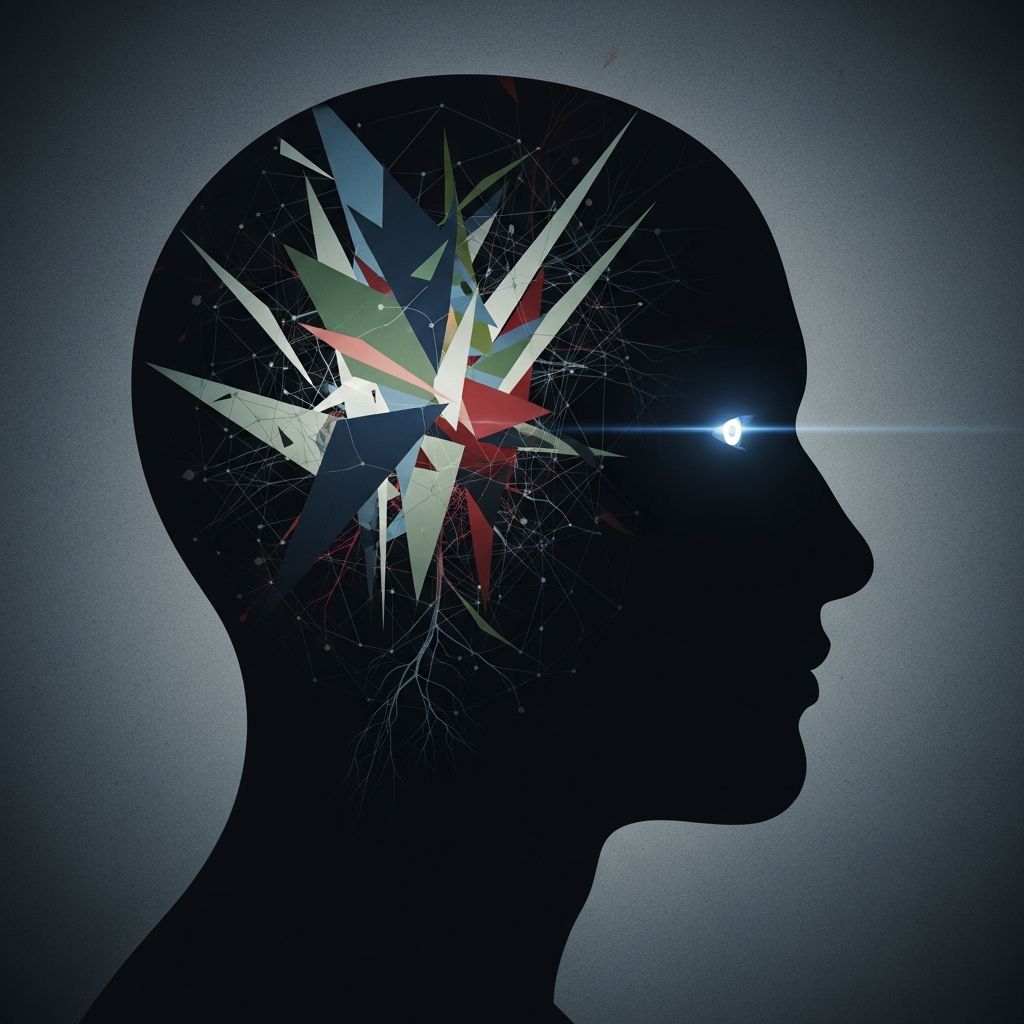
Psychopathy is a neuropsychiatric disorder characterized by deficient emotional responses, lack of empathy, poor behavioral controls, and persistent antisocial deviance.It manifests early in development with strong genetic influences, affecting paralimbic brain regions and leading to manipulative, impulsive behaviors.
What Is Psychopathy?
Psychopathy involves shallow emotions, grandiosity, impulsivity, and a disregard for others’ rights, often resulting in criminality and relational destruction. Unlike stereotypes of violent killers, it exists on a spectrum, with about 1% of adults showing clinically significant traits—1.2% in men and 0.3-0.7% in women. Core features include callous-unemotional traits emerging before age 10, distinguishing it from general antisocial personality disorder (ASPD).
It is not a DSM-5 formal diagnosis but aligns with ASPD symptoms like norm violation, deceit, and irresponsibility. Psychopaths excel in superficial charm but fail in genuine empathy, using manipulation for self-gain.
Psychopathy Symptoms and Traits
Symptoms cluster into interpersonal, affective, lifestyle, and antisocial factors:
- Interpersonal: Glibness, grandiosity, pathological lying, manipulation.
- Affective: Lack of remorse, shallow affect, callousness, failure to accept responsibility.
- Lifestyle: Impulsivity, poor planning, parasitic lifestyle, early behavioral problems.
- Antisocial: Juvenile delinquency, revocation of conditional release, criminal versatility.
High psychopathy predicts recidivism: 50% reoffend within 6 months, rising to 70% over 5 years—double non-psychopathic rates. In youth, callous-unemotional traits with conduct disorder signal intractable paths.
| Factor | Key Traits | Examples |
|---|---|---|
| Interpersonal | Glib, grandiose | Superficial charm to con others |
| Affective | Callous, remorseless | No guilt after harming others |
| Lifestyle | Impulsive, irresponsible | Short-term thrill-seeking |
| Antisocial | Criminal history | Repeated violations of law |
Psychopathy vs. Sociopathy
Psychopathy and sociopathy are often conflated but differ subtly. Psychopathy stems from genetic/brain factors, yielding ‘primary’ types who are cold, calculating, with innate low empathy. Sociopathy (‘secondary’) arises more from environment, showing hotter impulsivity, anxiety, and reactive aggression.
- Psychopathy: Innate, fearless, unemotional; better at masking traits.
- Sociopathy: Learned, volatile, more prone to emotional outbursts.
Both fall under ASPD in DSM-5, but psychopathy’s emotional deficits set it apart, with hypofunction in amygdala and paralimbic areas.
Causes and Risk Factors of Psychopathy
Psychopathy follows a developmental trajectory: genetic risks (e.g., heritability in callous traits) interact with environment, impairing moral development early. Brain imaging reveals paralimbic dysfunction—amygdala, anterior/ posterior cingulate, orbitofrontal cortex—disrupting emotion-cognition integration.
Models explain deficits:
- Somatic Marker Hypothesis: Poor use of bodily emotional signals for decision-making.
- Response Modulation Hypothesis: Failure to shift attention to emotional cues.
Youth with conduct disorder plus callous-unemotional traits show 65% recidivism. Public health links include substance misuse, risky sex, violence.
Psychopathy Brain Differences
Neuroimaging confirms widespread paralimbic hypofunction, impairing reward-punishment processing and social adaptation. Amygdala deficits blunt fear/remorse; ventromedial prefrontal issues hinder somatic markers.
Functional networks are compromised early, leading to intractable antisociality. Genetic factors precipitate this, distinguishing psychopathy from ASPD. Recent reviews affirm three dimensions: grandiosity-manipulation, emotional detachment, disinhibition.
Psychopathy Test and Diagnosis
Diagnosis uses gold-standard tools like the Hare Psychopathy Checklist-Revised (PCL-R), scoring 20 traits 0-2 (total 0-40). Scores ≥30 indicate psychopathy. It assesses via interview/file review, predicting violence/recidivism better than ASPD criteria.
Other tools: PPI-R (self-report), LSRP. In youth, ICU for callous-unemotional traits. CAPP model specifies 33 traits for granular risk assessment, linking to violence via motivation, disinhibition, destabilization.
Related Stories



- PCL-R Factors: 1 (interpersonal/affective), 2 (lifestyle/antisocial).
- Threshold: 30+ for diagnosis in research/forensics.
Treatment for Psychopathy
No cure exists; management targets symptoms. Psychotherapy (e.g., CBT) addresses impulsivity/aggression, but core empathy deficits resist change. Medications manage comorbidities like anxiety.
Early intervention in youth with callous traits shows promise, akin to autism spectrum approaches. Decompression therapy or targeted neurofeedback may aid paralimbic function, though evidence is emerging. High recidivism underscores prevention focus.
Granular targeting via CAPP improves outcomes by addressing specific traits like poor concentration destabilizing violence.
Frequently Asked Questions (FAQs)
Is psychopathy a formal diagnosis?
No, it’s not in DSM-5 but captured under ASPD; PCL-R is the research standard.
Can psychopaths feel emotions?
Shallow, blunted affects; no deep empathy or remorse, but superficial charm present.
Are psychopaths born or made?
Strong genetic basis with early developmental onset, modulated by environment.
Can psychopathy be treated?
Managed somewhat via therapy/meds for symptoms; core traits lifelong, early intervention key.
How common is psychopathy?
~1% clinically significant; up to 30% show some traits like low empathy.
Do all psychopaths become criminals?
No, but disproportionately involved; ‘successful’ ones channel traits into business/politics.
Key Takeaways on Psychopathy
Psychopathy is a spectrum disorder with developmental roots in genetic-brain vulnerabilities, demanding nuanced understanding beyond media tropes. Effective management requires early detection, targeted interventions, and public health awareness to mitigate risks like violence and recidivism.
References
- Psychopathy: Developmental Perspectives and their Implications for Treatment — Kiehl, K. A. PMC. 2015-02-24. https://pmc.ncbi.nlm.nih.gov/articles/PMC4321752/
- A broader view of psychopathy — American Psychological Association. 2022-03-01. https://www.apa.org/monitor/2022/03/ce-corner-psychopathy
- Psychopathy: What It Is and It Is Not — Healthline. 2024-11-07. https://www.healthline.com/health/psychopath
- Beyond Callous-Unemotional Traits: Demystifying Psychopathic Personality — Palo Alto University. 2024. https://paloaltou.edu/resources/translating-research-into-practice-blog/beyond-callous-unemotional-traits-demystifying-psychopathic-personality-through-conceptual-analysis
- Psychopathy is a neglected public health problem — Frontiers in Psychiatry. 2025. https://www.frontiersin.org/journals/psychiatry/articles/10.3389/fpsyt.2025.1657080/full
Similar Articles








Read full bio of Sneha Tete