PT/INR Blood Test: Complete Guide to Coagulation Monitoring
Understanding prothrombin time testing and INR results for blood clot management
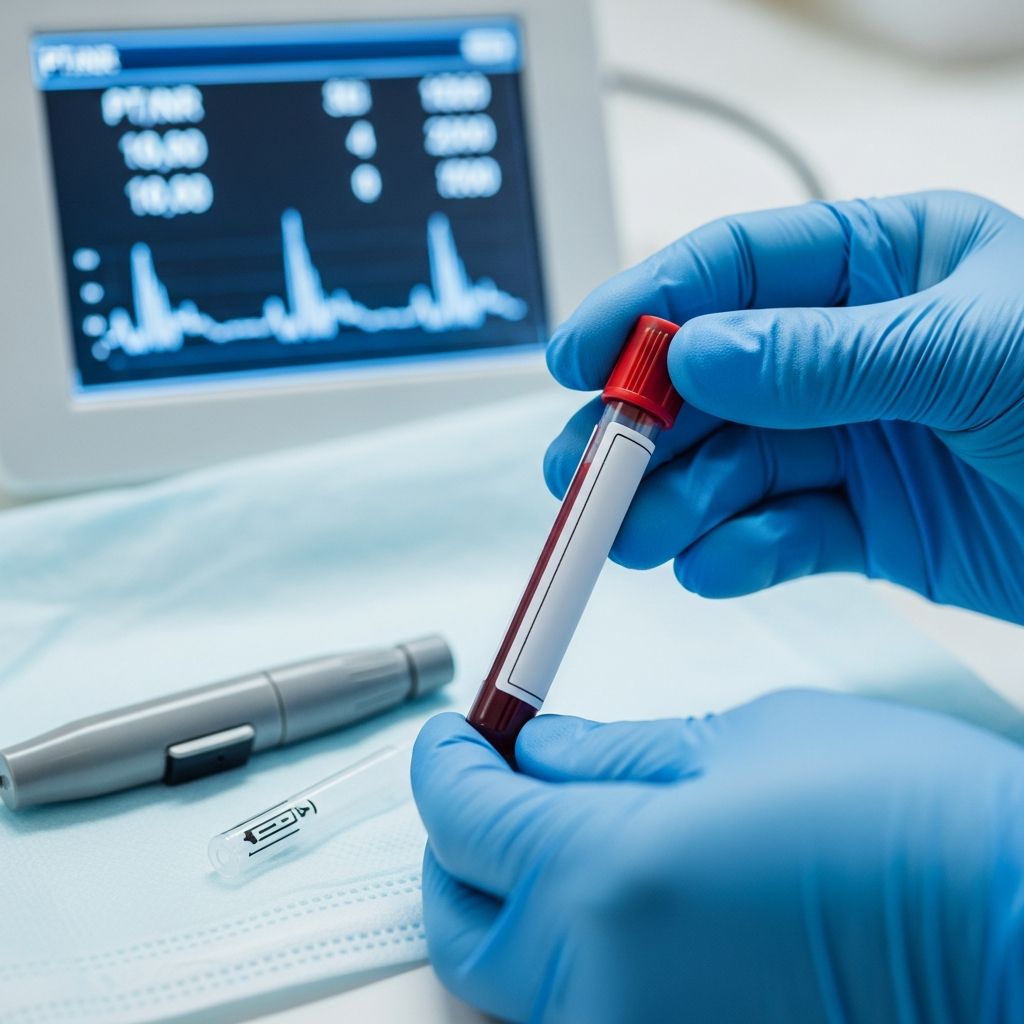
Blood clotting is a complex biological process essential for preventing excessive bleeding and maintaining cardiovascular health. When healthcare providers need to assess whether your blood is clotting at an appropriate rate, they often order a prothrombin time (PT) test, frequently reported as an international normalized ratio (INR). This diagnostic tool has become indispensable in modern medicine, particularly for patients taking anticoagulant medications or those with underlying clotting disorders. Understanding this test and what your results mean is crucial for informed healthcare management.
What Is the Prothrombin Time Test?
The prothrombin time test is a blood test that measures how quickly blood plasma forms a clot after laboratory reagents are introduced to a blood sample. The test specifically evaluates the extrinsic and common pathways of the coagulation cascade—the series of chemical reactions that activate clotting factors in your blood. When a blood sample is collected, laboratory technicians add a reagent called thromboplastin and calcium, which initiate the clotting cascade. The test then records the number of seconds required for a visible clot to form in the sample.
The PT measurement is expressed in seconds, typically ranging from 10 to 13 seconds in healthy individuals not taking anticoagulant medications. However, because different laboratories may use different reagents and equipment, results can vary significantly between facilities. This variability created a need for a standardized reporting method, leading to the development of the international normalized ratio.
Understanding the International Normalized Ratio (INR)
The international normalized ratio is a standardized calculation derived from the prothrombin time that allows healthcare providers to compare results across different laboratories and testing methods. The World Health Organization developed the INR system to address the inconsistencies inherent in traditional PT reporting. The INR represents the patient’s PT divided by a control PT value obtained using an international reference thromboplastin reagent developed by the WHO.
This mathematical adjustment enables consistent clinical interpretation regardless of which laboratory performed the test or what specific reagents were used. Instead of comparing raw seconds, clinicians can now rely on a standardized ratio that reflects each patient’s actual coagulation status. For healthy individuals not taking blood-thinning medications, an INR of 1.1 or below is considered normal. For patients on therapeutic anticoagulation, the target INR typically ranges from 2.0 to 3.0, depending on the specific medical condition being treated.
Clinical Applications and Testing Indications
The PT/INR test serves multiple diagnostic and monitoring purposes in clinical practice:
- Warfarin monitoring: The most common use of PT/INR testing is monitoring patients taking warfarin, a vitamin K antagonist anticoagulant. Because warfarin’s effects can vary based on diet, medications, and individual metabolism, regular INR testing ensures the patient maintains therapeutic levels.
- Preoperative evaluation: Before surgery or invasive procedures, healthcare providers may order PT/INR to assess clotting ability and identify potential bleeding risks.
- Bleeding disorder diagnosis: When patients present with unexplained bruising, nosebleeds, or other bleeding symptoms, PT/INR helps identify underlying coagulation defects.
- Liver function assessment: Since the liver produces most clotting factors, abnormal PT/INR can indicate liver disease or dysfunction.
- Vitamin K deficiency detection: Low vitamin K levels impair the production of clotting factors, resulting in elevated INR values.
- Mechanical heart valve management: Patients with mechanical heart valves require anticoagulation therapy, necessitating regular PT/INR monitoring to prevent both clots and bleeding complications.
Normal Results and Reference Ranges
Understanding what constitutes normal PT/INR results is essential for interpreting your test findings. Reference ranges vary slightly between laboratories due to differences in testing methodologies and reagents, so your healthcare provider will reference your specific laboratory’s normal range.
| Patient Status | PT Range | INR Range | Clinical Significance |
|---|---|---|---|
| Not taking anticoagulants | 11-13.5 seconds | 0.8-1.1 | Normal blood clotting function |
| Taking warfarin (standard conditions) | Variable | 2.0-3.0 | Therapeutic anticoagulation level |
| Taking warfarin (mechanical heart valve) | Variable | 2.5-3.5 | Higher therapeutic level for special conditions |
It is important to recognize that these ranges are general guidelines. Your specific target INR may differ based on your diagnosis, medical history, and individual risk factors. Always discuss your results with your healthcare provider to understand what your specific numbers mean for your situation.
Related Stories



Interpreting Abnormal Results
Abnormal PT/INR results indicate that your blood clotting function differs from the expected normal range. However, the clinical significance of these results depends largely on whether you are taking anticoagulant medications.
For Patients Not Taking Anticoagulants
When PT/INR results are abnormal in individuals not on blood-thinning medications, it suggests an underlying clotting problem. An INR above 1.1 indicates the blood is clotting more slowly than normal, which may result from:
- Bleeding disorders affecting the coagulation cascade
- Disseminated intravascular coagulation (DIC), a serious condition where clotting proteins become overactive
- Liver disease, which reduces clotting factor production
- Vitamin K deficiency
- Certain medications that interfere with clotting factors
For Patients Taking Warfarin
When patients are therapeutically anticoagulated with warfarin, INR results above the target range (exceeding 3.0) indicate over-anticoagulation, substantially increasing bleeding risk. Results below the target range (below 2.0) suggest under-anticoagulation, leaving the patient vulnerable to dangerous blood clot formation. Your healthcare provider will adjust your warfarin dose based on these results to maintain the therapeutic window.
Factors Affecting PT/INR Results
Multiple variables can influence your PT/INR results beyond your actual clotting function. These include:
- Dietary vitamin K: Consuming foods rich in vitamin K, such as leafy greens and cruciferous vegetables, can lower INR in warfarin-treated patients by promoting clotting factor production.
- Medication interactions: Numerous medications can potentiate or antagonize warfarin’s effects, altering INR results.
- Liver function: Liver disease reduces clotting factor synthesis, affecting test results.
- Hematocrit levels: Elevated hematocrit above 55% decreases plasma volume in blood samples, reducing available coagulating factors and potentially causing artificially prolonged measurements.
- Alcohol consumption: Excessive alcohol affects liver function and clotting factor metabolism.
- Illness and infection: Acute illness can temporarily affect clotting function.
Testing Frequency and Monitoring Protocols
How often you need PT/INR testing depends on your clinical situation and stability. Patients starting warfarin therapy typically require frequent testing—often within 2-3 days after beginning medication, then several times weekly until results stabilize. Once stable on a consistent dose, patients may be tested less frequently, sometimes only every 4-12 weeks. However, any changes in medications, diet, or health status may necessitate more frequent monitoring.
Home INR monitoring devices are now available for stable patients, allowing for more frequent self-testing and providing greater independence in anticoagulation management. However, these devices require training and are not suitable for all patients.
Potential Complications and Considerations
While PT/INR testing is generally safe, minor complications can occur. Standard blood draws may cause localized pain, bruising, or minor bleeding at the puncture site. These effects are typically minimal and resolve within hours. More importantly, patients must understand that INR results alone do not fully assess coagulation status. Healthcare providers often order additional tests, such as activated partial thromboplastin time (aPTT), which evaluates different parts of the coagulation cascade, to provide comprehensive coagulation assessment.
Frequently Asked Questions
How often should I get my INR tested?
Testing frequency varies based on your stability and clinical situation. Initially, frequent testing is necessary to establish your warfarin dose. Once stable, testing may occur every 4-12 weeks. Your healthcare provider will establish an appropriate schedule for your individual needs.
What should I do if my INR is too high?
If your INR is above the therapeutic range, contact your healthcare provider. They may reduce your warfarin dose. Do not stop taking warfarin without medical guidance, as this could lead to dangerous blood clots. Avoid additional vitamin K intake.
Can I eat leafy greens if I’m on warfarin?
Yes, you can eat leafy greens, but consistency is key. Warfarin doses are adjusted based on your typical diet. Sudden increases in vitamin K intake can lower your INR. Maintain consistent dietary habits and inform your provider of significant dietary changes.
Does the PT/INR test require special preparation?
No special preparation is typically required for PT/INR testing. You can eat and drink normally before the test. Simply inform your healthcare provider of all medications and supplements you are taking.
What does a normal INR mean for someone not taking warfarin?
A normal INR (0.8-1.1) in someone not on anticoagulants indicates normal blood clotting function. The blood clots appropriately—not too quickly and not too slowly.
Clinical Significance and Future Directions
The PT/INR test remains a cornerstone of anticoagulation management and coagulation assessment. While new anticoagulant drugs have been developed that require less frequent monitoring, warfarin remains widely used due to its effectiveness, long track record, and established management protocols. Understanding your PT/INR results empowers you to participate actively in your healthcare and recognize when adjustments may be necessary.
Advances in point-of-care testing and home monitoring continue to improve patient convenience and outcomes. As healthcare technology evolves, more patients may have access to frequent testing, enabling tighter anticoagulation control and potentially better clinical outcomes. However, traditional laboratory PT/INR testing remains the gold standard for assessing coagulation status and will likely continue to be essential for decades to come.
References
- Prothrombin Time Test — Mayo Clinic. 2024. https://www.mayoclinic.org/tests-procedures/prothrombin-time/about/pac-20384661
- Prothrombin Time (PT) — MedlinePlus Medical Encyclopedia, U.S. National Library of Medicine. 2024. https://medlineplus.gov/ency/article/003652.htm
- Prothrombin Time — StatPearls, National Center for Biotechnology Information. 2024. https://www.ncbi.nlm.nih.gov/books/NBK544269/
- Prothrombin Time Test and INR (PT/INR) — MedlinePlus Medical Test, U.S. National Library of Medicine. 2024. https://medlineplus.gov/lab-tests/prothrombin-time-test-and-inr-ptinr/
- Understanding the INR Blood Test & Results — Lincare Learning Center. 2024. https://www.lincare.com/resources/Lincare-Learning-Center/Understanding-the-INR-Blood-Test-and-Results
- International Normalised Ratio (INR) Test — Healthdirect, Australian Government Department of Health. 2024. https://www.healthdirect.gov.au/international-normalised-ratio-INR-test
Similar Articles








Read full bio of medha deb