Pubic Lice: Symptoms, Diagnosis, And Treatment Guide
Comprehensive guide to pubic lice: causes, symptoms, diagnosis, treatment, and prevention strategies for effective management.
Authoritative facts about pubic lice (Phthirus pubis): what they are, who gets them, and how to get rid of them.
What are pubic lice?
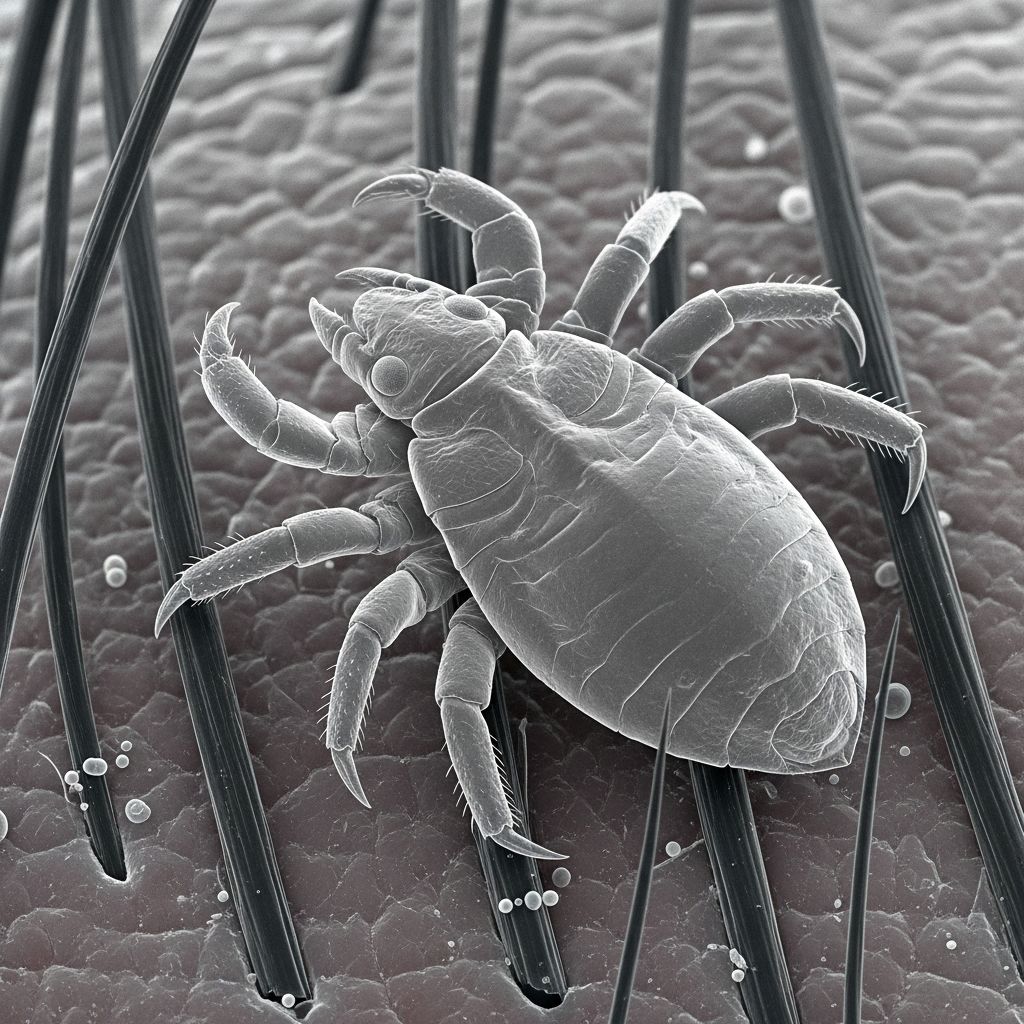
Pubic lice, commonly known as crabs, are tiny parasitic insects (Phthirus pubis) that infest coarse body hair, primarily in the pubic region. These wingless, blood-sucking ectoparasites measure 1–2 mm in length, with a broad body shaped like a crab, featuring six legs with large claws for gripping hair shafts. Unlike head or body lice, pubic lice prefer areas with thick, curly hair such as the pubic mound, perianal region, thighs, and abdomen. They can also infest armpits, chest hair, beards, moustaches, eyelashes, and eyebrows, particularly in children or heavy infestations.
Adult pubic lice are greyish-brown or reddish when engorged with blood, while eggs (nits) appear as 0.5 mm translucent ovals cemented to hair shafts near the skin. The lifecycle includes eggs hatching in 6–8 days into nymphs, which mature into adults in 9–15 days. Females lay 30 eggs over 17 days, leading to potential rapid spread if untreated. Pubic lice do not carry diseases but cause significant discomfort through biting and allergic reactions.
Who gets pubic lice?
Pubic lice affect people of all ages, genders, and backgrounds, with no link to poor hygiene. Prevalence is higher among sexually active adults, estimated at 1–5% in some populations, though underreported due to stigma. Risk factors include:
- Close physical contact, especially sexual intercourse, allowing lice to crawl between pubic hairs.
- Sharing infested bedding, towels, or clothing.
- Multiple sexual partners or contact with infested individuals.
- In children, lice on eyelashes may indicate abuse or fomites like shared hats, prompting investigation.
Transmission occurs via direct hair-to-hair contact; barrier methods like condoms do not prevent spread. Infestations are worldwide, more common in crowded living conditions.
What causes pubic lice?
Infestation, or pediculosis pubis, results from exposure to infested hairs. Lice crawl 1–2 cm per minute but cannot jump, fly, or survive long off the host (24–48 hours). Eggs detach easily if not cemented properly, but viable nits remain attached. Secondary bacterial infections arise from scratching. Myths linking lice to uncleanliness are false; anyone can get them through proximity.
What are the symptoms of pubic lice?
Symptoms emerge 5 days post-infestation as lice bite skin for blood meals, triggering pruritus (itching) from salivary allergens. Key signs include:
- Intense itching in pubic area, worse at night.
- Maculae caeruleae (blue-grey macules) on thighs/abdomen from lice haemozoin.
- Red papules, excoriations, or secondary impetigo.
- Visible lice, nits, or rust-coloured louse faeces on skin/underwear.
- In heavy cases, anaemia or eyelid infestations (phthiriasis palpebrarum).
Asymptomatic carriers exist, but most experience discomfort prompting diagnosis.
How is pubic lice diagnosed?
Diagnosis is clinical via visualization of lice or nits using magnification. Dermoscopy reveals gripping claws and viable nits (oval, <1 mm from scalp equivalent in pubic hair). Differentiate from:
| Condition | Key Differences |
|---|---|
| Head lice | Slender body, scalp preference |
| Scabies | Burrows, interdigital webs |
| Folliculitis | Pustules without parasites |
Healthcare providers may test for STIs given transmission overlap.
Related Stories



What is the treatment for pubic lice?
Treatment targets lice and nits with pediculicides, plus hygiene. Treat all sexual contacts simultaneously.
Topical treatments
- OTC: 1% permethrin lotion or pyrethrins/piperonyl butoxide mousse/shampoo. Apply to dry hair, leave 10 min, rinse; repeat in 7–10 days.
- Prescription: Malathion 0.5% lotion (8–12 hrs contact), ivermectin lotion (topical), lindane shampoo (last resort, neurotoxic).
For eyelashes: Occlusive petrolatum BID x8–10 days + manual nit removal.
Non-chemical measures
- Wet combing with vinegar post-treatment.
- Machine wash/dry clothes/bedding at 60°C; seal non-washables 2 weeks.
- Shaving ineffective; avoid.
Retreatment if live lice persist after 7 days. Consult if pregnant/breastfeeding.
What is the outcome for pubic lice?
Most resolve in 1–2 weeks with proper treatment; recurrence from reinfestation common without partner treatment. Complications rare: secondary infection, rare anaemia. Follow-up confirms cure.
How can pubic lice be prevented?
- Avoid close contact with infested persons until treated.
- Do not share personal items.
- Sexual abstinence or mutual treatment during outbreaks.
- Screen partners if history of infestation.
Related topics - Body lice
- Head lice
- Scabies
Frequently asked questions
Do pubic lice spread diseases?
No, pubic lice do not transmit diseases like HIV or hepatitis, unlike some misconceptions.
Can I get pubic lice from toilet seats?
Unlikely; lice die quickly off-host and require hair grip.
How long are pubic lice contagious?
Until treated; abstain from sex 7–10 days post-treatment.
Is shaving pubic hair effective?
No; misses nits on skin and regrowth allows persistence.
What if treatment fails?
Seek prescription options; check for resistance or misdiagnosis.
References
- Pubic lice (crabs) — Medical News Today. 2023-10-12. https://www.medicalnewstoday.com/articles/173681
- Pubic Lice | Crabs — MedlinePlus (U.S. National Library of Medicine). 2024-05-15. https://medlineplus.gov/pubiclice.html
- Pubic Lice (Crabs): Bites, Symptoms, Treatment & Prevention — Cleveland Clinic. 2024-02-20. https://my.clevelandclinic.org/health/diseases/4522-pubic-lice-crabs
- Pubic lice — NHS (National Health Service). 2023-11-08. https://www.nhs.uk/conditions/pubic-lice/
- About Pubic “Crab” Lice — CDC (Centers for Disease Control and Prevention). 2024-06-01. https://www.cdc.gov/lice/about/pubic-lice.html
- Pubic Lice — UMass Memorial Health. 2023-09-15. https://www.ummhealth.org/health-library/pubic-lice
- Pubic lice (crabs) – Symptoms & causes — Mayo Clinic. 2024-01-10. https://www.mayoclinic.org/diseases-conditions/pubic-lice-crabs/symptoms-causes/syc-20350300
Similar Articles








Read full bio of Sneha Tete