Pudendal Nerve Entrapment Syndrome: Symptoms & Treatment Guide
Understanding chronic pelvic pain from pudendal nerve entrapment: symptoms, causes, diagnosis, and effective treatments.
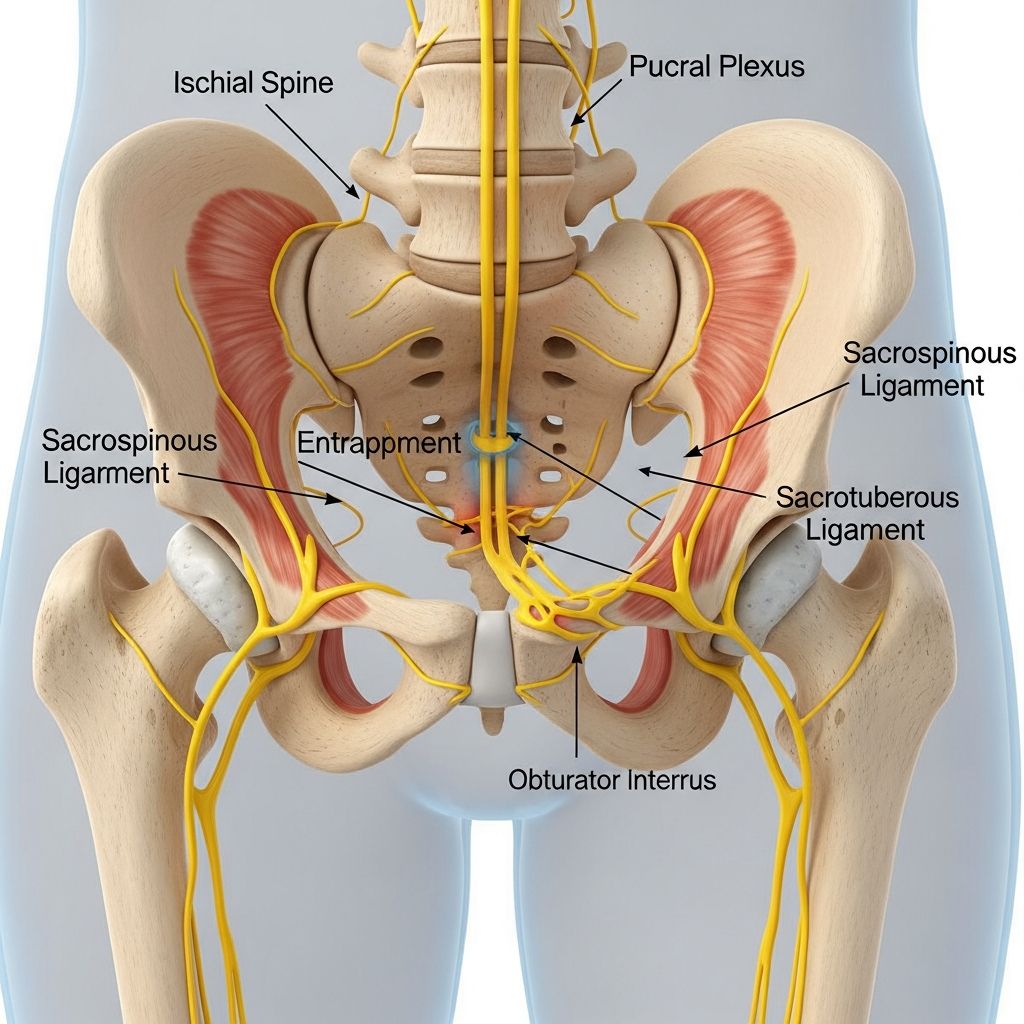
Pudendal nerve entrapment syndrome (PNES), also known as pudendal neuralgia, is a rare acquired peripheral neuropathy characterized by chronic neuropathic pain in the sensory distribution of the pudendal nerve, extending from the clitoris/penis to the anus. The pain is typically sharp, burning, or electric shock-like, intensely aggravated by sitting and relieved by standing or lying down. This condition often emerges between ages 50-70 and profoundly impacts quality of life due to associated pelvic floor dysfunctions.
What is the Pudendal Nerve?
The pudendal nerve (S2-S4) is a mixed somatic nerve providing sensory innervation to the perineum, genitals, and anus, while also controlling pelvic floor muscles, urethral/perianal sphincters, and contributing to sexual function. Originating from the sacral plexus, it exits the pelvis via the greater sciatic foramen, travels under the piriformis muscle, and re-enters via the lesser sciatic foramen, passing between the sacrotuberous and sacrospinous ligaments into Alcock’s (pudendal) canal. Entrapment most commonly occurs at these ligaments or in Alcock’s canal due to the nerve’s fixed position in narrow fibro-osseous tunnels.
Who Gets Pudendal Nerve Entrapment Syndrome?
PNES affects individuals aged 50-70 predominantly, with no strong gender bias though women may report more due to childbirth-related risks. Prevalence is low (rare disease per Orphanet), but underdiagnosed due to symptom overlap with prostatitis, vulvodynia, or musculoskeletal pain. Risk factors include cyclists (“cyclist’s syndrome”), childbirth trauma, pelvic surgeries, chronic constipation, and high-impact sports.
What are the Clinical Features of Pudendal Nerve Entrapment Syndrome?
Pain is the hallmark: unilateral or bilateral, neuropathic (burning, stabbing, electric), strictly in pudendal territory (clitoris/penis, labia/scrotum, perineum, anus). It worsens with sitting (especially soft surfaces), tight clothing, daytime activity, and improves standing/walking or on toilet seats.
- Urinary symptoms: Pollakiuria, dysuria, hesitancy, retention.
- Anorectal symptoms: Dyschezia, tenesmus, post-defecation pain, fecal incontinence.
- Sexual dysfunction: Dyspareunia, erectile dysfunction, reduced sensation, persistent genital arousal.
- Other: Numbness, paresthesia, foreign body sensation (sympathalgia), myofascial buttock pain, referred sciatic/inner thigh pain.
Symptoms are positional and diurnal, often leading to adaptive behaviors like standing or unilateral sitting.
How is Pudendal Nerve Entrapment Syndrome Diagnosed?
Diagnosis relies on Nantes criteria (2008), requiring all five essential or supportive features.
| Category | Criteria |
|---|---|
| Essential | 1. Pain in pudendal nerve territory |
| 2. Pain worsened by sitting | |
| 3. Pain does not awaken patient at night | |
| 4. No objective sensory loss on exam | |
| 5. Positive pudendal nerve block | |
| Supportive | 1. Pain unilateral |
| 2. Numbness in saddle area | |
| 3. Pain relieved by diagnostic block | |
| 4. MRI excludes mass lesion | |
| Exclusion | 1. Purely coccygeal/sacral pain |
| 2. Imaging shows mass compressing nerve | |
| 3. Previous pelvic surgery damage |
Clinical exam includes Nantes questionnaire, perineal touch provocation, and ruling out differentials (e.g., herpes, cauda equina). Neurophysiological tests: pudendal nerve terminal motor latency (PNTML), electromyography (EMG). Imaging: MRI pelvis (high-resolution 3T for ligaments/canal), MR neurography. Definitive: >50% pain relief from CT-guided pudendal nerve block.
What are the Complications of Pudendal Nerve Entrapment Syndrome?
- Chronicity leading to central sensitization, anxiety, depression.
- Sexual/relationship dysfunction, social isolation.
- Muscle atrophy/weakness from disuse.
- Secondary myofascial pain, pelvic floor hypertonicity.
What is the Treatment for Pudendal Nerve Entrapment Syndrome?
Multimodal, stepwise: conservative first, escalating to interventional/surgical.
Conservative Management
- Pelvic floor physical therapy: Myofascial release, trigger point therapy, biofeedback to relax hypertonic muscles.
- Lifestyle: Avoid aggravating activities (cycling), use donut cushions, loose clothing.
- Medications: Neuropathic agents (gabapentin, pregabalin, amitriptyline), NSAIDs, muscle relaxants.
Related Stories



Interventional
- Pudendal nerve blocks (local anesthetic ± steroid), repeated 3-6x.
- Botox injections into piriformis/levator ani.
- Neuromodulation: sacral/PNS stimulation.
Surgical
Transperineal or transgluteal pudendal neurolysis/decompression for refractory cases (after failed blocks/PT). Success 60-80% in expert hands, but risks include worsening pain.
What is the Outcome for Pudendal Nerve Entrapment Syndrome?
Variable; early intervention yields better prognosis. 50-70% improve with conservative care, 80% post-surgery in selected patients. Chronic cases may persist due to axonal damage, but symptom management restores function. Multidisciplinary pelvic pain clinics optimize outcomes.
Frequently Asked Questions
Q: Is pudendal nerve entrapment the same as pudendal neuralgia?
A: Yes, terms are synonymous; neuralgia emphasizes neuropathic pain from entrapment/irritation.
Q: Can pudendal nerve pain be cured?
A: Many achieve significant relief or remission with targeted therapy; full cure depends on chronicity and nerve damage extent.
Q: Does sitting on a donut cushion help?
A: Yes, it reduces pressure on the nerve; prefer firm seats over soft.
Q: Is surgery always needed?
A: No, only 20-30% require it after failing conservative treatments.
Q: Can physical therapy worsen symptoms?
A: Improper PT can; seek pelvic specialists trained in neuralgia.
References
- Pudendal nerve entrapment syndrome — Orphanet. 2023. https://www.orpha.net/en/disease/detail/60039
- Pudendal Nerve Entrapment: Causes, Symptoms, and Treatment — Mendwell Health. 2024-10-15. https://www.mendwellhealth.com/all-conditions/pudendal-nerve-entrapment
- Pudendal nerve entrapment — Wikipedia (sourced from peer-reviewed refs). 2025-01-10. https://en.wikipedia.org/wiki/Pudendal_nerve_entrapment
- Pudendal neuralgia — NHS UK (.gov). 2024. https://www.nhs.uk/conditions/pudendal-neuralgia/
- Pudendal Neuralgia: Causes Symptoms & Diagnosis — Advanced Reconstruction. 2023-05-20. https://www.advancedreconstruction.com/distinguished-centers/pudendal-neuralgia
- Pudendal Neuralgia: Causes, Symptoms & Treatment — Cleveland Clinic (.org). 2024-11-01. https://my.clevelandclinic.org/health/diseases/24438-pudendal-neuralgia
Similar Articles








Read full bio of medha deb