Pulmonary Embolism: Causes, Symptoms, and Treatment
Comprehensive guide to understanding pulmonary embolism: risks, diagnosis, and management.
Understanding Pulmonary Embolism
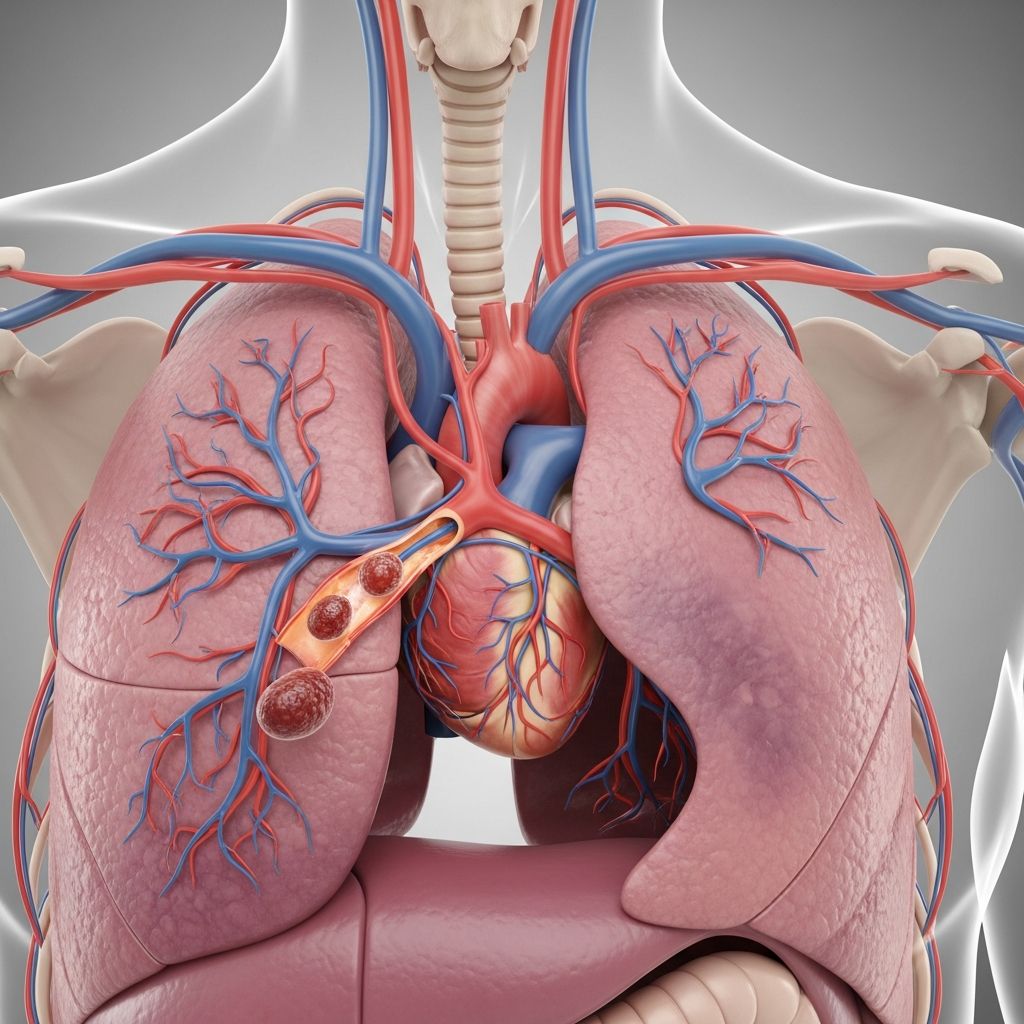
A pulmonary embolism (PE) is a serious medical condition in which a blood clot becomes lodged in the lungs, blocking blood flow and potentially causing life-threatening complications. This condition occurs when a clot breaks free from another part of the body—typically from a deep vein in the leg, a condition known as deep vein thrombosis (DVT)—and travels through the circulatory system to the lungs.
Pulmonary embolism is a critical component of venous thromboembolism (VTE), which encompasses both deep vein thrombosis and pulmonary embolism. Understanding this condition is essential because PE can develop rapidly and become fatal if not promptly recognized and treated. Healthcare providers estimate that silent, asymptomatic pulmonary embolisms are present in more than half of patients with VTE, and among these patients, PE is estimated to result in death 40% of the time.
How Pulmonary Embolism Develops
The development of pulmonary embolism typically follows a specific pathway. Blood clots form most commonly in the deep veins of the legs, groin, or arms due to several factors including slowed blood flow, damage to blood vessel walls, or an inherited or acquired tendency for blood to clot more easily. When a clot forms in a deep vein (DVT), a portion of it can break off and travel through the venous system toward the heart and lungs.
Once the clot enters the pulmonary circulation, it becomes wedged in the blood vessels within the lungs. This blockage prevents normal blood flow and oxygen exchange, which can result in a dangerous drop in oxygen levels in the bloodstream. The severity of PE depends on factors such as the size of the clot and the degree of lung involvement.
Risk Factors for Pulmonary Embolism
Several factors increase the likelihood of developing pulmonary embolism. Approximately one-third of patients with VTE develop PE, while two-thirds develop DVT. Notably, around 60% of surgical patients are considered at high risk for VTE. The persistent incidence of VTE is influenced by multiple factors, including increasing hospitalizations, the use of surgical procedures, and the rising prevalence of obesity, cancer, and leg paralysis.
Understanding the risk factors is crucial for prevention and early detection:
- Immobility: Prolonged bed rest, long flights, or limited movement significantly increases clot formation risk
- Surgery: Major surgical procedures, particularly orthopedic surgeries, substantially elevate VTE risk
- Injury: Fractures and severe muscle injuries create conditions favorable for clot formation
- Pregnancy and Postpartum Period: Pregnancy and up to three months after delivery increase clotting risk
- Medications: Birth control pills and hormone replacement therapy contain estrogen, which increases clotting risk
- Heart and Lung Disease: Existing cardiovascular and pulmonary conditions raise PE susceptibility
- Cancer: Active cancer and cancer treatments significantly increase thromboembolism risk
- Inherited Clotting Disorders: Genetic predispositions to excessive clotting increase PE likelihood
- Age: Risk increases progressively with advancing age
- Obesity: Excess weight contributes to VTE development
- Previous VTE: History of DVT or PE substantially increases recurrence risk
- Inflammatory Bowel Disease: Conditions like Crohn’s disease and ulcerative colitis increase clotting risk
Related Stories



Recognizing Symptoms of Pulmonary Embolism
Recognizing the symptoms of pulmonary embolism is critical for seeking timely medical attention. Symptoms can vary widely depending on the size and location of the clot within the lungs. Some patients may experience mild symptoms, while others face life-threatening manifestations. It is important to note that approximately 50% of people with DVT may not experience any symptoms, making PE particularly dangerous.
Common symptoms of pulmonary embolism include:
- Difficulty Breathing: Shortness of breath or dyspnea is one of the most characteristic symptoms
- Chest Pain or Discomfort: Sharp or stabbing pain that may worsen with breathing or movement
- Rapid Heartbeat: Tachycardia or an abnormally fast pulse is a frequent finding
- Coughing Up Blood: Hemoptysis may occur in some cases
- Low Blood Pressure: Hypotension can develop, particularly in massive PE
- Anxiety and Dizziness: These symptoms often accompany the acute distress of PE
- Fainting: Syncope may occur due to severely reduced oxygen levels
If you or someone near you experiences sudden onset of these symptoms, particularly the combination of shortness of breath and chest pain, seek emergency medical attention immediately. PE can be deadly and requires urgent evaluation.
Diagnosis of Pulmonary Embolism
Healthcare providers employ several diagnostic methods to confirm pulmonary embolism. The diagnostic approach depends on clinical suspicion, the patient’s condition, and available imaging technology.
Clinical Evaluation
Your healthcare provider will begin with a comprehensive medical history and physical examination. They will assess your symptoms, risk factors, and vital signs to determine the clinical likelihood of PE. Blood tests may be ordered, including D-dimer tests, which measure a substance released when blood clots break down.
Imaging Studies
If PE is suspected, imaging studies are typically ordered. A computed tomography (CT) scan of the chest is the most common diagnostic test for PE. This imaging modality allows physicians to visualize the blood vessels within the lungs and directly identify clots. The CT scan can detect the location, size, and extent of pulmonary embolism.
Ultrasound of the legs may be performed to detect DVT, which can confirm the source of the pulmonary embolism. Doppler ultrasound can visualize blood flow and identify clots in the deep veins.
In certain circumstances, additional imaging such as ventilation-perfusion (V/Q) scans or pulmonary angiography may be performed to further evaluate lung perfusion and blood vessel status.
Treatment Options for Pulmonary Embolism
Treatment of pulmonary embolism aims to prevent the clot from growing larger, stop new clots from forming, and allow the body’s natural fibrinolytic system to break down the existing clot. The specific treatment approach depends on the severity of PE and individual patient factors.
Anticoagulation Therapy
Anticoagulant medications, commonly called blood thinners, are the primary treatment for pulmonary embolism. These medications work by reducing the blood’s ability to clot and preventing new clots from forming. Common anticoagulants include heparin, warfarin, and newer direct oral anticoagulants (DOACs) such as rivaroxaban, apixaban, and dabigatran.
Initial treatment often begins with parenteral anticoagulation using unfractionated heparin or low-molecular-weight heparin, which provides rapid onset of action. These are often followed by longer-term oral anticoagulants.
Thrombolytic Therapy
In cases of massive or submassive pulmonary embolism with hemodynamic instability, thrombolytic agents may be administered. These medications, such as tissue plasminogen activator (tPA), actively dissolve clots rather than merely preventing their growth. Thrombolytic therapy carries increased bleeding risk but may be necessary in life-threatening situations.
Inferior Vena Cava Filter
In patients who cannot tolerate anticoagulation due to contraindications such as active bleeding, an inferior vena cava (IVC) filter may be placed. This device, inserted into the main vein returning blood from the lower body, physically traps clots before they can reach the lungs. IVC filters are typically temporary measures used when anticoagulation cannot be safely administered.
Supportive Care
Patients with PE typically receive oxygen therapy to maintain adequate blood oxygen levels and respiratory support as needed. Pain management, leg elevation, and compression stockings may provide symptomatic relief, particularly if DVT is also present.
Prevention of Pulmonary Embolism
Prevention is substantially more effective than treating PE after it develops. More than half of all VTE cases can be prevented through the use of blood-thinning medications and compression stockings. Thromboprophylaxis is an important patient safety practice that can reduce healthcare-associated VTE in high-risk patients by 30–65%.
Several prevention strategies should be employed:
- Early Mobilization: Moving and walking as soon as medically appropriate after surgery or hospitalization
- Pharmacologic Prophylaxis: Prophylactic anticoagulation for high-risk patients, particularly those undergoing surgery
- Mechanical Prophylaxis: Compression stockings and sequential compression devices improve venous return
- Hydration: Maintaining adequate fluid intake prevents blood viscosity from increasing
- Leg Exercises: Calf muscle contractions and leg elevation promote venous circulation
- Avoiding Immobility: On long flights or car rides, standing and walking periodically reduces clot risk
- Smoking Cessation: Quitting smoking reduces overall thrombotic risk
- Weight Management: Maintaining a healthy weight decreases VTE risk
Prognosis and Mortality
The prognosis of pulmonary embolism depends on multiple factors including the size of the clot, the patient’s overall health status, and the rapidity of diagnosis and treatment. The mortality rate one month after VTE diagnosis is estimated between 10–30% by the CDC. PE can prove deadly in approximately 10% of cases if left untreated.
However, with prompt diagnosis and appropriate treatment, outcomes have improved significantly. Most patients who receive timely anticoagulation therapy survive and recover well. Chronic complications may develop in some cases, including post-thrombotic syndrome and chronic thromboembolic pulmonary hypertension.
Living with Pulmonary Embolism
Patients diagnosed with PE require ongoing anticoagulation therapy, typically for a minimum of three months, though some may require indefinite treatment depending on the underlying cause. Regular follow-up appointments with healthcare providers are essential to monitor treatment effectiveness and adjust therapy as needed.
Patients should be educated about warning signs of recurrent PE or bleeding complications from anticoagulation therapy. Consistent adherence to prescribed medications and regular monitoring through blood tests, when appropriate, are critical components of long-term management.
When to Seek Emergency Care
Certain symptoms warrant immediate emergency evaluation and should not be delayed:
- Sudden onset of severe shortness of breath
- Chest pain accompanied by difficulty breathing
- Coughing up blood
- Fainting or loss of consciousness
- Severe rapid heartbeat
- Symptoms of DVT in combination with chest symptoms
Do not delay seeking medical attention if you experience these symptoms. Emergency departments are equipped to rapidly diagnose and initiate treatment for PE, which can be life-saving.
Frequently Asked Questions
Q: What is the difference between DVT and PE?
A: DVT is a blood clot that forms in a deep vein, usually in the leg. PE occurs when a clot from a DVT breaks free and travels to the lungs. DVT can exist without causing PE, but PE typically develops from DVT.
Q: Can you survive a pulmonary embolism?
A: Yes, many people survive PE with prompt diagnosis and treatment. However, untreated PE can be fatal. Early recognition and anticoagulation therapy significantly improve survival rates.
Q: How long does anticoagulation therapy last?
A: Treatment duration varies depending on the underlying cause of PE. Typical duration is at least three months, but some patients require indefinite anticoagulation therapy, particularly those with cancer or inherited clotting disorders.
Q: Can PE be prevented?
A: Yes, PE can often be prevented in high-risk patients through prophylactic anticoagulation, compression devices, and early mobilization after surgery or hospitalization.
Q: Are there long-term complications from PE?
A: Some patients develop chronic thromboembolic pulmonary hypertension or post-thrombotic syndrome. Regular follow-up care helps identify and manage these potential complications.
Q: What lifestyle changes help prevent recurrent PE?
A: Maintaining healthy weight, regular physical activity, smoking cessation, staying hydrated, avoiding prolonged immobility, and strict adherence to anticoagulation therapy reduce recurrence risk.
References
- Johns Hopkins Venous Thromboembolism (VTE) Collaborative Studies and Implements Methods — Agency for Healthcare Research and Quality (AHRQ). 2024. https://psnet.ahrq.gov/innovation/johns-hopkins-venous-thromboembolism-vte-collaborative-studies-and-implements-methods
- A Guide for Patients with Newly Diagnosed Deep Vein Thrombosis or Pulmonary Embolism — Frank C, Ratchford EV, Moll S. Vascular Medicine. 2023 Oct;28(5):481-486. https://pubmed.ncbi.nlm.nih.gov/37401771/
- No Time to Wait Educates About Potentially Serious Conditions — Pfizer. 2024. https://www.pfizer.com/news/articles/no_time_to_wait_educates_about_potentially_serious_conditions
- How Do I Prevent Blood Clots? — Johns Hopkins Medicine. April 15, 2015. https://www.youtube.com/watch?v=0o3yadu4DFw
- For Millions of US Adults Experiencing DVT/PE Symptoms, This is No Time to Wait — National Blood Clot Alliance. 2024. https://www.stoptheclot.org/news/for-millions-of-us-adults-experiencing-dvt-pe-symptoms-this-is-no-time-to-wait/
- Venous Thromboembolism: Risk Factors and Prevention — Centers for Disease Control and Prevention (CDC). 2024. https://www.cdc.gov/ncbddd/dvt/facts.html
Similar Articles








Read full bio of Sneha Tete