Pulmonary Embolism Causes: Risks, Triggers, And What To Know
Understand the key risk factors and causes of pulmonary embolism, from blood clots to lifestyle contributors, to prevent this serious condition.
A
pulmonary embolism (PE)
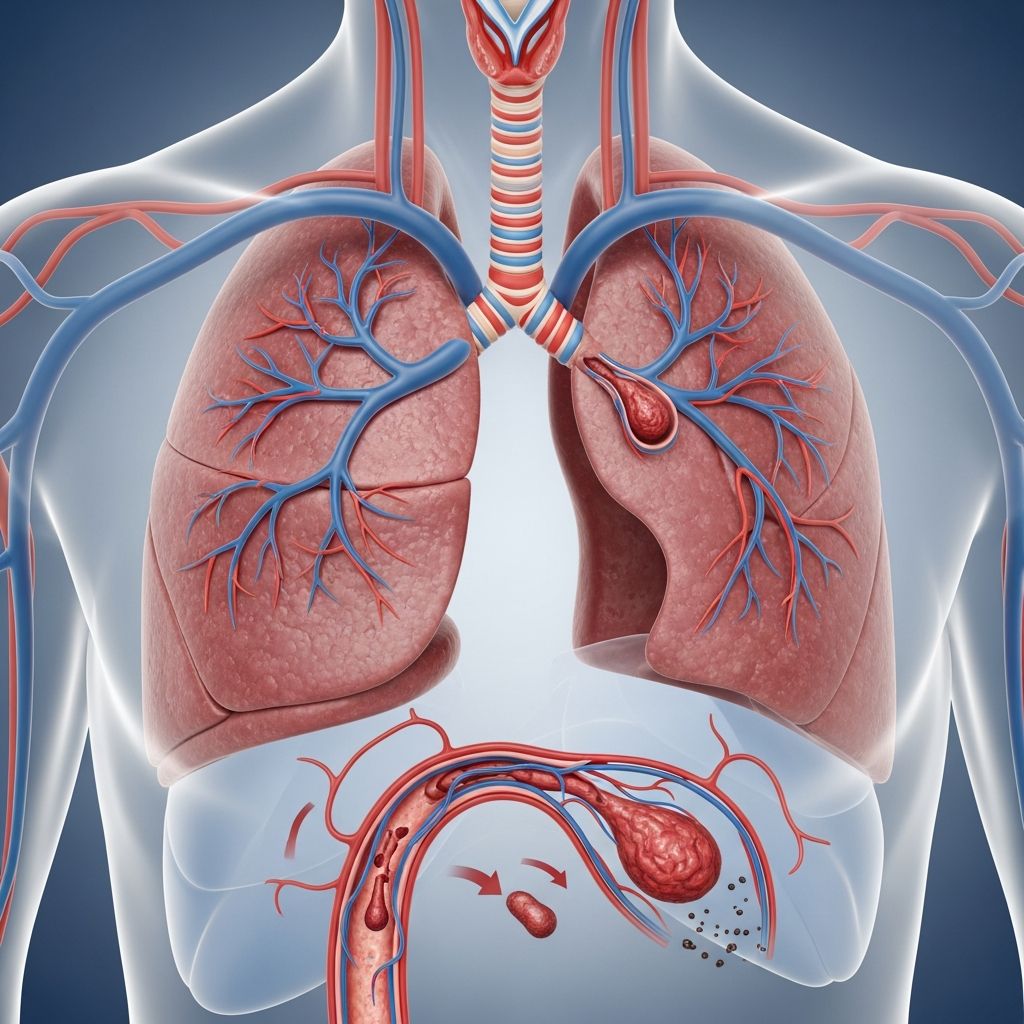
is a potentially life-threatening condition where a blood clot or other material blocks one or more arteries in the lungs, impairing blood flow and oxygen exchange. Most commonly, PE arises from a blood clot that originates in the deep veins of the legs or pelvis—known asdeep vein thrombosis (DVT)
—and travels to the lungs. This article delves into the full spectrum of causes and risk factors, drawing from authoritative medical sources to provide a comprehensive overview.What Is a Pulmonary Embolism?
Pulmonary embolism occurs when an embolus, typically a blood clot, lodges in the pulmonary arteries, preventing blood from reaching parts of the lung tissue. This blockage can lead to lung tissue death due to oxygen deprivation, increased pressure on the right side of the heart, and potentially heart failure if severe. While blood clots account for the vast majority of cases, rare instances involve fat droplets, air bubbles, amniotic fluid, tumor cells, or parasites.
The condition falls under
venous thromboembolism (VTE)
, which includes both PE and DVT, representing a major global cause of morbidity and mortality. Pathophysiologically, PE disrupts the ventilation-perfusion ratio, causing hypoxemia, vasospasm from released mediators like serotonin, and increased pulmonary vascular resistance. Large emboli may cause a ‘saddle embolus’ obstructing the main pulmonary artery, while smaller ones lead to pulmonary infarction in about 30% of cases, particularly in younger patients without prior cardiopulmonary disease.How Does a Pulmonary Embolism Form?
The formation of PE is explained by
Virchow’s triad
: hypercoagulability (increased clotting tendency), venous stasis (slowed blood flow), and endothelial injury (damage to blood vessel walls). Most PEs (over 90%) originate from lower extremity DVTs, where clots break off, travel through the bloodstream, and lodge in pulmonary vessels.Blood clots form in deep veins due to these factors, then embolize to the lungs. Multiple smaller emboli are common in lower lobes, with bilateral involvement frequent. Unprovoked PEs—those without clear risk factors—occur in about 30% of cases and carry a 2- to 3-fold higher recurrence risk compared to provoked ones.
Risk Factors for Pulmonary Embolism
Risk factors for PE mirror those for DVT and are categorized as genetic or acquired. Understanding these helps in prevention, especially during high-risk periods like surgery or travel.
Genetic Risk Factors
- **Thrombophilias**: Inherited conditions like Factor V Leiden mutation, prothrombin gene mutation, protein C or S deficiency, antithrombin III deficiency, and hyperhomocysteinemia increase clotting propensity.
- Family history of blood clots or VTE significantly elevates personal risk, particularly with first-degree relatives.
Acquired Risk Factors
Acquired factors are often modifiable and include:
- Prolonged immobility: Bed rest >3 days, travel >4 hours (e.g., flights or car trips), or hospitalization.
- Surgery and trauma: Recent orthopedic surgery (hip/knee replacement), major trauma, lower limb fractures.
- Cancer: Highest risk with pancreatic, hematological, lung, gastric, and brain cancers; chemotherapy also contributes.
- Obesity and lifestyle: Excess weight, cigarette smoking.
- Hormonal factors: Estrogen-containing oral contraceptives, hormone therapy, pregnancy (up to 3 months postpartum).
- Medical devices and conditions: Indwelling central venous catheters, heart failure, atrial fibrillation, recent myocardial infarction, infections.
- Other: Age (increasing from 40s onward), previous VTE history.
Related Stories



| Category | Examples | Risk Level |
|---|---|---|
| Genetic | Factor V Leiden, Protein C deficiency | High (inherited) |
| Immobility | Long travel, bed rest | Moderate-High |
| Cancer | Pancreatic, lung | Very High |
| Pregnancy | Postpartum period | Moderate |
| Surgery | Hip replacement | High |
Cancer and its treatments are particularly potent triggers, with infections and heart conditions like congestive heart failure further amplifying risk. Notably, PE incidence is rising among younger adults (25-64), despite overall declines in older groups.
Less Common Causes of Pulmonary Embolism
While DVT-related clots dominate, non-thrombotic emboli are rarer but critical to recognize:
- Fat emboli: From bone fractures, especially long bones.
- Air emboli: Introduced via IV lines or surgery.
- Amniotic fluid emboli**: During childbirth, a obstetric emergency.
- Tumor emboli: Cancer cells breaking off.
- Septic emboli: From infections.
These account for fewer than 10% of PEs but can mimic thrombotic cases clinically.
Who’s at Risk for Pulmonary Embolism?
High-risk groups include:
- Individuals with recent surgery, hospitalization, or trauma.
- Pregnant or postpartum women, especially on estrogen therapy.
- Cancer patients undergoing chemotherapy.
- Obese smokers with sedentary lifestyles.
- Those with genetic thrombophilias or family VTE history.
- Older adults, though younger cases are increasing.
Provoked PEs (with identifiable factors) have lower recurrence than unprovoked or persistent-risk cases (e.g., ongoing cancer).
Frequently Asked Questions (FAQs)
What causes the majority of pulmonary embolisms?
The most common cause is a blood clot from deep vein thrombosis (DVT) in the legs or pelvis that travels to the lungs.
Can pulmonary embolism be caused by anything other than blood clots?
Yes, rarely by fat, air, amniotic fluid, tumor cells, or parasites.
Does pregnancy increase PE risk?
Yes, pregnancy and the postpartum period (up to 3 months) heighten risk due to hormonal changes and venous stasis.
Is smoking a risk factor for PE?
Yes, cigarette smoking promotes hypercoagulability and vessel damage.
How does long travel contribute to PE?
Prolonged sitting (>4 hours) causes venous stasis, increasing DVT and subsequent PE risk.
Are genetic factors involved in PE?
Yes, thrombophilias like Factor V Leiden significantly raise risk.
Does cancer cause pulmonary embolism?
Certain cancers, especially pancreatic and lung, carry very high VTE risk.
References
- Pulmonary embolism: Symptoms, causes, and more — Medical News Today. 2023-10-12. https://www.medicalnewstoday.com/articles/153796
- Acute Pulmonary Embolism – StatPearls — NCBI Bookshelf / NIH. 2023-07-17. https://www.ncbi.nlm.nih.gov/books/NBK560551/
- Pulmonary embolus — MedlinePlus Medical Encyclopedia. 2024-01-05. https://medlineplus.gov/ency/article/000132.htm
- What Is Pulmonary Embolism? — JAMA Network. 2023-05-02. https://jamanetwork.com/journals/jama/fullarticle/2797200
- Pulmonary Embolism: Symptoms, Causes & Treatment — Cleveland Clinic. 2023-11-20. https://my.clevelandclinic.org/health/diseases/17400-pulmonary-embolism
- Pulmonary embolism is common and can be deadly, but few know the signs — American Heart Association. 2021-11-23. https://www.heart.org/en/news/2021/11/23/pulmonary-embolism-is-common-and-can-be-deadly-but-few-know-the-signs
Similar Articles








Read full bio of medha deb