Pulmonary Fibrosis: Causes, Symptoms & Treatment
Understanding pulmonary fibrosis: Learn about causes, symptoms, diagnosis, and treatment options.
Understanding Pulmonary Fibrosis
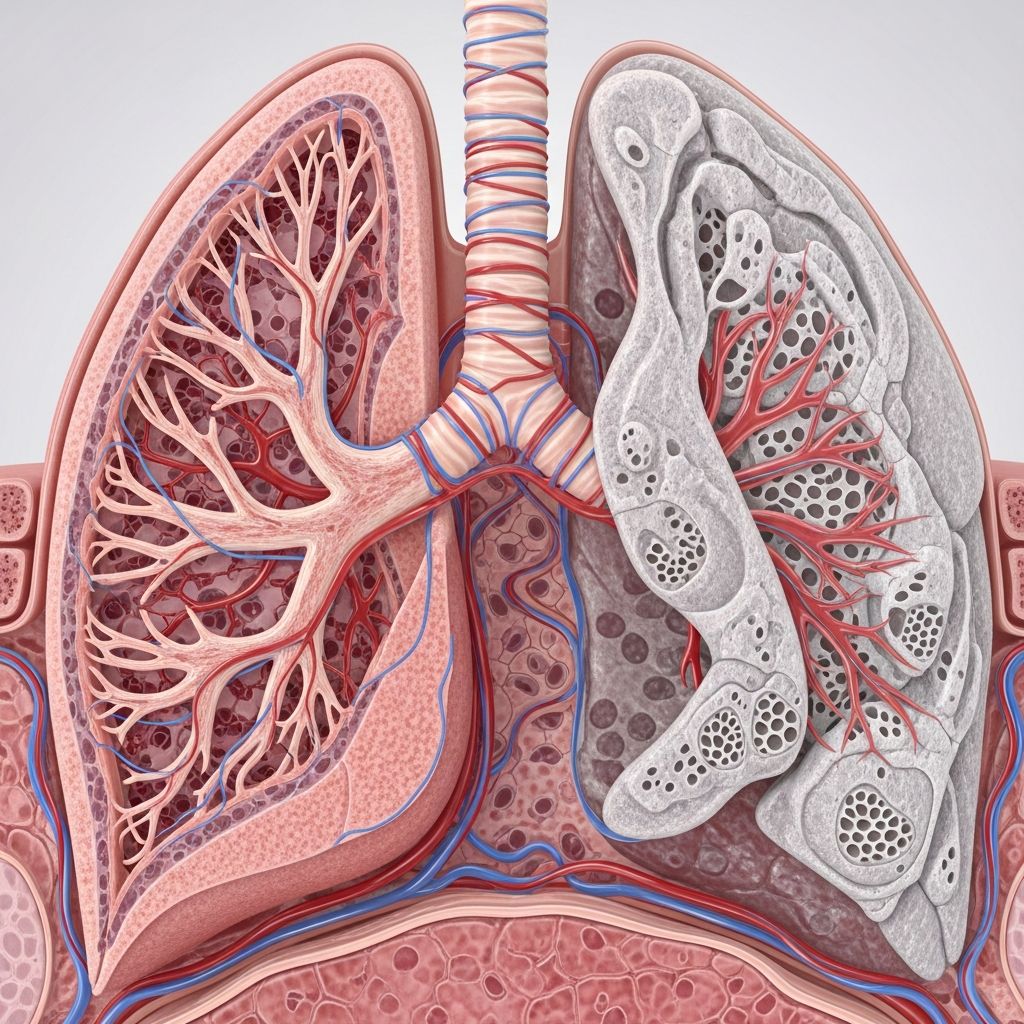
Pulmonary fibrosis is a serious medical condition characterized by scarring and thickening in your lungs that makes it difficult to breathe deeply. This progressive lung disease is classified as a type of interstitial lung disease, which specifically affects the delicate tissue between the air sacs in your lungs, known as alveoli. When these tissues become scarred and stiff, they lose their ability to expand and contract normally, significantly impairing your lungs’ capacity to absorb oxygen and deliver it throughout your body.
The condition is permanent and typically becomes progressively worse over time, a state referred to as progressive pulmonary fibrosis. This means that individuals diagnosed with this condition often experience a gradual decline in lung function, though the rate of progression can vary considerably from person to person. Some patients may experience slow deterioration over several years, while others may see their condition worsen more rapidly over a matter of months.
How Pulmonary Fibrosis Affects Your Lungs
When lung tissue becomes scarred, it hardens and loses its elasticity. Hard, stiff lung tissues don’t expand as well as they should, compromising the fundamental process of breathing. If you have pulmonary fibrosis, you may find yourself getting short of breath during daily tasks that never seemed tiring before, such as climbing stairs, walking, or performing household chores. This progressive limitation in physical activity stems from the lungs’ reduced capacity to process oxygen efficiently.
Beyond just breathing difficulties, scarred lung tissues have a hard time getting oxygen to the rest of your body. This oxygen deprivation forces your heart to work much harder than normal to pump blood and compensate for the reduced oxygen supply. Over time, this added strain on the cardiovascular system can lead to serious complications and secondary health problems.
Potential Complications
Untreated or advanced pulmonary fibrosis can result in several serious complications that significantly impact overall health and quality of life. When scarred lung tissue reduces oxygen transport to the body, it can lead to:
– Pulmonary hypertension, a condition where blood pressure in the lung arteries becomes abnormally high- Right-sided heart failure, also known as cor pulmonale, which occurs when the right ventricle weakens from the strain- Respiratory failure, where the lungs can no longer provide adequate gas exchange- Secondary infections due to weakened lung function- Acute exacerbations that can rapidly worsen symptoms
Identifying the Causes and Risk Factors
Pulmonary fibrosis can develop from various underlying causes, and understanding these risk factors is essential for prevention and early detection. Many cases are classified as idiopathic, meaning the exact cause cannot be identified. However, numerous environmental, occupational, and medical factors can contribute to the development of lung scarring.
Environmental and occupational exposures represent significant risk factors. Prolonged inhalation of harmful substances such as asbestos, silica dust, metal dust, and coal dust can cause permanent lung damage. People working in construction, mining, sandblasting, or factory settings face elevated risk. Additionally, chronic exposure to certain organic dusts, such as those encountered in farming or animal handling, can trigger hypersensitivity pneumonitis, which may progress to pulmonary fibrosis.
Related Stories



Medical conditions can also predispose individuals to develop pulmonary fibrosis. Connective tissue diseases such as rheumatoid arthritis, scleroderma, and systemic lupus erythematosus are frequently associated with lung fibrosis. Certain medications, particularly chemotherapy agents and some immunosuppressants, may cause fibrotic lung changes as a side effect. Chronic acid reflux, smoking history, and previous lung infections can all increase risk. Family history of pulmonary fibrosis also suggests a genetic component, though the inheritance pattern is complex.
Recognizing Symptoms and When to Seek Care
The symptoms of pulmonary fibrosis typically develop gradually, though their onset and severity can vary widely among patients. Early recognition of these signs is crucial for timely diagnosis and treatment initiation.
The most common symptoms include:
– Shortness of breath, especially during physical activity- Persistent dry cough that doesn’t produce mucus- Fatigue and general weakness- Chest discomfort or pain- Rapid, shallow breathing- Loss of appetite and unexplained weight loss- Clubbing of fingernails or toenails, where the tips enlarge and curve
You should seek medical attention if you experience persistent shortness of breath, a chronic dry cough lasting more than a few weeks, or unexplained chest pain. Prompt evaluation by a healthcare provider is essential, as early detection and intervention can help slow disease progression and improve long-term outcomes.
Diagnostic Procedures and Testing
Diagnosing pulmonary fibrosis typically requires multiple tests and imaging procedures to confirm the condition and assess its severity. Your provider will begin by listening to your lungs with a stethoscope and obtaining a detailed medical history, including occupational and environmental exposures.
Key diagnostic tools include:
– Pulmonary function tests that measure your lungs’ ability to move air in and out and their capacity to transfer oxygen into the bloodstream- Chest X-rays to visualize lung tissue and identify patterns of scarring- High-resolution computed tomography scans that provide detailed cross-sectional images of the lungs and can reveal the extent and pattern of fibrosis- Blood tests to screen for underlying autoimmune conditions or systemic diseases- Exercise oxygen saturation testing to evaluate how well your lungs function during activity- Echocardiograms to assess heart function and rule out cardiac causes of symptoms- Bronchoscopy with bronchoalveolar lavage to examine airways and collect samples- Lung tissue biopsy in select cases to confirm the diagnosis and determine the specific pattern of lung disease
It might take a number of tests and imaging procedures to obtain a definitive diagnosis, as pulmonary fibrosis can mimic other lung conditions. This comprehensive diagnostic approach helps your provider determine the specific type of interstitial lung disease you have and establish the baseline severity of your condition.
Treatment Options and Management Strategies
Currently, there is no cure for pulmonary fibrosis. Instead, treatment focuses on easing symptoms, slowing down disease progression, and improving your overall quality of life. An individualized treatment approach works best, as each patient’s disease course and needs are unique.
Antifibrotic Medications
Antifibrotic therapy represents the primary pharmacological approach to managing pulmonary fibrosis. These medications help reduce lung scarring and slow disease progression. Two main antifibrotic agents are currently available: pirfenidone and nintedanib. Both medications have demonstrated effectiveness in slowing the decline in lung function in patients with progressive fibrotic lung disease. Your healthcare provider will determine which medication is most appropriate based on your specific diagnosis, lung function status, and overall health profile.
Supportive Care Measures
Beyond medication, several supportive care strategies play a vital role in managing pulmonary fibrosis:
– Supplemental oxygen therapy to maintain adequate oxygen levels, particularly during physical activity or sleep- Pulmonary rehabilitation programs that include supervised exercise training and breathing techniques to improve exercise capacity and reduce shortness of breath- Nutritional counseling to maintain healthy weight and ensure adequate caloric and protein intake- Vaccinations, including influenza and pneumococcal vaccines, to prevent respiratory infections that could trigger acute exacerbations- Lifestyle modifications such as energy conservation techniques and pacing activities- Management of gastroesophageal reflux disease, as acid reflux can contribute to lung damage
Lung Transplantation
For patients with advanced pulmonary fibrosis who have exhausted medical management options, lung transplantation may be considered. This surgical procedure offers the potential for improved survival and quality of life in appropriately selected candidates. Prompt referral for lung transplant evaluation is critical for eligible patients, as pulmonary fibrosis is now the most common indication for lung transplantation.
Disease Progression and Life Expectancy
Healthcare providers cannot easily predict how pulmonary fibrosis will progress in individual patients. Your symptoms may get worse very slowly, over years, or in some cases, the disease may lead to severe symptoms quickly, over months. This unpredictability underscores the importance of regular monitoring and follow-up with your healthcare team.
The life expectancy of someone with idiopathic pulmonary fibrosis, the most common form of the disease, has traditionally been cited as three to five years following diagnosis. However, life expectancies for people with pulmonary fibrosis have been getting longer in recent years, largely due to advances in medical therapy and earlier detection. Many patients now live significantly longer than previous prognostic estimates suggested, highlighting the importance of newer treatment options.
Staging and Severity Assessment
While there is no official standardized staging system for pulmonary fibrosis, some providers may describe the condition as mild, moderate, severe, or very severe. They base this informal staging on your symptoms, lung function test results, and imaging findings. Understanding your disease severity helps your healthcare team determine the appropriate intensity of treatment and monitoring.
Prevention Strategies
While many causes of pulmonary fibrosis aren’t preventable, you can reduce your risk of lung scarring from environmental exposures by taking these precautions:
– Use appropriate personal protective equipment, such as respirators and masks, when working in dusty or hazardous environments- Ensure proper ventilation in your workplace and home- Avoid smoking and secondhand smoke exposure- Minimize exposure to environmental pollutants and air quality hazards- Follow safety protocols in occupational settings with known respiratory hazards- Seek prompt treatment for respiratory infections and chronic lung conditions- Manage reflux disease through diet, medication, and lifestyle modifications- Maintain overall health through regular exercise and adequate nutrition
Frequently Asked Questions
Q: Is pulmonary fibrosis contagious?
A: No, pulmonary fibrosis is not contagious. It develops due to scarring in the lung tissue and cannot be transmitted from one person to another through any means of contact.
Q: Can pulmonary fibrosis be reversed?
A: Unfortunately, once lung tissue becomes scarred, the damage is permanent and cannot be reversed. However, medications and treatments can help slow disease progression and manage symptoms effectively.
Q: How often should I have check-ups if I have pulmonary fibrosis?
A: Most patients with pulmonary fibrosis require regular monitoring with pulmonary function tests and imaging at least annually, though more frequent visits may be necessary if your condition is progressing or if you’re starting new treatments.
Q: Can I exercise with pulmonary fibrosis?
A: Yes, exercise is often beneficial for patients with pulmonary fibrosis. Pulmonary rehabilitation programs provide supervised exercise training adapted to your individual capacity and can improve physical function and reduce shortness of breath.
Q: What should I do if my symptoms suddenly worsen?
A: An acute worsening of symptoms may represent an acute exacerbation of pulmonary fibrosis. Contact your healthcare provider immediately or seek emergency care if you experience severe shortness of breath, chest pain, or difficulty breathing at rest.
Q: Are there new treatments being developed for pulmonary fibrosis?
A: Yes, ongoing research is continuously advancing the field. Researchers are investigating new antifibrotic agents, immunomodulatory therapies, and targeted treatments to improve outcomes for patients with pulmonary fibrosis.
Q: How does a multidisciplinary approach help in managing pulmonary fibrosis?
A: A multidisciplinary team including pulmonologists, radiologists, pathologists, rheumatologists, and other specialists can provide comprehensive care. This collaborative approach ensures accurate diagnosis, appropriate treatment selection, and management of any coexisting conditions that may complicate pulmonary fibrosis.
References
- Pulmonary Fibrosis: Causes, Symptoms & Treatment — Cleveland Clinic. 2024. https://my.clevelandclinic.org/health/diseases/10959-pulmonary-fibrosis
- A New Approach to Progressive Pulmonary Fibrosis — Consult QD, Cleveland Clinic. 2024. https://consultqd.clevelandclinic.org/a-new-approach-to-progressive-pulmonary-fibrosis
- How to Treat Idiopathic Pulmonary Fibrosis — Consult QD, Cleveland Clinic. 2024. https://consultqd.clevelandclinic.org/how-to-treat-idiopathic-pulmonary-fibrosis
- Interstitial Lung Disease Program — Cleveland Clinic. 2024. https://my.clevelandclinic.org/departments/respiratory/depts/interstitial-lung-disease
- It takes a village to care for the patient with idiopathic pulmonary fibrosis — Cleveland Clinic Journal of Medicine, 2018. https://www.ccjm.org/content/85/5/387
- Study finds potential therapeutic target for pulmonary fibrosis scarring — Cleveland Clinic Lerner Research Institute. 2024. https://www.lerner.ccf.org/news/article/?title=Study+finds+potential+therapeutic+target+for+pulmonary+fibrosis+scarring
Similar Articles








Read full bio of medha deb