Pulmonary Function Testing: Purpose, Procedure & Results
Complete guide to pulmonary function tests: understand how they evaluate lung health.
Understanding Pulmonary Function Tests
Pulmonary function tests (PFTs) are a series of diagnostic procedures designed to measure how well your lungs work. These tests determine how much air moves into and out of your lungs, how much air transfers from your lungs into your bloodstream, and how effectively your lungs function during physical exertion. By providing objective measurements of lung capacity, airflow, and gas exchange, PFTs enable healthcare providers to diagnose respiratory conditions, monitor disease progression, and assess the effectiveness of treatment interventions.
Your lungs are responsible for delivering oxygen to your body and removing carbon dioxide, making their proper function critical to overall health. When you experience breathing difficulties or have risk factors for lung disease, PFTs provide valuable diagnostic information that guides clinical decision-making. These tests are noninvasive, relatively quick, and can be performed in an outpatient setting, making them an accessible tool for evaluating respiratory health.
Why Your Healthcare Provider May Order Pulmonary Function Tests
Your healthcare provider may recommend pulmonary function testing for several reasons. If you experience respiratory symptoms or have known risk factors for lung disease, PFTs can help establish a diagnosis and determine the severity of your condition. Common reasons for ordering these tests include:
- Persistent cough lasting more than a few weeks
- Unexplained shortness of breath or difficulty breathing
- Chest discomfort during physical activity
- History of tobacco smoking or current smoking status
- Occupational exposure to harmful substances
- Family history of lung disease
- Pre-operative evaluation before surgery
- Monitoring of known respiratory conditions
- Assessment of treatment effectiveness for chronic lung diseases
Additionally, your healthcare provider may order pulmonary function tests as part of a routine physical examination, even if you don’t currently experience symptoms. Early detection of lung abnormalities can lead to earlier intervention and better long-term outcomes.
Common Measurements in Pulmonary Function Tests
PFTs generate multiple measurements that provide a comprehensive picture of your lung function. Understanding these measurements helps you appreciate what your test results reveal about your respiratory health.
Key Lung Volume and Capacity Measurements
Residual Volume (RV) measures the amount of air remaining in your lungs after you exhale as completely as possible. This air cannot be expelled and remains to keep your airways open.
Total Lung Capacity (TLC) represents the maximum volume of air your lungs can hold when completely filled. This measurement helps establish baseline expectations for your individual physiology.
Forced Vital Capacity (FVC) measures how much air you can forcefully exhale after taking the deepest possible breath. This value depends on both lung function and muscular effort.
Flow-Based Measurements
Forced Expiratory Volume (FEV) quantifies the amount of air you can exhale during the first, second, and third seconds of the FVC test. Healthcare providers frequently compare FEV₁ (one-second value) to FVC to assess airway obstruction severity.
Forced Expiratory Flow (FEF) calculates the average rate at which air flows during the middle portion of the FVC test. This measurement can detect small airway abnormalities not visible through other tests.
Related Stories



Peak Expiratory Flow Rate (PEFR) represents the fastest rate at which you can force air out of your lungs. This measurement is particularly useful for monitoring asthma control.
Types of Pulmonary Function Tests
Your healthcare provider selects specific tests based on your symptoms, medical history, and diagnostic needs. The combination of tests provides comprehensive evaluation of different aspects of lung function.
Spirometry
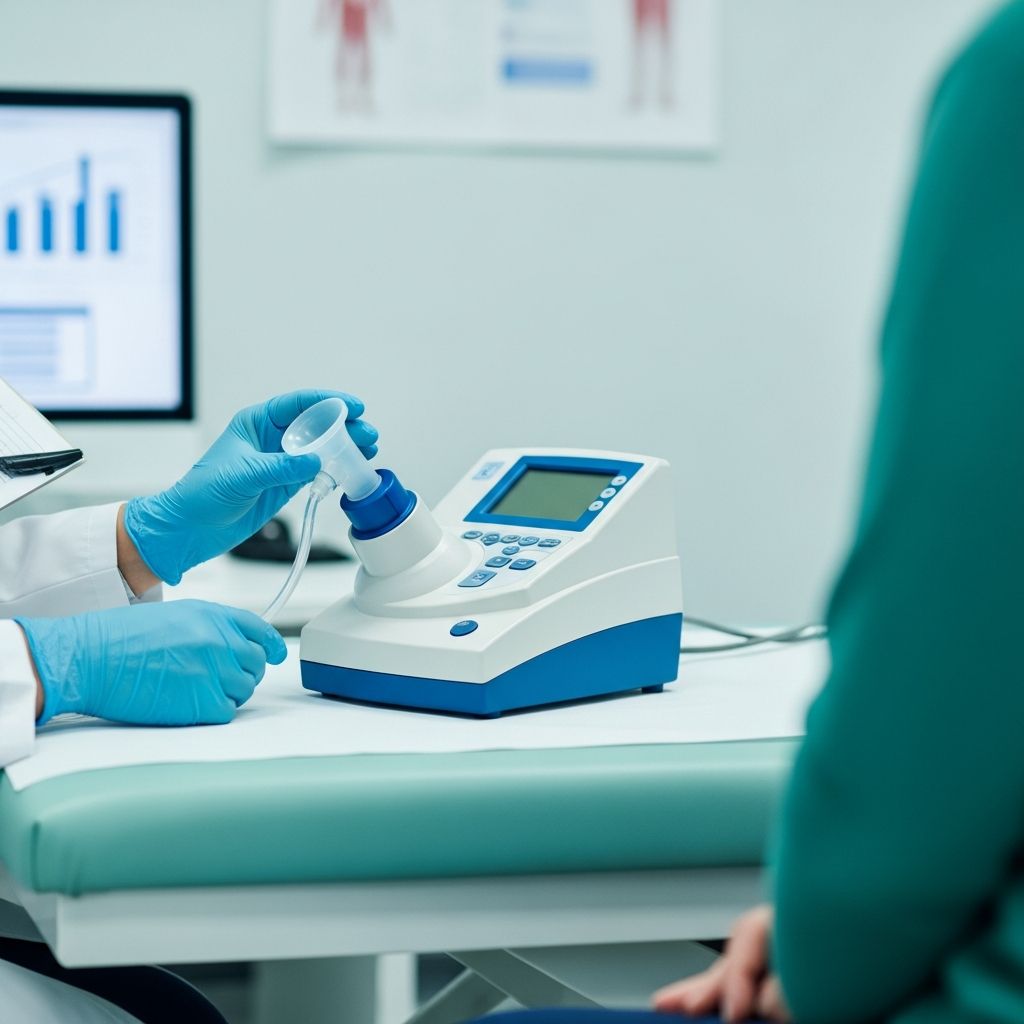
Spirometry is the most commonly performed pulmonary function test and serves as the foundation for most PFT evaluations. During this test, you sit in front of a spirometry machine and breathe through a disposable mouthpiece. A nose clip prevents air from escaping through your nose, ensuring all breathing occurs through the mouth and mouthpiece. The respiratory technologist will provide specific breathing instructions, which may include taking deep breaths in and out or exhaling as forcefully and rapidly as possible after a deep inhalation. The spirometer measures and records airflow patterns, providing critical data about your lung function.
Body Plethysmography
Body plethysmography measures lung volumes using principles of pressure and volume relationships. You sit or stand in a small, sealed clear plastic booth while breathing through a mouthpiece. As your chest expands and contracts during breathing, sensors inside the booth detect changes in air pressure and volume. The test uses Boyle’s law to calculate your lung volumes accurately. The procedure typically takes fewer than 20 minutes and provides multiple measurements within just a few minutes. This test is particularly valuable for measuring residual volume, which cannot be determined through spirometry alone.
Cardiopulmonary Exercise Testing
This test evaluates how your lungs and heart respond to physical exertion. Before beginning, a respiratory technician attaches multiple monitors to your body, including EKG leads to measure heart rate, a blood pressure cuff, a pulse oximeter to measure blood oxygen saturation, and a mouthpiece with a tube connected to a flow meter. You then exercise on a treadmill or stationary bicycle while these monitors continuously track your cardiovascular and pulmonary responses. This test helps determine exercise capacity and identifies exercise-induced breathing abnormalities.
Exhaled Nitric Oxide Test
For this test, you breathe into a mouthpiece connected to a monitor that measures nitric oxide levels in your breath. Elevated nitric oxide can indicate airway inflammation, particularly useful for detecting eosinophilic airway inflammation associated with certain types of asthma.
Diffusion Capacity Test (DLCO)
The diffusion capacity test evaluates how effectively oxygen moves from your lungs into your bloodstream. You inhale a gas mixture containing carbon monoxide and may also inhale a “tracer gas” for one breath. Sensors detect when you exhale this gas, allowing the machine to calculate how well your lungs transfer oxygen and carbon dioxide. This test is particularly important for detecting interstitial lung diseases and assessing lung damage from various causes.
Pulse Oximetry Testing
Pulse oximetry measures the oxygen saturation level in your red blood cells. A pulse oximeter is typically placed on your finger but may also be positioned on your forehead or toe. Results are obtained almost instantaneously, making this one of the quickest and most accessible measurements. This test can be performed during rest or while walking (oximetry with ambulation) to detect exercise-induced oxygen desaturation.
Additional Specialized Tests
Healthcare providers may order additional tests depending on your condition, including methacholine inhalation challenge testing to assess airway reactivity, respiratory muscle strength testing, altitude simulation tests, and shunt studies using 100% oxygen.
What to Expect During Your Pulmonary Function Test
Before Your Test
Your healthcare provider will record important personal information before conducting the test. This information includes your age, height, weight, and ethnic background. Your provider uses these demographic details to determine typical values specific to your population, allowing for accurate interpretation of your results compared to expected values for people like you.
Wear comfortable, loose-fitting clothing that allows easy chest expansion. Avoid eating large meals immediately before testing, as a full stomach can restrict breathing. If you use rescue inhalers or other respiratory medications, ask your healthcare provider whether you should use them before testing, as some medications may affect results.
During Your Test
After recording your information, a healthcare provider will take you to a room containing the PFT equipment and provide detailed instructions specific to your test. For spirometry, the provider will place soft nose clips on your nose to ensure you breathe entirely through your mouth. You’ll place your lips around a mouthpiece connected to the spirometer. The provider will give clear breathing directions, which may include taking deep breaths in and out or breathing as hard and fast as possible during exhalation.
For body plethysmography, you’ll sit in the clear plastic box with the door remaining closed for approximately five minutes while you breathe normally and follow specific instructions. For cardiopulmonary exercise testing, the provider will attach heart rate monitors, blood pressure cuffs, and blood oxygen sensors before you begin exercising on the treadmill or stationary bicycle.
Duration of Testing
A typical PFT may take between 15 and 45 minutes to complete, depending on which specific tests your provider orders and how your lungs respond. Some individual tests, like pulse oximetry, take just minutes, while comprehensive testing involving multiple procedures may require closer to 45 minutes.
Understanding Your Test Results
Your healthcare provider will contact you a few days after your test with your results. The interpretation of PFT results requires expertise, as abnormal patterns can indicate different types of lung disease. When interpreting results, healthcare providers first determine whether the pattern shows obstruction, restriction, or normal function. Obstructive patterns indicate narrowed airways, common in asthma and COPD. Restrictive patterns suggest reduced lung volume, seen in interstitial lung disease or chest wall abnormalities. Your provider will explain what your specific results mean for your health and recommend appropriate follow-up or treatment.
Conditions That Pulmonary Function Tests Help Diagnose
PFTs are valuable diagnostic tools for evaluating numerous respiratory conditions. Your healthcare provider may order these tests to help diagnose and assess the effectiveness of current treatments for chronic respiratory conditions such as asthma, chronic obstructive pulmonary disease (COPD), interstitial lung disease, cystic fibrosis, and pulmonary fibrosis. The tests can also detect early signs of lung disease before symptoms become severe, enabling earlier intervention and better outcomes.
Frequently Asked Questions
Q: Are pulmonary function tests painful?
A: No, PFTs are noninvasive and painless. You may feel mild discomfort from nose clips or the mouthpiece, but the tests do not cause pain. Some patients find the breathing instructions challenging or become fatigued, but these are normal responses.
Q: Can I eat before my pulmonary function test?
A: You can eat before your test, but avoid large meals immediately beforehand. A full stomach can restrict your ability to breathe deeply and may affect test results. Light snacking is generally acceptable.
Q: How should I prepare for my pulmonary function test?
A: Wear comfortable, loose-fitting clothing. Avoid strenuous exercise immediately before testing. Ask your healthcare provider about your medications, as some may affect results. Get adequate rest the night before your test.
Q: Will my medications affect my test results?
A: Some medications, particularly rescue inhalers and other respiratory drugs, can affect PFT results. Discuss all medications with your healthcare provider before testing to determine which ones you should use or avoid.
Q: What if I cannot complete the test?
A: Communicate with your healthcare provider if you experience difficulty during testing. They can adjust procedures, provide breaks, or reschedule testing. Incomplete cooperation during spirometry may result in unreliable results that may need to be repeated.
Q: When will I receive my test results?
A: Your healthcare provider typically contacts you within a few days after testing with your results. They will explain what the results mean and discuss any recommended next steps or treatments.
Q: Can children undergo pulmonary function testing?
A: Yes, children can have PFTs, though they require cooperation with breathing instructions. Most children aged six and older can successfully complete testing. Younger children may have difficulty following instructions accurately.
Q: How often should I have pulmonary function tests?
A: The frequency depends on your condition and healthcare provider’s recommendations. Those with chronic lung diseases may have annual or periodic testing to monitor disease progression and treatment effectiveness. Your provider will determine the appropriate testing schedule for your situation.
References
- Pulmonary Function Tests to Evaluate Lung Disorders — University Hospitals Cleveland Medical Center. 2024. https://www.uhhospitals.org/services/pulmonary-and-sleep-services/conditions-and-treatments/pulmonary-function-tests
- Pulmonary Function Testing Services — Cleveland Clinic. 2024. https://my.clevelandclinic.org/departments/respiratory/depts/pulmonary-function-testing
- Pulmonary Function Test: Purpose, Procedure & Results — Cleveland Clinic. 2024. https://my.clevelandclinic.org/health/diagnostics/17966-pulmonary-function-testing
- Body Plethysmography (Pulmonary Function Test) — Cleveland Clinic. 2024. https://my.clevelandclinic.org/health/diagnostics/15467-body-plethysmography-pulmonary-function-test
- Lung Diffusion Testing (DLCO) — Cleveland Clinic. 2024. https://my.clevelandclinic.org/health/diagnostics/15445-dlco
- Spirometry: Purpose, Procedure, Risks & Results — Cleveland Clinic. 2024. https://my.clevelandclinic.org/health/diagnostics/17833-spirometry
- Interpreting Pulmonary Function Tests: Recognize the Pattern, and the Diagnosis — Cleveland Clinic Journal of Medicine. 2003. https://www.ccjm.org/content/ccjom/70/10/866.full.pdf
Similar Articles








Read full bio of Sneha Tete