Pulmonary Sarcoidosis: Causes, Symptoms, Diagnosis & Treatment
Understanding pulmonary sarcoidosis: comprehensive guide to symptoms, diagnosis, and evidence-based treatment options.
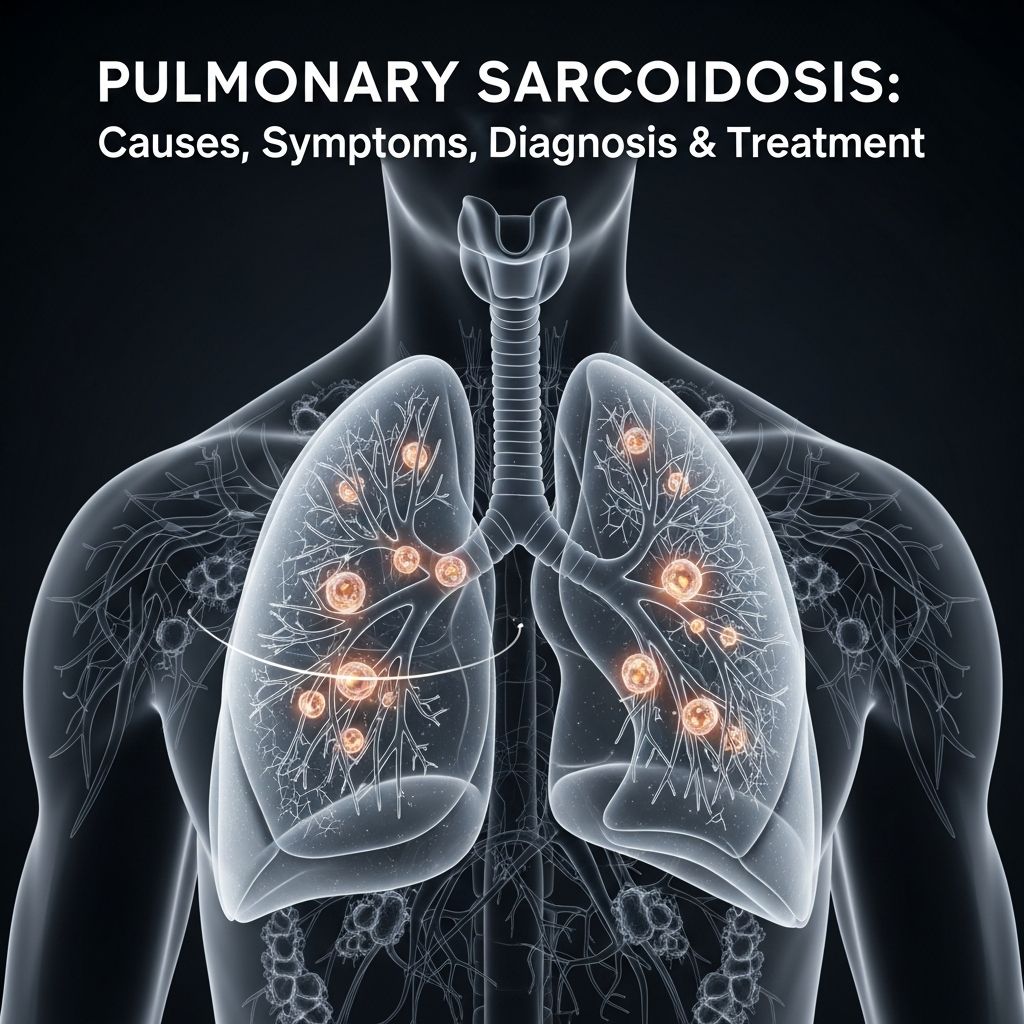
Understanding Pulmonary Sarcoidosis
Pulmonary sarcoidosis is a systemic inflammatory disease characterized by the formation of noncaseating granulomas, which are collections of inflammatory cells that develop when the immune system overreacts to unknown triggers. This condition affects the lungs in more than 90% of patients with sarcoidosis, making it one of the most common manifestations of this multisystem disease. While the lungs are the primary target organ, sarcoidosis can also impact the heart, eyes, nervous system, kidneys, bones, joints, and skin, with each patient experiencing different patterns of organ involvement.
Sarcoidosis typically strikes individuals during the prime of their lives, most commonly between ages 20 and 40 years old, and the impact can be sudden and devastating for patients and their families. The disease presents with significant heterogeneity, meaning it manifests differently across individuals, and follows an unpredictable clinical course that makes diagnosis and treatment challenging.
Etiology and Pathogenesis
Despite extensive research over more than a century, the exact cause of sarcoidosis remains unknown. However, current understanding suggests that the disease develops through a complex interplay of genetic factors, environmental exposures, and immune system dysfunction.
Genetic and Immunological Factors
The pathogenesis of sarcoidosis involves the interaction between antigens, HLA class II molecules, and T-cell receptors. It is likely that specific combinations of these three factors are required for sarcoidosis to develop. The pathophysiology depends on genetics that determine specific HLA polymorphisms, environmental exposures in the form of putative antigens, and T-cell responses that may be genetically programmed but can also involve memory from previous antigen exposure.
Potential Causative Agents
Several groups have identified possible infectious agents as potential causes for sarcoidosis, though none of these potential causes has been definitively confirmed. There is increasing evidence suggesting that one or more infectious agents may cause sarcoidosis, although the organism may no longer be viable in the patient. Research suggests that antigens from mycobacterial organisms could be released during the death of the organism, with a complex of host and mycobacterial proteins in response to infection potentially leading to sarcoidosis development. The failure to clear these antigen-protein complexes in some patients could lead to chronic disease.
Clinical Presentation and Symptoms
Patients with pulmonary sarcoidosis present with a wide range of clinical manifestations, and many experience nonspecific symptoms that can be difficult to diagnose. The variable presentation often leads to diagnostic delays, with patients sometimes seeing more than a dozen different specialists before receiving an accurate diagnosis.
Common Symptoms
The most frequently reported symptoms include cough, dyspnea (shortness of breath), chest pain, and general fatigue. Many patients also experience systemic symptoms such as fever, night sweats, and weight loss. In some cases, patients may present with acute complications, such as sudden cardiac events or neurological manifestations that require emergency intervention.
Pulmonary Function Abnormalities
Related Stories



Pulmonary function studies are abnormal in many patients with sarcoidosis, though there is no diagnostic pattern specific to the disease. Restrictive physiology is usually observed, characterized by reduced lung volumes and vital capacity. However, airflow obstruction is found in a significant proportion of patients with abnormal pulmonary function studies. Airflow obstruction may result from endobronchial disease, airway stenosis, airway reactivity, or airway distortion from parenchymal disease. This airflow obstruction may be more common in the African American population than other groups.
There is only a modest correlation between forced vital capacity (FVC) and the level of dyspnea reported by the patient, meaning some individuals may have significant functional impairment without proportional radiographic findings. A reduction in diffusion capacity may be related not only to restrictive disease but also to sarcoidosis-associated pulmonary hypertension.
Diagnostic Approach
Clinical Evaluation
The diagnosis of pulmonary sarcoidosis requires a comprehensive clinical evaluation including patient history, physical examination, and laboratory testing. Physicians must maintain a high index of suspicion, particularly in patients presenting with unexplained respiratory symptoms combined with systemic manifestations.
Imaging Studies
Chest X-ray remains the primary imaging modality for evaluating pulmonary sarcoidosis. The radiographic staging system helps classify disease severity and predict prognosis. Patients with stage 1 findings have a greater than 90% chance of resolution of their radiographic findings within 2 years, whereas those with stage 3 have resolution in less than one-third of cases within 2 years. Higher resolution CT imaging provides more detailed assessment of pulmonary involvement and helps identify complications.
Advanced Diagnostic Techniques
The diagnosis of sarcoidosis has been significantly aided by new technology, including endobronchial ultrasound (EBUS), which has been shown to increase the yield of needle aspiration of mediastinal and hilar lymph nodes. This technique allows for safer and more accurate tissue sampling compared to traditional bronchoscopy alone. The addition of EBUS increases the time of bronchoscopy by an average of 10 minutes and is associated with higher sedation requirements, but substantially improves diagnostic accuracy.
Laboratory and Tissue Confirmation
Definitive diagnosis of sarcoidosis requires histological evidence of noncaseating granulomas obtained through tissue biopsy. Specimens can be obtained through bronchoscopic lung biopsy, transbronchial needle aspiration under ultrasound guidance, or other tissue sampling techniques. Laboratory studies may reveal elevated serum angiotensin-converting enzyme (ACE) levels and hypercalcemia in some patients, though these findings are not present in all cases and are not specific for sarcoidosis.
Radiographic Staging
The Scadding classification system provides a framework for staging pulmonary sarcoidosis based on chest X-ray findings:
| Stage | Radiographic Findings | Prognosis |
|---|---|---|
| Stage 0 | Normal chest X-ray | Normal lung parenchyma |
| Stage 1 | Hilar lymphadenopathy without parenchymal involvement | >90% spontaneous remission within 2 years |
| Stage 2 | Hilar lymphadenopathy with parenchymal infiltration | Intermediate prognosis |
| Stage 3 | Parenchymal infiltration without hilar lymphadenopathy | <33% spontaneous remission within 2 years |
| Stage 4 | Pulmonary fibrosis | Poor prognosis with progressive disease |
This staging system provides general information regarding the prognosis of pulmonary disease over time and helps guide treatment decisions.
Treatment Approaches
General Treatment Principles
Treatment of pulmonary sarcoidosis is usually limited to the symptomatic patient. In most series, approximately half of patients do not require long-term systemic therapy. The goal of treatment is to control symptoms, prevent organ damage, and maintain quality of life while minimizing medication side effects.
Symptomatic Management
In cases where systemic therapy is not required, topical and local treatments may be sufficient to control disease manifestations. For patients with skin lesions, topical fluorinated steroid creams or corticosteroid injections can control dermatological involvement. Steroid-containing eye drops are effective for ocular manifestations. For pulmonary patients with cough, inhaled corticosteroids may be sufficient to control this symptom without requiring systemic therapy.
Systemic Corticosteroid Therapy
Corticosteroids remain the first-line treatment for symptomatic pulmonary sarcoidosis requiring systemic therapy. The recommended initial dosage is 20-40 mg of prednisone or its equivalent daily. Treatment is typically continued for 12-24 months, with gradual dose reduction as the disease comes under control. Patients receiving corticosteroids require regular monitoring for side effects, including weight gain, diabetes, hypertension, osteoporosis, and opportunistic infections.
Steroid-Sparing Alternatives
For patients with chronic pulmonary sarcoidosis who cannot tolerate corticosteroids or who develop corticosteroid resistance, alternative immunosuppressive agents may be considered. Methotrexate is commonly used as a steroid-sparing agent, typically administered at a dose of 5-15 mg once weekly. Other agents such as azathioprine, mycophenolate mofetil, and biologic agents targeting specific immune pathways may also be employed in selected patients.
Multidisciplinary Care Approach
Modern management of sarcoidosis requires coordination among multiple medical specialists. The Johns Hopkins Sarcoidosis Program exemplifies this approach, with a team including pulmonologists, cardiologists, neurologists, rheumatologists, and other specialists meeting regularly to review and coordinate care for patients with multisystem involvement. This strategic approach allows patients with multiple system involvement to receive coordinated care in a timelier manner and improves overall outcomes.
Dedicated support teams including medical office coordinators, nurse practitioners, and patient navigators help patients manage appointments, imaging, blood tests, and other aspects of their care. Patient support groups and educational resources foster shared decision-making and help patients feel connected to a supportive community.
Frequently Asked Questions
What causes pulmonary sarcoidosis?
The exact cause of pulmonary sarcoidosis remains unknown despite over a century of research. Current evidence suggests that the disease develops through a combination of genetic predisposition, environmental exposures, and immune system dysfunction. Some research indicates that infectious agents may play a role, though this has not been definitively proven.
How common is pulmonary sarcoidosis?
Sarcoidosis typically affects individuals between ages 20 and 40 years old. The disease affects more than 90% of patients with sarcoidosis in the lungs, making pulmonary involvement the most common manifestation. While relatively rare as an overall condition, specialized centers like Johns Hopkins care for large numbers of patients enabling advanced research and coordinated treatment.
Can pulmonary sarcoidosis be cured?
Currently, there is no known cure for sarcoidosis. However, treatment with corticosteroids and other immunosuppressive agents can control symptoms and prevent progression in many patients. Researchers are actively working to develop more targeted therapies with fewer side effects and ultimately find a cure for this disease.
What is the prognosis for pulmonary sarcoidosis?
Prognosis varies depending on radiographic stage at diagnosis and individual disease characteristics. Patients with stage 1 disease have greater than 90% chance of spontaneous resolution within 2 years, while those with stage 3 or 4 disease have poorer prognosis with higher likelihood of progressive pulmonary fibrosis and long-term impairment.
How is pulmonary sarcoidosis diagnosed?
Diagnosis requires a combination of clinical evaluation, imaging studies (chest X-ray and high-resolution CT), pulmonary function testing, and tissue biopsy demonstrating noncaseating granulomas. Advanced techniques like endobronchial ultrasound improve diagnostic accuracy by allowing safe sampling of lymph nodes.
Living with Pulmonary Sarcoidosis
Patients with pulmonary sarcoidosis face unique challenges related to disease unpredictability and variable response to treatment. Many patients experience significant fatigue that impacts their ability to work and maintain normal daily activities. Long-term corticosteroid therapy can cause unwelcome side effects including weight gain, diabetes, and hypertension, requiring careful monitoring and management.
Engaging with multidisciplinary care teams, participating in patient support groups, and maintaining regular communication with healthcare providers can improve outcomes and quality of life. Adherence to prescribed treatments and participation in research studies contribute to better health outcomes and advancement of medical knowledge.
References
- A Concise Review of Pulmonary Sarcoidosis — National Institutes of Health, National Center for Biotechnology Information (PMC). 2011. https://pmc.ncbi.nlm.nih.gov/articles/PMC3081278/
- A Team Approach to Sarcoidosis — Johns Hopkins Center for Innovative Medicine. 2023. https://www.hopkinscim.org/breakthrough/summer-2023/a-team-approach-to-sarcoidosis/
- Sarcoidosis: A Systemic Granulomatous Disease — Johns Hopkins University Research Publications. https://pure.johnshopkins.edu/en/publications/sarcoidosis-28
Similar Articles








Read full bio of Sneha Tete