Pulmonary Veins: 4 Essential Facts For Heart Health
Understanding your pulmonary veins and their vital role in oxygen delivery.
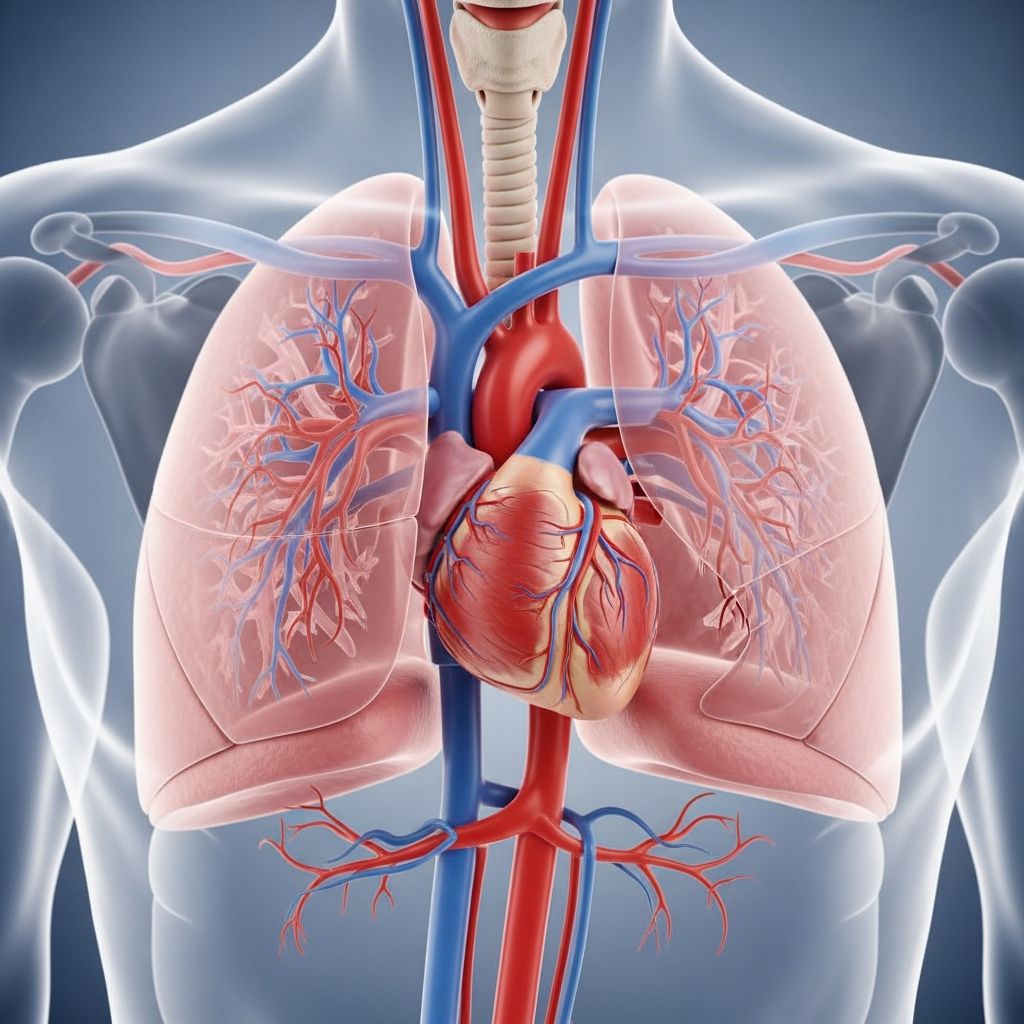
What Are Pulmonary Veins?
Your pulmonary veins are specialized blood vessels that play a crucial role in your circulatory system. These veins collect oxygen-rich blood from your lungs and carry it directly to your heart, where it can be distributed throughout your entire body. Unlike most other veins in your body, which transport oxygen-poor blood, pulmonary veins are unique in that they carry oxygenated blood. This fundamental difference makes them essential to maintaining your overall health and ensuring every organ and tissue receives the oxygen it needs to function properly.
The pulmonary veins represent the final step in the pulmonary circulation pathway, completing the process by which your blood picks up oxygen in the lungs and returns it to the systemic circulation. Without functioning pulmonary veins, oxygen-rich blood cannot reach your heart for distribution throughout your body, making these vessels absolutely vital to your survival.
Location and Structure of Pulmonary Veins
Your pulmonary veins are located in a strategic position between your lungs and your heart. Many smaller blood vessels converge within each of your lungs to form a pair of pulmonary veins. Each pair originates from its respective lung through a spot known as the hilum, or root, which serves as the exit point for these vessels from the lung tissue.
From the hilum, your pulmonary veins travel medially toward your heart and connect with your left atrium, which is the top left chamber of your heart. The connection occurs through the posterior wall of the left atrium, where the veins empty their oxygen-rich blood directly into the chamber.
Most people have four pulmonary veins total, each draining blood from a different section of the lungs. These are categorized as:
– Right superior pulmonary vein- Right inferior pulmonary vein- Left superior pulmonary vein- Left inferior pulmonary vein
The walls of your pulmonary veins consist of three distinct layers. The innermost layer is the endothelium, which provides a smooth surface for blood flow. The middle layer contains smooth muscle tissue that helps regulate vessel function. The outermost layer provides structural support and protection.
A unique feature of pulmonary veins distinguishes them from other blood vessels in your body: they are partly covered by a thin myocardial layer. This is essentially a “sleeve” of heart muscle tissue that covers a portion of each pulmonary vein near its connection with your left atrium. The average length of this sleeve is approximately 9 millimeters. Notably, superior pulmonary veins have longer sleeves than inferior pulmonary veins, which has clinical significance for certain cardiac procedures.
How Pulmonary Veins Function
The primary function of your pulmonary veins is to transport oxygenated blood from your lungs to your heart. Here’s how this process works within the context of your overall circulation:
When you breathe, oxygen enters your lungs and diffuses into the pulmonary capillaries surrounding the alveoli, or air sacs. This oxygen combines with hemoglobin in red blood cells, transforming the blood from oxygen-poor to oxygen-rich. Your pulmonary veins collect this oxygenated blood from the extensive capillary networks throughout both lungs.
The blood then travels through the pulmonary veins toward your heart. As the veins approach the left atrium, they empty their contents into this chamber through distinct openings called ostia. Unlike many other veins in your body, pulmonary veins lack valves at their atrial junctions, allowing unobstructed blood flow into the left atrium.
Related Stories



From your left atrium, the oxygenated blood flows into your left ventricle and is then pumped out through your aorta to the systemic circulation, where it distributes oxygen to every organ, tissue, and cell in your body. This continuous cycle ensures your entire body receives the oxygen necessary for metabolism and survival.
Anatomical Variations of Pulmonary Veins
While the standard configuration consists of four pulmonary veins draining into the left atrium, research shows that approximately 38% of people have harmless anatomical variations in pulmonary vein structure. These variations affect how many pulmonary veins they have and how those veins connect with their left atrium. It is important to understand that many variations are healthy and completely harmless.
Harmless Variations: These variations do not interfere with normal cardiac function because they still allow oxygen-rich blood to enter your left atrium properly. Even with different arrangements or numbers of pulmonary veins, the blood follows the normal path into your left ventricle and then out to the rest of your body. Your heart continues to function normally, and these individuals experience no health consequences from their anatomical variation.
Problematic Variations: Other variations can prevent your pulmonary veins from draining properly into your left atrium. These variations interfere with your heart’s normal functioning and can be life-threatening if not addressed. The most significant of these include partial anomalous pulmonary venous return (PAPVR) and total anomalous pulmonary venous return (TAPVR).
In PAPVR, one or more pulmonary veins drain into the right atrium or systemic venous circulation instead of the left atrium. In TAPVR, all four pulmonary veins drain into the wrong location, which is a more severe condition. Additionally, pulmonary vein stenosis, characterized by narrowing of the veins, and pulmonary vein atresia, where the veins fail to form properly, represent serious congenital anomalies that require medical intervention.
Pulmonary Veins and Heart Health
Beyond their essential oxygen-transport function, pulmonary veins have significant implications for heart health. The myocardial sleeves that cover portions of the pulmonary veins create unique electrical properties. These sleeves contain cardiac muscle tissue capable of generating electrical impulses, which contributes to the arrhythmogenic potential of the pulmonary veins.
Pulmonary veins are central to the pathophysiology of atrial fibrillation, one of the most common cardiac arrhythmias. Abnormal electrical activity originating from these myocardial sleeves can trigger irregular heartbeats that disrupt normal cardiac function. This connection has led to the development of catheter ablation procedures specifically targeting pulmonary vein tissue to treat atrial fibrillation.
Complications can arise from various conditions affecting pulmonary veins. Pulmonary vein stenosis, which may develop as a complication of catheter ablation or result from external compression, can lead to pulmonary congestion and elevated pulmonary pressures. Thrombosis, or blood clot formation, within pulmonary veins, though rare, represents a serious condition requiring immediate medical attention.
Clinical Significance and Medical Imaging
Understanding both normal and variant pulmonary venous anatomy is essential for accurate diagnosis and effective medical intervention. Precise imaging and anatomical knowledge are particularly important for several clinical scenarios.
Physicians need detailed knowledge of pulmonary vein anatomy when planning lung resection surgeries, as the arrangement and course of these vessels affect surgical approach and safety. Similarly, in lung transplantation procedures, precise understanding of pulmonary venous anatomy is critical for successful organ anastomosis and subsequent function.
Interventional cardiologists performing catheter ablation for atrial fibrillation must have detailed knowledge of pulmonary vein anatomy and variations to safely navigate catheters and deliver ablative therapy. The complex and highly variable anatomy of these vessels directly influences diagnostic imaging techniques, interventional procedures, and outcomes.
Advanced imaging techniques such as computed tomography (CT) angiography, magnetic resonance angiography (MRA), and three-dimensional echocardiography allow physicians to visualize pulmonary vein anatomy in detail before intervention. These imaging modalities help identify anatomical variations and plan procedures accordingly, reducing complications and improving patient outcomes.
Supporting Structures and Supply
Your pulmonary veins do not function in isolation but are supported by surrounding anatomical structures. The pulmonary ligament, located medial and inferior to the inferior pulmonary veins on both sides, provides structural support and helps stabilize these vessels in their anatomical position.
The pulmonary veins receive blood supply from small branches of adjacent bronchial arteries, which provide the limited arterial supply necessary for vein wall metabolism. Venous drainage from the pulmonary vein walls occurs via both bronchial and pulmonary venous pathways, ensuring adequate nutrition and waste removal from vein tissue.
Lymphatic drainage from the pulmonary veins follows bronchovascular bundles toward hilar and mediastinal lymph nodes, paralleling the course of pulmonary arteries and veins. This lymphatic drainage system helps remove excess fluid and support immune function in the region surrounding these critical vessels.
The innervation of pulmonary veins arises from the pulmonary plexus, which contains both parasympathetic and sympathetic nerve fibers. Parasympathetic fibers originating from the vagus nerve mediate vasoconstriction and course anterior to pulmonary bronchi and superior to the pulmonary veins. Sympathetic fibers, which promote vasodilation, originate from the thoracic sympathetic trunk, allowing for dynamic regulation of pulmonary venous tone in response to physiological demands.
Pulmonary Veins in Context of Overall Circulation
Your pulmonary veins represent one component of an integrated circulatory system involving multiple vessels and chambers. The superior and inferior vena cava collect deoxygenated blood from your entire body and deliver it to your right atrium. This oxygen-poor blood then flows into your right ventricle and is pumped through your pulmonary artery to your lungs.
In your lungs, blood releases carbon dioxide and picks up fresh oxygen through the process of gas exchange. Your pulmonary veins then collect this oxygenated blood and return it to your left atrium, completing the pulmonary circulation and beginning the systemic circulation that delivers oxygen throughout your body.
This cyclical process occurs continuously throughout your life, with your pulmonary veins playing an indispensable role in ensuring oxygen delivery to your heart and body. The efficiency and proper functioning of your pulmonary veins directly impacts your overall cardiovascular health and oxygen availability to all your tissues.
Frequently Asked Questions
Q: How many pulmonary veins do most people have?
A: Most people have four pulmonary veins: right superior, right inferior, left superior, and left inferior. However, about 38% of people have harmless anatomical variations in the number and arrangement of these veins.
Q: What makes pulmonary veins different from other veins in the body?
A: Pulmonary veins are unique because they carry oxygen-rich blood rather than oxygen-poor blood. Additionally, they lack valves at their atrial junctions and are partly covered by a thin sleeve of heart muscle tissue called the myocardial layer.
Q: Where do pulmonary veins connect to the heart?
A: Pulmonary veins connect to the left atrium, which is the top left chamber of your heart. They drain into the posterior wall of the left atrium through distinct openings called ostia.
Q: Are anatomical variations in pulmonary veins always a problem?
A: No. Many anatomical variations are harmless and do not affect heart function. However, some variations such as total anomalous pulmonary venous return (TAPVR) can be serious and require medical intervention.
Q: What is the relationship between pulmonary veins and atrial fibrillation?
A: The myocardial sleeves covering pulmonary veins can generate abnormal electrical impulses that trigger atrial fibrillation. This connection has led to catheter ablation procedures targeting pulmonary vein tissue to treat this common arrhythmia.
Q: What conditions can affect pulmonary veins?
A: Conditions affecting pulmonary veins include stenosis (narrowing), atresia (failure to form), thrombosis (blood clots), and anomalous drainage patterns. Complications can also arise from certain medical procedures like catheter ablation.
References
- Anatomy, Thorax, Lung Veins — National Center for Biotechnology Information (NCBI), StatPearls. 2024. https://www.ncbi.nlm.nih.gov/books/NBK545205/
- Pulmonary Veins: Anatomy and Function — Cleveland Clinic. 2024. https://my.clevelandclinic.org/health/body/23242-pulmonary-veins
- How Blood Flows Through the Heart and Body — Cleveland Clinic. 2024. https://my.clevelandclinic.org/health/articles/17060-how-does-the-blood-flow-through-your-heart
- Great Vessels of the Heart: Anatomy and Function — Cleveland Clinic. 2024. https://my.clevelandclinic.org/health/body/17057-your-heart–blood-vessels
- Blood Vessels: Types, Function and Anatomy — Cleveland Clinic. 2024. https://my.clevelandclinic.org/health/body/21640-blood-vessels
Similar Articles








Read full bio of Sneha Tete