Pulpotomy: A Vital Tooth-Saving Procedure Explained
Understanding pulpotomy: A minimally invasive alternative to root canal treatment that preserves tooth vitality.
What Is Pulpotomy?
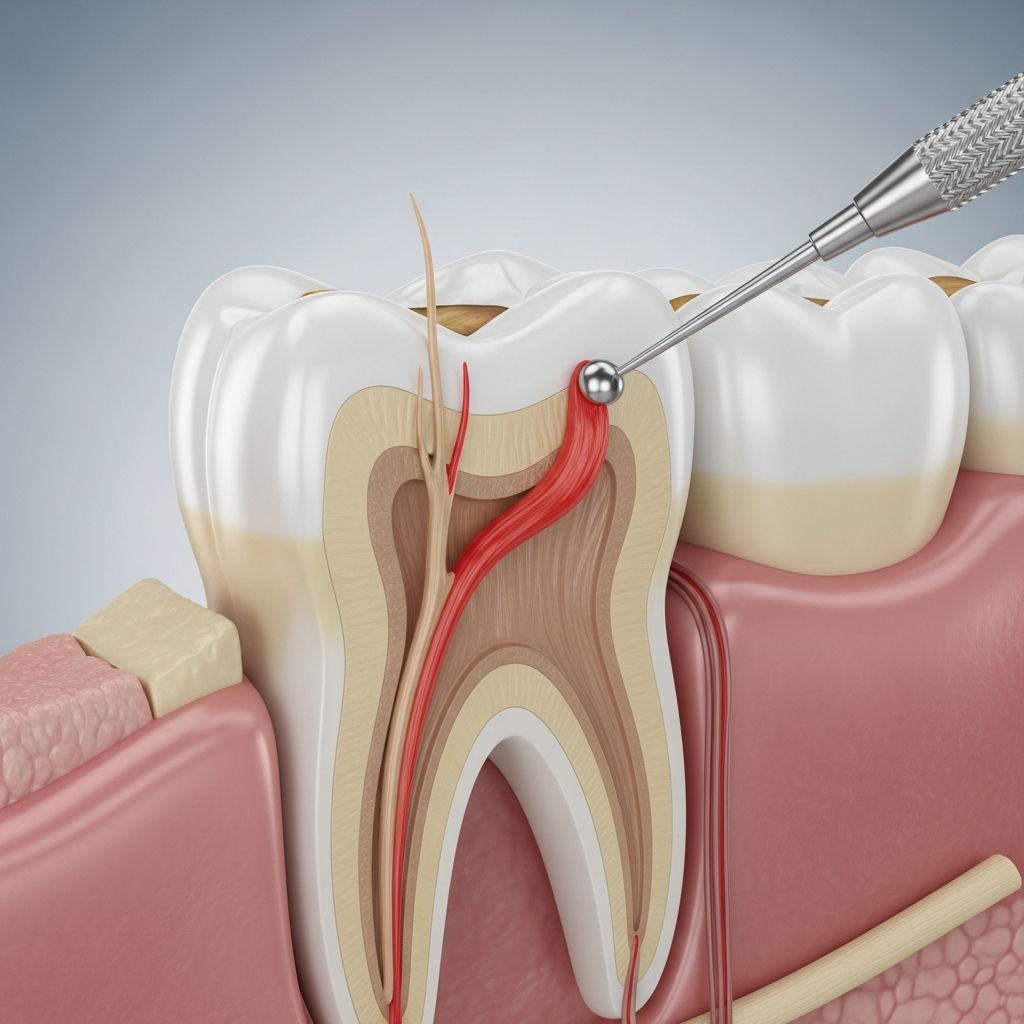
Pulpotomy is a dental procedure designed to save a severely decayed or infected tooth by removing infected pulp tissue from within the tooth’s crown. The pulp is the innermost part of the tooth containing blood vessels, connective tissue, and nerves. When deep decay or trauma exposes the pulp to bacteria, it can become inflamed or infected—a condition called pulpitis—threatening the tooth’s survival.
Unlike a root canal, which removes all pulp tissue including that in the roots, pulpotomy is a more conservative approach that preserves the vital pulp tissue beneath the crown. This makes it an increasingly popular option for both children with primary teeth and, increasingly, adults with mature permanent teeth.
Understanding Vital Pulp Therapy
Pulpotomy belongs to a broader category of treatments called vital pulp therapy (VPT), which represents a shift in modern dentistry toward preserving tooth structure and function rather than removing it entirely. Vital pulp therapy is a conservative approach that preserves healthy pulp following injury caused by trauma, caries, or restorative procedures.
The primary objective of vital pulp therapy is to stimulate reparative dentin formation and maintain pulp vitality, thereby preserving the normal physiological function of the tooth. This approach has become increasingly supported by recent research, with studies showing that pulpotomy can achieve success rates comparable to traditional root canal treatment, even in mature permanent teeth with irreversible pulpitis.
Types of Pulpotomy Procedures
There are two main categories of pulpotomy: partial pulpotomy and full pulpotomy. The choice between these procedures depends on several factors, including the extent of pulp inflammation, the patient’s age, and the overall treatment plan.
Partial Pulpotomy (PP)
Partial pulpotomy is defined as removing a small portion of coronal pulp tissue after exposure, followed by applying a biomaterial directly onto the remaining pulp tissue before placement of a permanent restoration. This procedure was first reported by Cvek in 1978 for treating traumatically exposed young permanent teeth, and later expanded to treat young permanent teeth with deep caries in 1993.
Partial pulpotomy is particularly suitable for vital teeth with traumatic pulp exposure and is often chosen when sufficient healthy pulp remains to maintain tooth vitality.
Full Pulpotomy (FP)
Full pulpotomy, also called complete pulpotomy, is defined as the complete removal of the coronal pulp and application of a biomaterial directly onto the pulp tissue at the level of the root canal orifice(s) prior to placement of a permanent restoration.
Full pulpotomy is typically indicated in immature permanent teeth with cariously exposed pulp as an interim procedure to allow continued root development. It may also be performed as an emergency procedure for temporary relief of symptoms until a definitive root canal treatment can be accomplished.
Related Stories



When Is Pulpotomy Recommended?
Your dentist may recommend pulpotomy in several clinical situations:
- Deep cavity that has exposed the pulp underneath
- Pulp inflammation or infection (pulpitis) confined to the coronal pulp
- Traumatic exposure of a vital tooth
- Restorative procedures that inadvertently expose the pulp
- Cases where a root canal would be more invasive than necessary
Pulpotomy is less invasive than root canal procedures and can be an effective way to preserve more of the natural tooth structure. However, if your tooth has a deep infection that extends into or near the root, a root canal may be recommended instead of pulpotomy.
Pulpotomy vs. Other Procedures
| Procedure | Scope | Best For | Outcome |
|---|---|---|---|
| Pulpotomy | Removes coronal pulp only; preserves roots and radicular pulp | Limited coronal pulpitis; young/immature teeth; preservation priority | Preserves tooth vitality and root development |
| Pulpectomy | Removes all pulp, including roots and radicular pulp | Irreversible pulpitis or necrosis extending to root canals | Complete pulp removal; sometimes called “baby root canal” |
| Root Canal (RCT) | Removes all pulp tissue and roots from mature teeth | Severe infection in permanent teeth with fully formed roots | Most invasive; complete pulp removal and sterilization |
Unlike pulpectomy, which removes all the pulp plus the roots of an infected tooth, pulpotomy preserves the roots and remaining vital pulp tissue, making it less invasive and particularly valuable for children with baby teeth that need to remain intact for proper spacing of permanent teeth.
The Pulpotomy Procedure: What to Expect
Understanding what happens during a pulpotomy can help alleviate anxiety about the procedure. Here’s what to expect:
- Anesthesia: Your dentist will administer local anesthesia to numb the tooth and surrounding area, ensuring you experience no pain during the procedure.
- Decay Removal: The decayed area of the tooth will be removed with a drill, and the dentist will drill through the tooth’s enamel and dentin layers until the pulp is exposed.
- Pulp Removal: The infected material within the tooth’s crown will be scooped out and removed. The extent of removal depends on whether a partial or full pulpotomy is being performed.
- Pulp Sealing: The empty space where the pulp was will be filled with dental cement or a biocompatible material (such as MTA—mineral trioxide aggregate) to seal it closed and promote healing.
- Restoration: A stainless steel crown will be cemented onto the existing tooth, which becomes its new outer surface, or a composite restoration will be placed.
Biomaterials Used in Pulpotomy
The success of pulpotomy depends significantly on the biomaterial applied to the remaining pulp tissue after removal of the infected or exposed coronal pulp. Modern pulpotomy relies on biocompatible materials that promote healing and maintain pulp vitality.
Historically, formocresol was the standard medicament of choice for pulpotomy, but contemporary practice increasingly favors materials like mineral trioxide aggregate (MTA) and other advanced bioceramics that offer superior biocompatibility and longer-term clinical success. These materials support reparative dentin formation and help maintain the vitality of the remaining pulp tissue.
Pulpotomy in Children vs. Adults
Pulpotomy in Primary Teeth (Baby Teeth)
Pulpotomy is most commonly performed on children with baby (primary) teeth, which have immature root formation. Because pulpotomy leaves the roots of a tooth intact and able to grow, it’s ideal for preserving primary teeth. Baby teeth help maintain spacing for the permanent teeth that will follow, so keeping them intact is often a priority in pediatric dentistry.
Pulpotomy in Permanent Teeth
While traditionally associated with primary teeth, pulpotomy has increasingly been studied and applied in adults and children with permanent secondary teeth. Several studies have demonstrated that this procedure can be used effectively in adults and in children with secondary teeth, provided that enough healthy pulp exists within the tooth to keep it healthy and vital.
Recent research increasingly supports pulpotomy as a potential alternative to root canal treatment, even for mature permanent teeth with irreversible pulpitis, expanding the clinical applications of this conservative approach.
Pulpitis Classification and Treatment Selection
Your dentist’s choice of treatment depends on the classification and severity of pulpitis. The following table outlines how different levels of pulpitis guide treatment decisions:
| Pulpitis Type | Severity | Symptoms | Pathology | Recommended Treatment |
|---|---|---|---|---|
| Reversible Pulpitis | Mild | Heightened reaction to cold, warm, and sweet stimuli; reaction lasts up to 20 seconds; no spontaneous pain | Limited local inflammation confined to coronal pulp | Indirect pulp capping |
| Irreversible Pulpitis | Moderate | Strong, prolonged reaction to cold lasting minutes; spontaneous dull pain suppressible with medication | Extensive local inflammation confined to coronal pulp | Partial or Full Pulpotomy (PP/FP) |
| Irreversible Pulpitis | Severe | Pain reaction to warmth and cold; severe spontaneous sharp or dull pain; very sensitive to percussion | Extensive local inflammation extending into root canals | Full Pulpotomy (if hemostasis achievable) or Root Canal Treatment (if hemostasis fails) |
Recovery and Aftercare
Recovery from pulpotomy is generally straightforward and less complicated than recovery from root canal treatment. You should experience no pain during the procedure and only minor discomfort afterward.
Following pulpotomy, you may experience:
- Minor sensitivity or slight discomfort for a few days
- Normal healing of the restored tooth area
- Full restoration of function within a short period
If only a pulpotomy is being done on a permanent adult tooth, the tooth should be watched and monitored carefully to ensure the remaining pulp remains vital and the tooth continues to function normally.
Success Rates and Long-Term Outcomes
Research has consistently demonstrated strong success rates for pulpotomy when appropriate cases are selected and proper biomaterials are used. Pulpotomy in immature permanent teeth could achieve success rates comparable to apexification, a traditional treatment for immature teeth.
The success of pulpotomy depends on several factors:
- Proper diagnosis of pulp vitality status
- Selection of appropriate cases with limited inflammation
- Use of biocompatible medicaments and biomaterials
- Adequate restoration and sealing of the tooth
- Regular monitoring and follow-up care
Frequently Asked Questions (FAQs)
Q: Is pulpotomy painful?
A: No, pulpotomy should cause no pain during the procedure because your dentist will administer local anesthesia. You may experience mild discomfort for a few days after the procedure, which is easily managed with over-the-counter pain relief.
Q: How long does a pulpotomy procedure take?
A: A typical pulpotomy procedure usually takes 30 to 45 minutes, depending on the complexity of the case and which type of pulpotomy (partial or full) is being performed.
Q: Is pulpotomy better than a root canal?
A: Pulpotomy is less invasive than a root canal and preserves more natural tooth structure and vitality. However, whether it’s appropriate depends on your specific diagnosis. A root canal may be necessary if infection extends deeply into the roots.
Q: How long do pulpotomy results last?
A: With proper care and monitoring, pulpotomy results can be long-lasting. The remaining vital pulp tissue continues to support the tooth’s health and function, and the tooth should continue to develop normally (particularly important in young teeth with immature roots).
Q: Can pulpotomy be done on adult teeth?
A: Yes, recent research shows that pulpotomy can be effectively performed on adult permanent teeth when the inflammation is limited to the coronal pulp and sufficient healthy pulp tissue remains.
Q: What is the cost of pulpotomy?
A: Pulpotomy costs vary depending on the dentist, location, and complexity of the case, but it is generally less expensive than root canal treatment because it is less invasive and requires less time.
References
- Expert Consensus on Pulpotomy in the Management of Mature Permanent Teeth — National Center for Biotechnology Information, PubMed Central. 2024. https://pmc.ncbi.nlm.nih.gov/articles/PMC11704326/
- Pulpotomy: Procedure, What to Expect, and Recovery — Healthline Media. 2024. https://www.healthline.com/health/dental-and-oral-health/pulpotomy
- Pulp Therapy for Primary and Immature Permanent Teeth — American Academy of Pediatric Dentistry (AAPD). 2023. https://www.aapd.org/media/Policies_Guidelines/BP_PulpTherapy.pdf
Similar Articles








Read full bio of medha deb