Pulse Oximetry: Measuring Blood Oxygen Levels
Learn how pulse oximetry measures oxygen saturation and supports better health outcomes.
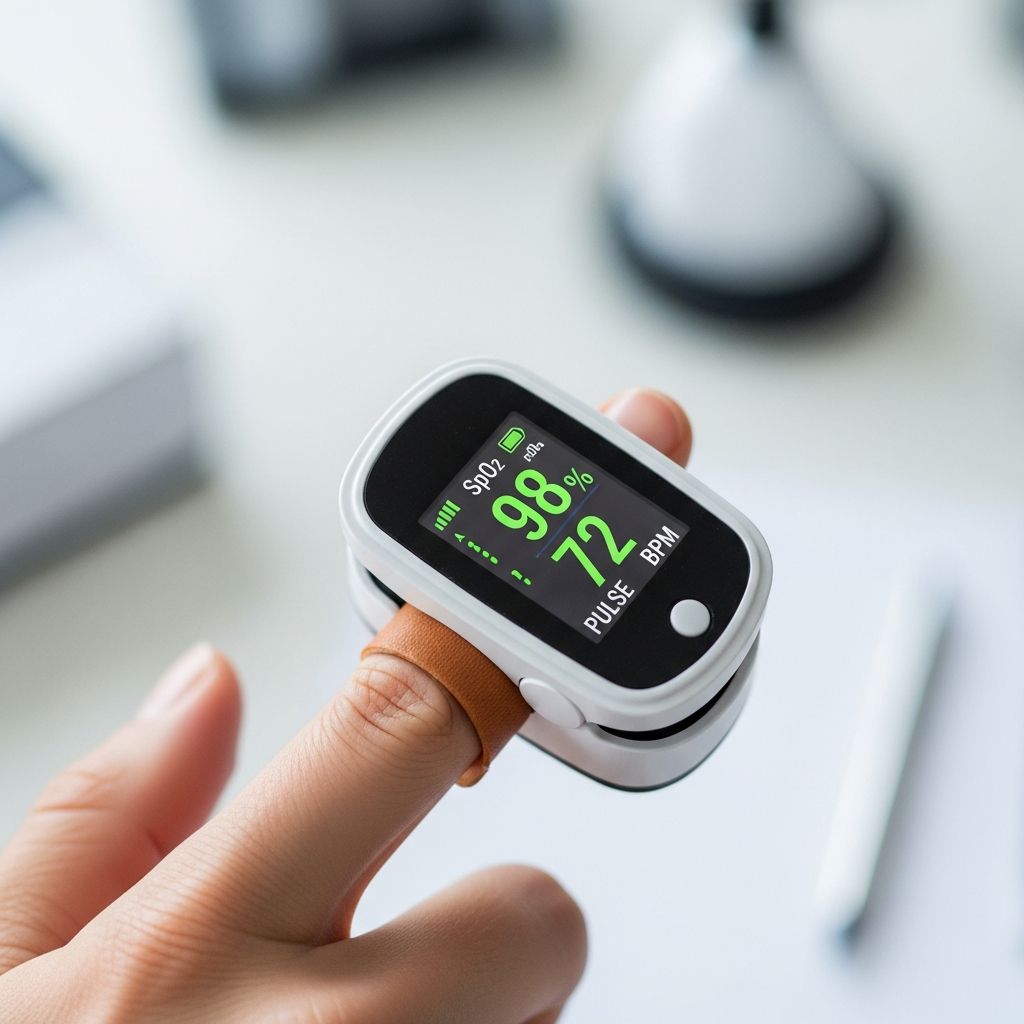
Pulse oximetry is a simple, painless, and noninvasive test that measures the oxygen saturation level in your blood. This essential diagnostic tool has become a standard part of medical care across hospitals, clinics, and home settings. By using light technology to assess how efficiently oxygen is being carried through your bloodstream, pulse oximeters provide medical professionals with critical information about your respiratory and circulatory health.
What Is Pulse Oximetry?
Pulse oximetry is a noninvasive monitoring technique that measures the percentage of hemoglobin in your blood that is saturated with oxygen. Often referred to as the “fifth vital sign” alongside temperature, blood pressure, pulse, and respiration rate, pulse oximetry has become an integral component of comprehensive health assessments. The measurement is expressed as SpO2, which represents peripheral arterial oxygen saturation.
A pulse oximeter is a small, electronic clip-like device that attaches painlessly to a body part, most commonly your fingertip, though it can also be placed on your ear, toe, or forehead. The device uses light wavelengths to measure oxygen levels without requiring any blood samples or needles, making it comfortable for patients of all ages.
How Pulse Oximetry Works
The technology behind pulse oximetry is based on spectrophotometry and the Beer-Lambert Law. The device operates by emitting light at two specific wavelengths—660 nanometers (red light) and 940 nanometers (infrared light)—through the tissue. Deoxygenated and oxygenated hemoglobin absorb light differently at these wavelengths, allowing the pulse oximeter to distinguish between them.
When you place your finger on the pulse oximeter, the device emits light that passes through your fingernail, skin, tissue, and blood. On the opposite side of the finger, a sensor detects and measures the amount of light that successfully passes through without being absorbed by your tissue and blood. Using this measurement and a proprietary algorithm, the device calculates your blood oxygen saturation percentage and displays the result on a screen, typically within seconds.
The pulse oximeter simultaneously measures your heart rate by detecting the pulsatile changes in light absorption that correspond to each heartbeat. This dual measurement makes it an efficient tool for assessing two important vital signs at once.
Purpose and Clinical Uses
The primary purpose of pulse oximetry is to assess whether your blood is adequately oxygenated and to monitor oxygen levels continuously or periodically depending on your clinical situation. Medical professionals use pulse oximetry across various healthcare settings for multiple reasons:
Monitoring Chronic Conditions
Pulse oximetry is commonly used to monitor patients with conditions that affect blood oxygen levels. These conditions include chronic obstructive pulmonary disease (COPD), asthma, pneumonia, lung cancer, anemia, heart attack, heart failure, and congenital heart disease. Continuous monitoring helps healthcare providers detect dangerous drops in oxygen saturation early, often before patients experience noticeable symptoms.
Related Stories



Surgical and Anesthesia Monitoring
Pulse oximetry is considered standard of care during surgical procedures requiring sedation or anesthesia. The American Society of Anesthesiologists (ASA), World Federation of Societies of Anesthesiologists, and World Health Organization recommend pulse oximetry for all patients receiving anesthesia. It helps anesthesiologists maintain safe oxygen levels throughout procedures and detect any respiratory depression caused by anesthetic medications.
Medication and Treatment Assessment
Doctors use pulse oximetry to assess how well new lung medications are working, evaluate the effectiveness of supplemental oxygen therapy, and monitor patients taking medications that may impair respiration, such as opioids. It helps determine whether patients need oxygen therapy and when treatment adjustments are necessary.
Emergency and Acute Care
In emergency departments and hospital wards, pulse oximetry rapidly assesses blood oxygenation in patients with respiratory difficulties. It helps medical professionals quickly identify hypoxia—dangerously low blood oxygen levels—and determine whether patients need oxygen support or mechanical ventilation.
Sleep Disorder Evaluation
Pulse oximetry is used during sleep studies to evaluate whether patients experience brief episodes of stopped breathing, such as sleep apnea. These episodes often cause temporary drops in oxygen saturation that can be detected and recorded throughout the night.
Physical Activity Assessment
Healthcare providers may use pulse oximetry to assess patients’ ability to tolerate increased physical activity by monitoring whether oxygen saturation remains stable during exercise testing.
Advantages Over Traditional Methods
Pulse oximetry offers significant advantages compared to traditional methods of measuring blood oxygen levels, such as arterial blood gas testing. Traditional methods require drawing a blood sample from an artery—a potentially painful procedure that typically requires 15 minutes or longer to analyze the sample. In contrast, pulse oximetry is completely noninvasive, painless, and provides readings within seconds.
Additionally, pulse oximeters can be used continuously for long-term monitoring without discomfort to patients. This capability has led to dramatically reduced rates of unrecognized oxygen desaturation in hospitals and improved patient outcomes since pulse oximetry became standard care.
Understanding Pulse Oximetry Readings
A pulse oximetry reading displays two important measurements: your oxygen saturation level (SpO2) expressed as a percentage, and your heart rate in beats per minute.
Normal Oxygen Saturation Levels
Normal oxygen saturation for healthy adults ranges from 95 to 100 percent. This means that 95 to 100 percent of your red blood cells are carrying oxygen. Most healthcare providers become concerned when saturation drops below 90 percent, though specific target ranges may vary depending on individual medical conditions.
What Low Readings Mean
Low oxygen saturation readings may indicate that your lungs are not adequately transferring oxygen to your blood, or that your heart is not effectively pumping oxygenated blood throughout your body. Common causes of low readings include respiratory infections, lung disease, heart disease, anemia, carbon monoxide poisoning, or side effects from certain medications.
Accuracy and Limitations
Pulse oximetry tests are estimations of blood oxygen levels, but they are typically quite accurate when using high-quality equipment found in medical offices and hospitals. The FDA requires that prescription pulse oximeters provide results within an accuracy range of 4 to 6 percent. However, certain factors can affect reading accuracy, including poor circulation, nail polish, artificial nails, skin pigmentation, extreme cold, excessive movement, and certain types of hemoglobin.
When Pulse Oximetry Should Be Used
Pulse oximeters are appropriate for use across a broad range of healthcare settings and clinical situations:
- During routine physical examinations to quickly assess general health status
- Before, during, and after surgical procedures involving anesthesia
- In emergency departments for patients with respiratory symptoms or difficulty breathing
- In hospital wards for hospitalized patients, particularly those at risk for low oxygen levels
- For patients receiving medications that may reduce respiration and lung function
- For ongoing assessment of lung function in people with COPD, asthma, ARDS, anemia, pneumonia, lung cancer, cardiac arrest, heart failure, and related conditions
- During sleep studies to evaluate sleep apnea and other sleep-related breathing disorders
- In ambulances and emergency transport settings
- At home for individuals with known chronic lung conditions under their doctor’s guidance
Pulse Oximetry in Different Settings
Hospital and Clinical Settings
In hospitals, pulse oximetry is standard monitoring equipment in intensive care units, operating rooms, emergency departments, and regular hospital wards. It provides continuous or intermittent monitoring depending on the patient’s condition and acuity level.
Doctor’s Office and Outpatient Clinics
Many doctors, particularly pulmonologists and cardiologists, use pulse oximeters in office settings to assess patients with chronic conditions and evaluate treatment effectiveness during routine visits.
Home Use
Home pulse oximeters allow individuals with chronic lung conditions to monitor their oxygen saturation regularly as part of their ongoing health management. These devices have become more accessible and user-friendly, enabling patients to track their health between medical appointments and alert their healthcare providers to concerning changes.
Clinical Significance and Impact
The widespread adoption of pulse oximetry as a standard monitoring tool has had substantial clinical benefits. Since pulse oximetry became routine in hospitals, the incidence of unrecognized oxygen desaturation and related adverse outcomes has decreased significantly. Studies suggest that using pulse oximetry in children in conjunction with oxygen administration reduces mortality rates. The technology has become so fundamental to modern medical care that oxygen saturation is now routinely included as the fifth vital sign in patient assessments.
Frequently Asked Questions About Pulse Oximetry
Q: Is pulse oximetry accurate?
A: Yes, pulse oximetry is generally accurate when using quality medical-grade equipment. FDA-approved devices must provide results within 4 to 6 percent accuracy. However, certain factors like nail polish, poor circulation, or extreme skin pigmentation may slightly affect readings.
Q: Does pulse oximetry hurt?
A: No, pulse oximetry is completely painless. The device simply clips onto your finger or other body part without breaking the skin or causing any discomfort.
Q: How long does a pulse oximetry test take?
A: A pulse oximetry reading typically appears within seconds. The device can provide continuous monitoring for extended periods without discomfort.
Q: Can I use a home pulse oximeter?
A: Yes, if you have a chronic lung condition, your doctor may recommend a home pulse oximeter for regular monitoring. Always follow your healthcare provider’s instructions on when and how to use it.
Q: What should my oxygen saturation be?
A: Normal oxygen saturation for healthy adults is typically 95 to 100 percent. Your doctor may recommend different target ranges based on your specific medical condition.
Q: Why might my reading be low?
A: Low oxygen saturation can result from respiratory infections, lung disease, heart problems, anemia, or medication side effects. If you consistently get low readings, contact your healthcare provider.
Conclusion
Pulse oximetry represents a significant advancement in noninvasive health monitoring. Its ability to quickly and painlessly measure blood oxygen saturation has made it indispensable in modern medicine, from routine office visits to critical care settings. Whether used during surgery, to manage chronic conditions, or for home health monitoring, pulse oximetry empowers both healthcare providers and patients to maintain better awareness of respiratory and circulatory health. Understanding how this technology works and what your readings mean can help you take a more active role in your healthcare and recognize when medical attention may be needed.
References
- Pulse Oximetry — National Center for Biotechnology Information, National Institutes of Health. 2024. https://www.ncbi.nlm.nih.gov/books/NBK470348/
- Pulse Oximetry: Uses, Readings, and How It Works — Healthline Media. 2024. https://www.healthline.com/health/pulse-oximetry
- Pulse Oximetry — Yale Medicine. 2024. https://www.yalemedicine.org/conditions/pulse-oximetry
- Pulse Oximeter Basics — U.S. Food and Drug Administration. 2024. https://www.fda.gov/consumers/consumer-updates/pulse-oximeter-basics
- Pulse Oximetry: Function, Method & Readings — Cleveland Clinic. 2024. https://my.clevelandclinic.org/health/diagnostics/pulse-oximetry
- Pulse Oximetry — American Lung Association. 2024. https://www.lung.org/lung-health-diseases/lung-procedures-and-tests/pulse-oximetry
- Pulse Oximetry: MedlinePlus Medical Test — U.S. National Library of Medicine. 2024. https://medlineplus.gov/lab-tests/pulse-oximetry/
Similar Articles








Read full bio of Sneha Tete