Punctate Palmoplantar Keratoderma Treatment: Top 5 Options
Understanding punctate palmoplantar keratoderma: causes, symptoms, diagnosis, and management of this rare skin disorder affecting palms and soles.
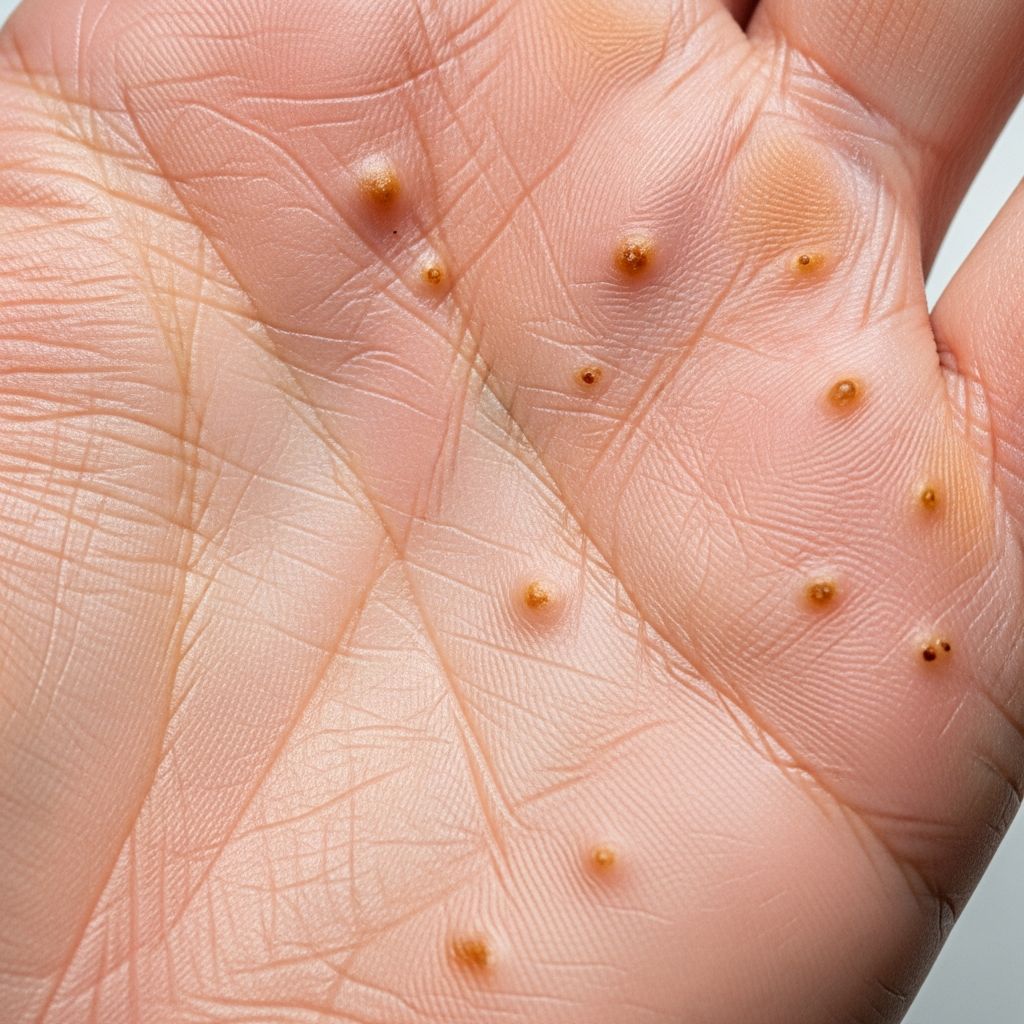
Punctate palmoplantar keratoderma (PPK) is a rare genetic skin disorder characterized by the development of numerous small, hyperkeratotic papules on the palms and soles, typically appearing in late childhood or adolescence.
What is punctate palmoplantar keratoderma?
Punctate PPK, also known as punctate-type palmoplantar keratoderma, belongs to a heterogeneous group of palmoplantar keratodermas marked by tiny bumps of thickened skin specifically on the palms and soles. Unlike diffuse or focal forms, punctate PPK features discrete, pinhead-sized hyperkeratotic lesions that are irregularly distributed. These papules range from 0.1 to 2 mm in diameter and may have central indentations or depressions, giving them a distinctive appearance. The condition is primarily hereditary, following an autosomal dominant inheritance pattern, though sporadic cases occur.
The disorder arises from abnormal keratinization in the epidermis, leading to hyperproliferation of keratinocytes in the basal layer. Lesions often worsen with age, mechanical irritation, or pressure, coalescing into larger plaques at high-friction sites like weight-bearing areas of the soles. While generally benign, punctate PPK can cause discomfort, pain, and functional impairment, particularly when affecting gait or grip.
Who gets punctate palmoplantar keratoderma?
Punctate PPK affects individuals of all ages but typically manifests in late childhood to early adolescence, with onset between 12 and 30 years reported in most cases. There is no sex predilection, and it occurs worldwide across ethnic groups, though certain subtypes show population-specific patterns, such as keratosis punctata of the palmar creases in individuals of African descent.
Family history is common due to autosomal dominant inheritance, conferring a 50% risk to offspring of affected parents. Variable expressivity means symptoms range from mild papules to severe confluent hyperkeratosis among family members. Sporadic cases without family history may represent de novo mutations or acquired forms linked to underlying malignancies.
What causes punctate palmoplantar keratoderma?
The primary cause is genetic mutations disrupting skin cell turnover. For punctate PPK type 1 (PPKP1), also called Buschke-Fischer-Brauer disease, mutations in the AAGAB gene on chromosome 15q22.33-q23 are causative. The AAGAB gene encodes p34, an adaptor protein in the clathrin-mediated endocytosis pathway. Mutations prolong the half-life of receptor tyrosine kinases in keratinocytes, promoting hyperproliferation and hyperkeratosis.
Other implicated genes include COL14A1 on 8q24.12, though evidence is preliminary from limited families. Subtypes have distinct genetics: type 2 (spiny keratoderma) lacks a specific gene but associates with internal malignancies in sporadic cases; type 3 (acrokeratoelastoidosis) involves marginal papules possibly linked to elastin abnormalities.
Acquired punctate keratodermas may signal paraneoplastic syndromes, associating with carcinomas (breast, lung, colon, renal), lymphoproliferative disorders, melanoma, or other conditions like HIV, tuberculosis, or hyperlipoproteinemia.
What are the clinical features of punctate palmoplantar keratoderma?
Core features include multiple small (1-5 mm), hard, hyperkeratotic papules scattered over the palms and soles, often with central umbilication or dells. Lesions are more prominent on pressure points, coalescing into yellowish plaques that may fissure or cause pain on walking.
- Palms: Discrete papules, sometimes confined to creases in specific variants.
- Soles: Denser distribution, painful hyperkeratosis over heels and metatarsals.
- Progression: Increases in number and size with age; mechanical trauma exacerbates.
- Associated symptoms: Pain, pruritus, hyperhidrosis (in type 3), secondary infections, nail dystrophy, or athlete’s foot.
Related Stories



Rare extracutaneous features in subtypes include guttate hypopigmentation (Cole disease), tendon calcifications, spastic paralysis, or color vision defects.
Subtypes of punctate palmoplantar keratoderma
Punctate PPK encompasses several subtypes with overlapping but distinct features:
| Subtype | Aliases | Key Features | Onset | Associations |
|---|---|---|---|---|
| Type 1 | Buschke-Fischer-Brauer, keratosis punctata palmaris et plantaris | Diffuse hyperkeratotic papules on palms/soles | Childhood-adolescence | AAGAB mutations; rare malignancies |
| Type 2 | Spiny keratoderma, music box spine | Tiny spines; sporadic = malignancies | Childhood (hereditary); adult (sporadic) | Carcinomas, renal disease |
| Type 3 | Acrokeratoelastoidosis (AKE), focal acral hyperkeratosis | Marginal shiny papules on borders/digits | Adolescence-adulthood | Hyperhidrosis |
| Palmar creases variant | – | Papules in creases; African descent | Variable | – |
| Cole disease | – | PPK + guttate hypopigmentation | Childhood | Calcifications |
Diagnosis of punctate palmoplantar keratoderma
Diagnosis is clinical, based on characteristic papules, family history, and exclusion of mimics like warts, porokeratosis, or arsenical keratosis. Dermoscopy reveals central depressions in hyperkeratotic plugs.
Histology shows non-specific hyperkeratosis, hypergranulosis, and acanthosis with a central epidermal invagination. Genetic testing confirms AAGAB or other mutations in suspected hereditary cases.
Differential includes myrmecia warts, focal acral hyperkeratosis, and paraneoplastic keratoderma; biopsy and screening for malignancy are warranted in late-onset or atypical cases.
Management of punctate palmoplantar keratoderma
No cure exists; treatment is symptomatic and preventive.
- Emollients: Urea (20-40%) or salicylic acid creams daily to soften keratin.
- Keratolytics: Topical salicylic acid (6-17%), lactic acid, or ammonium lactate.
- Retinoids: Oral acitretin (10-25 mg/day) for severe cases; topical tretinoin.
- Mechanical: Paring, dermabrasion, or laser ablation for thick plaques.
- Supportive: Orthotics for painful soles, antifungals for infections.
In malignancy-associated cases, treat the underlying cancer. Genetic counseling is advised for families.
Frequently Asked Questions (FAQs)
Is punctate palmoplantar keratoderma contagious?
No, it is a genetic condition and not transmissible.
Does punctate PPK increase cancer risk?
Rarely in type 1; more in sporadic type 2, warranting screening in late-onset cases.
Can punctate PPK be cured?
No, but symptoms are manageable with consistent topical therapy.
What is the prognosis for punctate palmoplantar keratoderma?
Chronic but non-life-threatening; quality of life improves with treatment.
Should children with family history be tested?
Genetic counseling recommended; testing if symptomatic.
References
- Punctate palmoplantar keratoderma type 1 — Orphanet. 2023. https://www.orpha.net/en/disease/detail/79501
- Punctate Keratoderma — Consultant360. 2022-10-01. https://www.consultant360.com/content/punctate-keratoderma
- Punctate Keratoderma: Symptoms, Types and Treatment — Indiana University School of Medicine Dermatology Trials. 2024. https://dermatrials.medicine.iu.edu/blogs/understanding-punctate-keratoderma
- Punctate palmoplantar keratoderma — VisualDx. 2025. https://www.visualdx.com/visualdx/diagnosis/punctate+palmoplantar+keratoderma?diagnosisId=51803&moduleId=101
- Punctate Keratoderma & Myrmecia — Dermatology Advisor. 2023. https://www.dermatologyadvisor.com/ddi/punctate-keratoderma-myrmecia/
Similar Articles








Read full bio of Sneha Tete