Pustular Psoriasis of Pregnancy: Causes, Diagnosis, and Treatment
Understanding pustular psoriasis of pregnancy: clinical features, diagnostic approaches, and evidence-based treatment strategies.
Pustular Psoriasis of Pregnancy: Clinical Overview
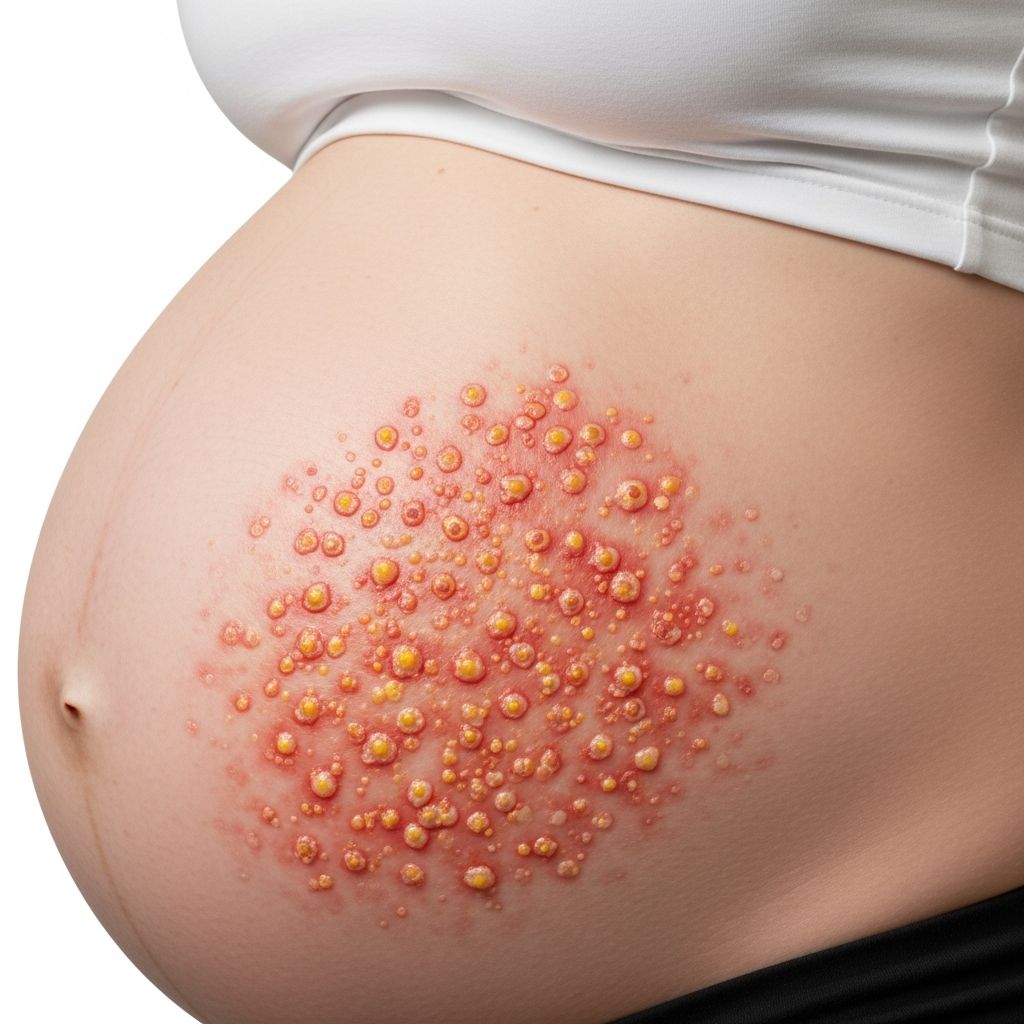
Pustular psoriasis of pregnancy (PPP), also known as impetigo herpetiformis, is a severe inflammatory dermatosis characterized by widespread pustular eruptions that typically emerge during pregnancy. This condition represents a significant clinical challenge due to its potential to impact both maternal and fetal health if left untreated. Unlike chronic plaque psoriasis, pustular psoriasis of pregnancy manifests with distinctive pustular formations rather than thick, scaly plaques, making accurate diagnosis and prompt treatment essential for optimal pregnancy outcomes.
The condition is considered a controversial entity with evolving understanding of its etiology and pathogenesis. Early recognition, detailed clinical description, and histopathologic confirmation are critical components of accurate diagnosis and prognostic assessment. Collaboration between dermatologists, obstetricians, and pediatricians ensures comprehensive management and improved quality of life for affected pregnant women.
Clinical Presentation and Manifestations
Timing and onset characteristics: Pustular psoriasis of pregnancy typically presents in the first or third trimester, though the exact timing can vary considerably among patients. The condition may persist through the postpartum period but characteristically resolves after delivery, often with remarkable speed. However, recurrence with potentially increased severity is documented in consecutive pregnancies, creating counseling challenges for affected women.
Morphologic features: The classic presentation includes erythematous to hyperpigmented plaques with distinctive pustular rings and central erosions. These lesions commonly affect intertriginous regions—areas where skin surfaces are in contact—including the axillae, groin, breasts, and skin folds. The face, trunk (chest, back, and abdomen), and extremities can also be involved in generalized presentations. Individual plaques typically range from 3×3 cm to 5×6 cm in size, though larger coalescent areas may develop.
Associated systemic features: Patients often experience significant accompanying symptoms, including pain, burning sensations, and pruritus (itching). Constitutional symptoms such as intermittent fever may occur, with lesions characteristically exacerbating during temperature spikes. In severe cases, widespread pustular coalescence and desquamation occur, potentially affecting large body surface areas.
Differential Diagnosis
Several dermatologic conditions must be distinguished from pustular psoriasis of pregnancy to ensure appropriate management:
- Dermatitis herpetiformis
- Acute generalized exanthematous pustulosis (AGEP)
- Polymorphic eruption of pregnancy
- Atopic eruption of pregnancy
- Subcorneal pustular dermatosis
- Gestational pemphigoid
Clinical assessment combined with histopathologic evaluation aids in distinguishing PPP from these alternative diagnoses. Skin biopsy findings demonstrating subcorneal or intraepidermal pustules with inflammatory infiltrates support PPP diagnosis.
Diagnostic Approach
Clinical examination and history: Comprehensive evaluation begins with detailed history regarding symptom onset, progression, and relationship to pregnancy timing. Physical examination documenting lesion distribution, morphology, and extent of body surface area involvement is essential. Previous pregnancy history, including similar manifestations or symptom severity, provides valuable prognostic information.
Laboratory and microbiologic assessment: Importantly, despite their pustular appearance, the pustules of PPP are sterile—bacterial cultures remain negative. However, systemic laboratory abnormalities frequently accompany this condition. Close monitoring of electrolytes, calcium, vitamin D, and albumin levels is necessary, with supplementation provided as needed.
Histopathologic confirmation: Skin biopsy remains the gold standard for definitive diagnosis, revealing subcorneal or intraepidermal pustule formation with variable inflammatory infiltrates. This confirmation is particularly valuable when clinical presentation is atypical or differential diagnoses remain uncertain.
Related Stories



Treatment Approaches During Pregnancy
First-Line Therapy: Systemic Corticosteroids
Corticosteroids are the established treatment of choice for pustular psoriasis of pregnancy. These potent immunosuppressive agents effectively suppress disease activity and typically produce rapid clinical improvement in most patients.
Dosing considerations: Treatment intensity depends on disease severity:
- Mild cases: Lower-dose corticosteroids, 15–30 mg/day of prednisone or prednisolone
- Moderate cases: Prednisolone 15–30 mg/day
- Severe cases: Higher doses ranging from 30–80 mg/day
Most patients require continuation of oral corticosteroid therapy until parturition, with very gradual tapering given the high risk of disease flare. Abrupt discontinuation or overly rapid dose reduction frequently precipitates symptom recurrence and disease exacerbation.
Safety profile in pregnancy: While systemic corticosteroids suppress the hypothalamic-pituitary axis and disrupt normal hormonal balance, potentially affecting placental function and nutrient supply to the developing fetus, clinical experience demonstrates safety when used appropriately. Case reports document normal fetal development and uneventful deliveries in patients treated with systemic corticosteroids. Caution regarding higher doses is warranted, as these may reduce fetal reactivity on fetal monitoring.
Postpartum breastfeeding considerations: Uncertain effects on infant exposure necessitate careful counseling regarding breastfeeding during corticosteroid therapy.
Cyclosporine: Second-Line and Combination Therapy
Cyclosporine has historically been reserved for severe or recalcitrant PPP cases but was designated by the National Psoriasis Foundation medical board in 2012 as an appropriate first-line therapy for the condition. This immunosuppressive agent offers distinct advantages in combination regimens.
Clinical applications: Cyclosporine, a category C medication in pregnancy, demonstrates particular benefit in moderate to severe disease. Multiple published cases report successful cyclosporine use in pregnant patients with PPP. The combination of steroids with cyclosporine is superior to monotherapy because both agents promptly decrease disease activity and provide better maternal and fetal outcomes.
Dosing and duration: Typical dosing involves initial administration with gradual reduction as clinical improvement occurs. Case studies document continuation through pregnancy with doses reduced to maintenance levels (such as 50 mg twice daily) until delivery. Cyclosporine can be given safely when the risk-benefit ratio is carefully weighed.
Adjunctive and Alternative Therapies
Phototherapy: Narrow-band ultraviolet B (Nb-UVB) radiation is considered safe during pregnancy, in contrast to PUVA (psoralen plus UVA), which is traditionally reserved for the postpartum period. Nb-UVB in combination with oral corticosteroids has demonstrated effectiveness in clearing recurrent PPP in multiparous women during subsequent pregnancies.
Granulocyte and monocyte adsorptive apheresis (GMA): This extracorporeal immunomodulatory therapy suppresses TNF-α and IL-1β production by monocytes. Successful GMA therapy has been documented in PPP cases, including one patient who underwent 14 cycles during pregnancy, resulting in improved fetal intrauterine growth and healthy delivery at 34 weeks gestation.
Antibiotic therapy: Despite the sterile nature of PPP pustules, some experts recommend concurrent antibiotic administration, particularly cephalosporins, in conjunction with systemic corticosteroids. This supportive approach may reduce secondary bacterial colonization risk.
Biologic agents: Infliximab and other biologic immunosuppressants have been employed in PPP management, representing additional treatment options for refractory disease.
Postpartum Management
Additional therapeutic options become available after pregnancy completion. Methotrexate, acitretin, and PUVA phototherapy—contraindicated during pregnancy—may be utilized postpartum. A case documenting complete lesion clearance following 8 weeks of methotrexate at 20 mg/week demonstrates efficacy of this approach. Similarly, acitretin initiated at 60 mg/day in combination with cephalosporin has successfully managed severe postpartum PPP flares.
Maternal and Fetal Monitoring
Both mother and fetus require close surveillance throughout pregnancy and postpartum. Obstetric monitoring includes baseline ultrasonography to confirm fetal viability and normal development. Fetal Doppler studies assess placental perfusion and detect intrauterine growth retardation, which may necessitate earlier delivery.
Maternal laboratory monitoring should encompass electrolyte levels, renal function, hepatic function, calcium, vitamin D, and albumin concentrations. These parameters guide supplementation decisions and inform medication adjustments.
Frequently Asked Questions
Q: Is pustular psoriasis of pregnancy hereditary?
A: While pustular psoriasis of pregnancy has been documented in subsequent pregnancies of the same woman, familial clustering is not commonly reported. The condition is considered a pregnancy-related dermatosis rather than a hereditary disorder, though genetic predisposition to psoriasis may play a contributing role.
Q: Can pustular psoriasis of pregnancy harm the baby?
A: Untreated severe PPP can impact fetal health; however, prompt initiation of appropriate therapy with systemic corticosteroids and/or cyclosporine has been associated with uneventful deliveries and normal fetal outcomes. Close fetal monitoring throughout pregnancy is essential.
Q: Will pustular psoriasis of pregnancy disappear after delivery?
A: Yes, pustular psoriasis of pregnancy typically resolves quickly after delivery. However, recurrence with potentially increased severity may occur in subsequent pregnancies, making proper counseling important for family planning decisions.
Q: What is the safest treatment during pregnancy?
A: Systemic corticosteroids, particularly prednisone and prednisolone at appropriate doses, are the first-line treatment of choice during pregnancy. Cyclosporine is also considered safe and increasingly used, especially in combination with corticosteroids for moderate to severe disease.
Q: Are topical treatments effective for pustular psoriasis of pregnancy?
A: Topical corticosteroid creams and synthetic vitamin D preparations may initiate treatment plans, but severe cases typically require systemic therapy. Generalized pustular psoriasis of pregnancy usually necessitates oral medications for adequate control.
Clinical Counseling and Patient Support
Comprehensive counseling is crucial throughout pregnancy to minimize mental stress and anxiety related to PPP diagnosis and management. Patients should understand that this condition, while serious, is manageable with appropriate medical supervision and that excellent fetal outcomes are achievable with prompt, effective treatment. Clear communication regarding medication safety, potential side effects, and expected disease course helps patients make informed decisions about their pregnancy care.
Multidisciplinary collaboration between dermatologists, obstetricians, and pediatricians optimizes management outcomes and improves overall quality of life for pregnant women with pustular psoriasis.
References
- Pustular Psoriasis of Pregnancy Successfully Managed with Steroid and Cyclosporine: A Case Report — International Journal of Preventive and Geriatric Dermatology. 2024. https://ijpgderma.org/pustular-psoriasis-of-pregnancy-successfully-managed-with-steroid-and-cyclosporine-a-case-report/
- Pustular Psoriasis of Pregnancy: Current Perspectives — National Center for Biotechnology Information (NIH). https://pmc.ncbi.nlm.nih.gov/articles/PMC5834178/
- Pustular Psoriasis: Treatment — American Academy of Dermatology. https://www.aad.org/public/diseases/psoriasis/treatment/medications/pustular
Similar Articles








Read full bio of medha deb