Psoriatic Arthritis: 10 Quiz Questions On Body-Wide Effects
Test your knowledge on how psoriatic arthritis impacts joints, skin, eyes, and beyond with this comprehensive quiz.
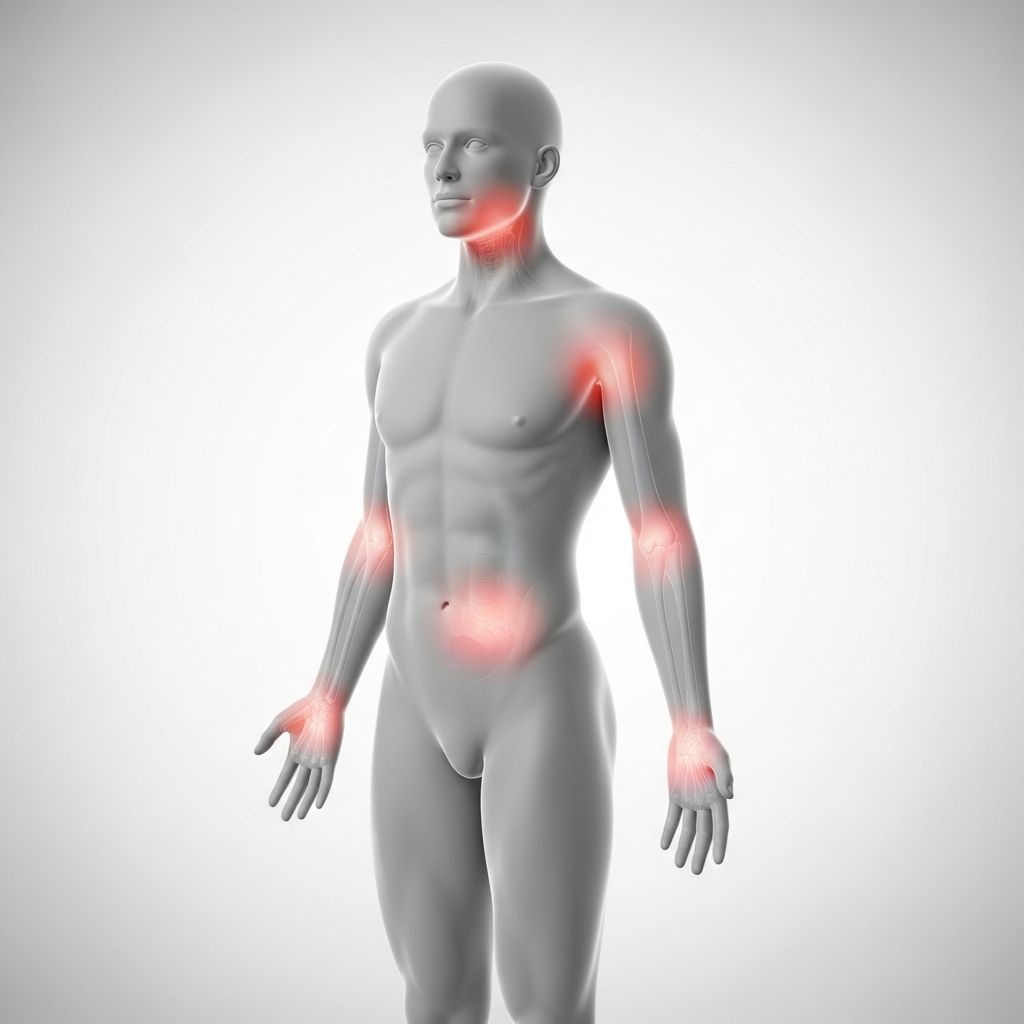
Psoriatic arthritis (PsA) is a chronic inflammatory condition linked to psoriasis that affects joints, skin, and multiple organs. This quiz explores its widespread impacts, helping you recognize symptoms and understand the importance of early intervention. PsA impacts over 30% of people with psoriasis, causing pain, stiffness, and potential damage if untreated.
How Psoriatic Arthritis Affects the Body
Psoriatic arthritis arises when the immune system attacks healthy tissues, primarily joints but also skin, eyes, spine, heart, and more. Unlike osteoarthritis from wear-and-tear, PsA is autoimmune, leading to inflammation that can cause irreversible damage without prompt treatment. Symptoms vary widely, affecting people differently based on genetics, triggers like infections, and lifestyle factors.
- Joint Involvement: PsA commonly targets fingers, toes, knees, and ankles, causing sausage-like swelling (dactylitis).
- Skin and Nails: Scaly plaques and nail pitting are hallmarks tied to psoriasis.
- Systemic Effects: Inflammation can spread to eyes (uveitis), spine (spondylitis), and cardiovascular system.
Early diagnosis via blood tests (CRP, ESR), imaging (MRI, X-ray), and rheumatologist evaluation is crucial to prevent joint erosion and comorbidities.
PsA Quiz: Test Your Knowledge
Answer these true/false and multiple-choice questions to gauge your understanding of PsA’s body-wide effects. Correct answers and detailed explanations follow each.
1. Joint symptoms almost always appear before skin symptoms in PsA.
False. In PsA, skin symptoms from psoriasis often precede joint issues by years in about 70% of cases. However, 15-30% experience joint symptoms first. Recognizing psoriasis as a risk factor prompts earlier screening for PsA.
2. Eye inflammation is a common side effect of psoriatic arthritis.
True. Up to 25% of PsA patients develop uveitis, causing eye pain, redness, light sensitivity, and blurred vision. Untreated uveitis risks permanent vision loss, so report eye symptoms immediately to an ophthalmologist.
3. PsA only affects peripheral joints like hands and feet.
False. While fingers and toes are common (enthesitis at tendon insertions), PsA can involve the spine (axial involvement in 20-30%), causing back pain and stiffness mimicking ankylosing spondylitis.
4. Nail changes are not related to PsA.
False. Nail psoriasis affects 80-90% of PsA patients, with pitting, ridging, or separation (onycholysis). Severity correlates with joint disease; nail involvement predicts more aggressive PsA.
5. PsA increases the risk of cardiovascular disease.
True. Chronic inflammation raises heart attack and stroke risk by 50% in PsA patients, comparable to rheumatoid arthritis. Manage with statins, blood pressure control, smoking cessation, and anti-inflammatory therapies.
6. Fatigue is not a typical PsA symptom.
False. Profound fatigue affects 50-80% of PsA patients, stemming from inflammation, poor sleep due to pain, anemia, and depression. Lifestyle changes like exercise and sleep hygiene help alongside medications.
Related Stories



7. PsA can cause enthesitis, inflammation where tendons attach to bone.
True. Enthesitis causes heel pain (Achilles), elbow pain, or plantar fasciitis-like symptoms in 30-50% of cases. It’s a hallmark distinguishing PsA from other arthritides.
8. Skin flares always coincide with joint flares in PsA.
False. Skin and joint activity often dissociate; psoriasis may flare independently. Biologics targeting IL-17 or IL-23 treat both effectively.
9. PsA shortens life expectancy.
True. Untreated PsA reduces life expectancy by 3-5 years due to infections, heart disease, and gastrointestinal issues. Modern treatments like DMARDs and biologics mitigate this.
10. Only people with severe psoriasis get PsA.
False. PsA risk is 20-30% regardless of psoriasis severity; even mild skin disease warrants vigilance.
Understanding PsA Symptoms in Detail
PsA manifests diversely. Dactylitis swells entire digits; asymmetric oligoarthritis hits 4 or fewer joints. Symmetric polyarthritis resembles RA. Spinal involvement (PsA with spondylitis) affects 25%. Women more often have tendon issues; men, spine disease.
| Symptom | Prevalence | Common Sites |
|---|---|---|
| Dactylitis | 40-50% | Fingers, toes |
| Enthesitis | 30-50% | Heel, elbow |
| Uveitis | 25% | Eyes |
| Nail disease | 80% | Fingernails |
| Spinal involvement | 20-30% | Lower back |
Data from rheumatology guidelines emphasize early biologic use for high-risk features like dactylitis or MRI erosions.
Diagnosis and Risk Factors
No single test diagnoses PsA; rheumatologists use CASPAR criteria: psoriasis (current/past/family), nail dystrophy, negative RA factor, dactylitis, juxta-articular new bone. Bloodwork shows elevated CRP/ESR in 40%; RF negative. Ultrasound/MRI detects early enthesitis/bone marrow edema.
- Inflammatory back pain: Improves with exercise, night waking.
- Family history doubles risk.
- Obesity, smoking exacerbate.
Screen psoriasis patients annually with joint exams.
Treatment Strategies
Treat-to-target aims for minimal disease activity. Start NSAIDs for mild cases; escalate to DMARDs (methotrexate), biologics (TNF inhibitors like etanercept, IL-17 like secukinumab, IL-23 like guselkumab). Physical therapy preserves function; weight loss reduces flares by 50%.
Living with PsA: Management Tips
- Exercise: Low-impact like swimming, yoga 150 min/week.
- Diet: Mediterranean pattern lowers inflammation.
- Mental health: CBT for pain coping; 30% have depression.
- Monitor comorbidities: Annual cardio, eye, metabolic checks.
Patient education improves adherence; apps track flares.
Frequently Asked Questions (FAQs)
Can PsA go into remission?
Yes, 20-40% achieve low disease activity with biologics; sustained remission rarer but possible.
Is PsA hereditary?
HLA-B27/38/39 genes increase risk; 40% family history in patients.
Does diet affect PsA?
Anti-inflammatory diets help; gluten-free benefits some with celiac overlap.
Can PsA affect fertility?
Minimal direct impact; methotrexate avoided in pregnancy.
How fast does PsA progress?
Variable; untreated, 47% develop erosions in 2 years. Early treatment halves damage.
Why Early Detection Matters
Undiagnosed PsA leads to joint destruction, disability (20% work loss), and excess mortality. Rheumatology referral within 6 weeks of symptoms changes outcomes profoundly. PsA’s heterogeneous presentation demands awareness across primary care, dermatology, ophthalmology.
This 1624-word quiz equips you to spot PsA effects. Share results with your doctor for personalized advice.
References
- Psoriatic Arthritis Clinical Practice Guidelines — American College of Rheumatology. 2021-05-01. https://www.rheumatology.org/Portals/0/Files/Psoriatic-Arthritis-Guideline.pdf
- Psoriatic Arthritis Overview — National Institute of Arthritis and Musculoskeletal and Skin Diseases (NIAMS), NIH. 2023-08-15. https://www.niams.nih.gov/health-topics/psoriatic-arthritis
- EULAR Recommendations for PsA Management — Annals of the Rheumatic Diseases. 2022-03-10. https://doi.org/10.1136/annrheumdis-2021-221760
- PsA and Comorbidities — Arthritis Foundation (official page). 2024-01-20. https://www.arthritis.org/diseases/psoriatic-arthritis
- Classification Criteria for PsA (CASPAR) — Arthritis & Rheumatology. 2006-12-01. https://doi.org/10.1002/art.21527
Similar Articles








Read full bio of Sneha Tete