Radiographic Investigations In Melanoma: Essential Imaging Guide
Essential imaging guide for staging, surveillance, and management of melanoma skin cancer.
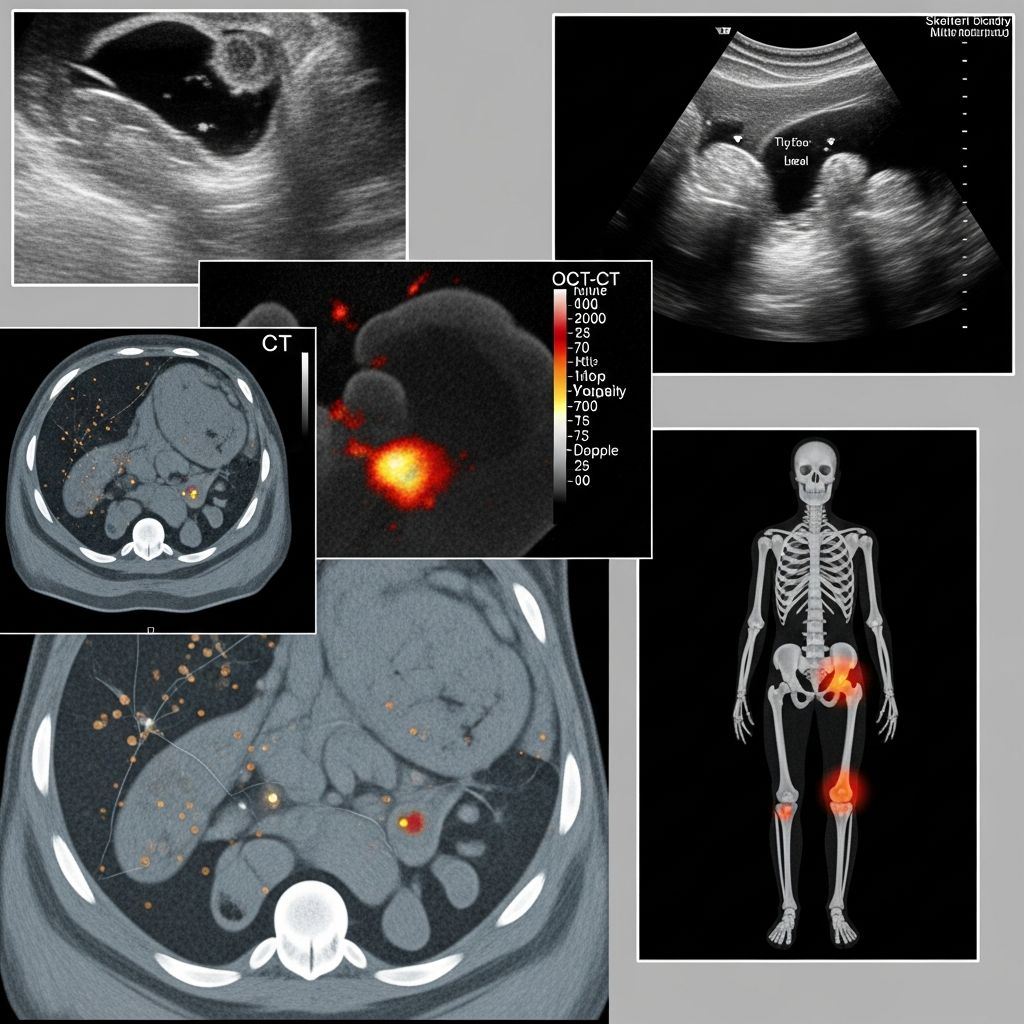
Radiographic investigations play a critical role in the management of melanoma, particularly for staging, detecting metastasis, and surveillance in high-risk patients. These imaging modalities help determine the extent of disease spread and guide treatment decisions.
What are radiographic investigations?
Radiographic investigations refer to imaging techniques that use X-rays, ultrasound, CT, MRI, PET, or combinations thereof to visualize internal structures. In melanoma, they assess lymph node involvement, distant metastases, and recurrence risk. Not all melanomas require imaging; it is reserved for higher-risk cases to avoid unnecessary radiation exposure.
Staging investigations
Melanoma staging follows the American Joint Committee on Cancer (AJCC) 8th edition guidelines. Imaging is recommended based on tumour thickness (Breslow depth), ulceration, and nodal status. For stage I-IIA (T1a-T2a), no routine imaging is needed. Higher stages warrant CT chest/abdomen/pelvis (CAP), PET-CT, or MRI brain.
- Low-risk melanomas (T1a-T3a without high-risk features): Clinical examination and ultrasound suffice; no cross-sectional imaging.
- Intermediate-risk (T3b/T4 or ulcerated): CT CAP or PET-CT for staging.
- High-risk (Stage IIIC/IIID): PET-CT plus MRI brain essential to detect distant spread.
Sentinel lymph node biopsy (SLNB) integration
SLNB identifies microscopic nodal spread using radioactive tracer. Positive SLNB prompts further imaging like CT or PET-CT. In New Zealand, SLNB is recommended for melanomas >1mm thick or 0.75-1mm with high-risk features.
Surveillance imaging
Post-treatment surveillance detects recurrence. Guidelines vary by stage:
- Stage I-IIA: Clinical exams every 3-6 months, no routine imaging.
- Stage IIB-IIC: Ultrasound of nodal basins; CT/MRI if suspicious.
- Stage III: Six-monthly ultrasound ± CT scans coordinated in secondary care.
Chest X-rays are not recommended due to low sensitivity (7.7-48%) and false positives.
Specific imaging modalities
Ultrasound
Ultrasound is first-line for nodal basins. Malignant features include longitudinal:transverse ratio <2mm, loss of central hilum, peripheral vascularity. It detects recurrence or new melanoma not identified by self-exams.
CT scan
CT provides 3D images using X-rays, superior for detecting small cancers vs. plain X-ray. Used for chest/abdomen/pelvis in staging T3b+ tumours.
PET-CT
PET-CT combines PET (radioactive glucose uptake in cancer cells) with CT anatomy. Highly sensitive for metastases, recommended for stage IIIC-IV.
MRI
MRI excels for brain metastases or head/neck tumours. Recommended for stage IIIC/D.
Radiographic investigations according to stage
| T Stage | N Stage | M Stage | AJCC Stage | Recommended Imaging |
|---|---|---|---|---|
| T1a-T3a | N0 | M0 | IIA-IIB | Ultrasound nodal basins |
| T3b/T4a | Any N ≥N1 | M0 | IIIC | CT CAP or PET-CT, MRI brain |
| T4b | N1a-N2c | M0 | IIIC | CT CAP or PET-CT, MRI brain |
| T4b | N3a/b/c | M0 | IIID | CT CAP or PET-CT, MRI brain |
| Any T | Any N | M1 | IV | PET-CT full body, MRI brain |
Table adapted from staging guidelines; imaging escalates with risk.
Role in treatment planning
Imaging informs surgery margins, adjuvant therapy, and radiotherapy. For brain/bone metastases, radiation follows imaging confirmation. Positive imaging may lead to systemic therapy.
Risks and considerations
Radiation exposure from CT/PET-CT is a concern; limit to high-risk cases. False positives necessitate biopsies. Multidisciplinary review optimizes imaging use.
Frequently Asked Questions (FAQs)
Who needs radiographic investigations for melanoma?
Patients with melanomas ≥T3b (Breslow >2mm/ulcerated), stage III+, or clinical suspicion of metastasis.
Is routine chest X-ray recommended in surveillance?
No, due to low sensitivity and radiation risk. Prefer ultrasound and targeted CT/MRI.
Related Stories



What does PET-CT detect in melanoma?
Glucose-avid metastases in lymph nodes, lungs, liver, brain with high sensitivity.
How often is surveillance imaging done?
Stage-dependent: ultrasound 3-6 monthly for stage III; CT coordinated per guidelines.
Does SLNB replace imaging?
No, SLNB stages nodes; imaging assesses distant spread.
Conclusion
Radiographic investigations are pivotal for optimal melanoma outcomes, tailored to risk stratification. Early detection via targeted imaging improves survival.
References
- Melanoma Skin Cancer: Images, Diagnosis, and Treatment — DermNet NZ. 2023. https://dermnetnz.org/topics/melanoma
- Melanoma Comprehensive Guide — Skintel. 2024. https://skintel.co.nz/articles/melanoma/
- Melanoma: post-treatment follow-up and surveillance — bpacnz. 2021-06-01. https://bpac.org.nz/2021/melanoma-followup.aspx
- Diagnosing melanoma skin cancer — Cancer Society NZ. 2024. https://www.cancer.org.nz/cancer/types-of-cancer/melanoma-of-the-skin/diagnosing-melanoma-skin-cancer/
- Cutaneous Melanoma Staging (AJCC 8th Edition) — American Joint Committee on Cancer. 2018. https://www.ncbi.nlm.nih.gov/books/NBK481869/
Similar Articles








Read full bio of Sneha Tete