Raltegravir For HIV: Uses, Dosing, Side Effects Guide
Comprehensive guide to raltegravir (Isentress), an integrase inhibitor for HIV treatment in adults and children.
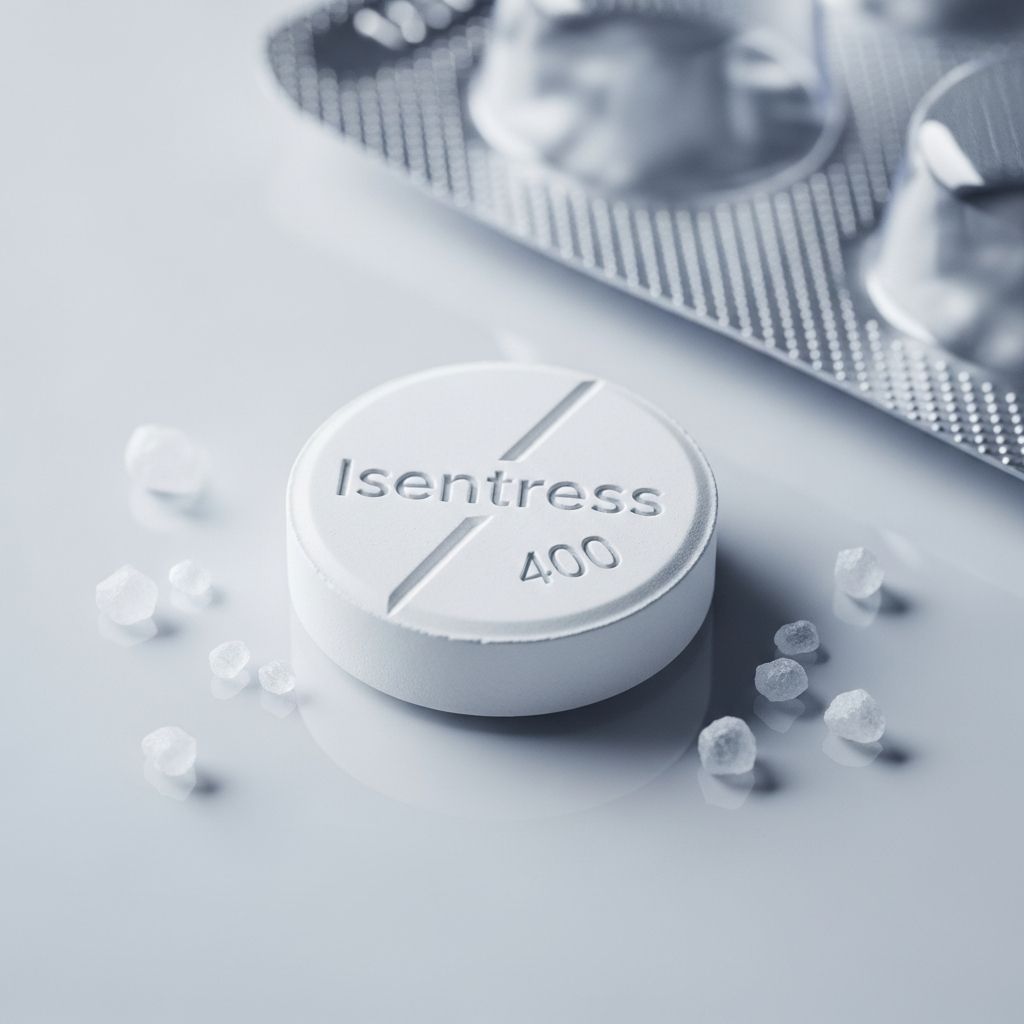
Raltegravir, sold under the brand name Isentress, is an integrase strand-transfer inhibitor (INSTI) used in combination with other antiretroviral agents to treat HIV-1 infection in adults and children. It works by blocking HIV’s integrase enzyme, preventing the virus from integrating its genetic material into human cells, thereby reducing viral replication and helping maintain immune function.
About raltegravir
Raltegravir represents a cornerstone in modern HIV management as the first approved integrase inhibitor. Developed by Merck & Co., it received FDA approval on October 12, 2007, initially for treatment-experienced adults, and later expanded for treatment-nae patients and pediatric use. Unlike nucleoside reverse transcriptase inhibitors or protease inhibitors, raltegravir targets a unique step in the HIV lifecycle: strand transfer during proviral DNA integration. This mechanism offers potent activity against multidrug-resistant HIV strains, making it valuable in salvage therapy.
The drug is metabolized primarily via glucuronidation by UGT1A1 enzyme, with minimal cytochrome P450 involvement, resulting in fewer drug-drug interactions compared to older antiretrovirals. Available formulations include 400 mg film-coated tablets for adults, chewable tablets (25 mg, 100 mg), and oral suspension powder for pediatrics, ensuring flexibility across age groups. Raltegravir does not cure HIV or prevent transmission; patients must continue safer sex practices and adhere to therapy to suppress viral load.
Clinical approval stemmed from pivotal trials like BENCHMRK 1/2 for experienced patients and STARTMRK for nae patients, demonstrating superior or equivalent viral suppression versus standards like efavirenz. Once-daily 1200 mg dosing (Isentress HD) was approved in 2019 for adults, improving adherence.
Before taking raltegravir
Allergy
Do not take raltegravir if allergic to it or any ingredients. Rare hypersensitivity reactions, including rash, fever, and organ dysfunction, have occurred; discontinue immediately if suspected.
Pregnancy and breastfeeding
Raltegravir is Pregnancy Category C; animal studies show no teratogenicity, but human data are limited. The CDC recommends it as part of preferred regimens for pregnant individuals due to efficacy and safety profile. It crosses the placenta, achieving therapeutic fetal levels. Breastfeeding is not recommended in HIV-positive individuals in high-resource settings to avoid transmission, though low raltegravir levels in breast milk pose minimal risk.
Babies and children
Approved for children 62 years weighing 62 10 kg. Dosing is weight-based using chewable tablets or suspension for younger patients; film-coated tablets for 62 25 kg. Safety and efficacy established down to 2 years; not studied in infants <2 years.
Taking other medicines and herbal supplements
Raltegravir has low interaction potential but adjust dose to 800 mg twice daily with rifampin (strong UGT1A1 inducer). Avoid strong inducers like rifapentine. No significant interactions with PPIs, H2 blockers, or common antiretrovirals, but monitor with atazanavir/tenofovir due to minor AUC changes. Herbal supplements like St. John’s wort may reduce efficacy via induction; consult a doctor.
Commonly combined with tenofovir/emtricitabine or abacavir/lamivudine in initial regimens.
Related Stories



Conditions to look out for
Inform your doctor of phenylketonuria (PKU) due to phenylalanine in chewable tablets/suspension. Use caution in severe liver impairment (Child-Pugh C), though no dose adjustment needed; not studied in decompensated cirrhosis. Monitor muscle enzyme elevations (rhabdomyolysis rare). No renal adjustment required.
How and when to take raltegravir
Dosage
Adults: 400 mg film-coated tablet orally twice daily. With rifampin: 800 mg (two 400 mg tablets) twice daily. Isentress HD: 1200 mg (two 600 mg tablets) once daily.
Children/Adolescents (62 2 years, 62 10 kg):
| Body Weight (kg) | Chewable Tablets | Suspension (mg) |
|---|---|---|
| 10 to <14 | 40 mg twice daily | 100 mg twice daily |
| 14 to <20 | 60 mg twice daily | 150 mg twice daily |
| 20 to <28 | 80 mg twice daily | 200 mg twice daily |
| 28 to <40 | 100 mg twice daily | 250 mg twice daily |
| 6240 | 300 mg twice daily | 300 mg twice daily (or 400 mg tablets) |
May transition to 400 mg tablets at 62 25 kg. Doses based on FDA labeling for twice-daily regimens.
How to take it
Swallow film-coated tablets whole; no food restrictions. Chewable tablets must be chewed, not swallowed whole; may double up if needed. Suspension: mix with water to 10 mL volume per dose, stable 30 min; discard unused. Take with or without food.
If you forget a dose
Take as soon as remembered unless near next dose; do not double. Missing doses risks resistance; adherence >95% optimal.
Common questions about raltegravir
How does raltegravir work?
It inhibits HIV-1 integrase, preventing 3′-end strand transfer of viral DNA into host genome.
When will I feel better?
Viral load drops within weeks; immune recovery over months. Continue lifelong.
Is raltegravir safe long-term?
Yes, with favorable safety; monitor for rare effects like myopathy.
Side-effects
Raltegravir is generally well-tolerated; most adverse events mild. Common (>10%): insomnia, headache, nausea, fatigue, diarrhea.
Serious side effects
- Hypersensitivity: Rash, blistering, hepatitis; stop immediately.
- Musculoskeletal: Myopathy, rhabdomyolysis (CK elevation); monitor symptoms.
- Immune Reconstitution: IRIS in advanced patients.
- Infection risk: Maintain viral suppression.
Lab abnormalities: elevated CK (9%), AST/ALT. No dyslipidemia or QT prolongation.
Reporting side effects
Report to prescriber or FDA MedWatch. In UK, Yellow Card scheme.
Frequently asked questions
Q: Can raltegravir be used as first-line therapy?
A: Yes, approved for treatment-nae adults based on STARTMRK trial showing non-inferiority to efavirenz.
Q: What if I miss a dose of raltegravir?
A: Take it as soon as possible unless it’s almost time for the next dose. Never double dose to avoid toxicity.
Q: Does raltegravir cause weight gain?
A: Less associated than some INSTIs; monitor BMI as with all ART.
Q: Is raltegravir safe in pregnancy?
A: Preferred in regimens; no increased birth defects reported.
Q: How effective is raltegravir against resistant HIV?
A: Highly effective in triple-class experienced patients per BENCHMRK trials (62% <50 copies/mL at 48 weeks).
Related HIV medicines
- Dolutegravir (Tivicay)
- Bictegravir (Biktarvy component)
- Elvitegravir (Genvoya)
- Cabotegravir (Vocabria/Apretude)
Other classes: NNRTIs (efavirenz), NRTIs (tenofovir), PIs (darunavir).
References
- Raltegravir (Isentress) — aidsmap. 2023-10-15. https://www.aidsmap.com/about-hiv/arv-background-information/raltegravir-isentress
- Isentress (raltegravir) tablets label — U.S. Food and Drug Administration. 2013-11-22. https://www.accessdata.fda.gov/drugsatfda_docs/label/2013/022145s029lbl.pdf
- Raltegravir (oral route) — Mayo Clinic. 2024-05-01. https://www.mayoclinic.org/drugs-supplements/raltegravir-oral-route/description/drg-20071335
- Raltegravir: Uses, Interactions, Mechanism of Action — DrugBank. 2024-01-10. https://go.drugbank.com/drugs/DB06817
- Raltegravir — LiverTox, NCBI/NIH. 2023-08-15. https://www.ncbi.nlm.nih.gov/books/NBK548313/
Similar Articles








Read full bio of Sneha Tete