Ramsay Hunt Syndrome: Guide To Causes, Symptoms, And Treatment
Understanding Ramsay Hunt syndrome: causes, symptoms, diagnosis, and effective treatments for this rare shingles complication.
Ramsay Hunt syndrome, also known as
herpes zoster oticus
, is a rare but serious complication of shingles caused by reactivation of thevaricella-zoster virus (VZV)
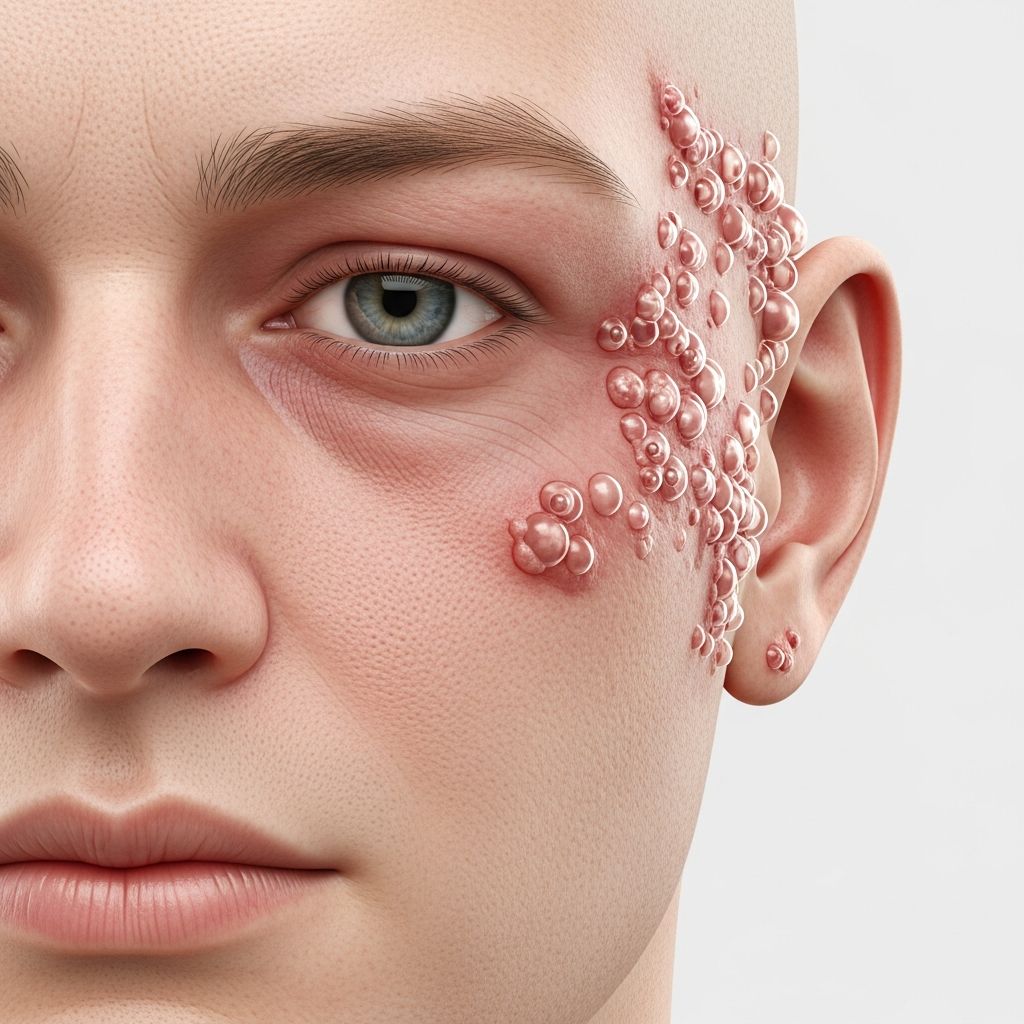
in the geniculate ganglion of the facial nerve. It presents with a classic triad of unilateral peripheral facial nerve palsy, otalgia (ear pain), and vesicular rash on the ear or in the mouth. First described by James Ramsay Hunt in 1907, this condition affects cranial nerve VII and can involve other nearby nerves such as VIII (vestibulocochlear), leading to hearing loss or vertigo. Prompt recognition and treatment within 72 hours significantly improve outcomes, with up to 70% of patients achieving full or near-full recovery.What is the cause of Ramsay Hunt syndrome?
Ramsay Hunt syndrome results from reactivation of latent VZV, the same virus responsible for chickenpox (varicella) and shingles (herpes zoster). After primary infection, the virus remains dormant in sensory ganglia, including the geniculate ganglion of the facial nerve (cranial nerve VII). Reactivation occurs due to waning cell-mediated immunity, often in individuals over 50 years old or those immunocompromised.
Key risk factors include:
- Age greater than 50 years
- Prior varicella-zoster virus exposure (nearly universal in adults)
- Immunosuppression (e.g., HIV, chemotherapy, organ transplant)
- Recent physiological stress or female sex
The virus spreads along the facial nerve, causing inflammation, neuritis, and characteristic symptoms. Unlike Bell’s palsy, Ramsay Hunt syndrome features dermatomal vesicular eruption confirming VZV etiology.
Clinical features of Ramsay Hunt syndrome
Symptoms typically onset suddenly over less than 72 hours, beginning with severe ipsilateral ear or facial pain preceding the rash by days. The hallmark triad includes:
- Unilateral peripheral facial palsy: Weakness or paralysis of facial muscles on one side, ranging from mild (House-Brackmann grade II) to complete (grade VI).
- Severe otalgia: Deep, burning ear pain due to nerve inflammation.
- Vesicular rash: Vesicles on the ear canal, concha, pinna, or oral mucosa (anterior two-thirds of tongue), often with crusting.
Additional features affecting cranial nerve VIII occur in up to 50% of cases:
- Vertigo or dizziness (vestibular involvement)
- Tinnitus or hearing loss (cochlear involvement)
Other common symptoms:
- Loss or alteration of taste (ageusia or dysgeusia on anterior tongue)
- Dry eye (xerophthalmia) and epiphora due to incomplete eyelid closure
- Dry mouth from facial weakness impairing lip seal
- Nausea, vomiting from vertigo
- Postherpetic neuralgia (persistent pain after rash resolves)
In severe cases, involvement of cranial nerves V (trigeminal), IX (glossopharyngeal), or X (vagus) can cause broader neurological deficits.
How is Ramsay Hunt syndrome diagnosed?
Diagnosis is primarily clinical, based on the characteristic triad of facial palsy, otalgia, and vesicular rash. Absence of constitutional symptoms (fever, malaise) distinguishes it from other infections.
Differential diagnosis includes:
| Condition | Key Distinguishing Features |
|---|---|
| Bell’s palsy | No rash; idiopathic facial palsy |
| Ramsay Hunt syndrome type 2 (disseminated zoster) | Multiple dermatomes; systemic VZV in immunocompromised |
| Cerebrovascular accident | Central facial sparing; imaging abnormalities |
| Lyme disease | Tick exposure; bilateral symptoms possible |
| Tumours (e.g., acoustic neuroma) | Gradual onset; imaging confirms mass |
Related Stories



Confirmatory tests if diagnosis uncertain:
- Swab of vesicles for VZV PCR (high sensitivity)
- Viral culture or Tzanck smear (less sensitive)
- MRI brain if polycranial neuropathy or no rash
- Audiometry for hearing assessment
Treatment of Ramsay Hunt syndrome
Early intervention within 72 hours of symptom onset is critical for optimal recovery, combining antivirals and high-dose corticosteroids. Combination therapy improves facial nerve recovery rates compared to antivirals alone.
Antiviral therapy
Oral antivirals target VZV replication:
- Valacyclovir 1g three times daily for 7 days (preferred due to better bioavailability)
- Acyclovir 800mg five times daily for 7-10 days
- Famciclovir 500mg three times daily
Initiate immediately; efficacy decreases after 72 hours.
Corticosteroids
High-dose steroids reduce nerve inflammation:
- Prednisone 60mg daily for 5-7 days, then taper over 10 days
- Higher doses (up to 200mg initial) for severe paralysis
- Intratympanic steroids as adjunct
Steroids plus antivirals yield best outcomes.
Symptomatic treatments
Manage complications:
- Pain: Gabapentin for neuralgia; acetaminophen/NSAIDs initially
- Vertigo: Meclizine or diazepam
- Dry eye: Artificial tears; eye patching/taping at night
- Dry mouth: Saliva substitutes (Biotene)
- Rash: Calamine lotion; avoid topical steroids on vesicles
- Postherpetic neuralgia: Topical capsaicin (cautiously); gabapentinoids
Physical therapy (facial neuromuscular retraining) for persistent palsy. Eye protection prevents corneal abrasion.
Complications of Ramsay Hunt syndrome
Untreated or delayed treatment risks:
- Permanent facial paralysis (30-50% without early therapy)
- Sensorineural hearing loss
- Chronic vertigo
- Postherpetic neuralgia (10-20%)
- Ocular complications (keratitis, ulceration)
- Synkinesis (abnormal facial movements during recovery)
Prognosis and recovery
With prompt treatment, 70% achieve complete/near-complete facial recovery. Mild cases (House-Brackmann I-III) recover fully in weeks; severe cases may take months or result in residual weakness. Hearing loss is less likely to fully resolve if profound at onset. Postherpetic neuralgia decreases with early steroids. Follow-up includes serial facial nerve grading and audiometry.
Prevention
Shingles vaccination prevents VZV reactivation:
- Shingrix (recombinant zoster vaccine): Two doses for adults ≥50 years or immunocompromised ≥19 years; 90-97% effective against herpes zoster and complications like Ramsay Hunt.
- Zostavax (live attenuated): Less effective, phased out in many regions.
Maintain immunity through vaccination; high-risk patients should consult providers.
Frequently asked questions
What is Ramsay Hunt syndrome?
A rare shingles variant causing facial paralysis, ear pain, and rash from VZV reactivation.
Is Ramsay Hunt syndrome contagious?
Vesicles contain live virus; contagious to non-immune individuals (causing chickenpox). Isolate until crusted.
How long does facial paralysis last?
Weeks to months; 70% full recovery with early treatment.
Can Ramsay Hunt syndrome cause permanent damage?
Yes, possible permanent facial weakness, hearing loss, or tinnitus without prompt therapy.
Is there a vaccine for Ramsay Hunt syndrome?
Shingrix vaccine prevents shingles and thus Ramsay Hunt.
What is the best treatment for Ramsay Hunt syndrome?
Valacyclovir + high-dose prednisone started within 72 hours.
References
- 7 Treatments for Ramsay Hunt Syndrome That Can Ease Symptoms — GoodRx. 2023-10-15. https://www.goodrx.com/conditions/shingles/ramsay-hunt-syndrome-causes-symptoms-treatment
- Ramsay Hunt Syndrome – Symptoms, Causes, Treatment — NORD (National Organization for Rare Disorders). 2024-05-20. https://rarediseases.org/rare-diseases/ramsay-hunt-syndrome/
- Ramsay Hunt syndrome – Symptoms, diagnosis and treatment — BMJ Best Practice. 2025-01-10. https://bestpractice.bmj.com/topics/en-gb/3000322
- Ramsay Hunt Syndrome (RHS) – Symptoms, Causes And Treatment — Apollo Hospitals. 2024-08-05. https://www.apollohospitals.com/diseases-and-conditions/ramsay-hunt-syndrome
- Ramsay Hunt Syndrome – StatPearls — NCBI Bookshelf / NIH. 2024-11-12. https://www.ncbi.nlm.nih.gov/books/NBK557409/
- Ramsay Hunt Syndrome (Herpes Zoster Oticus): Causes & Treatment — Cleveland Clinic. 2025-02-18. https://my.clevelandclinic.org/health/diseases/6093-ramsay-hunt-syndrome
Similar Articles








Read full bio of Sneha Tete