Rashes Affecting The Lower Legs: Causes, Symptoms & Treatments
Comprehensive guide to identifying, diagnosing, and managing rashes on the lower legs, from dermatitis to infections and ulcers.
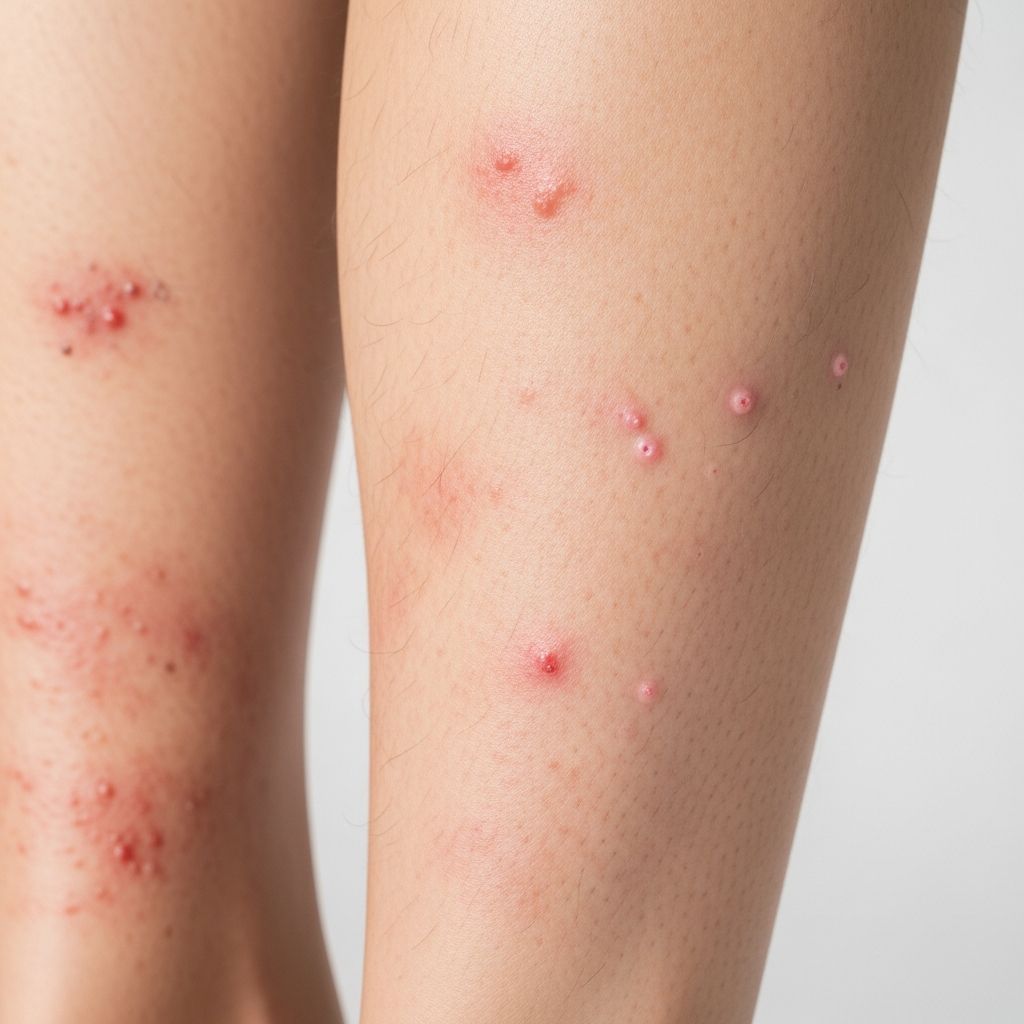
Most often, a rash affecting the lower legs is a type of
dermatitis
. The terms ‘dermatitis’ and ‘eczema’ are often used interchangeably. Acute dermatitis presents as red, swollen, and blistered plaques, while chronic dermatitis, accompanied by rubbing and scratching, results in darkened (hyperpigmented) and thickened (lichenified) plaques. This article explores the various causes, clinical features, and management strategies for rashes on the lower legs.What is dermatitis?
Dermatitis refers to a group of itchy inflammatory conditions characterised by epidermal changes. In the context of the lower legs, it commonly arises due to venous insufficiency, leading to oedema and skin barrier disruption. Acute phases feature erythema, vesicles, and oozing, progressing to chronic lichenification if untreated. Several subtypes affect this area predominantly.
Dermatitis
There are several different types of lower leg dermatitis, often linked to gravitational factors, venous disease, or contact irritants. Key variants include:
- Gravitational (stasis) dermatitis: The most common form, due to chronic venous insufficiency where damaged vein valves cause blood pooling and oedema, especially after standing or in hot weather. Skin appears red, scaly, itchy, with oozing, crusting, and irregular haemosiderin pigmentation.
- Varicose eczema: A variant of nummular dermatitis overlying varicose veins, presenting as discrete itchy patches.
- Asteatotic eczema (eczema craquelé): Dry, discoid patches with a ‘crazy paving’ appearance on lower limbs, common in elderly with dry skin.
- Contact dermatitis: Allergic or irritant reactions from topical agents, socks, or shoes.
Complications of leg dermatitis include secondary bacterial infection (cellulitis, impetigo), ulceration, and contact allergy from inappropriate topicals.
Scaly rashes of the lower legs
Scaly conditions affecting the lower legs include a range of dermatoses that mimic dermatitis but have distinct features:
- Psoriasis: The most common mimic, with well-demarcated erythematous plaques covered by silvery scales. Plaques often symmetric on shins.
- Lichen simplex chronicus: Thickened, scaly plaques from chronic rubbing.
- Tinea corporis (ringworm): Annular scaly patches with advancing borders, caused by dermatophyte fungi.
- Pityriasis rosea: Herald patch followed by smaller scaly lesions, self-limiting.
These require differentiation via clinical exam, Wood’s lamp, or biopsy to guide targeted therapy.
Infections
Infections frequently cause or complicate lower leg rashes, especially in oedematous or barrier-compromised skin:
- Bacterial infections: Staphylococcal or streptococcal, presenting as cellulitis (diffuse erythema, warmth, pain), erysipelas (sharply demarcated), or impetigo (honey-crusted lesions). Compromised skin from dermatitis predisposes.
- Staphylococcal scalded skin syndrome (SSSS): Rare toxin-mediated blistering starting from distant infection sites, causing widespread tender erythema and epidermal cleavage resembling burns.
- Fungal infections: Tinea cruris or corporis extending to legs, with annular scaly patches.
Systemic signs like fever, lymphadenopathy indicate severe infection requiring prompt antibiotics.
Redness of the lower legs
Other red or purplish conditions favouring the lower legs include:
Related Stories



- Erythema nodosum: Painful red nodules on shins, associated with infections, drugs, or sarcoidosis.
- Pretibial myxoedema: In thyroid disease, with thickened, orange-peel skin.
- Schamberg disease: Cayenne pepper-like purpura from capillary leakage.
- Livedo reticularis: Mottled net-like pattern, vascular origin.
These demand investigation for underlying systemic causes.
Lower leg ulcers
Ulcers represent end-stage complications, often from untreated dermatitis or venous disease:
- Venous ulcers: Most common, around medial malleolus, with irregular shallow base, granulation tissue, and haemosiderin staining. Due to venous hypertension.
- Arterial ulcers: Painful, punched-out on toes/feet, with poor pulses.
- Diabetic/neuropathic ulcers: On pressure points, risk of infection.
- Pyoderma gangrenosum: Rapidly enlarging with violaceous undermined edges.
Healing requires compression therapy for venous types, alongside wound care.
Who is at risk?
Risk factors include:
- Older age, obesity, prolonged standing/sitting.
- Venous disease history (varicose veins, DVT).
- Atopic background or dry skin.
- Immunosuppression or diabetes.
Clinical features
Presentations vary: acute (blisters, weeping), subacute (scaling, crusting), chronic (lichenified, hyperpigmented). Oedema worsens symptoms. In skin of colour, erythema less visible, hyperpigmentation prominent.
Diagnosis
Primarily clinical, aided by:
- Dermoscopy for scale/vascular patterns.
- Swab/biopsy for infection.
- Duplex ultrasound for venous disease.
Differential diagnosis
| Condition | Key Features | Distinguishing Test |
|---|---|---|
| Venous dermatitis | Oedema, pigmentation, malleolar | Venous Doppler |
| Psoriasis | Auspitz sign, nail pits | Biopsy |
| Cellulitis | Fever, rapid spread | Culture |
| Tinea | Annular, KOH positive | Microscopy |
Psoriasis is the primary mimic.
Management
Management depends on correct diagnosis. General advice:
- Reduce swelling: Leg elevation, compression stockings (20-30 mmHg), avoid standing.
- Emollients: Fragrance-free, apply generously post-bath.
- Topicals: Potent steroids (e.g., clobetasol) short-term for inflammation; avoid antibiotics/antihistamines due to allergy risk.
- Wet wraps: For acute weeping.
- Infections: Oral antibiotics (flucloxacillin); antiseptics for minor.
- Ulcers: Multilayer compression, pentoxifylline.
Refer to dermatology/vascular specialist if persistent.
Frequently Asked Questions (FAQs)
What causes most lower leg rashes?
Venous stasis dermatitis from poor circulation is the leading cause.
Can lower leg rashes lead to ulcers?
Yes, chronic inflammation and trauma can progress to venous leg ulcers.
How do I prevent recurrence?
Use compression, moisturise daily, elevate legs, and manage weight.
When should I see a doctor?
If rash weeps, ulcerates, or shows infection signs like fever.
Is psoriasis often mistaken for eczema on legs?
Yes, it’s the top differential due to similar scaling.
References
- Rashes affecting the lower legs — DermNet NZ (Dr Amanda Oakley). 2014-05 (reviewed). https://dermnetnz.org/topics/rashes-affecting-the-lower-legs
- Leg dermatitis — DermNet NZ. 2008 (updated). https://dermnetnz.org/cme/dermatitis/leg-dermatitis
- Bacterial Skin Infections — DermNet NZ (Dr Ian Coulson). Recent update. https://dermnetnz.org/topics/bacterial-skin-infections
- Staphylococcal Scalded Skin Syndrome — DermNet NZ. Recent update. https://dermnetnz.org/topics/staphylococcal-scalded-skin-syndrome
- Atopic Dermatitis — DermNet NZ. Recent update. https://dermnetnz.org/topics/atopic-dermatitis
- Dermatitis — DermNet NZ. Recent update. https://dermnetnz.org/topics/dermatitis
Similar Articles








Read full bio of Sneha Tete