Rat Bite Fever: Symptoms, Causes, Treatment
Learn about rat bite fever: causes, symptoms, diagnosis, treatment options, and prevention strategies.

Understanding Rat Bite Fever
Rat bite fever (RBF) is a bacterial infection transmitted to humans through contact with infected rodents, including rats, mice, and other small animals. Despite its name, rat bite fever can develop not only from bites but also from scratches, or even from exposure to the urine, nasal secretions, fecal matter, or ocular discharge of infected rodents. In some cases, transmission occurs through contaminated food or water, or through household pets such as dogs or cats that have encountered infected rodents. This potentially serious condition requires prompt medical attention and antibiotic treatment to prevent complications.
Causes and Transmission
Rat bite fever is caused by two main bacterial organisms: Streptobacillus moniliformis and Spirillum minus. The infection spreads through direct contact with infected rodents or their bodily fluids. Most cases in the United States result from contact with pet rodents, though wild rats and other small mammals can also transmit the disease. The bacteria can survive in the oral cavities and throats of infected animals without causing them harm, making rodents effective carriers.
Transmission pathways include:
- Direct bites from infected rodents
- Scratches from infected animals
- Contact with rodent urine or feces
- Exposure to nasal or ocular secretions
- Consumption of contaminated food or water
- Secondary transmission through infected pets
Symptoms and Clinical Presentation
The symptoms of rat bite fever vary depending on which organism is responsible for the infection. Typically, symptoms appear 3 to 10 days after exposure to an infected rodent, though they can be delayed up to 21 days. Notably, by the time symptoms develop, any bite or scratch wound usually has healed, which may make it difficult for patients to remember their rodent exposure.
Streptobacillary Rat Bite Fever
When caused by Streptobacillus moniliformis, the disease typically begins abruptly with fever and chills 3 to 10 days after the bite. Common symptoms include:
- High fever with chills
- Severe muscle aches and joint pain
- Headache and vomiting
- Nausea and sore throat
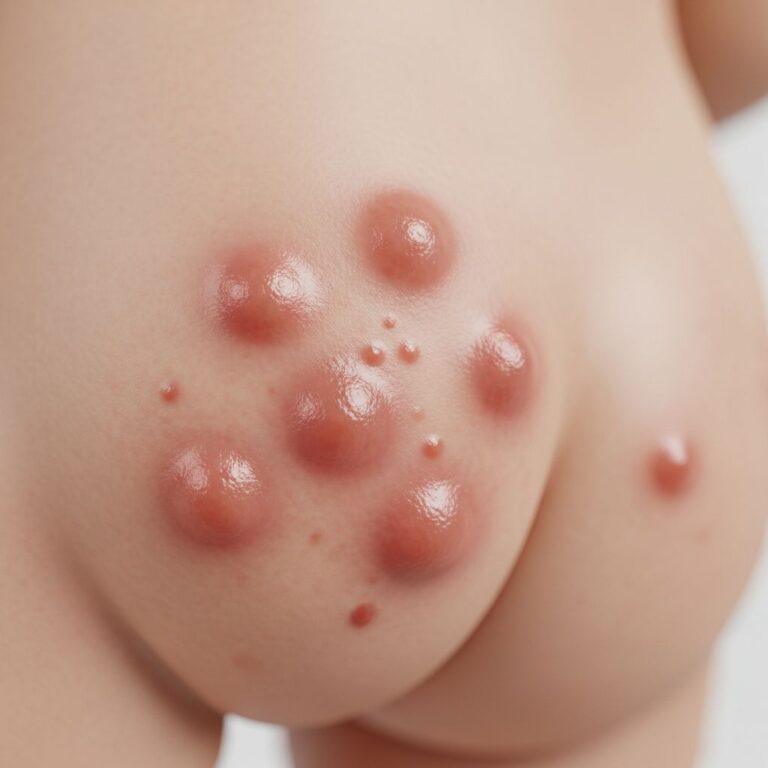
- Maculopapular, petechial, or vesicular rash appearing approximately 3 days after fever onset
- Rash typically appears on the hands and feet but may spread to the entire body
The rash may present as red or purple patches, bumps, tender papules, pustules, or hemorrhagic vesicles. Most patients develop flu-like symptoms with systemic manifestations affecting multiple body systems.
Spirillary Rat Bite Fever
When caused by Spirillum minus, symptoms emerge 7 to 21 days after the bite. The initial bite site may appear to heal initially before symptoms develop. Key characteristics include:
- Relapsing fever with alternating febrile and afebrile periods
- Open sore or ulceration at the bite site
- Regional lymphadenopathy (swollen lymph nodes near the bite)
- Rash with red or purple patches and bumps
- Febrile relapses that may recur over extended periods
The spirillary form characteristically causes recurring fever episodes separated by symptom-free intervals, potentially lasting for weeks or months if untreated.
Diagnosis
Diagnosis of rat bite fever is primarily clinical, based on the patient’s history of rodent exposure and characteristic symptoms. Healthcare providers should ask about recent contact with rodents or pets that may have encountered rodents. Several diagnostic confirmations may be employed:
Related Stories



- Culture of blood or wound aspirates (particularly for the streptobacillary form)
- Rising antibody titers in blood tests
- Inoculation of samples into mice, guinea pigs, or rats for isolation of Spirillum minus
- Microscopic examination of blood or clinical samples
Early diagnosis is crucial for initiating timely treatment and preventing serious complications. Patients should inform their healthcare provider immediately if they develop symptoms after known or suspected rodent exposure.
Treatment Options
Rat bite fever responds well to antibiotic therapy when treatment begins promptly. The primary antibiotic of choice is penicillin, administered either by injection or intravenously for 7 to 10 days in acute cases. Alternative antibiotics include ampicillin, cefuroxime, and cefotaxime.
Antibiotic Regimens
| Antibiotic | Administration Route | Dosing | Duration |
|---|---|---|---|
| Penicillin G | Intravenous | 200,000 units every 4 hours | 7-10 days initially |
| Ceftriaxone | Intravenous | 1 gram daily | 7-10 days initially |
| Penicillin V | Oral (transition) | 500 mg four times daily | Total 2 weeks |
| Ampicillin | Oral | 500 mg four times daily | Total 2 weeks |
| Amoxicillin | Oral | 500 mg three times daily | Total 2 weeks |
| Doxycycline | Intravenous/Oral | 100 mg twice daily | For penicillin-allergic patients |
For patients allergic to penicillin, doxycycline serves as an effective alternative. Patients typically begin with intravenous antibiotics and transition to oral medications once clinical improvement occurs. With prompt treatment, most individuals with rat bite fever recover completely.
Prevention of Initial Infection
Proper wound care immediately following a suspected rodent bite or scratch significantly reduces infection risk. Any animal bite should be thoroughly cleaned with soap and water. Treatment with amoxicillin-clavulanate by mouth for 2 to 3 days may help prevent infection. Additionally, tetanus vaccination status should be reviewed and updated if necessary.
Reducing rat bite fever risk involves:
- Avoiding contact with wild rodents
- Using appropriate precautions when handling pet rodents
- Maintaining proper hygiene after any animal contact
- Securing homes and businesses against rodent intrusion
- Educating children about safe interaction with animals
- Wearing protective gloves when handling potentially infected animals
Potential Complications
While rat bite fever responds well to antibiotics, untreated infections can lead to serious complications. The prognosis is excellent with early treatment, but untreated cases carry a mortality rate of 10 to 15 percent. Potential complications include:
- Endocarditis (infection of the heart valves)
- Sepsis (systemic blood infection)
- Abscesses of the brain or soft tissue
- Inflammation of the heart lining (myocarditis)
- Inflammation of the parotid (salivary) glands
- Inflammation of tendons (tenosynovitis)
- Septic arthritis requiring additional interventions
- Vertebral involvement leading to neurological complications
Infants and young children may develop severe diarrhea, potentially leading to dehydration and weight loss. Most deaths occur in infants and in patients who develop sepsis or endocarditis. Some patients experience prolonged migratory polyarthralgias, fatigue, and slow rash resolution even with appropriate antibiotic treatment.
Prognosis and Recovery
The outlook for rat bite fever is excellent when diagnosed and treated promptly. Most children with rat bite fever recover completely with appropriate antibiotics. Many cases resolve spontaneously within two weeks, even without treatment, though this carries significant risk of complications. However, untreated cases estimated to have a mortality rate of approximately 7 to 13 percent for Streptobacillus moniliformis infections. For complicated cases involving endocarditis, prolonged antibiotic treatment may be necessary, and some patients may require additional surgical interventions such as arthroscopy or joint lavage for septic arthritis.
Frequently Asked Questions
Q: How quickly can symptoms develop after a rodent bite?
A: Symptoms typically appear 3 to 10 days after exposure, though they can be delayed up to 21 days. By the time symptoms develop, the bite or scratch may have completely healed.
Q: Can rat bite fever be transmitted without a bite?
A: Yes, rat bite fever can spread through scratches, exposure to rodent urine or feces, or even contact with infected pets. In some cases, transmission occurs through contaminated food or water.
Q: What is the main antibiotic used to treat rat bite fever?
A: Penicillin is the primary antibiotic of choice, typically administered intravenously or by injection for 7 to 10 days. Alternative antibiotics include ampicillin, cefuroxime, doxycycline, and cefotaxime.
Q: How long does antibiotic treatment typically last?
A: Total antibiotic treatment usually lasts 2 weeks, beginning with intravenous antibiotics and transitioning to oral medications once clinical improvement occurs.
Q: What happens if rat bite fever goes untreated?
A: Untreated rat bite fever can lead to serious complications including endocarditis, sepsis, brain abscesses, and death. The mortality rate for untreated cases ranges from 7 to 15 percent.
Q: Is rat bite fever preventable?
A: While the disease itself cannot be prevented once exposure occurs, risk can be reduced by avoiding rodent contact, practicing proper hygiene, maintaining protected living spaces, and seeking immediate medical care after suspected exposure.
Q: What should I do if bitten or scratched by a rodent?
A: Immediately wash the wound thoroughly with soap and water. Consider treatment with amoxicillin-clavulanate for 2 to 3 days, review tetanus vaccination status, and monitor for symptoms. Seek medical attention immediately if symptoms develop.
References
- Rat Bite Fever — American Academy of Pediatrics (HealthyChildren.org). Updated 2024. https://www.healthychildren.org/English/health-issues/conditions/from-insects-animals/Pages/Rat-Bite-Fever.aspx
- Rat-Bite Fever: Infectious Diseases — Merck Manuals (Professional Edition). Updated 2024. https://www.merckmanuals.com/professional/infectious-diseases/spirochetes/rat-bite-fever
- About Rat Bite Fever (RBF) — Centers for Disease Control and Prevention (CDC). Updated 2024. https://www.cdc.gov/rat-bite-fever/about/index.html
- Rat-Bite Fever — MedlinePlus Medical Encyclopedia (National Library of Medicine). Updated 2023. https://medlineplus.gov/ency/article/001348.htm
- Rat-Bite Fever — StatPearls (NCBI Bookshelf, National Center for Biotechnology Information). Updated 2024. https://www.ncbi.nlm.nih.gov/books/NBK448197/
- Rat Bite Fever — Center for Food Security and Public Health, Iowa State University. Updated 2021. https://www.cfsph.iastate.edu/Factsheets/pdfs/rat_bite_fever.pdf
- Rat Bite Fever Fact Sheet — California Department of Public Health (CDPH). Updated 2023. https://www.cdph.ca.gov/Programs/CID/DCDC/
Similar Articles








Read full bio of medha deb