RDAs, DRIs, and DVs: Nutrition Guidelines Explained
Understanding RDAs, DRIs, and DVs: Essential nutrition reference values for healthy living.
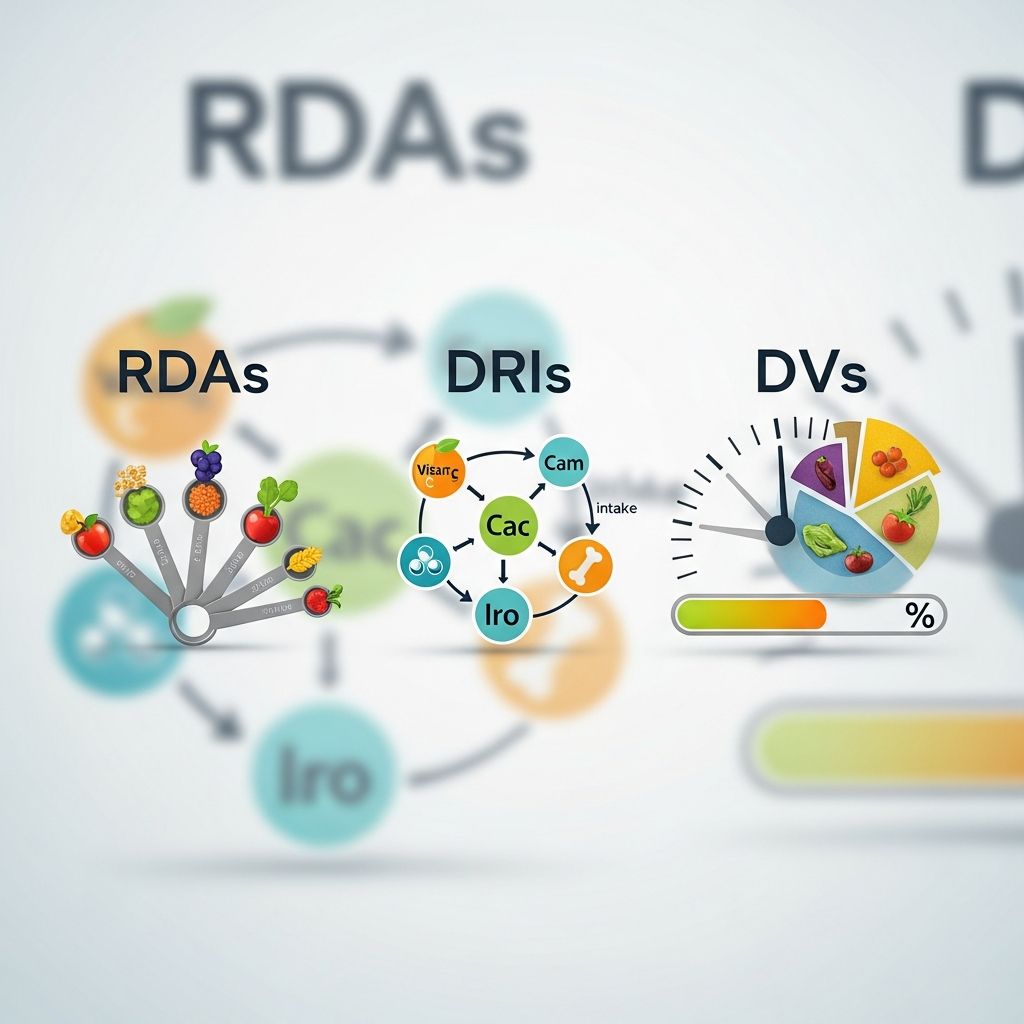
Understanding Nutrition Reference Standards: RDAs, DRIs, and DVs
Nutrition can be confusing, especially when you encounter different abbreviations and standards on food labels and dietary recommendations. Three key terms—RDAs, DRIs, and DVs—form the foundation of modern nutritional guidance in the United States and Canada. Understanding what these acronyms mean and how they differ is essential for making informed dietary choices and ensuring you meet your nutritional needs. These standards were developed by nutrition scientists and health professionals to help individuals, healthcare providers, and food manufacturers understand nutrient requirements and communicate nutritional information clearly.
What Are Dietary Reference Intakes (DRIs)?
The Dietary Reference Intake (DRI) is the overarching term for a comprehensive set of nutrient reference values used to evaluate and plan nutritious diets for healthy people. DRIs were established by the Food and Nutrition Board of the National Academies of Sciences, Engineering and Medicine, an authoritative body that addresses issues of safety, quality, and adequacy of the food supply. These values represent the most current scientific understanding of nutrient needs and serve as the foundation for all other nutrition recommendations.
One of the most important characteristics of DRIs is that they vary by age, sex, and life stage. This means that a teenager’s nutritional needs differ from those of an adult, a pregnant woman, or an older adult. The DRI system recognizes this biological reality and provides tailored recommendations for different population groups. This personalized approach ensures that recommendations reflect the actual physiological requirements of different individuals throughout their lives.
The DRI system includes several different types of reference values, each serving a specific purpose in nutrition planning and assessment:
Components of the DRI System
Estimated Average Requirement (EAR): This value represents the daily nutrient intake level estimated to satisfy the nutrient requirement of 50% of healthy individuals in a particular life stage or gender group. The EAR serves as the foundation for developing RDAs and is used primarily by nutrition researchers and policy makers rather than by the general public.
Recommended Dietary Allowance (RDA): The RDA is the average daily nutrient intake level sufficient to meet the nutrient requirements of nearly all (97–98%) healthy individuals in a particular life stage or gender group. This is the most commonly cited DRI value and is often used by individuals to plan nutritionally adequate diets. When there is sufficient scientific evidence available, the RDA is considered the gold standard recommendation.
Adequate Intake (AI): When scientific evidence is insufficient to establish an RDA, an Adequate Intake level is established instead. Adequate Intakes are based on observation of healthy people and represent intakes that are assumed to ensure nutritional adequacy, even though they may not meet the same stringent scientific criteria as RDAs.
Tolerable Upper Intake Level (UL): This represents the highest level of daily nutrient intake that is unlikely to cause adverse health effects in almost all healthy individuals. The UL is an important safety threshold; exceeding the UL, particularly over sustained periods, can lead to nutrient toxicity and health problems. It’s important to note that exceeding the RDA is not inherently problematic until the UL is reached.
Estimated Energy Requirement (EER): This value represents the average dietary energy intake (measured in calories) predicted to maintain energy balance in a healthy adult of a defined age, sex, weight, height, and level of physical activity.
Acceptable Macronutrient Distribution Range (AMDR): The AMDR is a range of intakes for energy-producing nutrients (carbohydrates, proteins, and fats) that is associated with reduced risk of chronic disease while providing adequate intakes of essential nutrients. These ranges help individuals understand the proportion of their daily calories that should come from different macronutrient sources.
What Is the Recommended Dietary Allowance (RDA)?
The Recommended Dietary Allowance (RDA) is one of the most important components within the larger DRI system. Established on the basis of scientific knowledge about nutrient needs, the RDA represents the level of intake of essential nutrients sufficient to meet the requirements of healthy individuals. The RDA was originally developed in the 1940s and has been regularly updated to reflect the latest scientific information about nutrition and health.
What makes the RDA particularly valuable is its focus on meeting the needs of nearly all healthy people in a defined group. By setting the standard high enough to cover 97–98% of the population, the RDA provides a safety margin that accounts for individual variation in nutrient needs. This means that if you consume nutrients at the RDA level, you can be confident that you are meeting your nutritional requirements, even if your individual needs are somewhat higher than average.
RDAs are not one-size-fits-all values. They differ based on age, sex, pregnancy status, and lactation status. For example, adolescent males have different RDAs than adult females, and pregnant women have different requirements than non-pregnant women. This recognition of biological differences across the population ensures that recommendations are realistic and achievable for different groups.
For macronutrients like carbohydrates, the RDA is set based on the average minimum amount needed for optimal brain function. For instance, the RDA for carbohydrate is 130 grams per day for both men and women, established because this amount provides the glucose that the brain requires for its primary fuel source.
Understanding Daily Values (DVs)
While RDAs and other DRI values are used for planning nutritious diets and assessing nutrient adequacy, Daily Values (DVs) serve a different purpose. Daily Values are the recommended amounts of nutrients to consume or not to exceed each day, as displayed on food and dietary supplement nutrition facts labels. The FDA established DVs to help consumers understand the nutrient content of packaged foods in relation to their approximate daily needs.
One important distinction is that while RDAs vary by age, sex, and life stage, DVs are standardized values. The DV for each nutrient is typically based on a 2,000-calorie diet for adults and children four years of age or older. This standardization allows for clear labeling on all products without requiring multiple labels for different population groups. However, it’s important to recognize that individual nutrient needs may differ from the DV based on age, sex, activity level, and other factors.
How Daily Values Are Calculated
The relationship between DVs and RDAs has evolved over time. When nutrition labeling first became mandatory in the United States, labels used percent U.S. RDA values based on RDAs published in 1968. This terminology was later changed to percent Daily Value (%DV), but until 2016, many of the DVs used on labels were still based on those outdated 1968 RDAs. This created a situation where label information did not reflect the most current scientific knowledge about nutrient needs.
In a significant update on May 27, 2016, the FDA updated the regulations to change the RDI and Daily Values to reflect current scientific information. These new DVs are primarily based on the RDAs found in the current DRI system, ensuring that nutrition labels now provide consumers with information aligned with the latest nutritional science. The 2016 update also placed emphasis on nutrients of current concern, including vitamin D, potassium, and added sugars.
Current Daily Values (as of 2024)
The following table shows the Daily Values for adults and children four or more years of age based on a 2,000 calorie diet:
| Nutrient | Daily Value |
|---|---|
| Total Fat | 78 g |
| Saturated Fatty Acids | 20 g |
| Cholesterol | 300 mg |
| Sodium | 2,300 mg |
| Potassium | 4,700 mg |
| Total Carbohydrate | 275 g |
| Added Sugars | 50 g |
| Dietary Fiber | 28 g |
| Protein | 50 g |
Understanding Percent Daily Value (%DV)
The Percent Daily Value (%DV) is a tool that appears on every nutrition facts label and helps consumers understand how much a nutrient in a single serving of food contributes to their daily nutrient goals. The %DV is calculated by comparing the amount of a nutrient in one serving to the Daily Value for that nutrient and expressing it as a percentage.
For example, if the Daily Value for a certain nutrient is 300 micrograms and a packaged food contains 30 micrograms in one serving, the %DV would be 10%. This means that eating one serving of the food would provide 10% of your daily need for that nutrient, and you could obtain the remaining 90% from other foods throughout the day.
Understanding how to use %DV can help you make healthier food choices. As a general guide, 5% DV or less of a nutrient per serving is considered low, while 20% DV or more is considered high. When shopping, you should generally aim to choose foods that are higher in dietary fiber, vitamin D, calcium, iron, and potassium, while selecting foods that are lower in saturated fat, sodium, and added sugars.
Key Differences Between RDA, DRI, and DV
Understanding the distinctions between these three terms is essential for properly interpreting nutrition information:
DRI is the broadest term, encompassing all reference values for nutrient recommendations. It’s an umbrella term for the entire system of recommendations.
RDA is a specific type of DRI value that represents the recommended daily intake for a particular nutrient. RDAs vary by age, sex, and life stage and are based on scientific evidence.
DV is a standardized value used on food labels to help consumers understand nutrient content. DVs do not vary by age or sex on labels and are typically based on a 2,000-calorie diet.
While DVs are often similar to RDAs, they are not always equivalent. An individual’s personal RDA may differ from the DV on a food label, especially if that person is outside the standard adult population or has different caloric needs.
Why These Standards Matter for Health
These reference values exist because getting adequate nutrition is fundamental to maintaining good health. The DRI, RDA, and DV systems help prevent nutritional deficiencies, reduce the risk of chronic diseases, and support optimal health across the lifespan. By understanding these standards, you can make more informed dietary choices and work with healthcare providers to ensure your nutritional needs are being met.
The regular updating of these standards—most recently in 2016 and ongoing—ensures that nutritional guidance keeps pace with emerging scientific evidence. As our understanding of how nutrients affect health improves, these recommendations are adjusted to reflect the latest knowledge.
Frequently Asked Questions
Q: How do I know if I’m getting enough nutrients?
A: You can use the RDA values appropriate for your age, sex, and life stage as a target for your daily nutrient intake. Additionally, using %DV on food labels can help you track nutrient intake from packaged foods. For personalized guidance, consult with a registered dietitian who can assess your individual needs.
Q: Is it harmful to consume more than the RDA?
A: Exceeding the RDA is not inherently problematic until the Tolerable Upper Intake Level (UL) is reached. There is generally a safety zone between the RDA and the UL where additional nutrient intake does not cause harm. However, consuming nutrients above the UL over sustained periods can lead to toxicity and adverse health effects.
Q: Why do DVs on labels differ from my personal RDA?
A: DVs are standardized values based on a 2,000-calorie diet for adults and children four years and older, while RDAs vary by age, sex, and life stage. Your personal RDA may be higher or lower than the DV depending on these individual factors.
Q: How often are RDAs and DVs updated?
A: RDAs are regularly revised to reflect the latest scientific information about nutrient needs. The most recent comprehensive update to DVs occurred in 2016, when the FDA changed the values to reflect current scientific information.
Q: What does %DV mean on a nutrition label?
A: %DV represents the percentage of the Daily Value that one serving of food provides for a specific nutrient. It helps you understand whether a food is a good source of a particular nutrient or whether you need to consume other foods to meet your daily needs.
Q: Are RDAs the same as AI (Adequate Intake)?
A: No, RDAs and AIs are different. RDAs are established when sufficient scientific evidence exists and represent recommendations for 97–98% of the population. AIs are established when evidence is insufficient to set an RDA and are based on observation of healthy people.
References
- Reference Daily Intake — Wikipedia. 2024. https://en.wikipedia.org/wiki/Reference_Daily_Intake
- DRIs Explained | Part 2 Foundations in Nutrition — Harvard T.H. Chan School of Public Health. https://www.youtube.com/watch?v=AKTwQZO0pFM
- Nutrient Recommendations and Databases — National Institutes of Health Office of Dietary Supplements. https://ods.od.nih.gov/HealthInformation/nutrientrecommendations.aspx
- Daily Value on the Nutrition and Supplement Facts Labels — U.S. Food and Drug Administration. https://www.fda.gov/food/nutrition-facts-label/daily-value-nutrition-and-supplement-facts-labels
- Vitamins and Minerals – The Nutrition Source — Harvard T.H. Chan School of Public Health. https://nutritionsource.hsph.harvard.edu/vitamins/
- Food and Vitamins and Supplements! Oh My! — Harvard Medical School. https://hms.harvard.edu/sites/default/files/assets/Sites/Longwood_Seminars/Nutrition_3_5_13.pdf
- Dietary Reference Intakes — Office of Disease Prevention and Health Promotion. https://odphp.health.gov/our-work/nutrition-physical-activity/dietary-guidelines/dietary-reference-intakes
Similar Articles








Read full bio of Sneha Tete