Reactive Arthritis (Reiter’s Syndrome): Symptoms & Treatment
Understanding reactive arthritis: causes, symptoms, diagnosis, and effective treatment options.
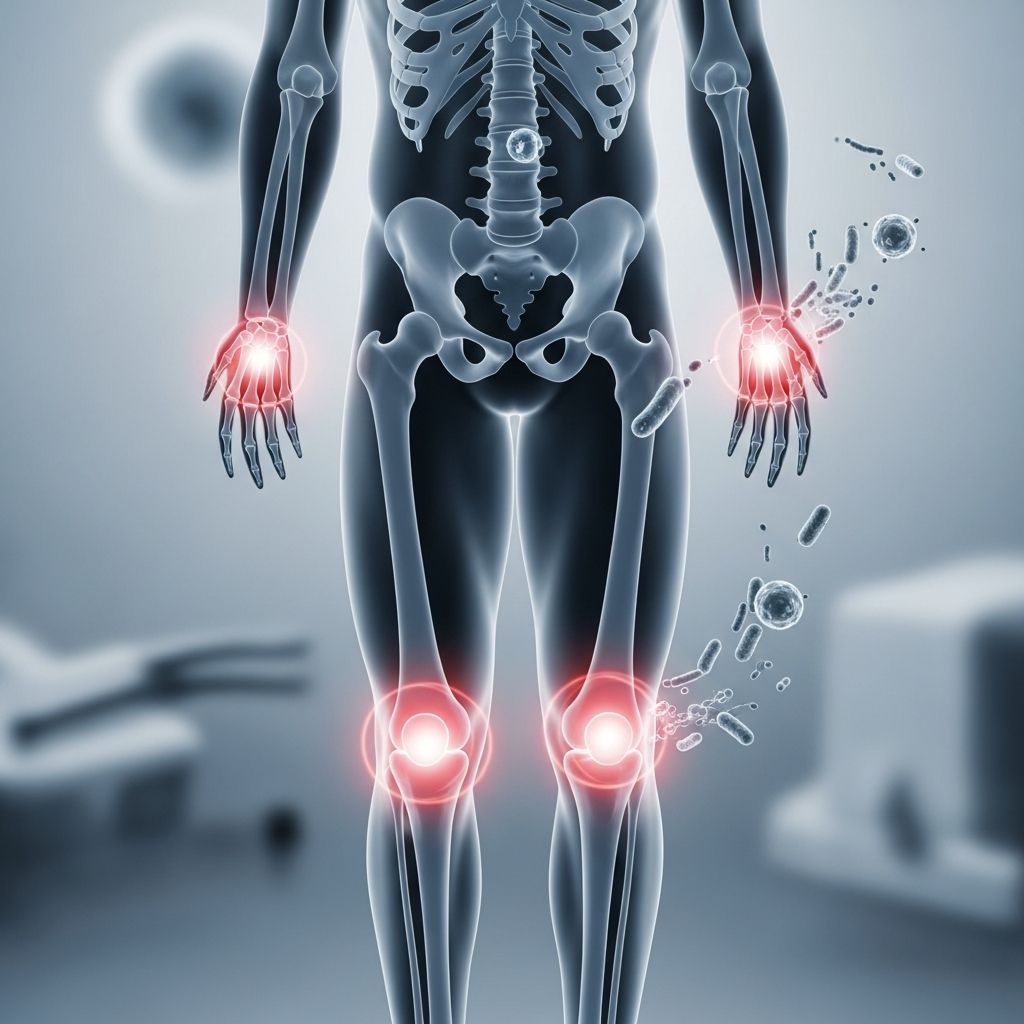
What Is Reactive Arthritis?
Reactive arthritis, formerly known as Reiter’s syndrome, is a rare and temporary form of inflammatory arthritis triggered by a bacterial infection elsewhere in your body. Unlike chronic arthritis conditions that persist throughout life, reactive arthritis typically resolves within several months to a year. This condition causes pain and stiffness primarily in your lower body joints, though it can also affect other body tissues including your eyes and skin, as well as produce whole-body symptoms like fatigue.
The condition represents an unusual immune response where your body’s inflammatory reaction extends beyond the site of infection. Rather than recognizing that the battle against infection is over, your immune system continues to send inflammation to joints and other tissues where the infection never actually occurred. This autoimmune-like response distinguishes reactive arthritis from typical post-infection recovery.
How Does Reactive Arthritis Develop?
Reactive arthritis begins with a bacterial infection in specific body systems. The most common triggers include infections in your urinary tract, genitals, digestive system, or throat. The arthritis typically emerges several days to weeks after the original infection has resolved, and it develops in only a small percentage of people who experience these triggering infections.
The mechanism involves an autoimmune response where your immune system overcorrects following the initial infection. Instead of returning to normal after fighting off the bacteria, your immune system targets healthy parts of your own body with inflammation. Fortunately, this differs from most autoimmune diseases because reactive arthritis is usually temporary and self-limiting.
Specific bacteria that commonly trigger reactive arthritis include chlamydia, salmonella, shigella, yersinia, and campylobacter. These organisms can initiate the cascade of events leading to joint inflammation weeks after the initial infection resolves.
Recognizing Reactive Arthritis Symptoms
The symptoms of reactive arthritis vary widely among patients. While the condition has a classic recognizable triad, most people won’t experience all three components simultaneously, and different symptoms may come and go throughout the illness.
The Classic Triad
The classic triad of reactive arthritis symptoms includes:
- Arthritis (joint pain and stiffness)
- Urethritis (inflammation of the urethra)
- Conjunctivitis (eye inflammation)
This triad provides a quick recognition pattern for healthcare providers, though it’s important to note that you may never experience all three symptoms, and other symptoms may also present.
Joint-Related Symptoms
The most common reactive arthritis symptoms are joint pain and stiffness, particularly affecting your:
- Knees
- Ankles
- Feet
- Lower back
- Heels
Large knee effusions exceeding 100 milliliters are not uncommon, and when these develop rapidly, they frequently result in popliteal cysts that may rupture. Heel pain, Achilles tendonitis, and pain at the insertion of the patella tendon into the tibial tubercle are characteristic presentations. Low back pain is common and often secondary to inflammatory sacroiliitis.
Additional Symptoms
Beyond the classic triad, you may experience:
- Conjunctivitis (frequently mild and transient)
- Iritis (characteristic of more persistent disease)
- Skin rashes, including keratoderma blennorrhagica and balanitis circinata
- Painless oral ulcers
- Urinary tract symptoms
- Gastrointestinal symptoms
- Fever and weight loss (which may be marked)
- Fatigue
Related Stories



In males, urethritis often presents as symptomatic with mucopurulent discharge, though it can occasionally present as gross hematuria secondary to hemorrhagic cystitis. In females, nonspecific cervicitis may occur, though urethritis may be asymptomatic in either sex. Conjunctivitis is frequently mild and transient, easily missed during examination, while iritis indicates more persistent and chronic disease.
Diagnosing Reactive Arthritis
Diagnosis of reactive arthritis involves multiple approaches combining clinical evaluation, laboratory testing, and imaging studies. Healthcare providers will perform a thorough physical examination looking for characteristic signs including skin rashes, gastrointestinal or urinary problems, eye inflammation, mouth sores, and joint involvement in the arms or legs, in addition to back pain.
Diagnostic Tests
You might have a variety of tests to help confirm the diagnosis, including:
- Blood tests to check for inflammatory markers
- Joint fluid analysis from aspiration
- Imaging studies such as X-rays
- Tests for sexually transmitted infections
- Stool cultures if gastrointestinal infection is suspected
Laboratory Findings
Laboratory abnormalities are nonspecific but helpful for diagnosis. Common findings include anemia, elevated erythrocyte sedimentation rate, or elevated C-reactive protein level. Examination of joint fluid reveals inflammatory synovitis with 15,000 to 30,000 white blood cells per cubic millimeter, with approximately two-thirds typically being neutrophils. The joint fluid glucose level remains normal, and crystals are not present, helping distinguish reactive arthritis from crystal arthropathies.
Treatment Approaches for Reactive Arthritis
Treatment for reactive arthritis may include multiple modalities designed to manage symptoms while the condition runs its natural course. Since reactive arthritis is usually self-limited and will clear up on its own within three to twelve months, treatment focuses on symptom management and potentially hastening resolution.
Initial Therapeutic Interventions
Symptomatic treatment is accomplished with high doses of potent nonsteroidal anti-inflammatory drugs, such as indomethacin. Initial therapy typically includes:
- Potent nonsteroidal anti-inflammatory drugs (e.g., indomethacin 75-mg sustained-release capsules two or three times daily)
- Doxycycline (100 mg twice daily for three months) if chlamydial origin is strongly suspected or confirmed
- Intra-articular corticosteroid injections in patients with large joint effusions
Oral corticosteroids aren’t as effective as NSAIDs, but intra-articular steroid injections can be particularly helpful for patients experiencing large knee effusions.
Treatment for Persistent Disease
In patients with persistent symptoms, sulfasalazine (Azulfidine) in dosages of 1 to 3 grams daily has proven useful. This medication is used similarly to treatment protocols for ankylosing spondylitis and psoriatic arthritis.
Chronic Therapy
For patients who develop erosive, deforming disease or show radiographic evidence of erosion or sacroiliitis, methotrexate (7.5 to 25 mg per week) and azathioprine (Imuran) have demonstrated effectiveness. Testing for human immunodeficiency virus (HIV) infection is mandatory in patients with persistent symptoms, as HIV can influence disease progression and treatment planning.
Management of Underlying Infections
If there is any clue to infection at the time arthritis starts, such as infectious diarrhea or infection of the genitourinary tract, these conditions will be treated. However, it’s important to understand that even with treating the underlying infection, reactive arthritis can continue because it represents an inflammatory reaction to the infection rather than the infection itself.
Prognosis and Long-Term Outcomes
The majority of patients with reactive arthritis experience a self-limited course with symptoms resolving within three to five months. However, symptoms lasting beyond six months indicate a chronic element of the disease. In most cases, reactive arthritis is not a lifelong condition, unlike typical chronic arthritis.
Approximately 20 to 25 percent of patients may progress to have chronic articular, ocular, and cardiac complications. In a small percentage of people, reactive arthritis seems to trigger a more serious and lasting form of spondyloarthritis with long-term joint inflammation that can cause real damage over time. It remains unclear whether this represents chronic reactive arthritis or whether a different disease has developed, as one autoimmune disease can trigger another and many people have more than one condition.
Risk Factors for Worse Outcomes
Several factors indicate a worse prognosis:
- Hip involvement
- Unresponsiveness to NSAIDs
- Elevated erythrocyte sedimentation rate greater than 30
Additionally, patients who are HLA-B27 positive have a higher risk of recurrence of reactive arthritis. Between 15 to 30 percent of patients with reactive arthritis can develop long-term arthritis or other joint abnormalities.
Important Considerations
While reactive arthritis is an autoimmune disorder, it differs fundamentally from most autoimmune diseases in its temporary nature. No autoimmune disorder is truly curable, which means it’s always possible for symptoms to return—for example, if you experience another triggering infection. This potential for recurrence underscores the importance of prompt treatment of infections and monitoring for symptom reappearance.
Understanding reactive arthritis helps patients and healthcare providers manage expectations about recovery and plan appropriate treatment strategies. The condition’s usually temporary nature offers hope for resolution, while awareness of potential chronic complications ensures appropriate monitoring and intervention when needed.
Frequently Asked Questions
Q: Is reactive arthritis permanent?
A: No, reactive arthritis is usually temporary and self-limiting, lasting less than a year in most cases. Symptoms typically resolve within three to twelve months. However, in a small percentage of people, it may develop into a more chronic form of spondyloarthritis.
Q: Can reactive arthritis be prevented?
A: While you cannot prevent reactive arthritis once an infection occurs, you can reduce your risk by preventing the triggering infections. This includes practicing safe sex to prevent sexually transmitted infections, maintaining proper food hygiene to prevent gastrointestinal infections, and seeking prompt treatment for any infections.
Q: What is the difference between reactive arthritis and other types of arthritis?
A: Unlike most chronic arthritis conditions like rheumatoid arthritis or osteoarthritis, reactive arthritis is temporary and triggered by an infection. It typically resolves on its own within months rather than persisting throughout life, and it’s not considered a lifelong condition.
Q: How long does treatment typically last?
A: Treatment duration varies depending on symptom severity and individual response. Initial anti-inflammatory therapy may last several weeks to months, while some patients with persistent symptoms may require longer-term treatment with medications like sulfasalazine or methotrexate.
Q: Will I have symptoms for the rest of my life?
A: Most people will not have symptoms for the rest of their lives. While reactive arthritis is usually self-limited and resolves within three to twelve months, approximately 20-25% of patients may develop chronic complications. The good news is that most people achieve complete or near-complete resolution of symptoms.
References
- Reactive Arthritis (Reiter’s Syndrome) — American Academy of Family Physicians. 1999-08-01. https://www.aafp.org/pubs/afp/issues/1999/0801/p499.html
- Reactive Arthritis (Reiter’s Syndrome): Symptoms & Treatment — Cleveland Clinic. 2024. https://my.clevelandclinic.org/health/diseases/reactive-arthritis-reiters-syndrome
- Reactive Arthritis (formerly called Reiter’s Syndrome) — Hospital for Special Surgery. 2024. https://www.hss.edu/health-library/conditions-and-treatments/list/reactive-arthritis
- Reactive Arthritis — National Center for Biotechnology Information (NCBI) Bookshelf. 2024. https://www.ncbi.nlm.nih.gov/books/NBK499831/
- Reactive Arthritis – Symptoms & Causes — Mayo Clinic. 2024. https://www.mayoclinic.org/diseases-conditions/reactive-arthritis/symptoms-causes/syc-20354838
Similar Articles








Read full bio of Sneha Tete